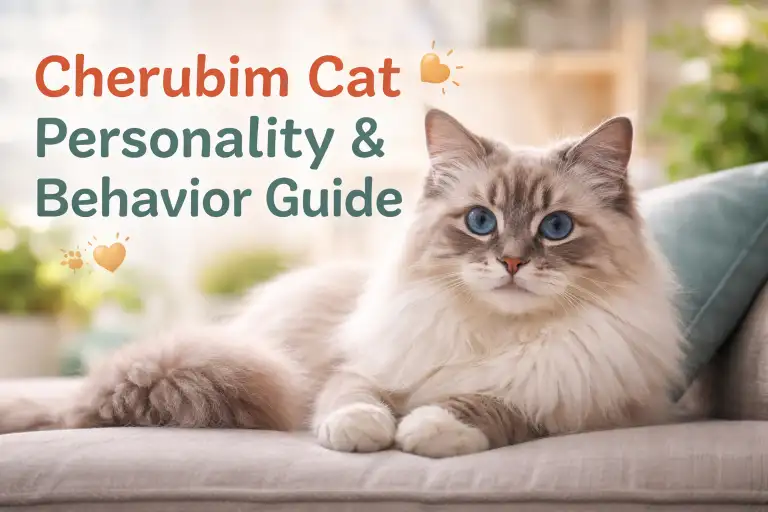
A Cherubim cat’s personality isn’t something fixed at birth or dictated by a single trait. It develops gradually, shaped by a combination of genetics, early experiences, environment, and ongoing interactions. Understanding these influences helps explain why two Cherubims can share the same lineage yet behave very differently in everyday life.
Recommended Dog Care Products
Based on your dog’s age, these products may help with comfort, health, grooming, and daily care.

Purina Pro Plan Veterinary Supplements
Daily probiotics for dogs to support digestive and gut health.
View on Amazon ↗
Earth Rated Poop Bags for Dogs
Leak-proof, extra thick waste bag refill rolls with lavender scent.
View on Amazon ↗
Greenies Pill Pockets for Dogs
Large dog treats for capsule medication, peanut butter flavor.
View on Amazon ↗
HONEY CARE All-Absorb Dog Wrap
Small male dog wraps, 50 count, useful for daily care support.
View on Amazon ↗
Seresto Flea & Tick Collar
Flea and tick treatment and prevention for dogs over 18 lbs.
View on Amazon ↗
Milk-Bone MaroSnacks
Small dog treats with real bone marrow in a 40 oz canister.
View on Amazon ↗
Vital Essentials Dog Treats
Freeze dried beef liver dog treats, grain free and single ingredient.
View on Amazon ↗
Stain & Odor Eliminator
Enzyme cleaner for pet stains, carpet messes, and strong odors.
View on Amazon ↗
Pur Luv Chicken Jerky Treats
Dog treats made with real chicken breast, high protein and chew-friendly.
View on Amazon ↗
Milk-Bone Flavor Snacks
Mini crunchy dog biscuits in a 36 oz canister for small rewards.
View on Amazon ↗As an Amazon Associate, we may earn from qualifying purchases.
Genetically, Cherubims tend to start with a baseline temperament that leans toward calmness, emotional awareness, and social interest. This doesn’t mean every Cherubim will behave the same way, but it does create a framework within which personality can unfold. Think of genetics as setting the range, not the final outcome.
Early life experiences play a major role in how confidently a Cherubim navigates the world. Kittens who experience gentle handling, predictable routines, and respectful human interaction often grow into adults who are comfortable observing, engaging, and retreating without anxiety. Conversely, limited or chaotic early exposure can result in a more cautious or reserved adult cat, which is still entirely normal behavior.
Environment continues to shape personality well beyond kittenhood. Cherubims are particularly responsive to household energy. Calm, predictable homes often bring out their composed, observant side, while highly stimulating environments may highlight their sensitivity and need for quiet regulation. This responsiveness is sometimes mistaken for fragility, when in reality it reflects strong environmental awareness.
Human interaction style matters just as much as frequency. Cherubims tend to respond best to humans who allow choice: choosing when to engage, when to observe, and when to rest nearby. Over time, this respect for boundaries often results in deeper trust and more consistent social behavior.
It’s also important to remember that personality is not static. As Cherubims move through different life stages, their behavior naturally shifts. Increased confidence, changing play preferences, or greater selectivity with social interaction are all part of normal personality development rather than signs of something being “off.”
Below is a simple overview of the main influences that shape Cherubim personality and how they commonly show up in day-to-day behavior.
| Influence | How It Commonly Shows Up in Behavior |
|---|---|
| Genetics | Baseline calmness, emotional sensitivity, social range |
| Early socialization | Comfort with handling, confidence around people |
| Environment | Levels of curiosity, caution, and relaxation |
| Routine & predictability | Emotional regulation and trust-building |
| Human interaction style | Attachment style and communication preferences |
Taken together, these factors explain why Cherubim personalities are best understood as evolving patterns rather than fixed traits. Observing how your Cherubim responds across different situations often reveals far more than any single label ever could.
Core Cherubim Personality Traits Explained
Cherubim cats are often described as gentle and loving, but their personality is more layered than a single label. Understanding their traits as ranges instead of fixed rules makes it easier to read their behavior without confusion or worry.
One of the most noticeable traits in Cherubims is how they show affection. Many enjoy being close to their people, but not all want to sit on laps. Some are happiest resting nearby, watching quietly, or following from room to room. This kind of closeness is a sign of bonding, even when there is little physical contact.
Recommended Dog Care Products
Based on your dog’s age, these products may help with comfort, health, grooming, and daily care.
Purina Pro Plan Veterinary Supplements
Daily probiotics for dogs to support digestive and gut health.
View on Amazon ↗
Earth Rated Poop Bags for Dogs
Leak-proof, extra thick waste bag refill rolls with lavender scent.
View on Amazon ↗
Greenies Pill Pockets for Dogs
Large dog treats for capsule medication, peanut butter flavor.
View on Amazon ↗
HONEY CARE All-Absorb Dog Wrap
Small male dog wraps, 50 count, useful for daily care support.
View on Amazon ↗
Seresto Flea & Tick Collar
Flea and tick treatment and prevention for dogs over 18 lbs.
View on Amazon ↗
Milk-Bone MaroSnacks
Small dog treats with real bone marrow in a 40 oz canister.
View on Amazon ↗
Vital Essentials Dog Treats
Freeze dried beef liver dog treats, grain free and single ingredient.
View on Amazon ↗
Stain & Odor Eliminator
Enzyme cleaner for pet stains, carpet messes, and strong odors.
View on Amazon ↗
Pur Luv Chicken Jerky Treats
Dog treats made with real chicken breast, high protein and chew-friendly.
View on Amazon ↗
Milk-Bone Flavor Snacks
Mini crunchy dog biscuits in a 36 oz canister for small rewards.
View on Amazon ↗As an Amazon Associate, we may earn from qualifying purchases.
Cherubims are also known for their calm nature. They usually move with purpose rather than rushing, and they tend to observe before joining in. This calmness is sometimes mistaken for laziness, but it often reflects confidence and comfort with their surroundings.
Another common trait is emotional sensitivity. Cherubims often notice changes in tone, routine, or mood in the home. They may respond by becoming quieter, staying closer, or choosing a familiar resting spot. This awareness helps them adjust to their environment rather than react strongly to it.
Playfulness in Cherubims is usually gentle and thoughtful. Instead of long bursts of wild activity, they often prefer short play sessions with clear focus, like stalking a toy or batting slowly. As they grow older, this play style often becomes even more selective.
Independence is also part of their personality. Cherubims are usually comfortable spending time alone, but this does not mean they are distant. Many balance independence with social interest, choosing when and how to interact.
The table below shows common Cherubim personality traits and how they often appear in daily life.
| Personality Trait | How It Often Appears |
|---|---|
| Affection | Prefers being nearby rather than always on laps |
| Calmness | Relaxed movements and quiet presence |
| Sensitivity | Responds to changes in mood or routine |
| Playfulness | Gentle, focused play in short sessions |
| Independence | Comfortable alone but socially aware |
These traits can change with age, environment, and experience. No two Cherubims express them in exactly the same way, and that variation is completely normal.
How Cherubim Cats Communicate and Socialize
Cherubim cats are quiet communicators. They may not always meow a lot or demand attention, but they are constantly sharing how they feel through body language, small sounds, and where they choose to be in the room.
One of the clearest ways Cherubims communicate is through their body posture. A relaxed Cherubim often has a loose body, soft eyes, and a tail held in a natural position. When they sit or lie near you, even without touching, it usually means they feel safe and comfortable.
Eye contact is also important. Slow blinking is a friendly signal. It shows trust and calmness. Many Cherubims use this instead of physical affection to show closeness.
Vocal sounds are usually gentle. Some Cherubims are very quiet, while others use soft chirps or short meows to greet their people or ask for something simple, like food or attention. Silence does not mean they are unhappy. For many Cherubims, quiet behavior is normal.
Recommended Dog Care Products
Based on your dog’s age, these products may help with comfort, health, grooming, and daily care.
Purina Pro Plan Veterinary Supplements
Daily probiotics for dogs to support digestive and gut health.
View on Amazon ↗
Earth Rated Poop Bags for Dogs
Leak-proof, extra thick waste bag refill rolls with lavender scent.
View on Amazon ↗
Greenies Pill Pockets for Dogs
Large dog treats for capsule medication, peanut butter flavor.
View on Amazon ↗
HONEY CARE All-Absorb Dog Wrap
Small male dog wraps, 50 count, useful for daily care support.
View on Amazon ↗
Seresto Flea & Tick Collar
Flea and tick treatment and prevention for dogs over 18 lbs.
View on Amazon ↗
Milk-Bone MaroSnacks
Small dog treats with real bone marrow in a 40 oz canister.
View on Amazon ↗
Vital Essentials Dog Treats
Freeze dried beef liver dog treats, grain free and single ingredient.
View on Amazon ↗
Stain & Odor Eliminator
Enzyme cleaner for pet stains, carpet messes, and strong odors.
View on Amazon ↗
Pur Luv Chicken Jerky Treats
Dog treats made with real chicken breast, high protein and chew-friendly.
View on Amazon ↗
Milk-Bone Flavor Snacks
Mini crunchy dog biscuits in a 36 oz canister for small rewards.
View on Amazon ↗As an Amazon Associate, we may earn from qualifying purchases.
Socially, Cherubims tend to enjoy shared space. They often follow their humans from room to room or choose a spot nearby to rest. This behavior shows bonding, even if they are not seeking touch.
With other cats or pets, Cherubims usually observe first. They like to understand what is happening before joining in. Many are polite and calm around other animals, as long as their space is respected. Friendship may develop slowly, but tolerance and peaceful sharing are common.
The table below explains some common communication signals and what they usually mean.
| Signal | What It Usually Means |
|---|---|
| Slow blinking | Trust and comfort |
| Sitting nearby | Social bonding without touch |
| Upright relaxed tail | Confidence and interest |
| Soft chirps or trills | Friendly greeting or notice |
| Quiet presence | Feeling safe and settled |
Understanding these signals helps owners feel more confident and less worried. Cherubims often speak softly, but they communicate clearly when you know what to look for.
Play, Comfort, and Commonly Misunderstood Behaviors
Cherubim cats may not always play in loud or wild ways, but play is still an important part of their behavior. Many enjoy calm games that involve watching, stalking, and gentle chasing. They often like toys that move slowly or allow them to think before they act.
Play time for Cherubims is usually short and focused. They may play for a few minutes and then stop once they feel satisfied. This is normal and does not mean they are bored or unhappy. As Cherubims grow older, their play style often becomes even calmer.
Comfort is shown in quiet ways. A Cherubim that feels safe may stretch out, rest in open areas, or choose the same sleeping spots each day. Sitting on high places, such as shelves or cat trees, also helps them feel secure and relaxed.
Some behaviors are often misunderstood. For example, hiding is not always a sign of fear. Many Cherubims hide simply to rest or enjoy quiet time. Choosing to leave the room can also mean they are done socializing, not that they are upset.
It is also common for Cherubims to become more still when something new happens. Freezing, watching closely, or moving slowly helps them understand their surroundings. This careful behavior is part of how they stay comfortable, not a sign of stress on its own.
The table below shows the difference between comfort signals and stress or overwhelm signals.
Recommended Dog Care Products
Based on your dog’s age, these products may help with comfort, health, grooming, and daily care.
Purina Pro Plan Veterinary Supplements
Daily probiotics for dogs to support digestive and gut health.
View on Amazon ↗
Earth Rated Poop Bags for Dogs
Leak-proof, extra thick waste bag refill rolls with lavender scent.
View on Amazon ↗
Greenies Pill Pockets for Dogs
Large dog treats for capsule medication, peanut butter flavor.
View on Amazon ↗
HONEY CARE All-Absorb Dog Wrap
Small male dog wraps, 50 count, useful for daily care support.
View on Amazon ↗
Seresto Flea & Tick Collar
Flea and tick treatment and prevention for dogs over 18 lbs.
View on Amazon ↗
Milk-Bone MaroSnacks
Small dog treats with real bone marrow in a 40 oz canister.
View on Amazon ↗
Vital Essentials Dog Treats
Freeze dried beef liver dog treats, grain free and single ingredient.
View on Amazon ↗
Stain & Odor Eliminator
Enzyme cleaner for pet stains, carpet messes, and strong odors.
View on Amazon ↗
Pur Luv Chicken Jerky Treats
Dog treats made with real chicken breast, high protein and chew-friendly.
View on Amazon ↗
Milk-Bone Flavor Snacks
Mini crunchy dog biscuits in a 36 oz canister for small rewards.
View on Amazon ↗As an Amazon Associate, we may earn from qualifying purchases.
| Comfort Signals | Stress or Overwhelm Signals |
|---|---|
| Gentle play | Sudden hiding for long periods |
| Resting in open areas | Avoiding all interaction |
| Slow, relaxed movement | Very stiff or tense body |
| Regular routines | Big changes in daily habits |
Most Cherubim behaviors make sense when viewed with patience and context. Watching patterns over time is more helpful than focusing on one moment.
Final Thoughts: Understanding the Cherubim Temperament
Living with a Cherubim cat is often a calm and gentle experience. Their behavior is usually quiet, thoughtful, and full of small signals that show trust and comfort. They may not always demand attention, but they often enjoy being close and sharing space with the people they care about.
Cherubims are best understood by watching patterns over time. How they rest, play, move, and choose where to be says a lot about how they feel. Small actions, like sitting nearby or slow blinking, often mean more than loud behavior.
It is important to remember that every Cherubim is an individual. Personality can change with age, environment, and life experience. What stays the same is their need for respect, patience, and a safe space to be themselves.
When owners focus on understanding instead of labeling behavior as “good” or “bad,” the bond with a Cherubim often grows stronger and more trusting. These cats communicate in soft ways, and learning to notice those signals makes living together more rewarding.
For official information about the Cherubim cat’s recognition and background, you can visit the International Cat Association (TICA) Cherubim breed page.

Ata Ur Rehman is the founder of Pet Age in Human Years Calculator, an educational platform that provides age conversion charts and lifespan guides for dogs, cats, birds, and other companion animals. His work focuses on helping pet owners understand how animal ages translate into human years using commonly accepted age conversion formulas and published lifespan averages.
The website compiles breed and species lifespan data from kennel clubs, breed organizations, and general animal lifespan studies to present simple and easy-to-understand guides for pet owners worldwide.
This website was created to centralize animal age conversion charts into one easy reference platform for pet owners.