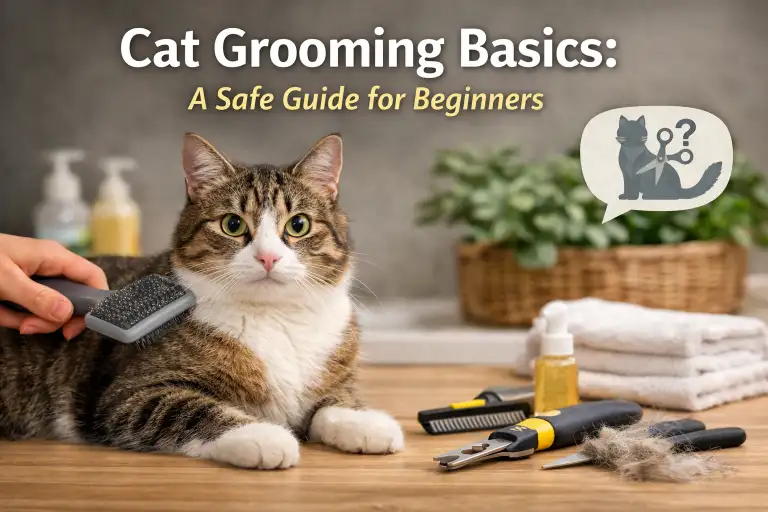
Many people assume cats don’t need help with grooming because they clean themselves. While cats are excellent self-groomers, their tongues can’t handle everything. Regular grooming by an owner plays a quiet but important role in keeping a cat healthy, comfortable, and emotionally balanced.
Recommended Dog Care Products
Based on your dog’s age, these products may help with comfort, health, grooming, and daily care.

Purina Pro Plan Veterinary Supplements
Daily probiotics for dogs to support digestive and gut health.
View on Amazon ↗
Earth Rated Poop Bags for Dogs
Leak-proof, extra thick waste bag refill rolls with lavender scent.
View on Amazon ↗
Greenies Pill Pockets for Dogs
Large dog treats for capsule medication, peanut butter flavor.
View on Amazon ↗
HONEY CARE All-Absorb Dog Wrap
Small male dog wraps, 50 count, useful for daily care support.
View on Amazon ↗
Seresto Flea & Tick Collar
Flea and tick treatment and prevention for dogs over 18 lbs.
View on Amazon ↗
Milk-Bone MaroSnacks
Small dog treats with real bone marrow in a 40 oz canister.
View on Amazon ↗
Vital Essentials Dog Treats
Freeze dried beef liver dog treats, grain free and single ingredient.
View on Amazon ↗
Stain & Odor Eliminator
Enzyme cleaner for pet stains, carpet messes, and strong odors.
View on Amazon ↗
Pur Luv Chicken Jerky Treats
Dog treats made with real chicken breast, high protein and chew-friendly.
View on Amazon ↗
Milk-Bone Flavor Snacks
Mini crunchy dog biscuits in a 36 oz canister for small rewards.
View on Amazon ↗As an Amazon Associate, we may earn from qualifying purchases.
From a health perspective, grooming helps remove loose fur, dirt, and dander before they become problems. Brushing reduces shedding and hairballs, which is especially important for indoor cats that swallow more loose hair. Grooming sessions also allow you to notice early changes such as dry skin, redness, small wounds, lumps, weight loss, or signs of parasites—things that are easy to miss when you’re not handling your cat closely.
Comfort is another major reason grooming matters. Mats, overgrown nails, and built-up oils can pull on the skin and cause constant low-level pain. Long-haired cats and senior cats are particularly vulnerable because they may struggle to groom hard-to-reach areas like the back, hips, or under the tail. Even short-haired cats benefit from brushing, especially during seasonal shedding periods.
Grooming also affects behavior and emotional well-being. Gentle, predictable grooming sessions help many cats feel secure and relaxed when handled. Over time, this can make vet visits, nail trims, and routine care less stressful. On the other hand, neglected grooming often leads to sudden, stressful interventions—such as emergency mat removal or painful nail trims—that can damage a cat’s trust.
It’s important to understand that grooming is not about making a cat look “pretty.” It’s a form of preventative care and quiet communication. When done correctly and at a pace your cat can tolerate, grooming supports physical health, reduces stress, and strengthens the bond between you and your cat.
Understanding Your Cat’s Grooming Needs
Every cat has different grooming needs. There is no one routine that works for all cats. A cat’s coat type, age, and daily lifestyle all affect how much help they need from you.
Some cats need only light grooming, while others need regular care to stay comfortable.
Short-haired cats usually need less brushing, but they still shed and can get loose hair stuck on their coat. Brushing helps reduce hairballs and keeps their skin healthy. Long-haired cats need more frequent grooming because their fur can tangle and form mats, especially around the neck, belly, legs, and tail. Mats are not just messy—they can be painful and pull on the skin.
Age also matters. Kittens should start gentle grooming early so they learn that brushing and nail trims are normal and safe. Adult cats often manage well with simple routines, but senior cats may struggle to groom themselves due to stiff joints, arthritis, or weight changes. Older cats often need extra help with brushing and hygiene, especially near the back end.
Lifestyle plays a role too. Indoor cats usually shed year-round and rely fully on you for grooming support. Outdoor cats may pick up dirt, pollen, or small debris in their coat and may need closer checks for skin issues or parasites.
Recommended Dog Care Products
Based on your dog’s age, these products may help with comfort, health, grooming, and daily care.
Purina Pro Plan Veterinary Supplements
Daily probiotics for dogs to support digestive and gut health.
View on Amazon ↗
Earth Rated Poop Bags for Dogs
Leak-proof, extra thick waste bag refill rolls with lavender scent.
View on Amazon ↗
Greenies Pill Pockets for Dogs
Large dog treats for capsule medication, peanut butter flavor.
View on Amazon ↗
HONEY CARE All-Absorb Dog Wrap
Small male dog wraps, 50 count, useful for daily care support.
View on Amazon ↗
Seresto Flea & Tick Collar
Flea and tick treatment and prevention for dogs over 18 lbs.
View on Amazon ↗
Milk-Bone MaroSnacks
Small dog treats with real bone marrow in a 40 oz canister.
View on Amazon ↗
Vital Essentials Dog Treats
Freeze dried beef liver dog treats, grain free and single ingredient.
View on Amazon ↗
Stain & Odor Eliminator
Enzyme cleaner for pet stains, carpet messes, and strong odors.
View on Amazon ↗
Pur Luv Chicken Jerky Treats
Dog treats made with real chicken breast, high protein and chew-friendly.
View on Amazon ↗
Milk-Bone Flavor Snacks
Mini crunchy dog biscuits in a 36 oz canister for small rewards.
View on Amazon ↗As an Amazon Associate, we may earn from qualifying purchases.
Cats also change with the seasons. Many cats shed more in spring and fall, which means brushing may need to happen more often during these times.
The most important thing to remember is to watch your own cat. Some cats enjoy grooming, while others need very short sessions. A calm, slow approach works better than trying to do everything at once.
Essential Cat Grooming Tasks (What to Do and How Often)
Cat grooming does not mean doing everything at once. It is better to break grooming into small, simple tasks that are done over time. Short and calm sessions work best for most cats.
Below are the main grooming tasks every cat owner should understand.
Brushing your cat
Brushing removes loose fur, dirt, and dead skin. It also helps prevent mats and reduces hairballs.
Most short-haired cats do well with brushing one or two times a week. Long-haired cats usually need brushing several times a week, and sometimes daily. During heavy shedding seasons, all cats may need more brushing.
Always brush gently and stop if your cat shows signs of stress. Never pull on knots or mats.
Trimming your cat’s nails
Cat nails keep growing and can become sharp or painful if not trimmed.
Most cats need nail trims every two to four weeks. Only trim the sharp tip of the nail. Cutting too deep can hurt your cat and cause bleeding.
If your cat becomes upset, trim one or two nails at a time instead of all of them at once.
Recommended Dog Care Products
Based on your dog’s age, these products may help with comfort, health, grooming, and daily care.
Purina Pro Plan Veterinary Supplements
Daily probiotics for dogs to support digestive and gut health.
View on Amazon ↗
Earth Rated Poop Bags for Dogs
Leak-proof, extra thick waste bag refill rolls with lavender scent.
View on Amazon ↗
Greenies Pill Pockets for Dogs
Large dog treats for capsule medication, peanut butter flavor.
View on Amazon ↗
HONEY CARE All-Absorb Dog Wrap
Small male dog wraps, 50 count, useful for daily care support.
View on Amazon ↗
Seresto Flea & Tick Collar
Flea and tick treatment and prevention for dogs over 18 lbs.
View on Amazon ↗
Milk-Bone MaroSnacks
Small dog treats with real bone marrow in a 40 oz canister.
View on Amazon ↗
Vital Essentials Dog Treats
Freeze dried beef liver dog treats, grain free and single ingredient.
View on Amazon ↗
Stain & Odor Eliminator
Enzyme cleaner for pet stains, carpet messes, and strong odors.
View on Amazon ↗
Pur Luv Chicken Jerky Treats
Dog treats made with real chicken breast, high protein and chew-friendly.
View on Amazon ↗
Milk-Bone Flavor Snacks
Mini crunchy dog biscuits in a 36 oz canister for small rewards.
View on Amazon ↗As an Amazon Associate, we may earn from qualifying purchases.
Bathing your cat
Most cats do not need regular baths. Cats clean themselves very well.
Baths may be needed if a cat gets into something sticky, dirty, or unsafe, or if a vet recommends it. Never bathe a cat just because they shed or smell slightly.
Bathing should be rare and gentle. If your cat becomes very scared, stop and consider professional help.
Ear, eye, and dental care
Healthy cat ears should look clean and smell normal. Light cleaning may be needed once in a while, but never push anything deep into the ear.
Eyes should be clear and free of thick discharge. Small eye crusts can be gently wiped with a soft cloth.
Dental care helps prevent bad breath and gum disease. Brushing a cat’s teeth is helpful, but even simple checks of the mouth can catch problems early.
Grooming task and frequency overview
| Grooming Task | How Often | Safe to Do at Home |
|---|---|---|
| Brushing | 1–7 times a week | Yes |
| Nail trimming | Every 2–4 weeks | Yes |
| Bathing | Rarely | Sometimes |
| Ear cleaning | Only if needed | Yes |
| Dental care | Daily to weekly | Yes |
The goal of grooming is comfort, not perfection. It is always okay to stop and continue another day.
Safe Handling, Stress Signals, and Grooming Mistakes to Avoid
Grooming should never feel scary or forced for your cat. How you handle your cat matters just as much as what grooming task you are doing. A calm cat is safer for you and more comfortable for them.
Safe handling basics
Always groom your cat in a quiet space where they feel safe. Use slow movements and a gentle voice. Let your cat sniff the brush or nail clipper before you start.
You do not need to hold your cat down. Forcing grooming often leads to fear, scratching, or biting. If your cat tries to leave, let them go and try again later.
Recommended Dog Care Products
Based on your dog’s age, these products may help with comfort, health, grooming, and daily care.
Purina Pro Plan Veterinary Supplements
Daily probiotics for dogs to support digestive and gut health.
View on Amazon ↗
Earth Rated Poop Bags for Dogs
Leak-proof, extra thick waste bag refill rolls with lavender scent.
View on Amazon ↗
Greenies Pill Pockets for Dogs
Large dog treats for capsule medication, peanut butter flavor.
View on Amazon ↗
HONEY CARE All-Absorb Dog Wrap
Small male dog wraps, 50 count, useful for daily care support.
View on Amazon ↗
Seresto Flea & Tick Collar
Flea and tick treatment and prevention for dogs over 18 lbs.
View on Amazon ↗
Milk-Bone MaroSnacks
Small dog treats with real bone marrow in a 40 oz canister.
View on Amazon ↗
Vital Essentials Dog Treats
Freeze dried beef liver dog treats, grain free and single ingredient.
View on Amazon ↗
Stain & Odor Eliminator
Enzyme cleaner for pet stains, carpet messes, and strong odors.
View on Amazon ↗
Pur Luv Chicken Jerky Treats
Dog treats made with real chicken breast, high protein and chew-friendly.
View on Amazon ↗
Milk-Bone Flavor Snacks
Mini crunchy dog biscuits in a 36 oz canister for small rewards.
View on Amazon ↗As an Amazon Associate, we may earn from qualifying purchases.
Short grooming sessions work best. Even one or two minutes is enough for some cats.
Stress signals to watch for
Cats show stress with their body language. Learning these signs helps you know when to stop before things get worse.
| Stress Signal | What It Means | What You Should Do |
|---|---|---|
| Ears pulled back | Fear or discomfort | Stop grooming |
| Tail swishing fast | Overstimulated | Give space |
| Growling or hissing | Warning | End the session |
| Stiff body | High stress | Let the cat leave |
Stopping early helps your cat trust grooming in the future.
Common grooming mistakes
Many grooming problems happen because owners try to do too much at once.
Avoid these common mistakes:
- Brushing too hard or too long
- Pulling on mats or tangled fur
- Cutting nails too short
- Bathing a cat when it is not needed
- Ignoring stress signs
If something feels unsafe or stressful, it is okay to pause and ask for help later.
Grooming should build trust, not fear. Going slow is always the better choice.
Grooming Frequency Guide, FAQs, and When to Get Professional Help
Knowing how often to groom your cat makes grooming feel easier and less stressful. You do not need to groom your cat every day. A simple routine is enough for most cats.
When to groom at home and when to get help
| Situation | Best Choice |
|---|---|
| Light shedding | Groom at home |
| Long hair starting to tangle | Groom at home often |
| Thick mats close to the skin | Professional groomer |
| Skin sores or swelling | Veterinarian |
| Cat becomes very aggressive | Vet or groomer advice |
If grooming feels unsafe, it is always okay to stop and ask for help.
Common questions cat owners ask
How often should I groom my cat?
Most cats need brushing one to three times a week. Long-haired cats may need more.
Do cats really need grooming help?
Yes. Cats groom themselves, but they still need help with brushing, nails, and health checks.
Can I cut mats out with scissors?
No. Cutting mats at home can easily cut the skin. Mats should be handled by a groomer or vet.
Do cats need baths?
Most cats do not need regular baths. Baths are only needed for special situations or medical reasons.
What if my cat hates grooming?
Go slow. Keep sessions short. Stop before your cat gets upset. Some cats need professional help.
Final advice for cat owners
Grooming is not about doing everything perfectly. It is about helping your cat stay clean, comfortable, and healthy. Small steps, calm handling, and patience make a big difference.
If your cat is relaxed and safe, you are doing grooming the right way.
For more detailed and expert-backed advice on cat grooming and its health benefits, check out the International Cat Care guide to grooming your cat.

Ata Ur Rehman is the founder of Pet Age in Human Years Calculator, an educational platform that provides age conversion charts and lifespan guides for dogs, cats, birds, and other companion animals. His work focuses on helping pet owners understand how animal ages translate into human years using commonly accepted age conversion formulas and published lifespan averages.
The website compiles breed and species lifespan data from kennel clubs, breed organizations, and general animal lifespan studies to present simple and easy-to-understand guides for pet owners worldwide.
This website was created to centralize animal age conversion charts into one easy reference platform for pet owners.