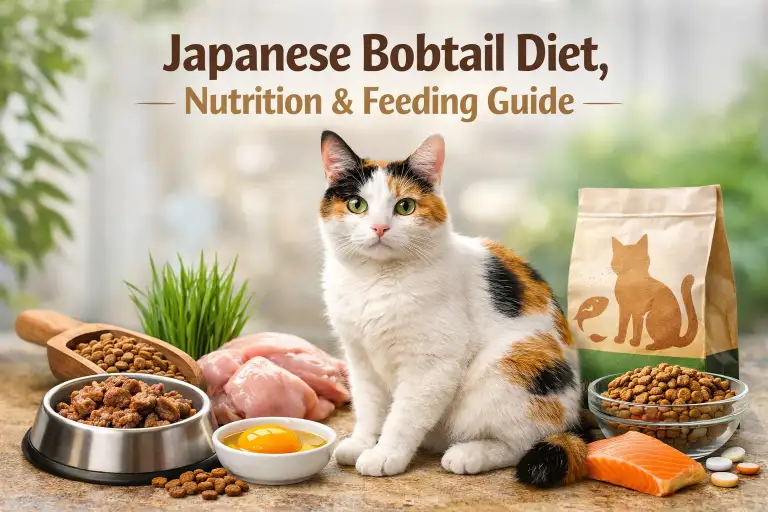
Japanese Bobtails do not require a unique or exotic diet, but their natural traits—high activity, lean build, and playful behavior—mean their nutrition should support energy, muscle maintenance, and long-term health. Like all cats, Japanese Bobtails are obligate carnivores. Their bodies are biologically designed to rely on nutrients found primarily in animal tissues, not plants.
Recommended Dog Care Products
Based on your dog’s age, these products may help with comfort, health, grooming, and daily care.

Purina Pro Plan Veterinary Supplements
Daily probiotics for dogs to support digestive and gut health.
View on Amazon ↗
Earth Rated Poop Bags for Dogs
Leak-proof, extra thick waste bag refill rolls with lavender scent.
View on Amazon ↗
Greenies Pill Pockets for Dogs
Large dog treats for capsule medication, peanut butter flavor.
View on Amazon ↗
HONEY CARE All-Absorb Dog Wrap
Small male dog wraps, 50 count, useful for daily care support.
View on Amazon ↗
Seresto Flea & Tick Collar
Flea and tick treatment and prevention for dogs over 18 lbs.
View on Amazon ↗
Milk-Bone MaroSnacks
Small dog treats with real bone marrow in a 40 oz canister.
View on Amazon ↗
Vital Essentials Dog Treats
Freeze dried beef liver dog treats, grain free and single ingredient.
View on Amazon ↗
Stain & Odor Eliminator
Enzyme cleaner for pet stains, carpet messes, and strong odors.
View on Amazon ↗
Pur Luv Chicken Jerky Treats
Dog treats made with real chicken breast, high protein and chew-friendly.
View on Amazon ↗
Milk-Bone Flavor Snacks
Mini crunchy dog biscuits in a 36 oz canister for small rewards.
View on Amazon ↗As an Amazon Associate, we may earn from qualifying purchases.
High-quality animal protein is the foundation of a healthy Japanese Bobtail diet. Protein supplies essential amino acids that cats cannot make on their own, including taurine, which is critical for heart function, vision, digestion, and reproductive health. When evaluating food, protein quality matters more than sheer percentage. Proteins derived from named animal sources are generally more biologically appropriate for cats than heavily processed or plant-based proteins.
Dietary fat is another essential component. Fat provides concentrated energy, supports skin and coat health, and helps cats absorb fat-soluble vitamins. For an active breed like the Japanese Bobtail, adequate fat helps sustain energy levels without requiring large meal volumes. However, excessive fat intake can contribute to unnecessary weight gain in indoor or neutered cats, so balance is important.
Carbohydrates play a limited role in feline nutrition. Cats can digest and use some carbohydrates, but they have no biological requirement for them. In practical terms, moderate carbohydrate levels can help with food structure and energy delivery, but they should never displace animal-based protein as the primary calorie source.
Beyond macronutrients, Japanese Bobtails rely on a precise balance of vitamins and minerals to stay healthy. Nutrients such as vitamin A, B vitamins, calcium, phosphorus, and trace minerals must be present in appropriate amounts. Because both deficiencies and excesses can cause health issues, feeding foods labeled as “complete and balanced” for cats is important for meeting these needs safely over time.
While breed traits can influence activity and appetite, individual cats vary widely. Age, lifestyle, neuter status, and overall health have a greater impact on nutritional needs than breed alone. Observing body condition, energy levels, and appetite remains more reliable than feeding based on breed reputation.
Best Food Choices for Japanese Bobtail Cats
Many owners ask what the best food is for a Japanese Bobtail. The good news is that this breed does not need special or rare food. What matters most is choosing food that matches a cat’s natural needs and daily lifestyle.
Wet food is often a strong choice for Japanese Bobtails. It contains a lot of moisture, which helps cats stay hydrated. This is important because cats naturally drink less water than they should. Wet food also smells stronger, which can help picky eaters enjoy their meals more.
Dry food is convenient and easy to store. Some cats enjoy crunching it, and it can work well in busy households. However, dry food contains less water and is usually more calorie-dense. This means it is easy to overfeed if portions are not measured carefully.
Many owners choose mixed feeding, which combines wet and dry food. This approach can give cats more moisture while keeping meals simple and flexible. Mixed feeding can also help manage cost and variety without changing the diet too often.
Recommended Dog Care Products
Based on your dog’s age, these products may help with comfort, health, grooming, and daily care.
Purina Pro Plan Veterinary Supplements
Daily probiotics for dogs to support digestive and gut health.
View on Amazon ↗
Earth Rated Poop Bags for Dogs
Leak-proof, extra thick waste bag refill rolls with lavender scent.
View on Amazon ↗
Greenies Pill Pockets for Dogs
Large dog treats for capsule medication, peanut butter flavor.
View on Amazon ↗
HONEY CARE All-Absorb Dog Wrap
Small male dog wraps, 50 count, useful for daily care support.
View on Amazon ↗
Seresto Flea & Tick Collar
Flea and tick treatment and prevention for dogs over 18 lbs.
View on Amazon ↗
Milk-Bone MaroSnacks
Small dog treats with real bone marrow in a 40 oz canister.
View on Amazon ↗
Vital Essentials Dog Treats
Freeze dried beef liver dog treats, grain free and single ingredient.
View on Amazon ↗
Stain & Odor Eliminator
Enzyme cleaner for pet stains, carpet messes, and strong odors.
View on Amazon ↗
Pur Luv Chicken Jerky Treats
Dog treats made with real chicken breast, high protein and chew-friendly.
View on Amazon ↗
Milk-Bone Flavor Snacks
Mini crunchy dog biscuits in a 36 oz canister for small rewards.
View on Amazon ↗As an Amazon Associate, we may earn from qualifying purchases.
When choosing any cat food, look for products made for cats, not other animals. The food should list animal-based ingredients near the top and state that it is “complete and balanced” for cats. This helps ensure your Japanese Bobtail gets all essential nutrients without needing extra supplements.
Grain-free food is not required for Japanese Bobtails. Some cats do well with grains, while others do not. What matters more than grains is the overall quality of the food and how your cat responds to it. If your cat maintains a healthy weight, has good energy, and a shiny coat, the food is likely working well.
How Much and How Often to Feed a Japanese Bobtail
Japanese Bobtails are active and curious cats, but that does not mean they should eat unlimited food. Feeding the right amount helps keep them lean, healthy, and full of energy.
Most adult Japanese Bobtails do best with set meal times instead of free-feeding. Free-feeding means leaving food out all day, which often leads to overeating. Scheduled meals make it easier to control portions and notice changes in appetite.
Kittens need to eat more often than adult cats because they are growing fast. Adult cats usually do well with two meals a day. Senior cats may need smaller meals or softer food, depending on their comfort and appetite.
Portion size matters more than how full the bowl looks. Dry food is very calorie-dense, so even a small amount can add up quickly. Wet food usually has fewer calories per bite, which can help cats feel full without overeating.
Spayed or neutered Japanese Bobtails often need fewer calories than before surgery. Their appetite may increase even though their energy needs drop. Watching body shape is important. You should be able to feel the ribs easily but not see them clearly.
Signs of overfeeding include steady weight gain, low energy, and begging even after meals. Signs of underfeeding include visible ribs, low energy, and constant hunger. Small portion changes over time are safer than sudden large changes.
Life Stage Feeding, Treats, and Common Feeding Mistakes
Japanese Bobtails need different feeding care as they grow and age. Kittens need more food and more meals because their bodies are growing fast. They use a lot of energy for play, learning, and muscle growth. Food made for kittens helps support this stage.
Adult Japanese Bobtails need steady meals that help them stay lean and active. This is the stage where overfeeding can slowly happen, especially for indoor cats. Watching body shape and energy level is more helpful than watching the bowl.
Recommended Dog Care Products
Based on your dog’s age, these products may help with comfort, health, grooming, and daily care.
Purina Pro Plan Veterinary Supplements
Daily probiotics for dogs to support digestive and gut health.
View on Amazon ↗
Earth Rated Poop Bags for Dogs
Leak-proof, extra thick waste bag refill rolls with lavender scent.
View on Amazon ↗
Greenies Pill Pockets for Dogs
Large dog treats for capsule medication, peanut butter flavor.
View on Amazon ↗
HONEY CARE All-Absorb Dog Wrap
Small male dog wraps, 50 count, useful for daily care support.
View on Amazon ↗
Seresto Flea & Tick Collar
Flea and tick treatment and prevention for dogs over 18 lbs.
View on Amazon ↗
Milk-Bone MaroSnacks
Small dog treats with real bone marrow in a 40 oz canister.
View on Amazon ↗
Vital Essentials Dog Treats
Freeze dried beef liver dog treats, grain free and single ingredient.
View on Amazon ↗
Stain & Odor Eliminator
Enzyme cleaner for pet stains, carpet messes, and strong odors.
View on Amazon ↗
Pur Luv Chicken Jerky Treats
Dog treats made with real chicken breast, high protein and chew-friendly.
View on Amazon ↗
Milk-Bone Flavor Snacks
Mini crunchy dog biscuits in a 36 oz canister for small rewards.
View on Amazon ↗As an Amazon Associate, we may earn from qualifying purchases.
Senior Japanese Bobtails may eat less or become picky. Some older cats prefer softer food or smaller meals. Weight loss, low appetite, or sudden changes should never be ignored and may need a vet check.
Treats should be given in small amounts. Treats are not meals and should never replace regular food. Too many treats can cause weight gain and unbalanced nutrition. Treats are best used for training, play, or bonding, not daily snacking.
Human food can be risky. Many foods people eat are too salty, fatty, or unsafe for cats. Feeding table scraps often leads to bad habits and health problems over time.
Common feeding mistakes include overfeeding because a cat seems hungry, switching foods too fast, and choosing food based only on trends instead of the cat’s needs. Another mistake is assuming a lean cat cannot gain weight.
Watching your Japanese Bobtail every day is the best guide. A healthy cat has steady energy, a healthy coat, and a stable body shape.
For more general guidance on balanced cat nutrition standards, you can visit the Association of American Feed Control Officials (AAFCO), which sets nutrient profiles used for complete and balanced cat foods: https://www.aafco.org

Ata Ur Rehman is the founder of Pet Age in Human Years Calculator, an educational platform that provides age conversion charts and lifespan guides for dogs, cats, birds, and other companion animals. His work focuses on helping pet owners understand how animal ages translate into human years using commonly accepted age conversion formulas and published lifespan averages.
The website compiles breed and species lifespan data from kennel clubs, breed organizations, and general animal lifespan studies to present simple and easy-to-understand guides for pet owners worldwide.
This website was created to centralize animal age conversion charts into one easy reference platform for pet owners.