Balinese Cat Care Guide: Daily Care, Grooming, and Home Setup
Understanding Balinese Cat Care Needs
Balinese cat care is less about managing a long coat and more about meeting intense social, mental, and emotional needs. Many owners are surprised by this. On paper, the Balinese looks like a graceful, low-shedding cat. In real life, they behave more like a highly intelligent, people-oriented companion that needs daily involvement to stay balanced and content.
Recommended Dog Care Products
Based on your dog’s age, these products may help with comfort, health, grooming, and daily care.

Purina Pro Plan Veterinary Supplements
Daily probiotics for dogs to support digestive and gut health.
View on Amazon ↗
Earth Rated Poop Bags for Dogs
Leak-proof, extra thick waste bag refill rolls with lavender scent.
View on Amazon ↗
Greenies Pill Pockets for Dogs
Large dog treats for capsule medication, peanut butter flavor.
View on Amazon ↗
HONEY CARE All-Absorb Dog Wrap
Small male dog wraps, 50 count, useful for daily care support.
View on Amazon ↗
Seresto Flea & Tick Collar
Flea and tick treatment and prevention for dogs over 18 lbs.
View on Amazon ↗
Milk-Bone MaroSnacks
Small dog treats with real bone marrow in a 40 oz canister.
View on Amazon ↗
Vital Essentials Dog Treats
Freeze dried beef liver dog treats, grain free and single ingredient.
View on Amazon ↗
Stain & Odor Eliminator
Enzyme cleaner for pet stains, carpet messes, and strong odors.
View on Amazon ↗
Pur Luv Chicken Jerky Treats
Dog treats made with real chicken breast, high protein and chew-friendly.
View on Amazon ↗
Milk-Bone Flavor Snacks
Mini crunchy dog biscuits in a 36 oz canister for small rewards.
View on Amazon ↗As an Amazon Associate, we may earn from qualifying purchases.
Balinese cats are closely related to Siamese cats, and that heritage strongly shapes their care needs. They are naturally curious, vocal, emotionally aware, and highly interactive. When these needs are met, Balinese cats are affectionate, playful, and deeply bonded to their people. When they are not, stress-related behaviors tend to appear quickly.
Unlike more independent breeds, Balinese cats do not thrive on “hands-off” care. They notice changes in routine, react to boredom faster, and form strong attachments to their humans. This doesn’t mean they are difficult to care for — it means their care must be intentional and consistent.
Balinese care needs at a glance
| Care area | What Balinese cats need | Why it matters |
|---|---|---|
| Social interaction | Daily, meaningful human engagement | Prevents anxiety and attention-seeking behaviors |
| Mental stimulation | Puzzle toys, learning, variety | Supports high intelligence and curiosity |
| Physical activity | Interactive play and climbing | Maintains lean muscle and emotional balance |
| Routine | Predictable schedules | Reduces stress and insecurity |
| Environment | Vertical space and enrichment | Prevents boredom-driven behavior problems |
One common misunderstanding is labeling Balinese cats as “high maintenance.” In reality, they are highly responsive. They respond strongly to both good care and poor care. Owners who engage with them daily often find Balinese cats easy to live with, while owners who expect independence may struggle.
Another important care factor is their sensitivity to environment and emotion. Balinese cats often pick up on household stress, schedule changes, and even their owner’s mood. This makes stable routines, enrichment, and gentle handling especially important, particularly in busy households or apartments.
Understanding these core care needs sets the foundation for everything else — daily routines, home setup, grooming, and behavior management. When you approach Balinese cat care with this mindset, most common problems become preventable rather than reactive.
Daily & Weekly Care Routine for a Balinese Cat
A Balinese cat needs daily attention and structure to stay happy. This does not mean constant work, but it does mean being involved every day. When care is steady, Balinese cats are calm, playful, and easy to live with.
Daily care tasks
Every day, your Balinese cat needs time with you. Short play sessions work better than one long session. Use toys that make your cat chase, jump, or think. This helps burn energy and keeps their mind busy.
Social time is just as important as play. Balinese cats like to follow their owners, sit nearby, and “talk.” Talking back, petting, or simply being present helps them feel secure.
Feeding should happen on a regular schedule. Balinese cats do best when meals are predictable. Always check that fresh water is available. Many Balinese cats drink more when water bowls are kept clean and placed away from food.
Recommended Dog Care Products
Based on your dog’s age, these products may help with comfort, health, grooming, and daily care.
Purina Pro Plan Veterinary Supplements
Daily probiotics for dogs to support digestive and gut health.
View on Amazon ↗
Earth Rated Poop Bags for Dogs
Leak-proof, extra thick waste bag refill rolls with lavender scent.
View on Amazon ↗
Greenies Pill Pockets for Dogs
Large dog treats for capsule medication, peanut butter flavor.
View on Amazon ↗
HONEY CARE All-Absorb Dog Wrap
Small male dog wraps, 50 count, useful for daily care support.
View on Amazon ↗
Seresto Flea & Tick Collar
Flea and tick treatment and prevention for dogs over 18 lbs.
View on Amazon ↗
Milk-Bone MaroSnacks
Small dog treats with real bone marrow in a 40 oz canister.
View on Amazon ↗
Vital Essentials Dog Treats
Freeze dried beef liver dog treats, grain free and single ingredient.
View on Amazon ↗
Stain & Odor Eliminator
Enzyme cleaner for pet stains, carpet messes, and strong odors.
View on Amazon ↗
Pur Luv Chicken Jerky Treats
Dog treats made with real chicken breast, high protein and chew-friendly.
View on Amazon ↗
Milk-Bone Flavor Snacks
Mini crunchy dog biscuits in a 36 oz canister for small rewards.
View on Amazon ↗As an Amazon Associate, we may earn from qualifying purchases.
Litter boxes should be checked daily. This breed is very clean and may avoid a dirty box. A clean litter box also helps you notice health problems early.
Weekly care tasks
Once a week, brush your Balinese cat to remove loose hair and reduce hairballs. Their coat does not mat easily, but brushing keeps the skin healthy and strengthens bonding.
Check ears, eyes, and teeth weekly. Look for redness, bad smell, or discharge. Trim nails as needed, especially if your cat climbs a lot indoors.
Take time each week to rotate toys or change play routines. Balinese cats get bored quickly if everything stays the same.
Balinese cat care routine overview
| How often | Care task | Why it helps |
|---|---|---|
| Daily | Interactive play | Reduces boredom and stress |
| Daily | Social interaction | Prevents anxiety and loneliness |
| Daily | Litter box check | Encourages good bathroom habits |
| Weekly | Brushing | Keeps coat and skin healthy |
| Weekly | Nail and ear check | Prevents injuries and infections |
This daily and weekly routine forms the heart of Balinese cat care. When these basics are followed, many behavior problems never appear.
Home Setup, Enrichment & Lifestyle Needs
A Balinese cat needs a home that keeps both the body and mind active. This breed gets bored faster than many other cats. A boring space often leads to loud meowing, attention-seeking, or trouble behaviors.
Creating a Balinese-friendly home
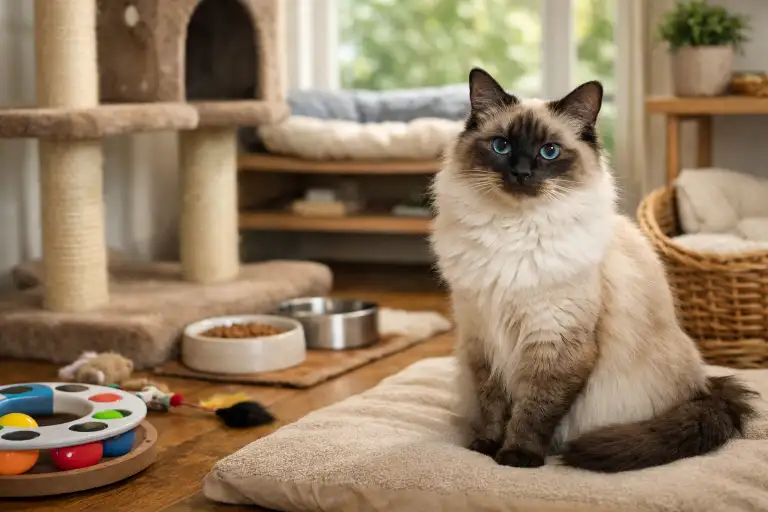
Balinese cats love to climb and watch from above. Cat trees, shelves, or window perches give them safe places to jump and rest. Vertical space is very important, especially for indoor cats.
Windows are a great source of entertainment. A safe window seat lets your cat watch birds and people outside. Always use secure screens to prevent falls.
Scratching is also a daily need. Offer both tall and flat scratchers in areas your cat uses often. This helps protect furniture and reduces stress.
Mental stimulation and play
Balinese cats are very smart. Simple toys may not hold their interest for long. Puzzle toys, rotating toys, and games that involve thinking work best.
Recommended Dog Care Products
Based on your dog’s age, these products may help with comfort, health, grooming, and daily care.
Purina Pro Plan Veterinary Supplements
Daily probiotics for dogs to support digestive and gut health.
View on Amazon ↗
Earth Rated Poop Bags for Dogs
Leak-proof, extra thick waste bag refill rolls with lavender scent.
View on Amazon ↗
Greenies Pill Pockets for Dogs
Large dog treats for capsule medication, peanut butter flavor.
View on Amazon ↗
HONEY CARE All-Absorb Dog Wrap
Small male dog wraps, 50 count, useful for daily care support.
View on Amazon ↗
Seresto Flea & Tick Collar
Flea and tick treatment and prevention for dogs over 18 lbs.
View on Amazon ↗
Milk-Bone MaroSnacks
Small dog treats with real bone marrow in a 40 oz canister.
View on Amazon ↗
Vital Essentials Dog Treats
Freeze dried beef liver dog treats, grain free and single ingredient.
View on Amazon ↗
Stain & Odor Eliminator
Enzyme cleaner for pet stains, carpet messes, and strong odors.
View on Amazon ↗
Pur Luv Chicken Jerky Treats
Dog treats made with real chicken breast, high protein and chew-friendly.
View on Amazon ↗
Milk-Bone Flavor Snacks
Mini crunchy dog biscuits in a 36 oz canister for small rewards.
View on Amazon ↗As an Amazon Associate, we may earn from qualifying purchases.
Change toys every few days instead of leaving them all out. This keeps playtime exciting and prevents boredom.
Interactive play with people is better than toys left on the floor. Your Balinese cat wants to play with you, not alone.
Living with people and other pets
Balinese cats enjoy being part of daily life. They do best in homes where someone is around often. If left alone too long, they may become lonely or anxious.
In multi-cat homes, make sure each cat has their own food bowls, litter boxes, and resting areas. This reduces tension and helps your Balinese feel safe.
Enrichment essentials for Balinese cats
| Area | What to provide | Why it helps |
|---|---|---|
| Vertical space | Cat trees, shelves | Supports climbing needs |
| Toys | Puzzle and interactive toys | Keeps the mind active |
| Windows | Safe perches | Provides daily entertainment |
| Scratching | Tall and flat scratchers | Reduces stress |
| Quiet space | Cozy resting spots | Prevents overstimulation |
A good home setup makes daily care much easier. When Balinese cats feel busy and secure, they are calmer and happier.
Common Balinese Cat Care Mistakes & Health Red Flags
Many problems with Balinese cats happen because owners do not notice small warning signs early. This breed is good at hiding stress until it becomes a bigger issue. Knowing common mistakes and red flags can help you act early.
Common care mistakes owners make
One common mistake is thinking Balinese cats are independent. They are not. When they are ignored or left alone too long, they may cry loudly, follow owners everywhere, or act out.
Another mistake is not providing enough playtime. Balinese cats need both body movement and mental work. Without this, they may knock things over, scratch furniture, or become restless.
Some owners ignore vocal behavior. Balinese cats use their voice to communicate needs. Sudden changes in how much they meow should never be ignored.
Poor routine is another issue. Feeding, play, and sleep times that change every day can make Balinese cats anxious.
Recommended Dog Care Products
Based on your dog’s age, these products may help with comfort, health, grooming, and daily care.
Purina Pro Plan Veterinary Supplements
Daily probiotics for dogs to support digestive and gut health.
View on Amazon ↗
Earth Rated Poop Bags for Dogs
Leak-proof, extra thick waste bag refill rolls with lavender scent.
View on Amazon ↗
Greenies Pill Pockets for Dogs
Large dog treats for capsule medication, peanut butter flavor.
View on Amazon ↗
HONEY CARE All-Absorb Dog Wrap
Small male dog wraps, 50 count, useful for daily care support.
View on Amazon ↗
Seresto Flea & Tick Collar
Flea and tick treatment and prevention for dogs over 18 lbs.
View on Amazon ↗
Milk-Bone MaroSnacks
Small dog treats with real bone marrow in a 40 oz canister.
View on Amazon ↗
Vital Essentials Dog Treats
Freeze dried beef liver dog treats, grain free and single ingredient.
View on Amazon ↗
Stain & Odor Eliminator
Enzyme cleaner for pet stains, carpet messes, and strong odors.
View on Amazon ↗
Pur Luv Chicken Jerky Treats
Dog treats made with real chicken breast, high protein and chew-friendly.
View on Amazon ↗
Milk-Bone Flavor Snacks
Mini crunchy dog biscuits in a 36 oz canister for small rewards.
View on Amazon ↗As an Amazon Associate, we may earn from qualifying purchases.
Health and stress red flags to watch for
Balinese cats often show stress or illness through behavior first. Small changes matter.
Common mistakes vs better care choices
| Common mistake | Why it causes problems | Better choice |
|---|---|---|
| Little daily interaction | Leads to loneliness | Daily play and talk |
| Ignoring loud meowing | Misses important signals | Watch patterns |
| Boring home setup | Causes stress behaviors | Add enrichment |
| No routine | Creates anxiety | Keep schedules steady |
Health and stress warning signs
| Sign | What it may mean | What to do |
|---|---|---|
| Sudden silence | Pain or illness | Contact a vet |
| Very loud or constant crying | Stress or boredom | Review routine |
| Weight loss | Health problem | Vet check |
| Litter box changes | Stress or illness | Act quickly |
If something feels “off,” trust your instincts. Balinese cats are very expressive, and changes usually mean something needs attention.
Balinese Care by Life Stage & Owner FAQs
Balinese cats need slightly different care as they grow. Age, energy level, and health all change over time. Adjusting care at each stage helps your cat stay happy and comfortable.
Balinese kitten care
Balinese kittens are very playful and curious. They need short play sessions many times a day. This helps them learn and burn energy without getting too wild.
Handle kittens gently and often. This builds trust and confidence. Teach good habits early, like using scratching posts and playing without biting hands.
Adult Balinese cat care
Adult Balinese cats are active and social. They still need daily play and attention, even if they seem calmer than kittens.
Mental games are important at this age. Puzzle toys and learning new routines help prevent boredom. Keep routines steady to reduce stress.
Senior Balinese cat care
Senior Balinese cats may slow down, but they still enjoy interaction. Use gentler play and softer toys.
Older cats may need more comfort. Warm beds, easy-to-reach food, and quiet spaces help them feel safe. Watch for changes in weight, movement, or behavior and speak to a vet if you notice concerns.
Balinese care by life stage
| Life stage | Main needs | Care focus |
|---|---|---|
| Kitten | Play and learning | Build good habits |
| Adult | Activity and routine | Prevent boredom |
| Senior | Comfort and health | Gentle care |
Common owner questions
Are Balinese cats high maintenance?
They are high in attention needs, not hard to care for.
Can Balinese cats be left alone?
Short periods are fine, but long hours alone can cause stress.
Do Balinese cats shed a lot?
They shed less than many long-haired cats, but still need brushing.
Are Balinese cats good for first-time owners?
Yes, if the owner has time and enjoys interaction.
For more trusted, veterinarian-backed information on cat health, behavior, and quality of life at every stage, visit Cat Friendly Homes, a resource developed by feline veterinary experts (American Association of Feline Practitioners / Feline Veterinary Medical Association). https://catfriendly.com/

Ata Ur Rehman is the founder of Pet Age in Human Years Calculator, an educational platform that provides age conversion charts and lifespan guides for dogs, cats, birds, and other companion animals. His work focuses on helping pet owners understand how animal ages translate into human years using commonly accepted age conversion formulas and published lifespan averages.
The website compiles breed and species lifespan data from kennel clubs, breed organizations, and general animal lifespan studies to present simple and easy-to-understand guides for pet owners worldwide.
This website was created to centralize animal age conversion charts into one easy reference platform for pet owners.