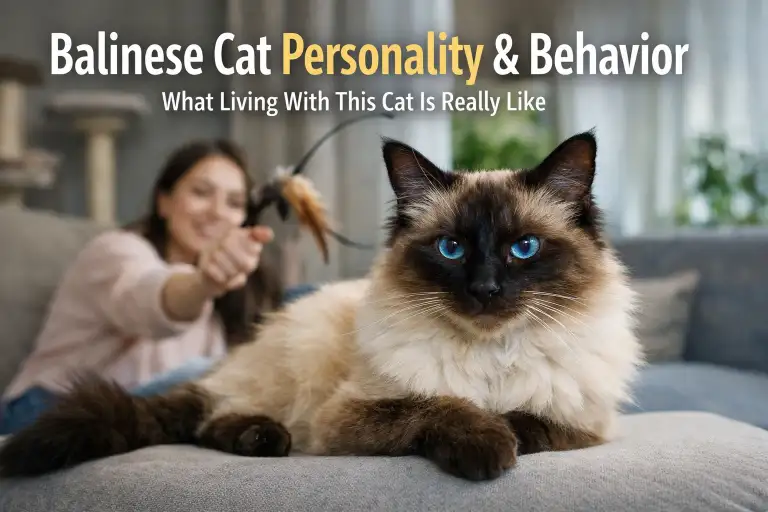
Balinese Cat Personality & Behavior: What Living With This Cat Is Really Like
Balinese Cat Personality Overview
The Balinese cat is best understood as a deeply people-oriented, emotionally expressive companion rather than a “low-maintenance” or aloof feline. While every cat is an individual, Balinese cats are widely known for forming strong social bonds, actively engaging with their environment, and seeking regular interaction with the people they trust.
Recommended Dog Care Products
Based on your dog’s age, these products may help with comfort, health, grooming, and daily care.

Purina Pro Plan Veterinary Supplements
Daily probiotics for dogs to support digestive and gut health.
View on Amazon ↗
Earth Rated Poop Bags for Dogs
Leak-proof, extra thick waste bag refill rolls with lavender scent.
View on Amazon ↗
Greenies Pill Pockets for Dogs
Large dog treats for capsule medication, peanut butter flavor.
View on Amazon ↗
HONEY CARE All-Absorb Dog Wrap
Small male dog wraps, 50 count, useful for daily care support.
View on Amazon ↗
Seresto Flea & Tick Collar
Flea and tick treatment and prevention for dogs over 18 lbs.
View on Amazon ↗
Milk-Bone MaroSnacks
Small dog treats with real bone marrow in a 40 oz canister.
View on Amazon ↗
Vital Essentials Dog Treats
Freeze dried beef liver dog treats, grain free and single ingredient.
View on Amazon ↗
Stain & Odor Eliminator
Enzyme cleaner for pet stains, carpet messes, and strong odors.
View on Amazon ↗
Pur Luv Chicken Jerky Treats
Dog treats made with real chicken breast, high protein and chew-friendly.
View on Amazon ↗
Milk-Bone Flavor Snacks
Mini crunchy dog biscuits in a 36 oz canister for small rewards.
View on Amazon ↗As an Amazon Associate, we may earn from qualifying purchases.
At their core, Balinese cats tend to combine high intelligence with emotional sensitivity. They are often quick to learn household routines, recognize patterns in human behavior, and respond noticeably to tone of voice, mood, and daily rhythms. This awareness is not about obedience or dependence—it reflects a cat that is highly attuned to its surroundings and social relationships.
Affection in Balinese cats is usually deliberate and expressive. Some enjoy curling up on a lap, while others prefer staying close by—sitting beside you, following you from room to room, or positioning themselves where they can observe and interact. This proximity-seeking behavior is often mistaken for clinginess, but in most cases it simply reflects trust and social interest rather than anxiety or insecurity.
Independence and attachment are not opposites in the Balinese personality. These cats are capable of entertaining themselves, exploring, and resting alone, yet they often choose interaction when it is available. Their independence shows up as confidence and curiosity, while their attachment appears as conversation, companionship, and a clear preference for shared space over isolation.
Because of this blend of intelligence, sensitivity, and sociability, Balinese cats tend to thrive in homes where their behavior is viewed as communication rather than demand. Understanding their personality starts with recognizing that their expressiveness is not “extra”—it is simply how this cat engages with the world.
What Shapes Balinese Cat Behavior
A Balinese cat’s behavior is shaped by both nature and life experience. While this breed is known for being social and expressive, no two Balinese cats behave in exactly the same way. Personality grows over time, based on how the cat is raised, where it lives, and how people interact with it every day.
Genetics play a role, but they do not decide everything. Balinese cats are often born curious, alert, and interested in people. These traits give them a strong starting point, but how those traits show up depends on what the cat experiences as it grows.
Early life matters a lot. Kittens that are gently handled, spoken to, and exposed to normal household sounds usually grow into more confident adults. A Balinese cat that feels safe around people from a young age is more likely to communicate openly and enjoy social time later in life.
The home environment also shapes behavior. Balinese cats do best in spaces where they feel involved, not ignored. Daily routines, quiet resting spots, window views, and chances to climb or explore all affect how relaxed or restless a cat feels. A calm, predictable home often leads to calmer behavior.
Human response is another key factor. Balinese cats tend to notice how people react to them. When communication is answered with patience and attention, the cat learns that interaction is welcome. When signals are ignored or misunderstood, the cat may repeat behaviors more often, not to be difficult, but to be understood.
Recommended Dog Care Products
Based on your dog’s age, these products may help with comfort, health, grooming, and daily care.
Purina Pro Plan Veterinary Supplements
Daily probiotics for dogs to support digestive and gut health.
View on Amazon ↗
Earth Rated Poop Bags for Dogs
Leak-proof, extra thick waste bag refill rolls with lavender scent.
View on Amazon ↗
Greenies Pill Pockets for Dogs
Large dog treats for capsule medication, peanut butter flavor.
View on Amazon ↗
HONEY CARE All-Absorb Dog Wrap
Small male dog wraps, 50 count, useful for daily care support.
View on Amazon ↗
Seresto Flea & Tick Collar
Flea and tick treatment and prevention for dogs over 18 lbs.
View on Amazon ↗
Milk-Bone MaroSnacks
Small dog treats with real bone marrow in a 40 oz canister.
View on Amazon ↗
Vital Essentials Dog Treats
Freeze dried beef liver dog treats, grain free and single ingredient.
View on Amazon ↗
Stain & Odor Eliminator
Enzyme cleaner for pet stains, carpet messes, and strong odors.
View on Amazon ↗
Pur Luv Chicken Jerky Treats
Dog treats made with real chicken breast, high protein and chew-friendly.
View on Amazon ↗
Milk-Bone Flavor Snacks
Mini crunchy dog biscuits in a 36 oz canister for small rewards.
View on Amazon ↗As an Amazon Associate, we may earn from qualifying purchases.
It is important to remember that behavior can change over time. Moving homes, changes in schedule, new people, or new pets can all influence how a Balinese cat acts. These changes usually reflect adjustment, not bad behavior.
How Balinese Cats Communicate With Humans
Balinese cats are known for being very expressive. They do not stay silent or distant when they want something. Instead, they use sounds, body movement, and eye contact to share how they feel. For many owners, this is one of the most noticeable parts of the Balinese cat personality.
Vocal sounds are a big part of how Balinese cats communicate. They often meow, chirp, or make soft talking sounds during the day. This is not random noise. Most of the time, it is a way to greet you, ask for attention, or respond when you speak to them. Many Balinese cats enjoy back-and-forth “conversations” with people they trust.
Body language is just as important as sound. A relaxed Balinese cat may walk with its tail held up, blink slowly, or sit close to you without touching. These are signs of comfort and trust. When a cat flicks its tail quickly, turns its ears sideways, or moves away, it is often saying it needs space, not that it is angry.
Some behaviors are often misunderstood. Following you around the house, sitting near your feet, or watching you closely are usually signs of interest and bonding. These cats like to stay involved in what their people are doing. This does not mean they are needy. It means they enjoy shared space and connection.
The table below helps explain common Balinese communication signals in a simple way.
| Behavior | What It May Look Like | What It Usually Means |
|---|---|---|
| Frequent meowing | Loud or regular sounds | Talking, greeting, or asking for interaction |
| Slow blinking | Eyes closing and opening slowly | Trust, comfort, and calm feelings |
| Following people | Walking room to room | Social interest and bonding |
| Tail flicking | Fast tail movement | Mild stress or too much stimulation |
Learning to notice these small signals helps owners understand what their Balinese cat is trying to say. When communication is understood, the relationship becomes calmer and more enjoyable for both the cat and the person.
Social, Play, and Daily Behavior Patterns
Daily life with a Balinese cat is usually active, social, and full of small interactions. These cats like to be part of what is happening in the home, even if they are not always in the center of attention. They often choose to stay nearby, watching, listening, and joining in when they feel comfortable.
Social behavior with people is usually warm and friendly. Balinese cats often enjoy spending time with their family members and may greet them when they enter a room. They tend to do well in homes where someone is around for part of the day, but they can also relax on their own when needed. What matters most is that they feel included, not ignored.
When it comes to other pets, many Balinese cats are curious and open. With other cats, they often enjoy gentle play and shared space, as long as introductions are calm and respectful. With dogs, their behavior depends on the dog’s energy and manners. A calm dog is more likely to be accepted than one that is loud or rough.
Recommended Dog Care Products
Based on your dog’s age, these products may help with comfort, health, grooming, and daily care.
Purina Pro Plan Veterinary Supplements
Daily probiotics for dogs to support digestive and gut health.
View on Amazon ↗
Earth Rated Poop Bags for Dogs
Leak-proof, extra thick waste bag refill rolls with lavender scent.
View on Amazon ↗
Greenies Pill Pockets for Dogs
Large dog treats for capsule medication, peanut butter flavor.
View on Amazon ↗
HONEY CARE All-Absorb Dog Wrap
Small male dog wraps, 50 count, useful for daily care support.
View on Amazon ↗
Seresto Flea & Tick Collar
Flea and tick treatment and prevention for dogs over 18 lbs.
View on Amazon ↗
Milk-Bone MaroSnacks
Small dog treats with real bone marrow in a 40 oz canister.
View on Amazon ↗
Vital Essentials Dog Treats
Freeze dried beef liver dog treats, grain free and single ingredient.
View on Amazon ↗
Stain & Odor Eliminator
Enzyme cleaner for pet stains, carpet messes, and strong odors.
View on Amazon ↗
Pur Luv Chicken Jerky Treats
Dog treats made with real chicken breast, high protein and chew-friendly.
View on Amazon ↗
Milk-Bone Flavor Snacks
Mini crunchy dog biscuits in a 36 oz canister for small rewards.
View on Amazon ↗As an Amazon Associate, we may earn from qualifying purchases.
Play is an important part of daily behavior. Balinese cats usually enjoy games that involve movement, thinking, and interaction. Chasing toys, jumping, and problem-solving play help them use both their body and their mind. Playtime is not just fun for them; it also helps them relax and feel balanced.
Sometimes owners worry when a Balinese cat seems restless or mischievous. In many cases, this is simply a sign of curiosity or boredom, not bad behavior. Exploring shelves, climbing, or inspecting new objects is normal for a cat that likes to stay mentally active.
Commonly Misunderstood Behaviors and Behavior Changes Over Time
Many Balinese cat behaviors are often misunderstood, especially by new owners. Because these cats are expressive and social, their actions can sometimes worry people who expect a quieter or more distant cat. In most cases, these behaviors are normal and healthy.
One common misunderstanding is calling Balinese cats “needy.” When a Balinese cat stays close, follows people, or talks often, it is usually showing connection, not dependence. These cats enjoy company and shared space. They still rest alone and make their own choices.
Another misunderstanding is about noise. Balinese cats are known for being vocal, but vocal does not mean unhappy. Talking is part of how they communicate. Silence does not always mean calm, and sound does not always mean stress.
Behavior can also change as a Balinese cat grows. Kittens are usually very playful, curious, and busy. Adult cats often settle into routines and become more balanced. Senior cats may play less and rest more, but they often become even more affectionate and calm. These changes are normal and happen slowly over time.
The table below explains some common behaviors that worry owners and what they usually mean.
| Behavior | Often Seen As | What It Usually Means |
|---|---|---|
| Staying close to people | Clingy | Strong bonding and trust |
| Loud or frequent talking | Problem behavior | Communication and social interest |
| Less play with age | Laziness | Normal maturity or aging |
| Quiet time or hiding | Bad mood | Need for rest or calm space |
It is important to look at behavior patterns, not single moments. A Balinese cat that feels safe and understood will usually show steady, clear behavior over time. Sudden or strong changes that last may be worth paying attention to, but most daily actions are simply part of this breed’s expressive nature.
For readers who want a deeper science-based look at how cats communicate and behave, the Cornell Feline Health Center offers clear, research-backed information on normal feline behavior and communication patterns.https://www.vet.cornell.edu/departments-centers-and-institutes/cornell-feline-health-center

Ata Ur Rehman is the founder of Pet Age in Human Years Calculator, an educational platform that provides age conversion charts and lifespan guides for dogs, cats, birds, and other companion animals. His work focuses on helping pet owners understand how animal ages translate into human years using commonly accepted age conversion formulas and published lifespan averages.
Recommended Dog Care Products
Based on your dog’s age, these products may help with comfort, health, grooming, and daily care.
Purina Pro Plan Veterinary Supplements
Daily probiotics for dogs to support digestive and gut health.
View on Amazon ↗
Earth Rated Poop Bags for Dogs
Leak-proof, extra thick waste bag refill rolls with lavender scent.
View on Amazon ↗
Greenies Pill Pockets for Dogs
Large dog treats for capsule medication, peanut butter flavor.
View on Amazon ↗
HONEY CARE All-Absorb Dog Wrap
Small male dog wraps, 50 count, useful for daily care support.
View on Amazon ↗
Seresto Flea & Tick Collar
Flea and tick treatment and prevention for dogs over 18 lbs.
View on Amazon ↗
Milk-Bone MaroSnacks
Small dog treats with real bone marrow in a 40 oz canister.
View on Amazon ↗
Vital Essentials Dog Treats
Freeze dried beef liver dog treats, grain free and single ingredient.
View on Amazon ↗
Stain & Odor Eliminator
Enzyme cleaner for pet stains, carpet messes, and strong odors.
View on Amazon ↗
Pur Luv Chicken Jerky Treats
Dog treats made with real chicken breast, high protein and chew-friendly.
View on Amazon ↗
Milk-Bone Flavor Snacks
Mini crunchy dog biscuits in a 36 oz canister for small rewards.
View on Amazon ↗As an Amazon Associate, we may earn from qualifying purchases.
The website compiles breed and species lifespan data from kennel clubs, breed organizations, and general animal lifespan studies to present simple and easy-to-understand guides for pet owners worldwide.
This website was created to centralize animal age conversion charts into one easy reference platform for pet owners.