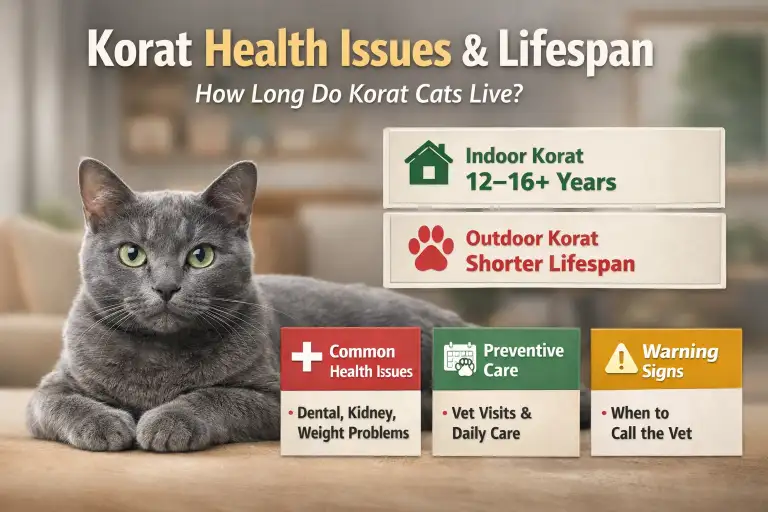
Korat cats are known not only for their striking silver-blue coats and affectionate personalities, but also for being a generally healthy and long-lived breed. For many owners, one of the first questions is simple and reassuring: how long can a Korat cat live?
Recommended Dog Care Products
Based on your dog’s age, these products may help with comfort, health, grooming, and daily care.

Purina Pro Plan Veterinary Supplements
Daily probiotics for dogs to support digestive and gut health.
View on Amazon ↗
Earth Rated Poop Bags for Dogs
Leak-proof, extra thick waste bag refill rolls with lavender scent.
View on Amazon ↗
Greenies Pill Pockets for Dogs
Large dog treats for capsule medication, peanut butter flavor.
View on Amazon ↗
HONEY CARE All-Absorb Dog Wrap
Small male dog wraps, 50 count, useful for daily care support.
View on Amazon ↗
Seresto Flea & Tick Collar
Flea and tick treatment and prevention for dogs over 18 lbs.
View on Amazon ↗
Milk-Bone MaroSnacks
Small dog treats with real bone marrow in a 40 oz canister.
View on Amazon ↗
Vital Essentials Dog Treats
Freeze dried beef liver dog treats, grain free and single ingredient.
View on Amazon ↗
Stain & Odor Eliminator
Enzyme cleaner for pet stains, carpet messes, and strong odors.
View on Amazon ↗
Pur Luv Chicken Jerky Treats
Dog treats made with real chicken breast, high protein and chew-friendly.
View on Amazon ↗
Milk-Bone Flavor Snacks
Mini crunchy dog biscuits in a 36 oz canister for small rewards.
View on Amazon ↗As an Amazon Associate, we may earn from qualifying purchases.
On average, Korat cats often live between 12 and 16 years, with many reaching their late teens when given consistent preventive care, a safe environment, and regular veterinary checkups. Like all cats, individual lifespan can vary based on genetics, lifestyle, and overall health support throughout life.
One of the biggest influences on lifespan is whether a Korat lives primarily indoors or outdoors. Indoor cats tend to live longer because they face fewer risks from accidents, parasites, infectious diseases, and environmental stressors.
Here is a simple overview:
| Lifestyle | Typical Lifespan Range | Notes |
|---|---|---|
| Indoor Korat | Longer lifespan (often 12–16+ years) | Protected from many outside dangers |
| Outdoor Korat | Shorter average lifespan | Higher exposure to injury, illness, and stress |
It’s also important to remember that lifespan numbers are only averages, not limits. Many Korat cats exceed expectations with good nutrition, dental care, healthy weight management, and early attention to subtle changes as they age.
Factors That Affect a Korat Cat’s Life Expectancy
Even though Korat cats often live a long time, their lifespan can still be different from cat to cat. Some Korats live well into their late teens, while others may have a shorter life because of lifestyle or health changes.
The good news is that many important factors are within an owner’s control.
Here are the main things that can affect how long a Korat cat lives:
Healthy Food and Weight
A balanced diet helps your Korat stay strong and active.
- Overweight cats may have more health problems
- Healthy weight supports the heart, joints, and organs
Indoor Living and Safety
Indoor Korats usually live longer because they are safer.
Recommended Dog Care Products
Based on your dog’s age, these products may help with comfort, health, grooming, and daily care.
Purina Pro Plan Veterinary Supplements
Daily probiotics for dogs to support digestive and gut health.
View on Amazon ↗
Earth Rated Poop Bags for Dogs
Leak-proof, extra thick waste bag refill rolls with lavender scent.
View on Amazon ↗
Greenies Pill Pockets for Dogs
Large dog treats for capsule medication, peanut butter flavor.
View on Amazon ↗
HONEY CARE All-Absorb Dog Wrap
Small male dog wraps, 50 count, useful for daily care support.
View on Amazon ↗
Seresto Flea & Tick Collar
Flea and tick treatment and prevention for dogs over 18 lbs.
View on Amazon ↗
Milk-Bone MaroSnacks
Small dog treats with real bone marrow in a 40 oz canister.
View on Amazon ↗
Vital Essentials Dog Treats
Freeze dried beef liver dog treats, grain free and single ingredient.
View on Amazon ↗
Stain & Odor Eliminator
Enzyme cleaner for pet stains, carpet messes, and strong odors.
View on Amazon ↗
Pur Luv Chicken Jerky Treats
Dog treats made with real chicken breast, high protein and chew-friendly.
View on Amazon ↗
Milk-Bone Flavor Snacks
Mini crunchy dog biscuits in a 36 oz canister for small rewards.
View on Amazon ↗As an Amazon Associate, we may earn from qualifying purchases.
Indoor cats avoid:
- Car accidents
- Animal fights
- Dangerous weather
- Some infections and parasites
Exercise and Play
Korat cats are smart and playful. Daily activity helps them stay healthy.
Simple ways to help:
- Play with toys
- Use climbing trees
- Give puzzle feeders
Low Stress and Routine
Cats do best when life feels calm and predictable.
A peaceful home can help reduce stress and support long-term health.
Regular Vet Checkups
Routine vet visits are one of the best ways to catch problems early.
Your vet can help with:
- Wellness exams
- Vaccines
- Dental checks
- Senior health screening
Quick checklist for a longer, healthier life:
- ✔ Feed a healthy diet
- ✔ Keep your Korat at a good weight
- ✔ Provide daily play and exercise
- ✔ Keep them indoors or supervised
- ✔ Schedule regular vet visits
Common Korat Health Issues Owners Should Know About
Korat cats are usually a healthy breed, but like all cats, they can still have some health concerns during their life. Most Korats will not face serious problems, especially with good care, but it helps to know what owners should watch for.
Recommended Dog Care Products
Based on your dog’s age, these products may help with comfort, health, grooming, and daily care.
Purina Pro Plan Veterinary Supplements
Daily probiotics for dogs to support digestive and gut health.
View on Amazon ↗
Earth Rated Poop Bags for Dogs
Leak-proof, extra thick waste bag refill rolls with lavender scent.
View on Amazon ↗
Greenies Pill Pockets for Dogs
Large dog treats for capsule medication, peanut butter flavor.
View on Amazon ↗
HONEY CARE All-Absorb Dog Wrap
Small male dog wraps, 50 count, useful for daily care support.
View on Amazon ↗
Seresto Flea & Tick Collar
Flea and tick treatment and prevention for dogs over 18 lbs.
View on Amazon ↗
Milk-Bone MaroSnacks
Small dog treats with real bone marrow in a 40 oz canister.
View on Amazon ↗
Vital Essentials Dog Treats
Freeze dried beef liver dog treats, grain free and single ingredient.
View on Amazon ↗
Stain & Odor Eliminator
Enzyme cleaner for pet stains, carpet messes, and strong odors.
View on Amazon ↗
Pur Luv Chicken Jerky Treats
Dog treats made with real chicken breast, high protein and chew-friendly.
View on Amazon ↗
Milk-Bone Flavor Snacks
Mini crunchy dog biscuits in a 36 oz canister for small rewards.
View on Amazon ↗As an Amazon Associate, we may earn from qualifying purchases.
This section is only an overview, not a way to diagnose illness.
Here are some common health areas that may affect Korat cats:
Dental (Teeth and Gum) Problems
Many cats develop dental disease as they get older.
Signs can include:
- Bad breath
- Trouble eating
- Red or swollen gums
Regular dental care can help prevent this.
Weight Gain and Obesity
If a Korat becomes overweight, it can lead to other health issues.
Extra weight may affect:
- Joints
- Energy levels
- Long-term health
Healthy food and playtime help a lot.
Kidney Health in Older Cats
Kidney changes are common in many senior cats, including Korats.
Older cats may need:
Recommended Dog Care Products
Based on your dog’s age, these products may help with comfort, health, grooming, and daily care.
Purina Pro Plan Veterinary Supplements
Daily probiotics for dogs to support digestive and gut health.
View on Amazon ↗
Earth Rated Poop Bags for Dogs
Leak-proof, extra thick waste bag refill rolls with lavender scent.
View on Amazon ↗
Greenies Pill Pockets for Dogs
Large dog treats for capsule medication, peanut butter flavor.
View on Amazon ↗
HONEY CARE All-Absorb Dog Wrap
Small male dog wraps, 50 count, useful for daily care support.
View on Amazon ↗
Seresto Flea & Tick Collar
Flea and tick treatment and prevention for dogs over 18 lbs.
View on Amazon ↗
Milk-Bone MaroSnacks
Small dog treats with real bone marrow in a 40 oz canister.
View on Amazon ↗
Vital Essentials Dog Treats
Freeze dried beef liver dog treats, grain free and single ingredient.
View on Amazon ↗
Stain & Odor Eliminator
Enzyme cleaner for pet stains, carpet messes, and strong odors.
View on Amazon ↗
Pur Luv Chicken Jerky Treats
Dog treats made with real chicken breast, high protein and chew-friendly.
View on Amazon ↗
Milk-Bone Flavor Snacks
Mini crunchy dog biscuits in a 36 oz canister for small rewards.
View on Amazon ↗As an Amazon Associate, we may earn from qualifying purchases.
- Regular vet checkups
- Routine blood and urine tests
Early detection can make a big difference.
Urinary Tract Issues
Some cats may have bladder or urinary problems.
Owners should watch for:
- Frequent litter box trips
- Straining or crying while urinating
- Accidents outside the box
These signs should always be checked by a vet.
Genetic Concerns (Rare)
Korat cats can have a few inherited health risks, but responsible breeders work to reduce these issues. Most Korats live healthy lives.
Here is a simple overview table:
| Health Area | Why It Matters | Preventive Focus |
|---|---|---|
| Dental health | Common in many cats | Vet dental checks and home care |
| Weight management | Supports long life | Healthy diet and daily activity |
| Kidney health | Often age-related | Regular senior screenings |
| Urinary health | Can become serious quickly | Hydration and litter box monitoring |
Preventive Care for a Healthy, Long-Lived Korat
The best way to help your Korat cat live a long and happy life is through good preventive care. This means doing simple health steps early, before problems become serious.
Preventive care is not about treating illness. It is about supporting wellness every day.
Here are the most important parts of keeping a Korat healthy:
Regular Vet Visits
Yearly checkups help your vet notice small changes early.
Vet visits may include:
- Full body exams
- Vaccines
- Dental checks
- Health screenings as your cat gets older
Dental Care
Healthy teeth and gums are very important.
You can support dental health by:
- Using vet-approved dental treats
- Brushing teeth if possible
- Scheduling professional cleanings when needed
Parasite Prevention
Even indoor cats can sometimes get fleas or worms.
Your vet may recommend prevention for:
- Fleas
- Ticks
- Heartworms (in some areas)
Healthy Diet and Hydration
Food and water affect almost every part of your cat’s health.
Helpful habits include:
- Feeding a balanced diet
- Avoiding too many treats
- Encouraging drinking with fresh water or fountains
Senior Cat Support
As Korats age, they may need extra care and closer monitoring.
Here is a simple timeline:
| Life Stage | Key Focus |
|---|---|
| Kitten | Vaccines, growth, healthy habits |
| Adult | Weight control, dental care, yearly exams |
| Senior | Bloodwork, kidney checks, comfort support |
Small steps over time can make a big difference in lifespan and quality of life.
Warning Signs and When to Consult a Veterinarian
Korat cats are often calm and strong, but they are also very good at hiding discomfort. This is why it is important for owners to notice small changes early.
This section is not for diagnosing illness. It is simply a guide for when it may be time to call your veterinarian.
Here are warning signs that should never be ignored:
Eating or Drinking Changes
Call your vet if your cat:
- Stops eating for a day
- Drinks much more or much less than usual
- Loses weight without reason
Litter Box Problems
Changes in bathroom habits can be serious.
Watch for:
- Straining to urinate
- Blood in urine
- Going outside the litter box
- Very frequent litter box trips
Low Energy or Hiding
A healthy Korat is usually alert and interested in daily life.
Be cautious if your cat:
- Sleeps much more than normal
- Hides often
- Seems weak or unusually quiet
Breathing or Movement Changes
Breathing should be calm and steady.
Contact a vet if you notice:
- Fast or hard breathing
- Limping
- Trouble jumping or walking
Sudden Behavior Changes
Cats often show stress or illness through behavior.
Examples include:
- Aggression
- Crying more than usual
- Avoiding touch
Here is a quick guide:
| Sign | Why It Shouldn’t Be Ignored |
|---|---|
| Not eating for 24 hours | Cats can decline quickly |
| Straining in the litter box | Urinary issues may be urgent |
| Sudden hiding or weakness | Often an early warning sign |
| Rapid breathing | Needs prompt vet attention |
If you ever feel unsure, it is always okay to call your veterinarian for guidance.
For more trusted information on feline wellness and preventive care, you can visit the American Association of Feline Practitioners (AAFP), which offers expert resources for cat owners.

Ata Ur Rehman is the founder of Pet Age in Human Years Calculator, an educational platform that provides age conversion charts and lifespan guides for dogs, cats, birds, and other companion animals. His work focuses on helping pet owners understand how animal ages translate into human years using commonly accepted age conversion formulas and published lifespan averages.
The website compiles breed and species lifespan data from kennel clubs, breed organizations, and general animal lifespan studies to present simple and easy-to-understand guides for pet owners worldwide.
This website was created to centralize animal age conversion charts into one easy reference platform for pet owners.