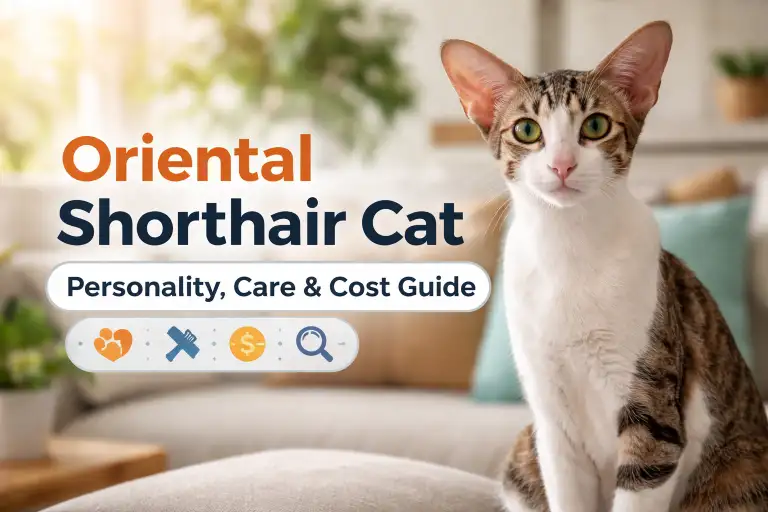
If there’s one thing that truly defines the Oriental Shorthair cat, it’s personality. This breed isn’t just affectionate or intelligent in a generic sense—it’s deeply people-oriented, emotionally expressive, and constantly involved in your daily life. Owners often describe living with an Oriental Shorthair as living with a “tiny, opinionated roommate” rather than a typical pet cat.
Before diving into the nuances, here’s a quick, skimmable snapshot of what most owners experience.
| Trait | What Owners Actually Experience |
|---|---|
| Affection level | Extremely high; seeks frequent contact and interaction |
| Independence | Low; prefers constant engagement over solitude |
| Vocalization | Frequent and expressive, often “conversational” |
| Intelligence | Very high; quickly learns routines and patterns |
| Playfulness | High and persistent, even in adulthood |
| Attention needs | Intense; boredom often leads to mischief |
What makes the Oriental Shorthair personality unique is how socially driven it is. These cats don’t just enjoy human company—they actively crave it. Many will follow their owners from room to room, supervise household tasks, and insert themselves into conversations with a wide range of chirps, trills, and meows. This vocal nature is often compared to the Siamese, but many owners note that Orientals tend to sound slightly softer and more varied, using different tones for different “messages.”
Affection-wise, Oriental Shorthairs bond strongly with their people. Some form a particularly intense attachment to one “chosen person,” while others spread their devotion across the entire household. They’re often happy to curl up beside you, sleep under the covers, or drape themselves across your laptop while you work. That said, they’re not always classic lap cats in the calm, sedentary sense—they want interactive closeness, not just passive cuddling.
Independence is not this breed’s strong suit. Oriental Shorthairs generally do poorly when ignored for long periods. Homes where everyone is out all day, every day, can be challenging unless the cat has another compatible pet for company. When understimulated or lonely, common behaviors include excessive vocalizing, knocking objects off surfaces, opening cabinets, or staging dramatic “protests” at closed doors.
Their intelligence adds another layer to their behavior. Oriental Shorthairs are fast learners, excellent problem-solvers, and highly observant. Many owners report their cats learning how to open doors, turn on faucets, or anticipate routines such as feeding times and bedtime with uncanny accuracy. This intelligence is a double-edged sword: when their minds are engaged, they’re delightful; when bored, they can become creatively destructive.
One common myth is that Oriental Shorthairs are “hyper” or unmanageable. In reality, their energy is purposeful, not chaotic. They thrive on interactive play, conversation, and inclusion in daily life. If those needs are met, they’re confident, affectionate, and emotionally attuned companions. If not, they make sure you notice—loudly and persistently.
In short, the Oriental Shorthair is ideal for people who want a cat that feels like a true companion, not a background presence. If you enjoy constant interaction, conversation, and a strong emotional bond, this breed can be incredibly rewarding. If you prefer a quiet, low-demand pet, this personality may quickly feel overwhelming.
Appearance, Size, Colors, and Physical Traits
The Oriental Shorthair cat has a look that many people notice right away. This breed looks slim, elegant, and very different from round-faced or fluffy cats. Some people love this unique style instantly, while others need time to appreciate it.
Here is a quick and simple overview of how an Oriental Shorthair looks.
| Feature | Description |
|---|---|
| Adult weight | Around 6–12 pounds |
| Body shape | Long, slim, and muscular |
| Legs and tail | Long and thin |
| Coat type | Short, smooth, and close to the body |
| Shedding level | Low |
| Ears | Very large and wide-set |
| Eyes | Almond-shaped |
| Colors and patterns | One of the widest ranges of any cat breed |
Oriental Shorthairs may look thin, but they are not weak. Their bodies are firm and athletic, with strong muscles under the skin. When you pick one up, they often feel heavier and stronger than they look.
One of the most famous features of this breed is the ears. They are large, open, and wide at the base, giving the cat a very alert and curious expression. The head is shaped like a long wedge, and the eyes are slanted, which adds to the sharp and elegant look.
The coat is very short and lies flat against the body. Because of this, grooming is easy and shedding is usually low. Many owners only need to brush their cat once a week or even less.
Color is where the Oriental Shorthair truly stands out. This breed comes in dozens of colors and patterns, including solid colors, tabby, smoke, shaded, and bicolor. You can find Oriental Shorthairs in black, white, blue, cream, chocolate, cinnamon, and many other shades. This wide color range is one reason the breed was created in the first place.
Compared to the Siamese, Oriental Shorthairs have the same body shape but do not have color-point markings. Instead, their full body shows one clear color or pattern, which makes each cat look very unique.
Because of their short coat and slim body, Oriental Shorthairs are more sensitive to cold than thicker-coated cats. Many enjoy warm spots in the house, sunny windows, or curling up under blankets.
Lifestyle Compatibility: Is the Oriental Shorthair Right for You?
The Oriental Shorthair cat is not a “background pet.” This breed likes to be involved in everything you do. Before choosing one, it is important to see if your home and lifestyle match their needs.
Here is a simple table to help you quickly understand where this breed fits best.
| Home or Lifestyle | Is It a Good Match? | Simple Explanation |
|---|---|---|
| Apartment living | Yes | Stays active indoors if played with daily |
| House with space | Yes | Enjoys room to explore and climb |
| First-time cat owners | Maybe | Needs time, attention, and patience |
| Families with children | Yes | Likes play and social homes |
| Seniors or quiet homes | Often no | Needs more interaction than quiet breeds |
| Long work hours | Risky | Can feel lonely if left alone too much |
| Multi-pet homes | Yes | Often enjoys other cats or friendly dogs |
| Single-cat home | Depends | Needs a lot of human attention |
Oriental Shorthairs do best in homes where someone is around often. They like company and do not enjoy being alone all day. People who work from home, families, or homes with another pet are usually a good match.
This breed is usually great for apartment living. They do not need a yard, but they do need daily playtime. Toys, climbing trees, and puzzle feeders help keep them busy and happy indoors.
With children, Oriental Shorthairs are usually friendly and playful. They do well with kids who are gentle and respectful. Loud noise or rough handling can stress them, so teaching children how to interact kindly is important.
In homes with other pets, Oriental Shorthairs often do well. They usually enjoy having another cat for company and can live with dogs if the dog is calm and friendly. Slow and careful introductions always help.
First-time cat owners can succeed with this breed, but only if they understand that this is a high-attention cat. If you want a quiet, independent pet, this breed may feel like too much work.
Oriental Shorthairs are best kept as indoor cats. Their friendly nature makes them less cautious outside, and their short coat does not protect them well from cold weather.
In simple terms, this breed is perfect for people who want a social, playful, and loving cat. It is not ideal for people who are away most of the day or prefer a low-interaction pet.
Care Needs: Activity, Grooming, Health, and Lifespan
Caring for an Oriental Shorthair cat is not hard, but it does take time and attention. This breed needs more play and social time than many other cats, even though grooming is easy.
Here is a quick care overview to make things simple.
| Care Area | What to Expect |
|---|---|
| Activity level | High; needs daily play |
| Mental needs | Very high; gets bored easily |
| Grooming | Easy and low effort |
| Shedding | Low |
| Cold sensitivity | High |
| Average lifespan | About 12–15 years or more |
| Common health concerns | Dental issues, some inherited conditions |
Oriental Shorthairs are active cats. They need daily playtime with their owners. Wand toys, balls, and games like fetch work very well. Short play sessions spread through the day are better than one long session.
Mental activity is just as important as physical play. These cats like puzzle toys, food games, and learning routines. When bored, they may meow a lot, climb furniture, or get into places they should not.
Grooming is simple because the coat is short and smooth. A quick brush once a week is usually enough. Many owners use a soft brush or even a damp cloth to remove loose hair. Bathing is rarely needed.
Because of their large ears, ear cleaning is important. Dirt can build up more easily than in other breeds. Dental care also matters. Oriental Shorthairs are more likely to have dental problems, so brushing teeth or using dental treats can help.
This breed feels cold easily. They enjoy warm beds, blankets, and sunny spots in the house. In colder homes, sweaters or heated beds are often appreciated.
Oriental Shorthairs often live long lives, especially when kept indoors and given regular vet care. Some health issues are more common in this breed, such as dental disease and certain inherited conditions. Regular checkups help catch problems early.
Overall, this breed is easy to care for physically but needs strong emotional and mental care. Time, play, and attention are just as important as food and vet visits.
Cost, Pros & Cons, and Similar Breeds
Before bringing home an Oriental Shorthair cat, it is important to understand the cost and decide if the good points match your lifestyle. This breed can be very rewarding, but it is not the right choice for everyone.
Here is a simple look at the usual costs.
| Expense Type | What to Expect |
|---|---|
| Kitten price | Medium to high, depending on breeder |
| Food and supplies | Average monthly cost |
| Grooming | Low cost |
| Vet care | Regular checkups recommended |
| Pet insurance | Often a good idea for this breed |
Oriental Shorthair kittens usually cost more than mixed-breed cats. The price depends on the breeder, location, and kitten quality. Ongoing costs are normal for a cat, but vet care may cost more if health issues appear later in life.
Now, here is a clear look at the pros and cons.
| Pros | Cons |
|---|---|
| Very loving and social | Needs a lot of attention |
| Smart and playful | Can get bored easily |
| Low grooming needs | Very talkative |
| Friendly with people and pets | Does not like being alone |
This breed is perfect for people who want a cat that feels like a close companion. If you enjoy talking to your pet, playing often, and spending time together, this cat can be a great match. If you are busy all day or want a quiet pet, this breed may feel overwhelming.
Some people also compare Oriental Shorthairs to similar breeds. Here is a simple comparison.
| Breed | Energy Level | Vocal Level | Grooming Needs |
|---|---|---|---|
| Oriental Shorthair | High | High | Low |
| Siamese | High | Very high | Low |
| Devon Rex | High | Medium | Medium |
| Cornish Rex | Very high | Medium | Low |
Oriental Shorthairs are a good choice for people who like active, social, and expressive cats. Other breeds may be better for people who want quieter or more independent pets.
For official breed standards and detailed registration information, you can also refer to the Cat Fanciers’ Association (CFA) Oriental Shorthair breed profile, which provides trusted, breeder-verified details about this cat breed.

Ata Ur Rehman is the founder of Pet Age in Human Years Calculator, an educational platform that provides age conversion charts and lifespan guides for dogs, cats, birds, and other companion animals. His work focuses on helping pet owners understand how animal ages translate into human years using commonly accepted age conversion formulas and published lifespan averages.
The website compiles breed and species lifespan data from kennel clubs, breed organizations, and general animal lifespan studies to present simple and easy-to-understand guides for pet owners worldwide.
This website was created to centralize animal age conversion charts into one easy reference platform for pet owners.