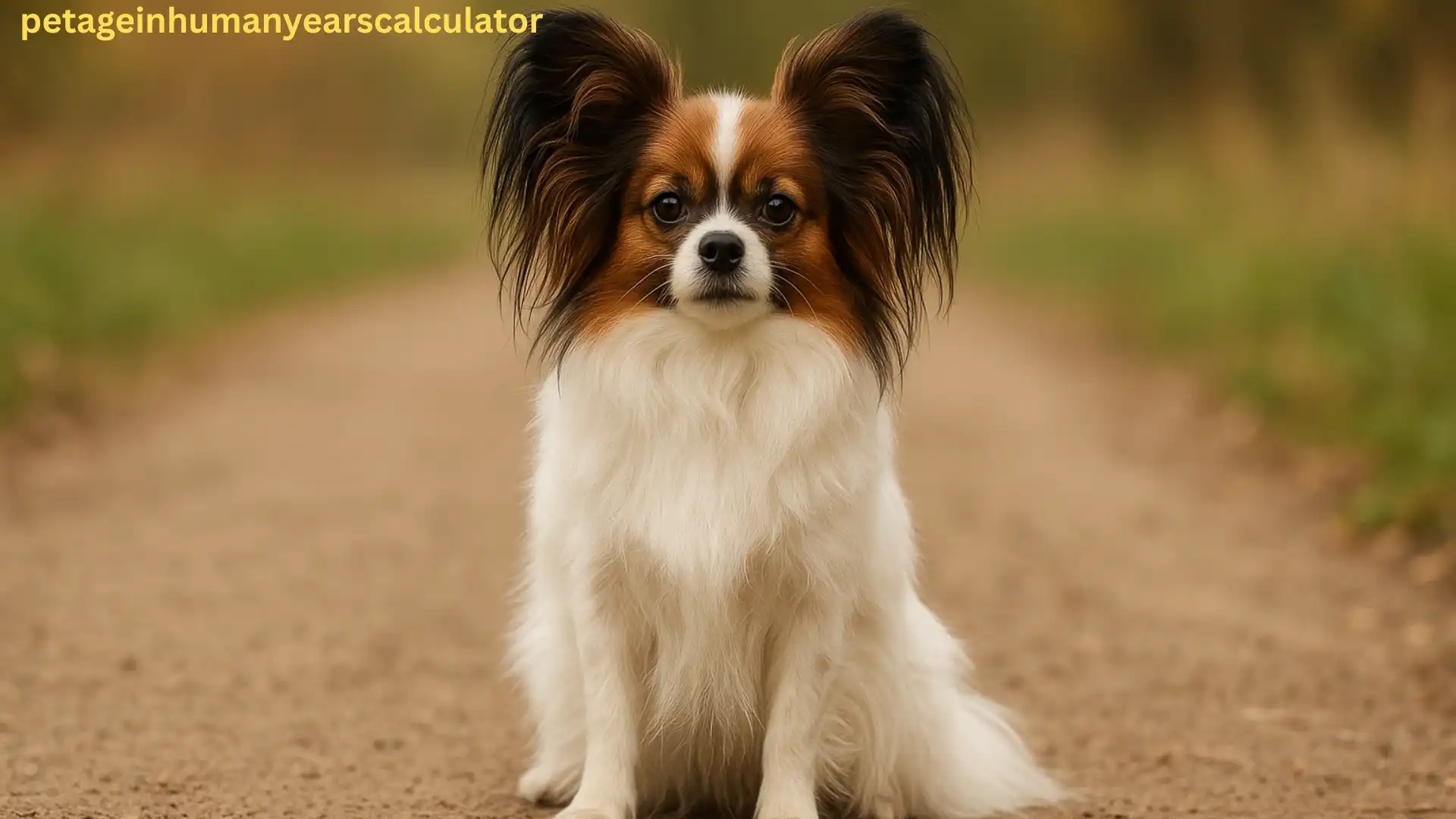
The Papillon is one of the longest-living toy dog breeds, with an average lifespan of 14 to 16 years. Known for its intelligence, butterfly-shaped ears, and energetic personality, the Papillon often remains active and alert well into its senior years. Understanding the Papillon lifespan chart, growth stages, and aging process can help owners provide better care throughout every stage of life.
This guide explains how long Papillons usually live, when they stop growing, when they become seniors, and which health factors most affect lifespan. You’ll also find a Papillon age stages chart, growth milestones, and lifespan-related care information designed to help owners better understand the breed’s long-term development.
If you want a more accurate estimate of your dog’s age and life stage, you can also use our Papillon Dog Age Calculator to compare your Papillon’s age in human years.
Papillon Lifespan & Quick Facts
Papillons typically live between 14 and 16 years, although some live even longer with proper care, dental hygiene, regular exercise, and routine veterinary checkups. Their small size and generally healthy genetics contribute to their long lifespan compared to many medium and large dog breeds.
Most Papillons remain energetic and active well into their senior years. However, aging signs may begin to appear around 8 or 9 years old. Understanding the different life stages of a Papillon helps owners adjust exercise, nutrition, and daily care over time.
If you want to compare your dog’s age more accurately, you can also use our Papillon Dog Age Calculator to estimate your Papillon’s age in human years and better understand its current life stage.
Papillon Appearance and Breed Characteristics
The Papillon is a small toy breed originally developed in Europe and recognized for its upright butterfly-shaped ears. Despite its delicate appearance, the breed is athletic, alert, and surprisingly sturdy for its size.
Adult Papillons usually stand between 8 and 11 inches tall and weigh around 5 to 10 pounds. Their silky single coat sheds less than many double-coated breeds, and their light body structure helps support agility and long-term mobility.
The breed is also known for its high intelligence, quick learning ability, and energetic personality. These traits help many Papillons remain mentally active throughout adulthood and into their senior years.
Papillon Temperament and Lifestyle Compatibility
Papillons are affectionate, alert, and highly people-oriented dogs. They enjoy regular interaction, mental stimulation, and daily activity. Because of their adaptable size and long lifespan, Papillons fit well into apartments, family homes, and homes with seniors.
Most Papillons do well with older children and other household pets when socialized early. Their intelligence and energy level also make them highly trainable throughout different stages of life.
| Lifestyle Factor | Suitability |
|---|---|
| Apartment living | Excellent |
| First-time owners | Very suitable |
| Families with children | Good with supervision |
| Homes with cats | Usually compatible |
| Exercise needs | Moderate |
| Mental stimulation needs | High |
Papillon Training, Exercise, and Daily Care
Papillons are highly intelligent dogs that respond best to positive reinforcement and short, consistent training sessions. Early training and socialization help prevent excessive barking and improve confidence throughout adulthood.
Even though they are small dogs, Papillons require daily exercise and mental stimulation to stay healthy. Short walks, indoor play, and interactive games are usually enough to maintain a healthy activity level.
Dental care is especially important because small breeds are more prone to dental disease as they age. Regular brushing, healthy nutrition, and routine vet checkups can help support a longer lifespan.
For more detailed care information, you can also explore our related Papillon training, grooming, feeding, and cost guides throughout this breed series.
| Care Area | Papillon Needs |
|---|---|
| Daily exercise | 30–45 minutes |
| Trainability | Very high |
| Mental stimulation | High |
| Grooming level | Low to moderate |
| Shedding level | Low |
| Dental care importance | Very high |
When Do Papillons Stop Growing?
Most Papillons reach their full height between 8 and 10 months of age. However, many continue developing muscle tone and body fullness until around 12 months. Because the Papillon is a toy breed, its growth period is shorter than medium or large dog breeds.
Although physical growth slows after the first year, mental maturity often continues into the second year. Young adult Papillons usually remain playful, energetic, and highly active during this stage.
| Growth Milestone | Typical Age |
|---|---|
| Full height reached | 8–10 months |
| Body fully filled out | Around 12 months |
| Mental maturity | 1–2 years |
| Senior stage begins | Around 8–9 years |
Papillon Lifespan, Health, and Age Stages
The Papillon lifespan typically ranges from 14 to 16 years, making this breed one of the longer-living toy dogs. With proper nutrition, dental care, exercise, and routine veterinary care, some Papillons live even longer.
Understanding how Papillons age helps owners adjust care routines during different stages of life. Puppies, adults, and senior Papillons all have different activity levels, nutritional needs, and health priorities.
To better understand your dog’s age and life stage, you can also use our Papillon Dog Age Calculator for a more detailed age comparison.
Papillon Age Stages Chart
The chart below shows the typical life stages of a Papillon from puppyhood through the senior years.
| Life Stage | Age Range | Key Characteristics |
|---|---|---|
| Puppy | 0–12 months | Rapid growth, training, socialization, high energy |
| Young Adult | 1–3 years | Full physical maturity, active lifestyle, strong learning ability |
| Adult | 4–7 years | Stable activity level, healthy maintenance stage |
| Senior | 8+ years | Gradual aging changes, increased health monitoring |
Common Health Issues That Affect Lifespan
Papillons are generally healthy dogs, but some conditions may affect quality of life and long-term lifespan if not managed early. Preventive care and regular veterinary checkups help reduce health risks as Papillons age.
| Health Issue | Impact on Health |
|---|---|
| Dental disease | Common in small breeds and may worsen with age |
| Luxating patella | Knee instability that can affect mobility |
| Progressive retinal atrophy (PRA) | Inherited eye condition that may reduce vision over time |
| Weight gain in senior years | May increase stress on joints and overall health |
Maintaining a healthy weight, consistent exercise routine, proper dental hygiene, and balanced nutrition all contribute to a longer and healthier Papillon lifespan.
For more detailed breed-specific care information, you can also explore our Papillon feeding, grooming, training, and ownership cost guides within this breed series.
What Affects a Papillon’s Lifespan?
Several factors influence how long a Papillon lives. While genetics play an important role, daily care, nutrition, exercise, dental hygiene, and weight management all have a major impact on long-term health and lifespan.
Papillons are generally healthy and long-living dogs, but maintaining consistent preventive care throughout adulthood and senior years helps reduce the risk of age-related health problems. Because small breeds are especially prone to dental disease, regular teeth cleaning and routine veterinary checkups are particularly important.
| Lifespan Factor | How It Affects Longevity |
|---|---|
| Genetics | Strong breeding lines often reduce inherited health risks |
| Dental care | Helps prevent infections and chronic health complications |
| Healthy weight | Reduces strain on joints, heart, and mobility |
| Regular exercise | Supports muscle tone, heart health, and mental stimulation |
| Balanced nutrition | Supports immune function and healthy aging |
| Routine veterinary care | Helps detect health problems earlier |
Maintaining a healthy lifestyle during every life stage can help improve both lifespan and quality of life. Many Papillons remain active, alert, and mentally sharp well into their senior years when they receive consistent care and proper nutrition.
If you want to better understand your Papillon’s current age stage and aging progression, you can also use our Papillon Dog Age Calculator for a more detailed age comparison.
Frequently Asked Questions About Papillon Lifespan
How long do Papillons usually live?
Most Papillons live between 14 and 16 years. With proper dental care, healthy nutrition, exercise, and regular veterinary visits, some Papillons may live even longer.
At what age is a Papillon considered a senior?
Most Papillons are considered seniors around 8 or 9 years old. Some remain highly active during their senior years, but aging signs such as lower energy levels or slower movement may gradually appear.
When do Papillons stop growing?
Most Papillons reach their full height by 8 to 10 months old and finish filling out physically around 12 months.
What health problems are common in Papillons?
Common Papillon health issues include dental disease, luxating patella, progressive retinal atrophy (PRA), and age-related mobility changes in senior dogs.
Are Papillons easy to care for as they age?
Yes, Papillons are generally manageable senior dogs when they receive proper exercise, healthy nutrition, dental care, and routine veterinary monitoring throughout adulthood and senior years.

Ata Ur Rehman is the founder of Pet Age in Human Years Calculator, an educational platform that provides age conversion charts and lifespan guides for dogs, cats, birds, and other companion animals. His work focuses on helping pet owners understand how animal ages translate into human years using commonly accepted age conversion formulas and published lifespan averages.
The website compiles breed and species lifespan data from kennel clubs, breed organizations, and general animal lifespan studies to present simple and easy-to-understand guides for pet owners worldwide.
This website was created to centralize animal age conversion charts into one easy reference platform for pet owners.