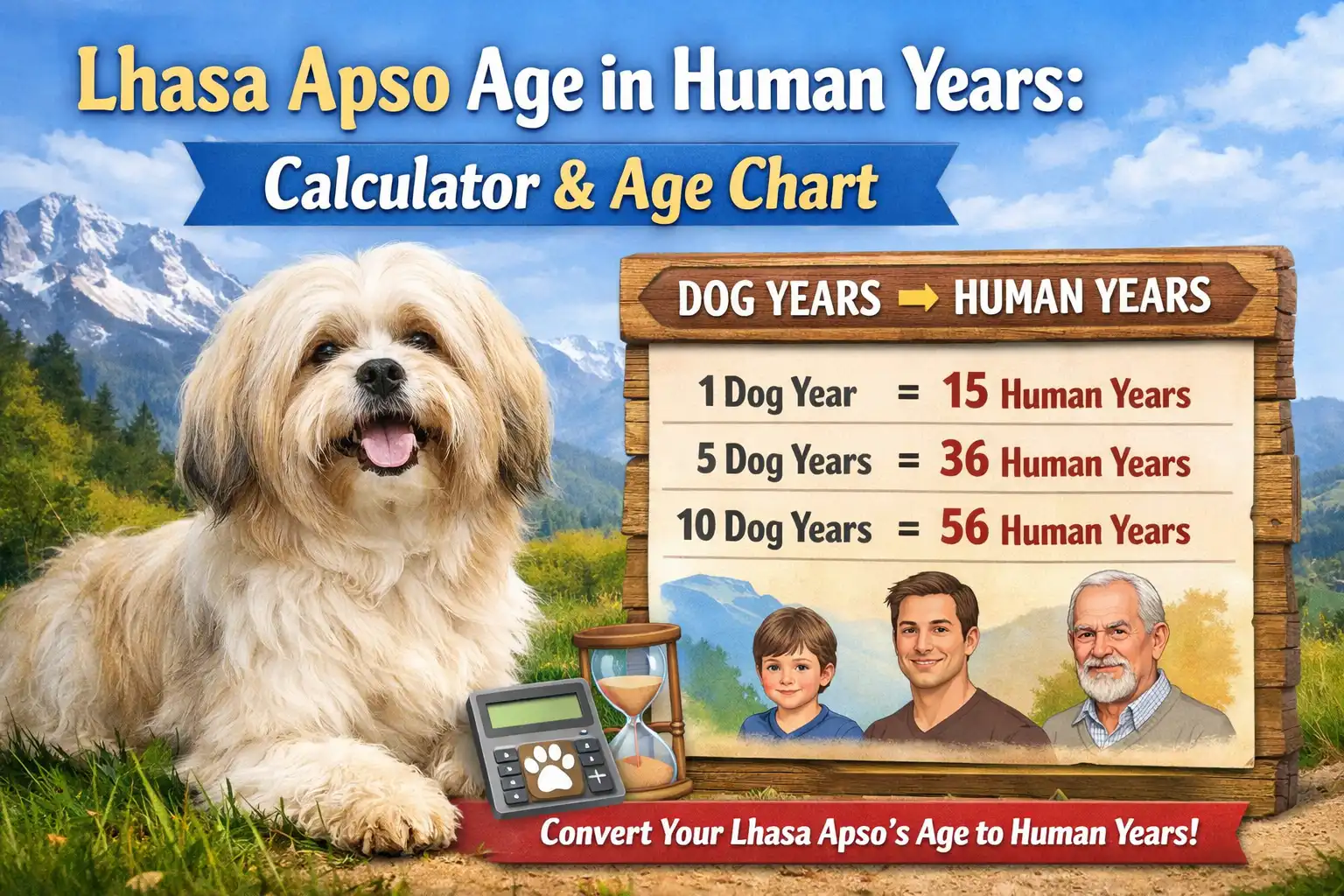
A Lhasa Apso age chart helps you understand your dog’s age in human years without relying on the old “one dog year equals seven human years” rule. That rule is too simple because dogs do not age at the same speed throughout life.
Lhasa Apsos are small dogs, and small breeds usually age differently from medium, large, and giant breeds. They grow very quickly during the first year, then their aging slows down as they become adults. This is why a Lhasa Apso’s early years count more when converting dog years to human years.
On average, a Lhasa Apso lives about 12 to 15 years. Some may live longer with healthy food, regular vet care, dental care, exercise, and a comfortable home. Their life can usually be divided into three main stages: puppy, adult, and senior.
Lhasa Apso Life Stages by Age
Before using the full Lhasa Apso age chart, it helps to understand the main life stages. A Lhasa Apso’s needs change as it moves from puppy to adult to senior age, so the chart is more useful when you connect each age range with the right care stage.
| Life Stage | Dog Age Range | What It Means |
|---|---|---|
| Puppy | 0–1 year | Fast growth, learning, social development, and high energy |
| Adult | 1–8 years | Stable energy, mature behavior, and routine health maintenance |
| Senior | 9+ years | Slower movement, more rest, and higher need for health monitoring |
This quick overview gives you the basic age stages. Later in the article, you will see a more detailed section on common aging signs and care changes for each stage.
How This Lhasa Apso Age Chart Works
This Lhasa Apso age chart converts your dog’s age into an estimated human age by looking at how small dogs usually grow and age. It does not use the outdated seven-year rule. Instead, it gives more weight to the first years of life and then uses a slower aging pattern for adult and senior years.
A Lhasa Apso grows very fast in the first year. By the end of year one, many small dogs are already similar to a human teenager in development. After the second year, aging becomes more gradual, which is why adult years add up more slowly on the chart.
The chart uses three simple ideas: early years count more, breed size matters, and adult years increase at a steadier pace. This gives a clearer estimate of your Lhasa Apso’s age in human years and helps you understand whether your dog is still young, fully adult, or entering the senior stage.
Quick Lhasa Apso Dog Years to Human Years Examples
| Lhasa Apso Age | Human Age Equivalent | Life Stage |
|---|---|---|
| 1 year | 15 years | Puppy / young adult |
| 3 years | 28 years | Adult |
| 5 years | 36 years | Adult |
| 10 years | 56 years | Senior |
These numbers are estimates. Every dog ages differently depending on health, diet, weight, exercise, genetics, and daily care.
Knowing your Lhasa Apso’s age in human years can help you choose the right food, exercise level, grooming routine, dental care, and vet schedule for each stage of life.
Lhasa Apso Age Chart to Human Years
The Lhasa Apso age chart below helps you compare your dog’s age in dog years to human years. Instead of using the old seven-year rule, this chart gives a clearer estimate based on how small dogs usually grow, mature, and age.
Lhasa Apsos are small dogs, and small breeds usually age quickly in their first two years. After that, their aging slows down compared to many larger breeds. This is why a Lhasa Apso’s age in human years is not the same as simply multiplying their dog age by seven.
Use this chart as a helpful guide, not an exact medical result. Your dog’s real aging speed can be affected by genetics, weight, food, exercise, dental health, lifestyle, and regular vet care.
Full Lhasa Apso Dog Years to Human Years Chart
| Dog Age | Human Age Equivalent | Life Stage |
|---|---|---|
| 1 year | 15 years | Puppy / young adult |
| 2 years | 24 years | Young adult |
| 3 years | 28 years | Adult |
| 4 years | 32 years | Adult |
| 5 years | 36 years | Adult |
| 6 years | 40 years | Adult |
| 7 years | 44 years | Adult |
| 8 years | 48 years | Mature adult |
| 9 years | 52 years | Senior |
| 10 years | 56 years | Senior |
| 11 years | 60 years | Senior |
| 12 years | 64 years | Senior |
| 13 years | 68 years | Senior |
| 14 years | 72 years | Senior |
| 15 years | 76 years | Senior |
If your Lhasa Apso is around 1 year old, it is similar to a human teenager. Between 3 and 8 years, most Lhasa Apsos are in their adult stage. Around 9 years and older, many Lhasa Apsos are considered seniors and may need more careful health monitoring.
If you want a faster result for your dog’s exact age, use the Lhasa Apso Dog Age Calculator. This chart gives the full age breakdown, while the calculator gives a quick estimate based on your dog’s age.
Lhasa Apso Life Stages and Aging Signs
A Lhasa Apso goes through different life stages as it gets older. Knowing these stages helps you understand when your dog may need changes in food, exercise, grooming, dental care, and vet visits.
The puppy stage usually lasts from birth to about 1 year. During this time, Lhasa Apsos grow quickly, learn routines, build confidence, and need early training, social time, and proper nutrition.
The adult stage usually starts around 1 year and continues until about 8 years. Adult Lhasa Apsos are often more settled, but they still need daily activity, weight control, coat care, dental care, and regular health checks.
The senior stage often begins around 9 years of age. Senior Lhasa Apsos may move more slowly, sleep more, gain weight more easily, or show changes in eyesight, hearing, teeth, joints, or energy level.
Common Lhasa Apso Aging Signs by Life Stage
| Life Stage | Age Range | Common Changes |
|---|---|---|
| Puppy | 0–1 year | Fast growth, high energy, teething, learning, and social development |
| Adult | 1–8 years | Stable behavior, steady energy, full coat care needs, and routine dental maintenance |
| Senior | 9+ years | Slower movement, more rest, possible vision changes, dental issues, stiffness, and lower energy |
Not all Lhasa Apsos age at the same speed. Some stay active well into their senior years, while others slow down earlier. Watch for small changes in movement, appetite, weight, sleep, mood, and daily habits so you can adjust care when needed.
How to Help Your Lhasa Apso Age Healthier
Once you understand your Lhasa Apso’s age in human years, it becomes easier to adjust care for the right life stage. A puppy, adult, and senior Lhasa Apso will not need the same food, exercise, grooming, or health routine.
Food should match your dog’s age and activity level. Puppies need food that supports growth. Adult Lhasa Apsos need balanced meals to maintain a healthy weight. Senior dogs may need easier-to-chew food, fewer calories, or a diet recommended by a vet.
Exercise should also change with age. Puppies do better with short play sessions. Adult dogs usually enjoy daily walks and light play. Senior Lhasa Apsos still need movement, but slower walks and gentle activity are usually better for comfort.
Dental care is especially important for small dogs like the Lhasa Apso. Regular brushing, dental checks, and early treatment can help reduce pain, tooth loss, bad breath, and eating problems as your dog gets older.
Regular vet visits help catch age-related problems early. As your Lhasa Apso becomes senior, it is important to watch changes in weight, joints, teeth, eyes, hearing, skin, appetite, and energy level more closely.
Comfort becomes more important in the senior years. Soft bedding, easy access to food and water, calm routines, and gentle handling can help an older Lhasa Apso feel safe and relaxed.
Lhasa Apso Care Focus by Age
| Age Stage | Care Focus |
|---|---|
| Puppy | Growth, training, social time, grooming habits, safe play, and early vet care |
| Adult | Weight control, daily exercise, coat care, dental care, balanced meals, and regular health checks |
| Senior | Joint comfort, dental monitoring, softer routines, weight control, easier movement, and more frequent vet checks |
Small care changes can make a big difference over time. When you know where your Lhasa Apso sits on the age chart, you can support the right routine for each stage of life.
Want the Exact Result? Use the Lhasa Apso Dog Age Calculator
The Lhasa Apso age chart gives you a full year-by-year estimate, but the fastest way to check your dog’s age is by using the Lhasa Apso Dog Age Calculator.
Use the calculator if you want a quick result for your Lhasa Apso’s current age in human years. This age chart is useful for understanding the full aging pattern, while the calculator is better for getting a direct answer instantly.
Check your Lhasa Apso’s age in human years with the calculator.
Related Lhasa Apso Guides
After checking your Lhasa Apso’s age in human years, these related guides can help you understand the breed’s care, training, grooming, nutrition, and ownership needs more clearly.
- Lhasa Apso Dog Age Calculator
- Lhasa Apso Dog Full Guide
- Lhasa Apso Training Guide
- Lhasa Apso Grooming Basics
- Lhasa Apso Nutrition & Feeding Guide
- Lhasa Apso Cost of Ownership Guide
Lhasa Apso Age Chart FAQs
How old is a 10-year-old Lhasa Apso in human years?
A 10-year-old Lhasa Apso is about 56 years old in human years. At this age, many Lhasa Apsos are considered seniors, so it is a good time to pay closer attention to dental health, weight, joints, eyesight, hearing, and energy levels.
At what age is a Lhasa Apso considered senior?
A Lhasa Apso is usually considered senior at around 9 years old. Some dogs may show senior signs earlier or later depending on their health, weight, activity level, genetics, and daily care routine.
How long do Lhasa Apsos usually live?
Lhasa Apsos usually live about 12 to 15 years on average. Some may live longer with good nutrition, regular vet visits, dental care, healthy weight control, gentle exercise, and a comfortable home environment.
Is the seven-year dog age rule accurate for a Lhasa Apso?
No, the seven-year rule is too simple for a Lhasa Apso. Dogs age faster in their early years and then slow down as adults. Small breeds like the Lhasa Apso also age differently from larger breeds, so an age chart gives a clearer estimate.
Why do small dogs like Lhasa Apsos age differently?
Small dogs usually mature quickly in the first one to two years, then age more slowly as adults compared to many large and giant breeds. This is why a Lhasa Apso age chart is more useful than using the same simple formula for every dog breed.
What is the human age of a 15-year-old Lhasa Apso?
A 15-year-old Lhasa Apso is about 76 years old in human years. This is a senior age, so comfort, gentle movement, easy access to food and water, dental care, and regular health checks become especially important.

Ata Ur Rehman is the founder of Pet Age in Human Years Calculator, an educational platform that provides age conversion charts and lifespan guides for dogs, cats, birds, and other companion animals. His work focuses on helping pet owners understand how animal ages translate into human years using commonly accepted age conversion formulas and published lifespan averages.
The website compiles breed and species lifespan data from kennel clubs, breed organizations, and general animal lifespan studies to present simple and easy-to-understand guides for pet owners worldwide.
This website was created to centralize animal age conversion charts into one easy reference platform for pet owners.