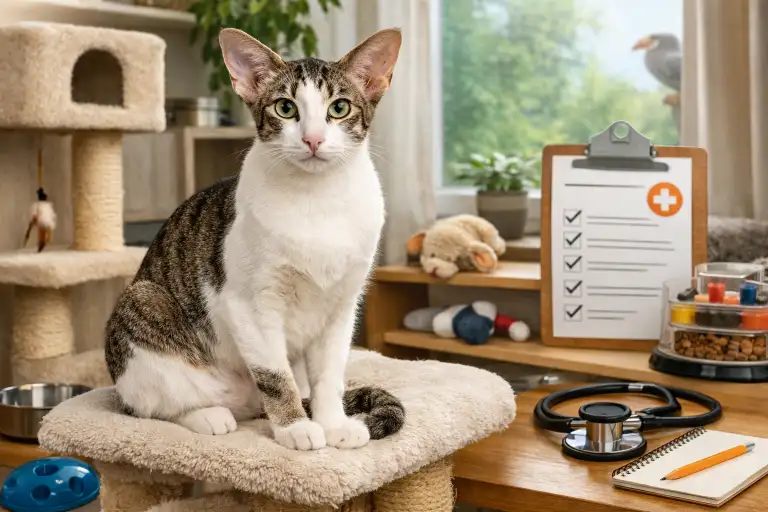
This Oriental Shorthair care guide is for people who want to do right by this breed, not just live with one. Whether you’ve just adopted an Oriental Shorthair, are considering one, or already share your home with this highly social cat, this guide focuses on what actually matters day to day — not glossy breed descriptions.
Oriental Shorthairs are often described as short-haired, elegant, and vocal, which leads many people to assume they’re easy to care for. In reality, their emotional, mental, and environmental needs are higher than average, and most care problems come from underestimating those needs rather than neglect.
This guide is designed to help you:
- Understand why Oriental Shorthairs behave the way they do
- Build a realistic daily and weekly care routine
- Prevent common behavior and stress-related issues
- Spot early health and wellbeing warning signs
- Create a home environment where this breed thrives, not just copes
You won’t find sales pitches, product roundups, or exaggerated claims here. Instead, the focus is on practical care decisions, clear expectations, and small details that experienced Oriental Shorthair owners learn over time — often the hard way.
If you’re looking for a care guide that treats Oriental Shorthairs as the intelligent, people-oriented cats they are, you’re in the right place.
Understanding Oriental Shorthair Care Needs
Oriental Shorthairs are not “quiet” or “independent” cats. They are very social, very smart, and deeply attached to their people. Knowing this helps you understand why their care needs are different from many other short-haired cats.
These cats like to be involved in everything you do. They often follow their owner from room to room, watch closely, and ask for attention using their voice. This is not bad behavior. It is how they communicate that they want interaction, play, or comfort.
Because they are so intelligent, Oriental Shorthairs get bored easily. When they are bored, they may:
- Meow more than usual
- Climb furniture or curtains
- Knock things over
- Demand attention at night
Many people think short fur means low care. This is not true for this breed. Their care is not hard, but it must be consistent. They need daily play, daily social time, and a predictable routine to feel safe.
Another important thing to understand is their body type. Oriental Shorthairs are slim and muscular. This makes weight loss or illness harder to notice. Small changes in eating, energy, or behavior can matter more for this breed than for heavier cats.
When their needs are met, Oriental Shorthairs are loving, playful, and deeply bonded to their owners. When their needs are ignored, stress and behavior problems often show up first — long before a medical issue is noticed.
Daily & Weekly Oriental Shorthair Care Routine
Oriental Shorthairs do best when their days feel predictable and active. A simple routine helps them feel safe, happy, and calm. You do not need to spend all day caring for them, but you do need to show up every day.
Daily care basics
Every day, your Oriental Shorthair needs:
- Play time with you, not just toys on the floor
- Social time, like talking, petting, or sitting near you
- Fresh food and clean water
- A clean litter box
- A quick look at their mood, energy, and appetite
Most Oriental Shorthairs need at least 20–30 minutes of active play daily. This can be split into short sessions. Wand toys, chase games, and puzzle toys work very well for this breed.
Weekly care tasks
Some care does not need to be done every day, but it should not be skipped.
This table shows a simple care schedule that most owners can follow.
Daily vs Weekly Care Checklist
| Care Task | Daily | Weekly |
|---|---|---|
| Interactive play | ✔ | — |
| Social time with owner | ✔ | — |
| Food and water check | ✔ | — |
| Litter box cleaning | ✔ | — |
| Light brushing | — | ✔ |
| Nail check or trim | — | ✔ |
| Ear and mouth check | — | ✔ |
| Weight and body feel check | — | ✔ |
Grooming and body checks
Even though they have short fur, Oriental Shorthairs still need light brushing. This helps remove loose hair and spread natural skin oils.
Because they are slim, it is important to gently feel their body once a week. If ribs or bones feel sharper than before, or if their energy drops, this can be an early warning sign.
Why routine matters
When care is skipped or changes often, Oriental Shorthairs may:
- Become louder
- Act needy or clingy
- Show stress behaviors
A steady routine helps prevent these problems before they start.
Home Setup, Enrichment & Common Care Mistakes
Oriental Shorthairs are indoor cats that need a busy and interesting home. If their space is boring, they will create their own fun — often in ways owners do not like.
Home setup that works best
These cats love to climb, watch, and explore. A good home setup includes:
- Cat trees or shelves to climb
- Window spots to watch outside
- Safe places to hide and rest
- More than one scratching post
Vertical space is very important. It helps them feel confident and keeps them active.
Mental play and boredom control
Oriental Shorthairs are very smart. They need toys that make them think, not just chase.
Good enrichment ideas include:
- Wand toys and chase games
- Puzzle feeders
- Toys that can be rotated each week
- Short training games using treats
Leaving the same toys out all the time can lead to boredom.
Common care mistakes owners make
This table shows what Oriental Shorthairs need and the mistakes that often cause problems.
Enrichment Needs vs Common Owner Mistakes
| What the Cat Needs | Good Setup | Common Mistake |
|---|---|---|
| Daily interaction | Planned playtime | Ignoring attention needs |
| Mental challenge | Puzzle toys | Only basic toys |
| Scratching options | Many scratchers | One hidden post |
| Routine | Same schedule daily | Changing times often |
Indoor vs outdoor life
Oriental Shorthairs are safest indoors. They are trusting, curious, and not street-smart. Outdoor risks include cars, animals, illness, and theft.
If you want to give outdoor experiences, leash walks or safe cat patios are better choices.
Health, Safety, Life Stages & When to See the Vet
Oriental Shorthairs often look healthy even when something is wrong. Their slim body and high energy can hide early problems, so owners need to watch small changes closely.
Common health concerns to watch for
This breed can be more sensitive than others. Problems often show up in quiet ways, such as changes in behavior or habits.
Warning Signs You Shouldn’t Ignore
| Sign | What It May Mean | What to Do |
|---|---|---|
| Eating less than usual | Pain or illness | Call your vet |
| Sudden weight loss | Hidden health issue | Vet visit needed |
| Less play or movement | Low energy or pain | Monitor closely |
| Bad breath or drooling | Dental problems | Schedule a check |
| Loud or constant crying | Stress or discomfort | Assess and contact vet |
If something feels “off,” trust your instincts. Oriental Shorthairs often show behavior changes before physical signs.
Care differences by life stage
Kittens need extra play, training, and gentle boundaries. They are learning how to interact with people and other pets.
Adult cats need steady routines and enough mental play to avoid boredom.
Senior Oriental Shorthairs may slow down, but changes can be subtle. Older cats need:
- Softer play
- Easier access to food and litter
- More frequent vet checkups
Safety at home
Because they are curious, Oriental Shorthairs can get into trouble easily. Keep these things safe:
- Loose cords and strings
- Small objects they can swallow
- Open windows without screens
- Unsafe plants
When to see a veterinarian
You should contact a vet if:
- Your cat stops eating for a day
- Behavior changes last more than 24 hours
- You notice weight loss or weakness
- Your cat hides more than usual
Regular vet visits help catch problems early and keep your cat healthy longer.
.
For more expert guidance on feline health, behavior, and care standards, you can also visit the International Cat Care (ISFM) website, which provides veterinarian-backed resources for cat owners worldwide.

Ata Ur Rehman is the founder of Pet Age in Human Years Calculator, an educational platform that provides age conversion charts and lifespan guides for dogs, cats, birds, and other companion animals. His work focuses on helping pet owners understand how animal ages translate into human years using commonly accepted age conversion formulas and published lifespan averages.
The website compiles breed and species lifespan data from kennel clubs, breed organizations, and general animal lifespan studies to present simple and easy-to-understand guides for pet owners worldwide.
This website was created to centralize animal age conversion charts into one easy reference platform for pet owners.