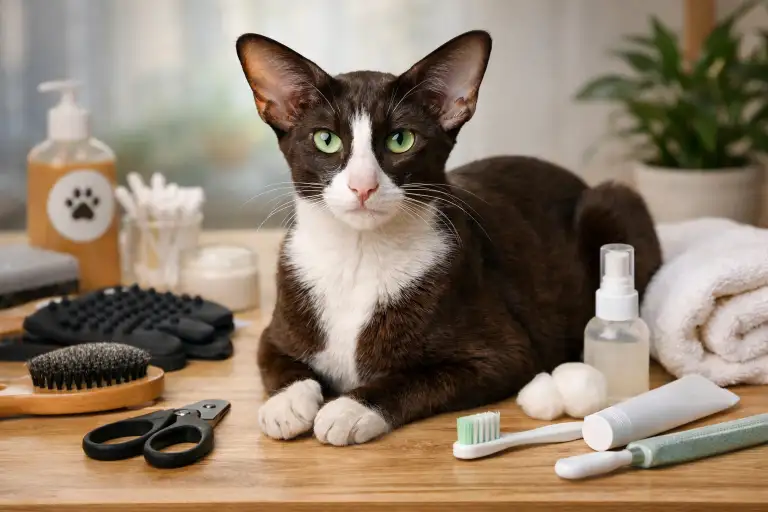
Oriental Shorthairs are often described as “low-maintenance” because of their short coat, but that description can be misleading for new owners. While they don’t mat like long-haired breeds, they have specific grooming needs tied to their coat texture, skin, and personality that are easy to overlook.
Their coat is very fine, short, and lies close to the body. Because there’s less fur to absorb oil, natural skin oils can build up more noticeably on the surface. This is why some Oriental Shorthairs feel slightly greasy compared to other short-haired cats. Grooming, in this case, is less about removing loose hair and more about distributing oils evenly and keeping the skin healthy.
Body structure also plays a role. Oriental Shorthairs tend to have a slender build with prominent bones and little padding. This makes them more sensitive to pressure during brushing or handling. Heavy-handed grooming that might not bother a sturdier cat can feel uncomfortable or even stressful for them.
Temperament is another key factor. Oriental Shorthairs are highly social, intelligent, and emotionally tuned in to their owners. Many enjoy attention, but they also have strong opinions and low tolerance for forced handling. Grooming sessions that ignore their mood or body language can quickly turn into resistance or avoidance. Successful grooming with this breed relies on calm timing, gentle handling, and short, predictable routines.
Lifestyle matters too. Most Oriental Shorthairs are indoor cats, which reduces dirt exposure but doesn’t eliminate grooming needs. Indoor cats still shed, produce skin oils, and need nail, ear, and dental care. Outdoor access, even limited, increases the need for regular checks for debris, minor skin issues, and nail wear differences.
The most important thing to understand is this: grooming an Oriental Shorthair isn’t about doing more—it’s about doing the right things, gently and consistently. When owners understand how their coat, skin, and personality work together, grooming becomes a low-stress routine rather than a struggle.
Brushing and Coat Care for Oriental Shorthairs
Even though Oriental Shorthairs have short hair, brushing is still important. Their fine coat does not trap loose hair the way thick coats do, so oils and shed hair stay close to the skin. Gentle brushing helps spread natural oils and keeps the coat smooth and healthy.
Most Oriental Shorthairs only need brushing once a week. During heavy shedding seasons, usually in spring or fall, brushing twice a week can help reduce loose hair around the home. Brushing more often than this can irritate their sensitive skin.
When brushing, use light pressure. This breed has a thin coat and a lean body, so pressing too hard can be uncomfortable. Slow, gentle strokes work best. Focus on areas where cats usually enjoy touch, like the back and sides, and be extra careful around the belly and legs.
Watch your cat’s behavior while brushing. If the tail starts flicking fast, the ears turn sideways, or your cat tries to walk away, it’s time to stop. Short brushing sessions are better than long ones. Even one or two minutes is enough if done regularly.
Good coat care is not about removing lots of fur. It is about keeping the skin calm and the coat clean-looking. A healthy Oriental Shorthair coat should feel smooth, not dry and not greasy.
Nail, Ear, Eye, and Dental Care Basics
Grooming is not only about the coat. Oriental Shorthairs also need simple care for their nails, ears, eyes, and teeth. These small tasks help prevent pain and health problems later.
Nail trimming is important because indoor cats do not wear their nails down enough on their own. Most Oriental Shorthairs need their nails trimmed every 2 to 4 weeks. Only trim the clear tip of the nail. Never cut into the pink area, called the quick, because it can bleed and hurt. If your cat pulls away or gets upset, stop and try again another day.
Ear care matters because Oriental Shorthairs have large, open ears. This makes it easier for wax and dirt to build up. Check the ears once a week. A small amount of light brown wax is normal. Redness, bad smell, or dark thick dirt is not normal and needs a vet check.
Eye care is usually simple. Some cats get a small amount of clear discharge in the corners of their eyes. This can be gently wiped away with a soft, damp cloth. Thick, yellow, or green discharge is not normal and should not be cleaned at home.
Dental care is often skipped, but it is very important. Oriental Shorthairs can have dental problems if teeth are ignored. Brushing your cat’s teeth a few times a week is ideal. If brushing is not possible, dental wipes or vet-approved options can help. Bad breath, red gums, or drooling are signs to stop and see a vet.
Here is a quick guide to help you know what is normal and what is not safe to handle at home:
| Area | Normal at Home | Stop and Get Help If |
|---|---|---|
| Nails | Clear tips trimmed | Bleeding or pain |
| Ears | Light wax | Redness, smell, dark dirt |
| Eyes | Small clear discharge | Thick or colored discharge |
| Teeth | Mild plaque | Red gums, pain, drooling |
Always keep these care sessions short. Calm handling builds trust, while forcing care can make future grooming harder.
Bathing Oriental Shorthairs — When It’s Needed and When It’s Not
Most Oriental Shorthairs do not need regular baths. Their short coat and self-grooming habits usually keep them clean. Bathing too often can dry out the skin and cause more oil problems instead of fixing them.
Some Oriental Shorthairs may feel a little oily. This is normal for the breed and does not always mean they are dirty. In many cases, gentle brushing or wiping the coat with a damp cloth is enough to freshen them up.
A bath may be needed in a few situations. This includes when your cat gets into something sticky, has visible dirt that brushing cannot remove, or has a strong smell that does not go away. Bathing should not be used as a regular grooming routine.
Before giving a bath, always think about your cat’s stress level. Many Oriental Shorthairs do not like water. Forcing a bath can break trust and make future grooming harder. If your cat becomes scared, stiff, or tries to escape, stop the bath.
Here is a simple guide to help decide if a bath is needed:
| Situation | Bath Needed? | Safer Option |
|---|---|---|
| Mild oil on coat | No | Brush or damp cloth |
| Light dirt | No | Spot cleaning |
| Sticky mess | Yes | Gentle bath |
| Strong odor | Maybe | Check with a vet |
If baths are needed, they should be rare. When in doubt, less bathing is usually better for this breed.
Grooming Frequency, Safety, and Common Mistakes
Keeping a simple grooming routine helps Oriental Shorthairs stay healthy and calm. Grooming does not need to be done every day. Doing too much can cause stress and skin problems.
Here is a simple grooming schedule most owners can follow:
| Grooming Task | How Often |
|---|---|
| Brushing | Once a week |
| Nail trimming | Every 2–4 weeks |
| Ear checks | Once a week |
| Eye cleaning | As needed |
| Dental care | A few times a week |
| Bathing | Rare, only when needed |
Safety is very important during grooming. Always watch your cat’s body language. Signs of stress include fast tail movement, ears turned sideways or flat, stiff body, growling, or trying to escape. If you see these signs, stop right away. You can always try again later.
Keep grooming sessions short. One or two minutes is often enough, especially for brushing or nail care. Calm praise and a gentle voice help your cat feel safe. Never hold your cat down or force grooming. This can cause fear and make grooming harder in the future.
Many grooming problems happen because of common mistakes, such as:
- Brushing too often or too hard
- Bathing when it is not needed
- Cutting nails too short
- Ignoring ear and dental care
- Continuing grooming when the cat is clearly stressed
If grooming feels too hard or your cat becomes very upset, it is okay to ask for help. A professional groomer or a vet can safely handle difficult grooming tasks.
For more expert guidance on keeping your cat healthy and comfortable, you can also visit the Cornell Feline Health Center’s grooming and preventive care resource.

Ata Ur Rehman is the founder of Pet Age in Human Years Calculator, an educational platform that provides age conversion charts and lifespan guides for dogs, cats, birds, and other companion animals. His work focuses on helping pet owners understand how animal ages translate into human years using commonly accepted age conversion formulas and published lifespan averages.
The website compiles breed and species lifespan data from kennel clubs, breed organizations, and general animal lifespan studies to present simple and easy-to-understand guides for pet owners worldwide.
This website was created to centralize animal age conversion charts into one easy reference platform for pet owners.