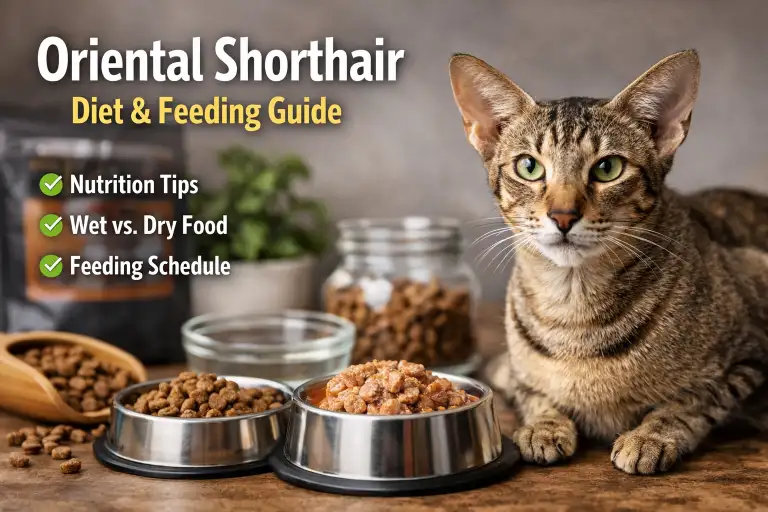
Oriental Shorthair cats have a distinctive body type and personality that directly influence how they should be fed. They are naturally lean, muscular, and highly active cats with fast metabolisms, which means their nutritional needs can look different from those of heavier-boned or more sedentary breeds. Many owners worry that their Oriental Shorthair feels too slim, but in most cases, this build is normal and healthy when supported by an appropriate diet.
Like all cats, Oriental Shorthairs are obligate carnivores. This means their bodies are biologically designed to rely on nutrients found primarily in animal tissue, especially protein and certain essential amino acids. Protein is not just important for growth; it plays a central role in maintaining muscle tone, supporting daily activity, and providing a steady source of energy for a breed known for constant movement, play, and interaction.
Because Oriental Shorthairs burn energy quickly, diet quality matters more than simply offering larger portions. Feeding more food does not automatically translate to better nutrition if the food is low in usable animal protein or overly diluted with fillers. A balanced, meat-focused diet helps support their lean physique without encouraging unhealthy weight gain or nutritional gaps.
It is also important to understand that a slim appearance does not automatically mean a cat is underfed. Oriental Shorthairs often have a visible waist and a lighter frame compared to rounder breeds. Owners should focus on overall body condition, muscle tone, energy levels, and coat quality rather than comparing their cat’s shape to other cats.
For most healthy Oriental Shorthairs, commercially prepared cat foods that meet established nutritional standards, such as those formulated to be complete and balanced, provide the safest and most reliable foundation. These diets are designed to supply essential nutrients like taurine, vitamins, and minerals in appropriate amounts without requiring owners to calculate or supplement individual components.
Understanding these core nutritional principles helps set realistic expectations and reduces feeding anxiety. When an Oriental Shorthair is alert, active, maintaining muscle, and eating a balanced diet, their naturally sleek build is usually a sign of good health rather than a cause for concern.
Best Diet for Oriental Shorthair Cats: What Nutrients Matter Most
When choosing food for an Oriental Shorthair, the goal is simple: give the body what it is built to use. These cats need food that supports energy, muscle, and overall health without overloading them with unnecessary ingredients.
Cats, including Oriental Shorthairs, get most of their nutrition from animal-based foods. This is why the balance of nutrients matters more than fancy labels or trends.
Here are the main nutrients that matter most and why they are important.
| Nutrient | Why It Matters | Simple Explanation for Owners |
|---|---|---|
| Animal Protein | Builds and maintains muscle | Keeps your cat strong, active, and lean |
| Fat | Main energy source | Gives fuel for play and daily activity |
| Carbohydrates | Extra energy, not essential | Small amounts are okay, but cats don’t rely on carbs |
| Taurine | Essential for heart, eyes, and digestion | Cats cannot make this on their own |
| Vitamins & Minerals | Support body systems | Needed in the right balance for daily health |
Protein is the most important part of an Oriental Shorthair’s diet. It helps maintain their slim muscles and supports their high energy levels. Foods made with real meat as the main ingredient are easier for cats to use and digest.
Fat is also important, even though some owners worry about it. Fat gives cats energy and helps keep their skin and coat healthy. Very low-fat diets may leave active cats feeling tired or hungry.
Carbohydrates are not a required nutrient for cats, but they are not automatically harmful either. In balanced cat food, small amounts of carbs help hold the food together and provide energy. The key is that carbs should not replace meat as the main part of the diet.
Taurine is an essential nutrient for all cats. It supports heart health, vision, and digestion. Balanced commercial cat foods already include taurine, which is why feeding complete diets is safer than trying to build nutrition piece by piece.
For most Oriental Shorthair cats, a complete and balanced commercial cat food provides all these nutrients in the right amounts. Owners do not need to chase individual nutrients as long as the overall diet is well made and designed for cats.
Wet Food vs Dry Food for Oriental Shorthairs: Which Is Better?
Many Oriental Shorthair owners wonder if wet food or dry food is the better choice. The truth is that both can work well when used correctly. The best option depends on hydration, portion control, and your cat’s daily habits.
Wet food contains a lot of water. This helps cats stay hydrated, especially because many cats do not drink much water on their own. For Oriental Shorthairs, wet food can be helpful because it supports hydration and is usually lower in calories per bite. This allows cats to eat a satisfying meal without taking in too many calories at once.
Dry food has much less moisture but is more concentrated. It contains more calories in a smaller amount. This makes portion control very important. If dry food is left out all day, it can be easy for a cat to eat more than needed without the owner noticing.
Here is a simple comparison to make the differences clear.
| Feature | Wet Food | Dry Food |
|---|---|---|
| Water content | Very high | Very low |
| Feeling of fullness | Helps cats feel full | Easy to overeat |
| Calorie density | Lower per serving | Higher per serving |
| Convenience | Needs refrigeration after opening | Easy to store and serve |
| Best use | Supporting hydration | Measured meals only |
Many owners choose mixed feeding, which means using both wet and dry food. This can give the benefits of hydration from wet food while keeping the convenience of dry food. When mixing foods, it is important to measure portions carefully so calories do not add up too fast.
There is a common belief that dry food cleans a cat’s teeth. In reality, most cats swallow kibble quickly, so dental care should not rely on food alone. Good nutrition supports overall health, but dental health usually needs separate care.
There is no single “perfect” food type for every Oriental Shorthair. What matters most is that the food is complete, balanced, and fed in the right amounts for your cat’s activity level and body condition.
How Much and How Often to Feed an Oriental Shorthair
Oriental Shorthair cats are active and curious, which often makes them seem hungry all the time. This does not always mean they need more food. It usually means they do better with the right feeding schedule and portion control.
Most Oriental Shorthairs do best with planned meals instead of food being left out all day. Scheduled meals help control calories and make it easier to notice changes in appetite.
How often you feed your cat depends mostly on age.
| Life Stage | How Often to Feed | Why This Helps |
|---|---|---|
| Kitten | Several small meals a day | Supports growth and high energy |
| Adult | 2 to 3 meals a day | Helps prevent overeating |
| Senior | 2 meals a day | Makes appetite changes easier to notice |
Portion size is more important than how full the bowl looks. Some foods are very high in calories, especially dry food. A small scoop can contain more energy than expected. This is why measuring food is helpful, even if the portion looks small.
Many Oriental Shorthairs beg for food because they are social, vocal, and food-motivated. Begging does not always mean hunger. It can also mean boredom or a desire for attention. Offering playtime or interaction instead of extra food can help.
Indoor Oriental Shorthairs usually need slightly less food than very active outdoor cats. After spaying or neutering, metabolism often slows down. Portions may need to be adjusted to prevent slow weight gain over time.
Signs that feeding amounts may need adjusting include:
- Ribs becoming hard to feel or too easy to see
- Loss of muscle along the back or legs
- Low energy or sudden weight gain
Watching your cat’s body condition, energy level, and daily habits is more useful than focusing on numbers alone.
Treats, Life Stages & Common Feeding Mistakes to Avoid
Treats can be a fun way to bond with an Oriental Shorthair, but they should stay a small part of the diet. These cats are smart and social, and they quickly learn how to ask for food. Too many treats can quietly add extra calories and unbalance the diet.
Treats should not replace regular meals. They work best when used in small amounts, such as during playtime or training. Human food should be given with care, since many common foods are not safe for cats. When in doubt, it is safer not to share.
Feeding needs also change as Oriental Shorthairs grow and age. Kittens need more frequent meals to support growth. Adult cats need steady portions to keep their lean body shape. Senior cats may eat less or prefer softer foods, and their appetite should be watched closely.
Here are some common feeding mistakes and better choices.
| Common Mistake | Why It Happens | Better Choice |
|---|---|---|
| Too many treats | Cat is vocal and demanding | Use treats sparingly |
| Thinking slim means underfed | Natural body shape | Watch muscle and energy |
| Free-feeding dry food | Easy and convenient | Serve measured meals |
| Changing food too fast | Trying new options | Switch foods slowly |
In homes with more than one cat, it is important to make sure each cat eats its own food. Food stealing can lead to one cat gaining weight while another does not get enough.
Sometimes diet questions need extra help. A veterinarian should be consulted if a cat shows sudden weight loss, constant vomiting, diarrhea, or a big change in appetite or behavior. Nutrition guides are meant to educate, not replace medical care.
For more general information on balanced feline nutrition standards, you can visit the Association of American Feed Control Officials (AAFCO), which sets nutritional guidelines for complete and balanced cat foods.

Ata Ur Rehman is the founder of Pet Age in Human Years Calculator, an educational platform that provides age conversion charts and lifespan guides for dogs, cats, birds, and other companion animals. His work focuses on helping pet owners understand how animal ages translate into human years using commonly accepted age conversion formulas and published lifespan averages.
The website compiles breed and species lifespan data from kennel clubs, breed organizations, and general animal lifespan studies to present simple and easy-to-understand guides for pet owners worldwide.
This website was created to centralize animal age conversion charts into one easy reference platform for pet owners.