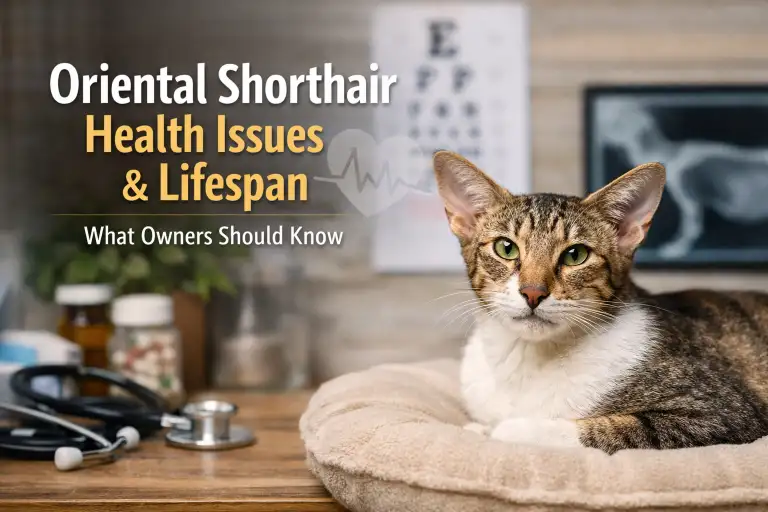
Oriental Shorthair cats are generally considered a long-lived breed, especially when kept indoors and supported with consistent, preventive care. Many owners are drawn to this breed not only for its distinctive appearance and social personality, but also for the potential to enjoy a long companionship.
On average, Oriental Shorthairs often live into their mid-teens, with some cats reaching their late teens or beyond. As with all cats, lifespan is not fixed. Genetics, lifestyle, environment, and routine veterinary oversight all play a role in how long an individual cat may live.
Living environment is one of the biggest influences. Cats who live primarily indoors are typically exposed to fewer hazards, such as traffic, infectious diseases, and injuries, which can positively affect longevity. Outdoor or partially outdoor lifestyles may shorten average lifespan due to increased risks, even in otherwise healthy cats.
It’s also important to remember that lifespan statistics describe ranges, not guarantees. A well-cared-for Oriental Shorthair may live longer than average, while another may face health challenges earlier in life despite attentive care. This variability is normal and does not reflect owner failure.
Oriental Shorthair Lifespan Overview
| Living Environment | Typical Lifespan Range | General Notes |
|---|---|---|
| Indoor only | 14–18+ years | Lower exposure to injury and infectious disease |
| Indoor with supervised outdoor access | 12–16 years | Risks vary based on environment and supervision |
| Primarily outdoor | Often shorter | Higher exposure to accidents, illness, and stressors |
Understanding typical lifespan ranges helps set realistic expectations, but it should never overshadow the focus on daily quality of life. With attentive observation, appropriate preventive care, and a stable environment, many Oriental Shorthairs enjoy long, active lives well into their senior years.
Factors That Affect an Oriental Shorthair’s Health and Longevity
How long an Oriental Shorthair lives is not based on one single thing. It is usually the result of several everyday factors working together over time. Understanding these factors can help owners know what truly matters for long-term health.
One of the most important influences is genetics. Like all purebred cats, Oriental Shorthairs may inherit certain traits from their family line. This does not mean health problems are guaranteed, but it helps explain why some cats are more sensitive than others.
Diet and body weight also play a big role. Cats that stay at a healthy weight often place less stress on their joints, heart, and organs. Over time, good nutrition supports energy levels, comfort, and overall wellbeing.
Daily activity and mental stimulation matter as well. Oriental Shorthairs are known for being curious and social. Regular play, interaction, and a stable routine help reduce stress and support both physical and emotional health.
The home environment is another key factor. This breed can be sensitive to stress and changes. Calm surroundings, predictable schedules, and positive human interaction can make a noticeable difference over the years.
Routine veterinary care helps catch small changes early. Regular checkups allow health trends to be noticed before they become bigger concerns. This kind of early awareness often supports better long-term outcomes.
Key Factors That Influence Lifespan
| Factor | How It Affects Health Over Time | Owner Awareness Focus |
|---|---|---|
| Genetics | May influence long-term health tendencies | Knowing family history when possible |
| Diet and weight | Supports organs, joints, and energy levels | Watching weight changes |
| Activity and play | Helps maintain strength and mental health | Encouraging daily movement |
| Stress and environment | Affects behavior and overall comfort | Keeping routines stable |
| Veterinary care | Helps spot changes early | Attending regular checkups |
Understanding these influences helps owners focus on what they can control without worry or pressure. No single factor determines lifespan, and small, consistent habits often matter most.
Common Health Issues Seen in Oriental Shorthair Cats
Oriental Shorthair cats are often described as active and alert, but like all cats, they can face certain health concerns over time. These are possible issues, not problems every cat will have. Many Oriental Shorthairs live long lives without serious illness, especially with regular care and observation.
Some health topics are talked about more often with this breed because of their body type and family background. Knowing about them helps owners notice changes early, not panic or self-diagnose.
Dental health is one area that comes up often. Cats may slowly develop gum or tooth problems as they age, which can affect comfort and eating habits if not noticed.
Heart-related conditions are another topic owners may read about. These issues are usually discussed at a general level and are not unique to this breed. Many cats never show signs, but awareness is helpful.
Weight and metabolism can also affect health. Oriental Shorthairs are usually slim, but changes in weight, either gain or loss, can signal that something is changing in the body.
Some cats may have sensitive digestion or stomach upset from time to time. This can vary widely between individuals and is not always serious.
It is also important to separate normal aging changes from breed-related concerns. Slower movement, longer sleep times, or mild changes in behavior can be part of growing older.
Health Issues Owners Commonly Read About
| Health Area | General Description | Typical Life Stage |
|---|---|---|
| Dental and oral health | Changes in gums, teeth, or mouth comfort | Adulthood to senior years |
| Heart health | Conditions that may affect how the heart works | Usually adulthood |
| Weight and metabolism | Changes in body weight or energy levels | Any age |
| Digestive sensitivity | Occasional stomach or digestion issues | Any age |
| Age-related changes | Slower movement or behavior shifts | Senior years |
Learning about these topics does not mean something is wrong. It simply helps owners understand what to watch for and when it may be worth asking questions during a veterinary visit.
Preventive Care and Early Awareness for Oriental Shorthairs
Preventive care means paying attention to small changes before they turn into bigger problems. For Oriental Shorthair cats, this kind of care can support better health over many years.
Regular veterinary visits are an important part of prevention. These visits help track weight, teeth, heart sounds, and overall condition. Even when a cat seems healthy, routine checkups can notice slow changes that are easy to miss at home.
Dental care awareness is also important. Mouth problems often develop quietly. Watching for changes in eating, drooling, or bad breath can help owners bring up concerns early.
Body weight and activity should be watched over time. A cat that suddenly gains or loses weight, becomes less playful, or seems tired more often may be showing early signs of change. These signs do not always mean illness, but they are worth noticing.
At home, daily observation matters. Small shifts in behavior, grooming habits, or mood can give useful clues about how a cat is feeling. Oriental Shorthairs are social cats, so changes in interaction or vocal behavior can be especially noticeable.
Early awareness does not mean constant worry. It simply means knowing what is normal for your cat and paying attention when something feels different.
Preventive Health Focus by Life Stage
| Life Stage | General Health Focus | Observation Emphasis |
|---|---|---|
| Kitten | Growth, energy, and development | Eating well and playful behavior |
| Adult | Weight, dental health, activity level | Steady routines and habits |
| Senior | Comfort, mobility, and energy | Subtle changes over time |
Preventive care is about consistency, not perfection. Small, steady habits often support the best long-term outcomes.
Aging, Warning Signs, and Quality of Life Considerations
As Oriental Shorthair cats grow older, their needs slowly change. Aging is a normal part of life, and many changes happen gradually. Knowing what is normal for your cat makes it easier to notice when something feels different.
Older cats may sleep more, move more slowly, or take longer to jump. These changes can be normal with age. However, sudden or strong changes are worth paying attention to, especially if they last for more than a short time.
Some warning signs are easy to overlook because they seem small at first. Changes in eating, drinking, grooming, or litter box habits can be early signals that a cat is not feeling their best. Behavior changes, such as hiding more often or becoming less social, also matter.
Quality of life is about comfort, routine, and emotional wellbeing. Keeping a calm home, offering soft resting spots, and maintaining daily interaction can help senior cats feel secure. Oriental Shorthairs often enjoy attention, even as they age, just in quieter ways.
When changes appear, it is always okay to ask a veterinarian for guidance. Asking questions early helps owners feel more confident and supported.
Changes Worth Discussing With a Veterinarian
| Type of Change | Why It Matters | General Guidance |
|---|---|---|
| Appetite or weight | May reflect body or energy changes | Worth noting if ongoing |
| Behavior or mood | Can signal stress or discomfort | Observe patterns |
| Grooming habits | Less grooming may affect coat health | Mention during visits |
| Litter box use | Changes can reflect comfort or routine shifts | Do not ignore |
| Movement or posture | Stiffness or slowing may affect comfort | Track gradual changes |
Aging does not mean poor quality of life. With attention, patience, and routine care, many Oriental Shorthairs remain comfortable and engaged well into their senior years.
For more general, science-based information about feline health and aging, owners can also explore educational resources from the International Cat Care (ISFM), which provides trusted guidance for cat owners worldwide.

Ata Ur Rehman is the founder of Pet Age in Human Years Calculator, an educational platform that provides age conversion charts and lifespan guides for dogs, cats, birds, and other companion animals. His work focuses on helping pet owners understand how animal ages translate into human years using commonly accepted age conversion formulas and published lifespan averages.
The website compiles breed and species lifespan data from kennel clubs, breed organizations, and general animal lifespan studies to present simple and easy-to-understand guides for pet owners worldwide.
This website was created to centralize animal age conversion charts into one easy reference platform for pet owners.