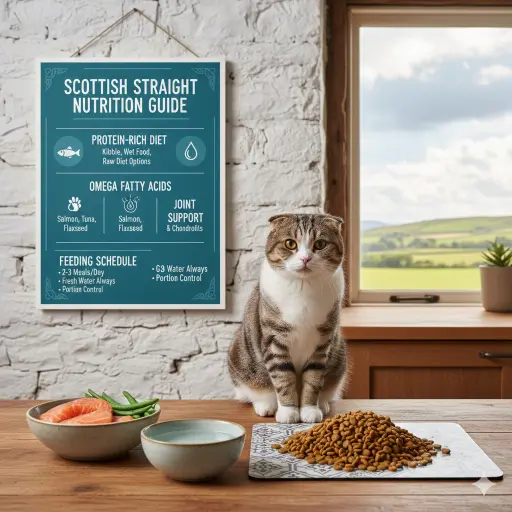
Nutrition is the foundation of a healthy life for your Scottish Straight cat. These cats are known for their calm, friendly personalities and muscular builds, so feeding them the right way helps maintain their energy, weight, and overall health. Unlike some other pets, cats are obligate carnivores. This means they must get most of their nutrients from meat, rather than plants, to thrive. Protein is their main energy source, and without it, they can develop health problems over time.
Scottish Straight cats have moderate activity levels. They enjoy short bursts of play but also love lounging. Because of this, their calorie needs are different from highly active cats or those that are very sedentary. Feeding the right amount of protein and fat helps maintain lean muscles while preventing unnecessary weight gain. Paying attention to portion sizes and calorie content is essential for keeping your cat at a healthy weight.
Besides protein, cats need fats, carbohydrates, vitamins, and minerals to function properly. Fats provide energy and help keep their coat soft and shiny, while certain vitamins and minerals support their bones, immune system, and overall health. One critical nutrient for cats is taurine, an amino acid they cannot produce enough of on their own. Taurine is found in animal-based proteins and is vital for heart health, vision, and reproduction.
Moisture is another key part of a cat’s diet. Cats naturally have a low thirst drive, which means they often don’t drink enough water. A diet that includes wet food can help them stay hydrated and support healthy kidneys and urinary tracts. Scottish Straights, like other cats, benefit from a balance of wet and dry food to meet both their nutritional and hydration needs. Regularly monitoring their weight, activity, and coat condition can help you adjust their diet as they grow and age.
Choosing the Right Food
Selecting the right food for your Scottish Straight cat can seem complicated, but it doesn’t have to be. The main types of commercial cat food are wet food, dry kibble, and mixed feeding. Wet food contains high moisture content, making it excellent for hydration. It is usually rich in protein and closer to a natural diet. Dry food, or kibble, is convenient, can help keep teeth clean, and is calorie-dense, which may help active cats maintain weight. Mixed feeding combines both, giving your cat variety while balancing moisture intake and convenience.
When choosing food, look at the protein sources first. Meat or fish should be the main ingredients. Avoid foods where grains, corn, or fillers are the first ingredient, as cats cannot efficiently use plant-based proteins. Fat content should also be appropriate—not too low, because cats need fat for energy, but not too high, especially for indoor or neutered cats prone to weight gain. Carbohydrates are optional and should be limited; cats do not require large amounts of grains in their diet.
Understanding food labels is critical. Check for AAFCO statements, which indicate the food meets established nutritional standards for cats. Look at the guaranteed analysis for protein, fat, and moisture. Scottish Straight owners should aim for diets with at least 30–40% protein on a dry matter basis, moderate fat, and low carbohydrate levels. Ingredients lists with named meats (chicken, turkey, salmon) are better than ambiguous terms like “meat by-products.”
Food Type Comparison for Scottish Straight Cats
| Food Type | Pros | Cons | Moisture Content | Notes for Scottish Straight |
|---|---|---|---|---|
| Wet Food | High protein, aids hydration, palatable | More expensive, shorter shelf life | 70–85% | Helps prevent urinary issues, good for picky eaters |
| Dry Food | Convenient, affordable, helps with teeth | Low moisture, risk of overeating | 5–10% | Use measured portions to prevent weight gain |
| Mixed Feeding | Balanced hydration and convenience | Requires monitoring portion sizes | 40–60% combined | Offers variety and better nutrient balance |
Feeding Guidelines by Life Stage
Scottish Straight cats have different nutritional needs as they grow. Kittens require higher calories and protein to support rapid growth. Feeding them 3–4 small meals a day of high-quality kitten food ensures they get enough nutrients. Wet food is excellent at this stage to supply hydration and concentrated protein. Be careful not to overfeed, as obesity in kittens can set the stage for lifelong weight issues.
Adult Scottish Straights need balanced diets to maintain healthy weight and energy. Adults typically eat 2 meals per day, and portions should reflect activity level. Indoor cats need fewer calories than outdoor cats, and neutered or spayed cats often require adjustments in their daily intake. Monitoring weight and body condition scores helps prevent overweight issues, which are common in calm, indoor Scottish Straights.
Senior cats have slower metabolisms, which can make them prone to weight gain or muscle loss. Senior diets should have high-quality protein but slightly fewer calories. Wet food is particularly useful because older cats often drink less water. Nutrients that support joint health, such as omega-3 fatty acids, may also be beneficial. Regular vet check-ups help ensure dietary adjustments are appropriate for your senior cat’s health.
Life Stage Feeding Chart for Scottish Straight Cats
| Life Stage | Recommended Portions | Frequency | Notes / Adjustments |
|---|---|---|---|
| Kitten (0–12 months) | 1/4–1/2 cup dry or 3–4 oz wet per meal | 3–4 meals/day | Monitor growth, avoid overfeeding |
| Adult (1–7 years) | 1/2 cup dry or 4–5 oz wet per meal | 2 meals/day | Adjust for indoor/less active cats |
| Senior (7+ years) | 1/3–1/2 cup dry or 3–4 oz wet per meal | 2 meals/day | Ensure hydration, monitor weight |
Treats, Snacks & Hydration
Treats are a great way to reward your Scottish Straight cat, but they should make up no more than 5–10% of daily calories. Choose treats high in protein and low in fillers. Small pieces of freeze-dried meat or commercial cat treats formulated with limited ingredients are ideal. Avoid giving human foods like chocolate, onions, garlic, or dairy, as these can be toxic or cause digestive issues.
Hydration is a critical but often overlooked part of a cat’s diet. Scottish Straights, like most cats, naturally drink less water. Incorporating wet food into their daily meals helps increase water intake. Other ways to encourage drinking include providing a water fountain, placing multiple water bowls around the house, and offering ice cubes in water bowls for novelty. Proper hydration supports urinary tract health and helps prevent kidney problems.
Treats & Snacks Safety for Scottish Straight Cats
| Treat Type | Safe Amount | Notes / Risks |
|---|---|---|
| Freeze-dried meat | 1–2 pieces/day | High protein, low fat |
| Commercial cat treats | 2–3 small pieces/day | Read ingredients for additives |
| Human food (cooked meat) | Small bites occasionally | Avoid onions, garlic, chocolate, dairy |
| Vegetables | Rarely, tiny pieces | Not nutritionally necessary, some cats dislike |
Treats should never replace main meals. Overfeeding treats can lead to obesity, which Scottish Straights are prone to if activity is limited. Keeping a feeding log or using measured portions can help maintain proper calorie balance.
Common Feeding Mistakes & Owner Tips
One of the biggest mistakes Scottish Straight owners make is overfeeding. These cats are moderate in activity and can gain weight quickly if meals are not measured. Free-feeding, or leaving food out all day, often leads to overeating. Use portion-controlled meals instead and monitor your cat’s weight monthly.
Another common mistake is neglecting hydration. Cats that eat mostly dry food may not drink enough water, increasing the risk of urinary and kidney issues. Combining wet food, fresh water, and even water fountains can prevent this problem. Also, feeding human food as snacks may seem harmless but can upset digestion or even be toxic. Stick to safe, breed-appropriate treats.
Multi-cat households present unique challenges. Some cats may eat faster than others or guard food, causing stress or overeating. Feed cats separately or provide multiple feeding stations to reduce competition. Observing each cat’s behavior and body condition helps prevent conflicts and ensures proper nutrition for all.
Finally, don’t ignore veterinary guidance. While this guide provides general advice, individual Scottish Straights may have unique health conditions requiring tailored diets. Regular check-ups help catch weight changes, dental issues, or nutrient deficiencies early, ensuring your cat stays healthy throughout life.
For more detailed feline nutrition standards, you can visit the World Small Animal Veterinary Association (WSAVA) Nutrition Guidelines.

Ata Ur Rehman is the founder of Pet Age in Human Years Calculator, an educational platform that provides age conversion charts and lifespan guides for dogs, cats, birds, and other companion animals. His work focuses on helping pet owners understand how animal ages translate into human years using commonly accepted age conversion formulas and published lifespan averages.
The website compiles breed and species lifespan data from kennel clubs, breed organizations, and general animal lifespan studies to present simple and easy-to-understand guides for pet owners worldwide.
This website was created to centralize animal age conversion charts into one easy reference platform for pet owners.