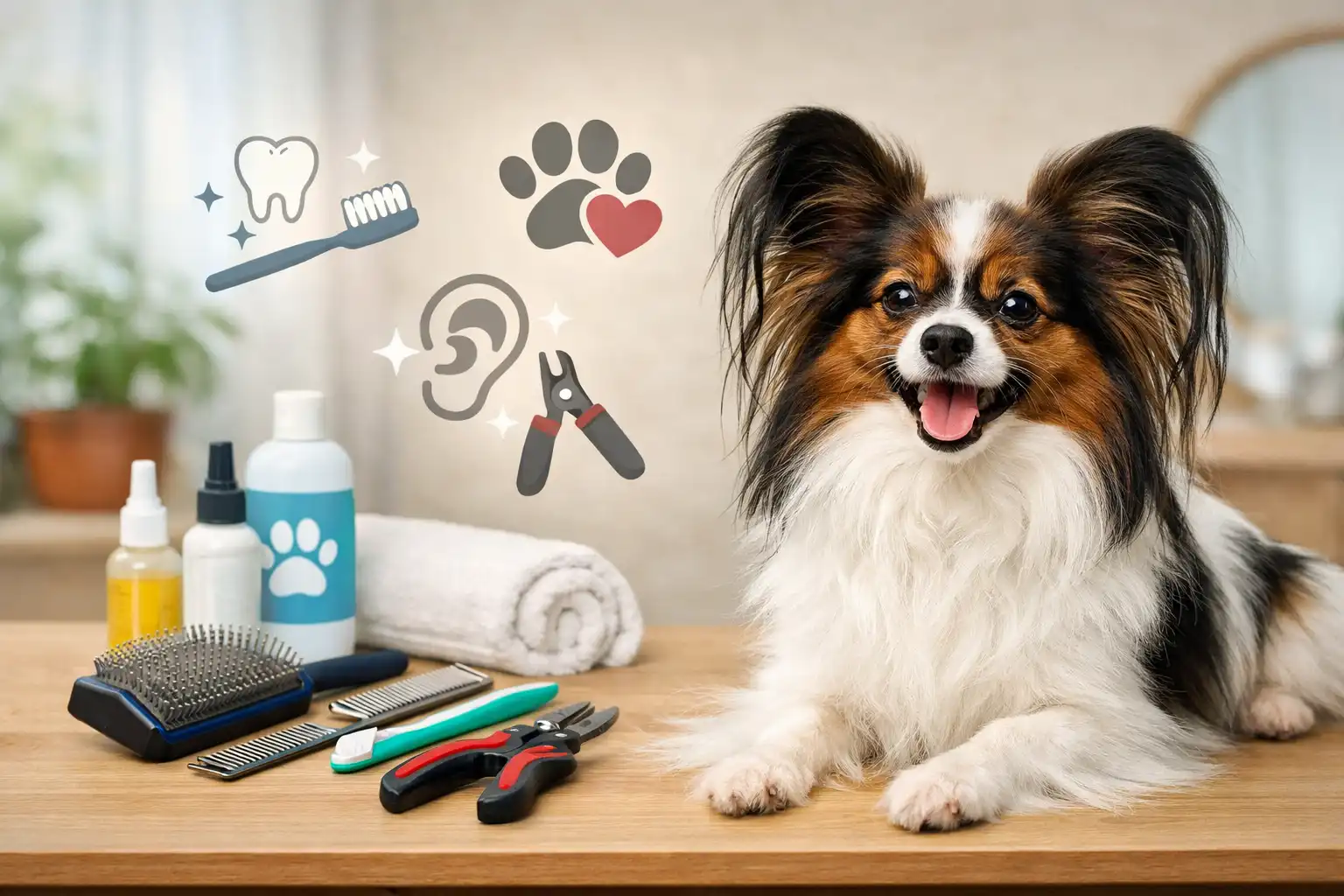
Papillon grooming means keeping the breed’s silky single coat clean, tangle-free, and healthy through regular brushing, bathing, nail trimming, ear cleaning, and dental care. Papillons do not need heavy haircuts, but they do need consistent grooming because their fine coat can mat around the ears, legs, chest, and tail if care is skipped.
The papillon dog is a small, elegant toy breed known for its butterfly-shaped ears, lively personality, and long lifespan. Although they look delicate, papillons are active, intelligent, and alert dogs that need regular daily care. Their grooming needs are not difficult, but they must be handled consistently to prevent tangles, overgrown nails, dental buildup, and skin discomfort.
If you are wondering how to groom a papillon, the basic routine is simple: brush the coat 2–3 times per week, bathe every 3–4 weeks, trim nails monthly, clean the ears when needed, and brush the teeth several times per week. This routine keeps the coat smooth, reduces shedding, and helps your papillon stay comfortable as they grow from puppy to senior age.
One reason papillons are often misunderstood is that their long feathered coat makes them look high maintenance. In reality, papillons have a single coat, not a thick double coat. They usually do not need full haircuts or shaving. Most papillon dog grooming focuses on brushing, light trimming around the feet or hygiene areas, and regular hygiene care.
Good papillon dog care is not only about appearance. A well-groomed papillon is usually more comfortable, easier to handle, and less likely to develop painful mats, irritated skin, bad breath, or walking problems caused by long nails. Because papillons often live well into their senior years, building a simple grooming routine early can support long-term health and comfort.
This guide explains papillon coat type, shedding, grooming frequency, bathing, brushing, haircuts, hygiene care, professional grooming needs, and common grooming mistakes so you can care for your papillon confidently at home.
Papillon Dog Care and Why Grooming Matters
Papillon dog care matters because this breed’s small size, fine coat, and long lifespan make routine maintenance especially important. Small problems can become uncomfortable quickly. A skipped brushing session can lead to tangles behind the ears, long nails can affect movement, and poor dental care can cause plaque buildup in the small mouth.
Papillons are confident, energetic, and people-focused dogs. They do best when their grooming, exercise, food, training, and health needs are handled through a steady routine. Grooming is one of the easiest parts of that routine to control because it allows owners to notice small changes early, including skin irritation, lumps, sore paws, ear odor, or dental problems.
Many owners ask whether papillons are high-maintenance dogs. The honest answer is that papillons are not difficult to groom, but they are not a “no-care” breed. Their single coat is easier than many long-haired double coats, but it still needs regular brushing and gentle handling. Consistency matters more than complicated grooming.
Proper grooming also supports behavior. A papillon with painful mats, sore gums, dirty ears, or overgrown nails may become restless, sensitive, or harder to handle. When the coat is clean, the nails are short, and the mouth is healthy, grooming becomes easier and the dog usually feels more relaxed.
If you also want to understand how grooming needs change as your dog gets older, you can use the Papillon Dog Age Calculator to estimate your dog’s life stage and plan age-appropriate care.
Papillon Coat Type, Shedding, and Grooming Needs Explained
The papillon has a single coat, which means it does not have a thick undercoat like many double-coated breeds. The hair is fine, soft, and silky, with longer feathering around the ears, chest, legs, and tail. Because of this coat type, papillons need regular brushing, but they do not need heavy trimming, full haircuts, or shaving.
Do Papillons Shed?
Yes, papillons shed lightly to moderately throughout the year. Their shedding level is usually manageable because they have a single coat and no heavy undercoat. Regular brushing 2–3 times per week helps remove loose hair, reduce tangles, and keep the coat smooth.
Papillon shedding is usually less noticeable than shedding from many double-coated breeds, but loose hair can still collect on clothes, bedding, and furniture. Brushing is the best way to control it. Bathing can also help when the coat feels dirty, but overbathing may dry the skin, so a steady schedule is better than frequent washing.
Matting is often a bigger issue than shedding in papillons. Tangles commonly form behind the ears, under the front legs, around the collar area, on the chest, and in the feathered tail. If these areas are ignored, small knots can tighten and pull on the skin. This is why gentle brushing and weekly coat checks are important parts of papillon grooming.
Papillon coat characteristics at a glance
| Feature | What it means for grooming |
|---|---|
| Coat type | Single coat with no thick undercoat |
| Hair texture | Fine, soft, and silky |
| Shedding level | Light to moderate year-round shedding |
| Matting risk | Medium, especially behind ears, legs, chest, and tail |
| Haircut needs | No full haircut needed; light tidy trimming only |
| Shaving needs | Not recommended unless advised by a veterinarian |
Knowing how often to groom a papillon is one of the most important parts of care. Papillons do not need daily grooming, but skipping care for too long can lead to tangles, dirty ears, long nails, and dental problems.
How often papillons need grooming
| Grooming task | How often | Why it matters |
|---|---|---|
| Brushing | 2–3 times per week | Prevents tangles, mats, and loose hair buildup |
| Bathing | Every 3–4 weeks | Keeps the coat clean without drying the skin |
| Nail trimming | Every 3–4 weeks | Supports healthy walking and posture |
| Ear cleaning | Every 2–4 weeks or as needed | Helps prevent wax buildup and irritation |
| Teeth brushing | Several times per week | Helps reduce plaque and bad breath |
| Coat check | Weekly | Finds hidden mats, skin irritation, or sore spots early |
Papillons are not hard to groom, but they do need consistent grooming care. A short routine followed every week is much better than a long grooming session done only when the coat becomes tangled. When grooming is regular, the coat stays softer, shedding stays easier to manage, and your papillon remains more comfortable.
Papillon Grooming Routine: How to Groom a Papillon at Home
To groom a papillon at home, brush the coat 2–3 times per week with a soft slicker brush or comb, bathe every 3–4 weeks with gentle dog shampoo, trim the nails every few weeks, clean the ears carefully, and brush the teeth several times per week. Keep sessions short, calm, and gentle so your papillon learns to accept grooming without stress.
Grooming a papillon at home is simple when you follow the same routine each week. You do not need complicated tools or long sessions. Short grooming sessions work best for small dogs because they are easier to manage and less stressful. Choose a calm time when your papillon is relaxed, not overly excited or tired.
Essential grooming tools for papillons
| Tool | Why it is needed | How often it is used |
|---|---|---|
| Soft slicker brush | Removes loose hair and small tangles | 2–3 times per week |
| Fine-tooth comb | Checks behind ears, legs, chest, and tail for hidden knots | Weekly |
| Gentle dog shampoo | Cleans the coat without drying the skin | Every 3–4 weeks |
| Towel or low-heat dryer | Dries the coat safely after bathing | After each bath |
| Nail clipper or grinder | Keeps nails short and comfortable | Every 3–4 weeks |
| Dog toothbrush and toothpaste | Helps reduce plaque and bad breath | Several times per week |
Brushing is the most important part of papillon grooming. Start at the ends of the hair and work slowly toward the skin. Do not pull through knots. Pay extra attention to the areas where tangles form easily, especially behind the ears, under the front legs, around the chest, and near the tail. If you find a knot, separate it gently with your fingers or a comb before brushing through it.
Bathing should be regular but not excessive. Too many baths can dry the skin and make the coat dull. Use a gentle dog shampoo, rinse the coat fully, and dry your papillon with a towel or low-heat dryer. Make sure the feathered areas are fully dry because damp hair can tangle more easily.
Papillon bathing and brushing schedule
| Task | How often | Simple tip |
|---|---|---|
| Brushing | 2–3 times per week | Focus on ears, legs, chest, and tail |
| Bathing | Every 3–4 weeks | Rinse fully to avoid skin irritation |
| Coat check | Weekly | Feel for hidden knots or skin changes |
| Paw and leg check | Weekly | Look for mats, dirt, or long hair between paw pads |
| Face wipe | As needed | Use a soft damp cloth around the face |
Papillons generally do not need full haircuts. Light trimming around the feet, paw pads, and hygiene areas may help keep them tidy, but the feathered coat should usually be left natural. Shaving a papillon is not recommended unless a veterinarian advises it for a medical reason.
When grooming becomes part of the weekly routine, many papillons learn to tolerate it well. Calm handling, gentle movements, and praise help build trust. This is especially helpful for puppies and nervous dogs because early positive grooming experiences make future care much easier.
Consistent grooming becomes easier when your dog understands basic commands. Our Papillon Training Guide explains how to build cooperation and better handling behavior through simple training routines.
Common Papillon Grooming Mistakes to Avoid
Even though papillon grooming is simple, small mistakes can lead to coat, skin, or health problems. Avoid these common errors to keep your dog comfortable and mat-free:
- Brushing too aggressively: Pulling through tangles can damage the silky coat and hurt the skin. Always brush gently and work from the ends upward.
- Skipping hidden areas: Mats often form behind the ears, under the legs, around the chest, and near the tail. Check these areas every week.
- Bathing too often: Overbathing can dry out the skin and make the coat dull. A 3–4 week bathing schedule is enough for most papillons unless they get unusually dirty.
- Shaving the coat: Papillons have a protective single coat. Shaving can affect natural coat texture and may lead to uneven regrowth.
- Ignoring dental care: Small breeds are prone to plaque buildup. Skipping regular teeth brushing can lead to bad breath, gum irritation, and dental disease.
Papillon Health, Hygiene, and Extra Care Areas
Good papillon dog care is not only about brushing and bathing. Small dogs need extra attention in a few important areas to stay healthy and comfortable. Nails, ears, teeth, skin, and coat checks should all be part of a regular care routine. When these areas are checked often, many small problems can be noticed before they become painful or expensive.
Nail care is especially important for papillons because their paws are small and light. Long nails can make walking uncomfortable and may affect posture over time. Trim the nails every 3–4 weeks, or sooner if you hear clicking sounds when your dog walks on the floor. Always cut a little at a time to avoid hurting the quick.
Ear care also matters because papillons have large, upright ears that can collect dust, dirt, and wax. Clean the ears gently with a dog-safe ear cleaner when needed. Never push cotton deep into the ear. If you notice redness, bad smell, swelling, or frequent head shaking, your papillon may need a vet check.
Dental care is one of the most important parts of hygiene for this breed. Papillons have small mouths, so plaque can build up quickly. Brush your dog’s teeth several times per week using dog toothpaste. Dental chews may help support oral hygiene, but they should not replace brushing. Bad breath, red gums, loose teeth, or trouble eating are signs that dental care needs attention.
Skin and coat checks should be done while brushing. Run your hands over your papillon’s body and look for bumps, dry spots, redness, flakes, hair loss, or sore areas. Healthy skin should look clean and feel smooth, not oily, flaky, or irritated. Coat and skin health are also influenced by diet, so you can read our Papillon dog food and nutrition guide for more support on food, coat quality, and energy levels.
Common Papillon Grooming-Related Health Issues
| Area | Common problem | Early signs | What to do |
|---|---|---|---|
| Nails | Overgrown nails | Clicking sound, limping, awkward walking | Trim nails every 3–4 weeks |
| Ears | Wax buildup or infection | Bad smell, redness, head shaking | Clean gently or see a vet |
| Teeth | Plaque and dental disease | Bad breath, red gums, trouble eating | Brush teeth several times per week |
| Skin | Irritation, allergy, or dryness | Scratching, redness, flakes, hair loss | Check products, diet, and vet advice |
| Coat | Mats and tangles | Knots behind ears, legs, chest, or tail | Brush gently 2–3 times per week |
Keeping up with these small care tasks makes a big difference. They help your papillon feel good, move easily, and avoid pain. Most checks only take a few minutes each week, but they support long-term health and comfort. Planning ahead for grooming supplies, dental care, and vet visits is also part of responsible ownership. Our Papillon dog cost and lifetime ownership guide explains expected monthly and long-term care expenses.
When to See a Veterinarian for Grooming-Related Issues
Most papillon grooming tasks can be handled at home, but some signs need professional care. Contact a veterinarian if you notice persistent ear redness, strong odor, swelling, bleeding gums, difficulty eating, sudden hair loss, severe itching, painful mats close to the skin, or skin sores. Early treatment can stop minor grooming issues from turning into serious health problems.
Papillon Haircuts, Grooming Styles, and Professional Grooming
Many owners search for papillon haircuts and grooming styles because the breed has long feathering around the ears, chest, legs, and tail. However, papillons usually do not need full haircuts. Their coat should look natural, light, and feathered rather than heavily clipped.
The most common papillon grooming style is a natural coat with light tidy trimming. This may include trimming hair around the feet, paw pads, and hygiene areas. Some owners ask for a shorter practical trim, but shaving the full coat is not recommended unless there is a medical reason or severe matting that cannot be safely brushed out.
A “papillon teddy bear cut” or very short haircut may look cute, but it can change the natural look of the breed and may affect coat texture. If you want a neater style, ask the groomer for a light tidy trim instead of a full-body cut. The goal should be comfort, cleanliness, and coat health, not removing the breed’s natural feathering.
Do Papillons Need to Go to the Groomer?
Papillons do not always need to go to a professional groomer. Many owners can handle brushing, bathing, nail trimming, ear cleaning, and basic coat checks at home. A groomer is helpful if your papillon has heavy mats, becomes nervous during nail trimming, needs a hygiene trim, or you are not confident handling grooming tools.
If you use a professional groomer, choose someone who understands the breed’s coat and handling needs. Ask for gentle brushing, light trimming, careful nail care, and no shaving unless medically necessary. This helps keep the coat healthy while still making your dog easier to maintain at home.
Home Grooming vs Professional Grooming
| Task | Home grooming | Professional grooming |
|---|---|---|
| Brushing | Best done regularly at home | Helpful if mats are already forming |
| Bathing | Simple with gentle shampoo | Useful for deep cleaning or nervous dogs |
| Light trimming | Possible if you are confident | Best for feet, paw pads, and hygiene areas |
| Mat removal | Only safe for small, loose tangles | Better for tight or painful mats |
| Nail trimming | Fine if your dog stays calm | Safer if you are unsure or your dog pulls away |
Papillon Grooming by Age
Papillon grooming needs change slightly as your dog grows. Puppies need gentle handling so they learn that brushing, bathing, nail trimming, and tooth brushing are normal. Adult papillons need consistency to prevent tangles and hygiene problems. Senior papillons may need shorter sessions, softer tools, and more frequent skin and comfort checks.
You can estimate your dog’s current life stage using our Papillon Dog Age Calculator. This helps you plan grooming and daily care based on whether your papillon is still growing, in the adult stage, or entering senior years.
Papillon Grooming by Life Stage
| Life stage | Grooming focus | Special care tips |
|---|---|---|
| Puppy | Gentle brushing, touch training, short sessions | Reward calm behavior and keep grooming positive |
| Adult | Regular brushing, bathing, nail care, dental care | Stay consistent to prevent mats and plaque buildup |
| Senior | Comfort grooming, skin checks, slower handling | Use soft tools and take breaks during grooming |
As papillons get older, grooming may need to slow down. Senior dogs may have sensitive skin, sore joints, or less patience for long sessions. Short, calm grooming sessions are usually better than one long session. If you want deeper age-based guidance, our Papillon age in human years guide explains how life stages affect care planning, while our Papillon dog lifespan guide covers long-term health and aging expectations for this breed.
Papillon Grooming FAQs
Do Papillons Need Haircuts?
No, papillons do not need full haircuts. Most papillons only need light trimming around the feet, paw pads, and hygiene areas. Their natural feathered coat should usually be brushed and maintained rather than cut short.
Can You Shave a Papillon?
Shaving a papillon is not recommended unless a veterinarian advises it for medical reasons or severe matting. The coat helps protect the skin, and shaving may affect the natural coat texture or cause uneven regrowth.
Are Papillons Easy to Groom?
Yes, papillons are usually easy to groom when care is consistent. Their single coat is easier to maintain than many double coats, but they still need brushing 2–3 times per week, regular bathing, nail trimming, ear checks, and dental care.
How Often Should Papillons Be Groomed?
Papillons should be brushed 2–3 times per week and bathed about every 3–4 weeks. Nails, ears, teeth, and coat checks should also be part of the routine. Dogs with longer feathering or active outdoor habits may need more frequent checks.
Are Papillons High Maintenance Dogs?
Papillons are not extremely high maintenance, but they do need regular grooming. Their coat does not require heavy trimming, but skipping brushing, nail care, or dental care can quickly lead to discomfort.
Do Papillons Shed a Lot?
No, papillons usually shed lightly to moderately. Their single coat does not shed in heavy clumps like many double-coated breeds, but regular brushing helps control loose hair and prevents tangles.
Simple Papillon Grooming and Care Summary
A good papillon grooming routine is simple, consistent, and gentle. Focus on preventing tangles, keeping the coat clean, maintaining healthy nails, checking the ears, and protecting dental health.
- Brush the coat 2–3 times per week to prevent tangles and mats
- Bathe every 3–4 weeks with gentle dog shampoo
- Trim nails every 3–4 weeks to support healthy walking
- Clean ears every 2–4 weeks or whenever wax builds up
- Brush teeth several times per week to reduce plaque and bad breath
- Check behind the ears, legs, chest, and tail for hidden mats
- Use light trimming only around feet, paw pads, and hygiene areas when needed
For age-based care planning, use our Papillon Dog Age Calculator to understand your dog’s current life stage and adjust grooming, comfort, and daily care as your papillon grows older.

Ata Ur Rehman is the founder of Pet Age in Human Years Calculator, an educational platform that provides age conversion charts and lifespan guides for dogs, cats, birds, and other companion animals. His work focuses on helping pet owners understand how animal ages translate into human years using commonly accepted age conversion formulas and published lifespan averages.
The website compiles breed and species lifespan data from kennel clubs, breed organizations, and general animal lifespan studies to present simple and easy-to-understand guides for pet owners worldwide.
This website was created to centralize animal age conversion charts into one easy reference platform for pet owners.