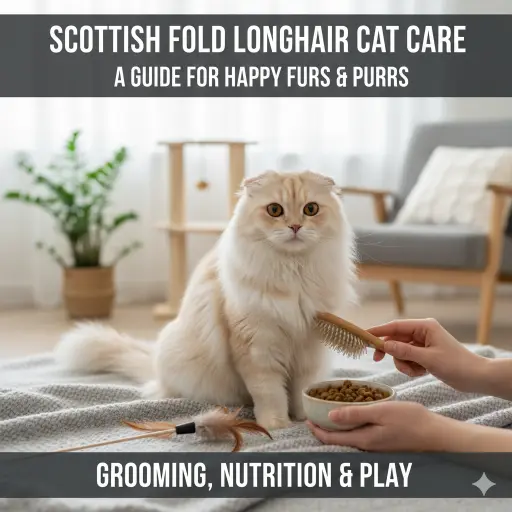
Scottish Fold Longhair cats are loved for their sweet nature, soft long coats, and unique folded ears. Many people choose this cat because they look calm, gentle, and very affectionate. But owning a Scottish Fold Longhair is not just about enjoying their cute looks. They need regular and careful daily care to stay healthy and happy. This guide is written for cat owners who want clear, honest, and practical advice, even if they are caring for a cat for the first time.
This care guide focuses on what owners actually deal with every day. Long fur can get tangled, folded ears can trap dirt, and some health problems are easier to miss if you do not know what to watch for. Scottish Fold Longhairs are not high-energy cats, but that does not mean they are low-maintenance. Their calm personality can sometimes hide discomfort or pain, which makes good care even more important.
Many online articles talk about this breed in a very general way. They often repeat the same facts without explaining what to do at home. This guide is different. It explains how to care for a Scottish Fold Longhair step by step, using simple words and real-life examples. Everything here is written to be easy enough for a 7th-grade reader, but detailed enough for serious cat owners.
Daily and Weekly Care Essentials
Daily care for a Scottish Fold Longhair is mostly about grooming, observation, and routine. Their long coat needs regular brushing to prevent mats. Mats are tight knots of fur that pull on the skin and can become painful. Most Scottish Fold Longhairs need brushing at least once a day, especially around the chest, belly, and behind the legs. These are the places where mats form fastest.
Weekly care focuses on deeper grooming and health checks. This is when owners should check ears closely, trim nails if needed, and look for skin problems. Folded ears are cute, but they reduce airflow inside the ear. This can trap moisture and lead to infections. Cleaning the ears once a week with a vet-approved ear cleaner helps prevent this problem.
Litter box care is also very important for longhaired cats. Fur around the back legs can trap litter or waste, which may lead to skin irritation or bad smells. Keeping the litter box clean and trimming fur around the rear area can prevent these issues. Many owners notice fewer problems when they use low-dust, fine-grain litter.
Below is a simple table showing basic grooming tasks and how often they should be done.
| Care Task | How Often | Tools Needed | Helpful Tip |
|---|---|---|---|
| Brushing | Daily | Slicker brush, wide comb | Start slow and gentle |
| Ear Cleaning | Weekly | Cat ear cleaner, cotton pad | Never use cotton swabs |
| Nail Trimming | Every 2–3 weeks | Cat nail clippers | Trim only the tip |
| Bathing | Rare (every few months) | Cat-safe shampoo | Only if truly needed |
Owners should also spend a few minutes each day watching their cat. Is your cat moving normally? Are they grooming themselves? Are they eating and drinking as usual? These small checks help catch problems early.
Health and Behavior Signals Every Owner Should Know
Scottish Fold Longhairs are known for being quiet and gentle. Because of this, they may not show pain in obvious ways. Owners need to learn small behavior changes that may signal a problem. For example, a cat that suddenly hides more than usual or avoids being touched may be feeling discomfort.
One common issue in this breed is ear trouble. Redness, bad smell, head shaking, or scratching around the ears are warning signs. If these signs last more than a day or two, a vet visit is needed. Ignoring ear infections can lead to serious pain and hearing loss.
Another concern is joint health. The gene that causes folded ears is also linked to bone and cartilage problems. Some cats may develop stiff movement or trouble jumping as they age. Owners often first notice this when the cat stops jumping onto favorite spots or walks more slowly.
The table below explains common warning signs and what they may mean.
| Sign You See | What It Might Mean | What To Do |
|---|---|---|
| Head shaking | Ear infection | Check ears, see vet |
| Limping or stiffness | Joint pain | Limit jumping, vet check |
| Matting fur | Missed grooming | Brush daily, trim mats |
| Loss of appetite | Stress or illness | Monitor, call vet |
Hairballs are also more common in longhaired cats. If your cat vomits hair often or seems constipated, it may be time to improve grooming or speak to a vet. Regular brushing is the best way to reduce hairballs.
Special Care Situations
Scottish Fold Longhair kittens need gentle grooming from a young age. Short daily brushing sessions help them get used to being handled. This makes grooming much easier when they grow older. Kittens also need regular playtime to build strength and confidence. Even calm breeds need daily activity.
Senior Scottish Fold Longhairs often need extra care. Older cats may groom themselves less, which increases matting risk. Arthritis can make grooming painful. Owners may need to brush more gently and provide soft bedding and easy access to favorite spots.
Multi-cat homes can create grooming and stress challenges. One cat may block another from grooming areas or litter boxes. Each cat should have their own space, bed, and litter box when possible. Stress can worsen health issues, especially in sensitive breeds like Scottish Folds.
Indoor-only cats usually stay cleaner, but they still need daily brushing. Outdoor access increases the risk of ear infections, parasites, and coat damage. Many vets recommend keeping Scottish Fold Longhairs indoors for safety and health reasons.
Scottish Fold Longhair Care Checklist and FAQ
This final section brings everything together in a simple, skimmable way. Many owners like having a checklist they can return to when life gets busy.
| Care Area | Daily | Weekly | Monthly |
|---|---|---|---|
| Brushing | ✔ | ||
| Ear Check | ✔ | ||
| Nail Trim | ✔ | ||
| Full Health Check | ✔ |
Frequently Asked Questions:
How often should I brush a Scottish Fold Longhair?
Daily brushing is best to prevent mats and hairballs.
Do folded ears always cause problems?
Not always, but they increase the risk of ear infections, so regular checks are important.
Can Scottish Fold Longhairs live with other pets?
Yes, they are usually gentle and social, but slow introductions are important.
Do they need professional grooming?
Some owners choose it, especially if mats become hard to manage at home.
What is the biggest mistake owners make?
Skipping grooming until mats form or ignoring small behavior changes.
Scottish Fold Longhair Care Guide. With daily attention, gentle grooming, and early problem detection, these cats can live comfortable and happy lives.
For additional veterinary-backed guidance on feline health and care, visit:
https://catvets.com

Ata Ur Rehman is the founder of Pet Age in Human Years Calculator, an educational platform that provides age conversion charts and lifespan guides for dogs, cats, birds, and other companion animals. His work focuses on helping pet owners understand how animal ages translate into human years using commonly accepted age conversion formulas and published lifespan averages.
The website compiles breed and species lifespan data from kennel clubs, breed organizations, and general animal lifespan studies to present simple and easy-to-understand guides for pet owners worldwide.
This website was created to centralize animal age conversion charts into one easy reference platform for pet owners.