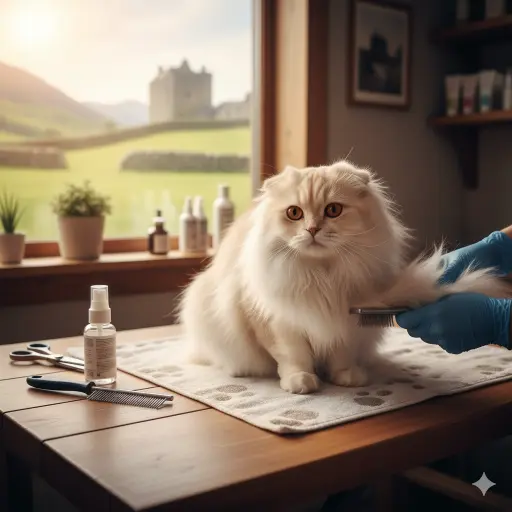
Grooming a Scottish Fold Longhair is not the same as grooming all other cats. Their long, soft fur can tangle easily. This means they need brushing more often than short‑haired cats do. If hair gets matted, it can pull on the skin and make your cat uncomfortable. Regular care prevents these problems.
Scottish Folds also have ears that fold forward. While this makes them extra cute, it also means wax and debris can build up more quickly. The folded ear creates a small space where dirt can stay. This needs gentle cleaning so your cat does not get an ear infection. But it must be done very carefully because the ear skin is thin and sensitive.
Longhair cats shed more than shorthaired cats. They lose hair all year, and this increases in certain seasons. When your home has more cat hair around, it usually means your cat needs more brushing to remove loose fur. Removing loose fur not only keeps your house cleaner but also helps reduce hairballs inside your cat’s stomach.
Every cat is different in how they respond to grooming. Some Scottish Fold Longhairs love it, while others may get nervous or upset. This guide helps you understand the basics, what tools to use, the right timing, and how to help your cat stay calm during grooming. The goal is to make grooming safe, easy, and stress‑free for both you and your cat.
Brushing, shedding and mat prevention
Brushing a longhaired cat is the foundation of grooming. A good brushing routine keeps the coat soft, clean, and free of knots. It also helps remove loose hair before it forms serious mats. Mats are thick clumps of fur that pull on the skin. They can be painful and hard to remove.
Longhair coats are best brushed with more than one tool. A slicker brush is good for daily use. It removes loose fur on the surface. A wide‑tooth comb helps go deeper into the coat. This is where mats start to form, especially under the belly, near the legs, and around the chest.
Start each brushing session in a calm place where your cat feels safe. Let them sniff the brush first. If your cat seems nervous, pet them and speak in a soft voice. Begin brushing with gentle strokes. Move along the hair in the same direction it grows. This is less irritating than brushing against the hair.
| Problem Areas for Matting |
|---|
| Under the armpits |
| Along the belly |
| Around the tail |
| Behind the ears |
If you find small tangles, use your fingers or the comb to gently work them apart. Never pull hard. If a tangle is tight, stop and use a dematting tool or take your cat to a professional groomer. Remember, pulling on tangles without care will hurt your cat’s skin.
The table below shows a simple guide for grooming frequency and notes for longhair cats:
Grooming Frequency Guide
| Grooming Task | How Often | Scottish Fold Longhair Notes |
|---|---|---|
| Brushing | Daily–3× a week | More often during shedding season |
| Nail trimming | Every 2–3 weeks | Short play and simple trimming helps |
| Ear cleaning | Every 2–4 weeks | Folded ears get wax buildup faster |
| Eye wiping | As needed | Tear stains especially around inner eyes |
| Bathing | Only if dirty | Rare unless coat is messy |
Most longhaired cats do best with brushing every day or every other day. During heavy shedding times (spring and fall), daily brushing removes more loose hair. This helps prevent hairballs and matting. When you brush often, you also get to know how your cat feels and looks. This makes it easier to notice bumps, skin changes, or lumps early.
Remember, short sessions are better than long ones. If your cat becomes restless or stressed, stop and try again later. You want your cat to stay calm and comfortable with grooming.
Nail, ear & basic hygiene care
In addition to brushing, longhair cats need basic hygiene care. A calm and gentle routine for nails and ears can prevent problems.
Trimming nails too short is one of the most common mistakes owners make. If you cut into the quick (the pink area inside the nail), your cat will bleed and feel pain. Only trim the sharp tips. A good rule is to trim every 2–3 weeks, but if your cat is active and scratches on posts often, you might need to trim a bit less.
Before cutting nails, hold your cat’s paw and press gently on the toe pad. This makes the nail come out and helps you see how much to trim. Use nail clippers made for pets. If your cat is nervous, trim one or two nails at a time and give a treat after each attempt.
Ears can accumulate wax and debris because the folded ear shape creates a small space. Clean the outer ear only with a soft cotton ball. Do not insert anything into the ear canal. Look for redness, bad smell, or excessive wax. These signs mean you should consult your veterinarian.
Eye care is simple but important. Longhair cats sometimes get tear stains where the fur stays wet. Use a soft, damp cloth to wipe the area gently. Never use soap or harsh cleaners unless directed by a vet. Tear stains often clear with gentle wiping.
Dental hygiene is easy to overlook but very important. Brushing your cat’s teeth with a cat‑safe toothpaste helps prevent tartar buildup and oral disease. Start slowly — just a few seconds at a time — and reward your cat afterward. If brushing seems too hard, ask your vet for alternatives like dental wipes or specialized chews.
The table below shows common grooming tools and what they are used for:
Tools & What They’re For
| Tool | Purpose | When to Use |
|---|---|---|
| Slicker brush | Remove loose hair & surface debris | Regular brushing |
| Wide‑tooth comb | Untangle deeper fur | After slicker brushing |
| Nail clippers | Trim sharp nail tips | Every 2–3 weeks |
| Soft cotton balls | Clean outer ears gently | Every 2–4 weeks |
| Waterless shampoo | Spot clean messy areas | Between baths |
Use tools gently. Avoid brushes with stiff, sharp pins that can scratch the skin. If your cat shows pain when you touch certain spots, stop and try another approach.
Bathing & stress‑smart grooming handling
Most cats do not need regular baths. This includes Scottish Fold Longhairs. Their natural oils keep the coat clean if you brush often. Bathing can dry out the skin, which causes more problems than it solves. Only bathe your cat when the fur is dirty with grease, sticky substances, or strong odor.
When a bath is needed, gather everything first: a cat‑safe shampoo, a small cup or sprayer, a towel, and a non‑slip surface in the sink or tub. Use lukewarm water. Speak softly and move slowly. Never spray water directly into the face. Clean the body first, then the legs, and last the head area with a damp cloth.
Many cats fear water. Look for signs of stress: flattened ears, wide eyes, growling, or trying to escape. If your cat shows these signs, stop and calm them with a break. Use treats and praise to make grooming feel good. Associating grooming with positive things helps your cat stay relaxed in future sessions.
Waterless shampoos, pet wipes, and damp cloths help keep your cat clean without full baths. These are especially useful for longhair breeds because they refresh the coat and remove extra oil. Always use products made for cats, not dog products or human shampoos.
Staying calm during grooming is key. If your cat becomes stiff, hisses, or swats, it is feeling scared or uncomfortable. Step away, give your cat space, and try again later. Rushing can make grooming harder next time. You want moments where your cat trusts you, not avoids you.
Reward good behavior. Treats, slow petting, and soft words all help. If your cat sits still for brushing or nails, give a treat right after. This makes your cat link grooming with good things — not fear.
Grooming schedules & common owner questions
| Frequency | Grooming Tasks |
|---|---|
| Daily | BrushingQuick fur checkEye wiping if needed |
| Weekly | Longer brushing sessionCheck ears and pawsLight combing for tangles |
| Every 2–3 weeks | Nail trimming |
| Every 2–4 weeks | Ear cleaning |
| Rarely | Bathing (only if dirty) |
Grooming differs by life stage. Kittens need very short, gentle sessions to learn that grooming is normal. Keep it under five minutes and focus on brushing. If a kitten resists, stop and play with them to build trust.
Adult cats usually accept longer sessions once they know what to expect. Keep a consistent routine so they know what comes next. This makes grooming easier over time.
Senior cats may have joint stiffness or dental issues. Be extra gentle around sensitive areas. Use soft brushes and short sessions. If moving a senior cat hurts them, stop and try again later. Check with your vet if you see skin changes or unusual behavior.
Here are answers to common grooming questions owners ask:
• How often should I brush my Scottish Fold Longhair?
Daily or every other day is best, especially during shedding.
• Can I trim mats myself?
Small tangles you can gently work apart. Tight mats should be handled by a professional groomer.
• Do longhair cats need baths?
Only when the coat is dirty or oily. Most longhairs stay clean with good brushing.
• What if my cat bites or scratches during grooming?
Stop immediately, give space, and try again later. Reward calm behavior and start with short sessions.
• Do folded ears get more infections?
They can if wax builds up. Clean only the outer part and watch for redness or smell.
• How do I prevent hairballs?
Frequent brushing reduces loose hair swallowed during self‑grooming.
If grooming feels too hard or your cat has big mats, pain, or skin irritation, ask your veterinarian or a professional groomer for help. They have tools and training that make grooming safer for difficult cases.
For more detailed safety guidance on grooming and signs of ear or skin problems, you may find this article from the American Veterinary Medical Association useful: https://www.avma.org/resources/pet‑owners/petcare/cat‑care

Ata Ur Rehman is the founder of Pet Age in Human Years Calculator, an educational platform that provides age conversion charts and lifespan guides for dogs, cats, birds, and other companion animals. His work focuses on helping pet owners understand how animal ages translate into human years using commonly accepted age conversion formulas and published lifespan averages.
The website compiles breed and species lifespan data from kennel clubs, breed organizations, and general animal lifespan studies to present simple and easy-to-understand guides for pet owners worldwide.
This website was created to centralize animal age conversion charts into one easy reference platform for pet owners.