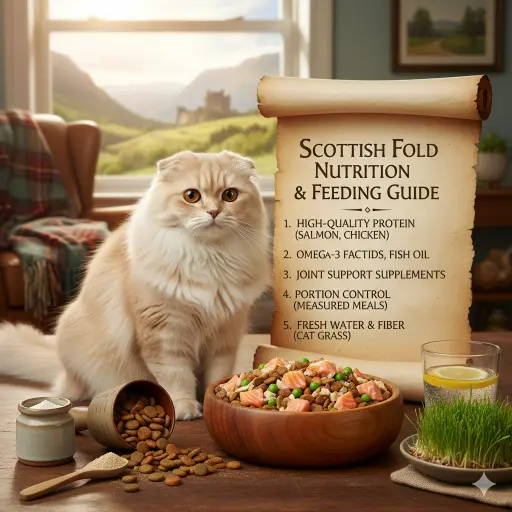
All cats need the right food to live a happy, healthy life, and Scottish Fold Longhairs are no different. These cats have soft, long fur and a calm personality. Their body needs good nutrition to support their strong muscles, shiny coat, and overall energy. Feeding your Scottish Fold Longhair the right diet helps keep them at a healthy weight, reduces risks of health issues, and gives them the nutrients they need every day.
Cats are what scientists call obligate carnivores. This means they must eat animal‑based proteins to stay healthy. Unlike humans, cats cannot make certain nutrients on their own and must get them from meat, organs, and high‑quality cat food. Key nutrients cats require include protein, fats, essential amino acids like taurine, and certain vitamins and minerals. Without these, cats can become sick or weak.
Scottish Fold Longhairs tend to be indoor cats with moderate energy levels. Because they are not as active as outdoor cats, their calorie needs might be lower. This means you have to be careful with how much you feed them. Too much food can lead to weight gain, which puts stress on joints and can lead to more serious health problems. Good quality food with balanced nutrition helps keep your cat lean and healthy.
Protein is especially important. Cats use protein for building strong muscles and repairing tissues. A diet that is high in animal protein supports their lean body mass and helps with body functions from head to tail. Fats provide energy and help with skin and coat health. Cats also need moisture in their diet because they do not always drink enough water on their own. Wet food can help keep them hydrated.
Choosing the right food and feeding it the right way makes a big difference in how your Scottish Fold Longhair feels and moves. In the next section, we will talk about choosing between wet food, dry food, or a mix of both to give your cat the best nutrition possible.
Choosing the Right Food (Wet, Dry, or Mixed)
One of the first decisions every cat owner has to make is what type of food to feed their cat. You can choose wet food, dry food, or a mix of the two. Each option has its good points and challenges, and many owners find that combining wet and dry food gives the most balanced approach.
Wet food has high moisture content, which helps support proper hydration. This is good for your cat’s urinary tract and kidneys. Because Scottish Fold Longhairs may drink less water than they need, wet food can be especially helpful. Wet food is also often very palatable, meaning most cats enjoy the taste and texture.
Dry food is easier to store and can be less expensive over time. It also helps with dental health by reducing some tartar buildup when cats chew crunchy pieces. However, dry food has less moisture, so your cat might need to drink more water on its own. Some cats do very well on dry food, especially if they have plenty of water available.
Mixed feeding means offering both wet and dry food. Many veterinarians suggest this method because it gives cats the hydration benefits of wet food with the convenience and dental advantages of dry food. For indoor cats like Scottish Fold Longhairs, mixed feeding can help with weight control and keep meals interesting.
Here is a simple comparison to help you choose:
Comparison of Wet, Dry, and Mixed Feeding
| Feature | Wet Food | Dry Food | Mixed Feeding |
|---|---|---|---|
| Moisture Content | High | Low | Balanced |
| Hydration Help | Excellent | Poor | Good |
| Dental Help | Limited | Moderate | Moderate |
| Cost | Usually Higher | Usually Lower | Average |
| Palatability | High | Varies | High |
When choosing food, always look for products labeled “complete and balanced” as defined by AAFCO standards. This means the food provides all the nutrients your cat needs. We will talk more about reading labels later. For now, pick a diet that fits your cat’s hydration needs, lifestyle, and health.
Feeding Frequency & How Much to Feed
Once you choose the type of food, the next step is deciding how often and how much to feed your Scottish Fold Longhair. Feeding the right amount helps control weight, gives consistent energy, and prevents hunger between meals.
Cat feeding falls into two main styles: meal feeding and free feeding. Meal feeding means giving food at specific times, like morning and evening. Free feeding means leaving food out all day so your cat can eat whenever they want. Meal feeding is usually better because it allows you to control portions, prevent overeating, and watch for changes in appetite.
Most adult Scottish Fold Longhairs do well with two meals per day. Kittens, like all young cats, have higher energy needs and may need three to four small meals a day. Senior cats may eat smaller amounts more often. It’s important to adjust feeding amounts as your cat ages, becomes more or less active, or gains or loses weight.
The amount of food depends on calorie needs, which are based on the cat’s age, weight, and activity level. Always follow the feeding guidelines on the cat food label as a starting point, but remember these are general suggestions. Your cat may need slightly more or less food than recommended.
The table below gives a basic idea of how much to feed:
Feeding Chart by Life Stage
| Life Stage | Frequency | Portion Guide (Approx.) |
|---|---|---|
| Kitten (up to 6 months) | 3–4 small meals/day | 50–100 kcal per kg body weight/day |
| Young Adult (6 months–7 years) | 2 meals/day | 30–40 kcal per kg body weight/day |
| Senior (7+ years) | 2 small meals/day | 25–35 kcal per kg body weight/day |
These numbers are approximate. Your cat’s ideal intake may change with weight goals, neuter/spay status, and lifestyle. Always watch your cat’s body condition. A healthy Scottish Fold Longhair should have a visible waist when viewed from above and ribs that you can feel but not see.
If you notice your cat gaining weight, reduce portions gradually or switch to a lower‑calorie food while keeping protein levels high. If your cat is losing weight or always seems hungry, talk to your vet to rule out health issues.
Practical Feeding Tips & Common Mistakes
Feeding might seem simple, but many owners make common mistakes that can lead to health problems. Here are practical tips to help you feed your Scottish Fold Longhair wisely:
- Avoid Overfeeding Treats
Treats should be less than 10% of your cat’s daily calories. Too many treats can cause weight gain and upset nutritional balance. - Check Food Labels
Look for foods with real animal protein as the first ingredient. Avoid foods with too many fillers, artificial colors, or low‑quality carbohydrate sources. - Don’t Free Feed in Multi‑Cat Homes
If you have more than one cat, free feeding can cause food stealing or overfeeding. Meal feeding helps each cat get the right amount. - Monitor Weight and Body Shape
If your cat’s belly hangs over the hips or feels fatty, it may be overweight. If the ribs are very easy to see, your cat may need more food or veterinary advice. - Avoid Dangerous Foods
Some human foods are toxic to cats, including onions, garlic, chocolate, alcohol, caffeine, grapes, and raisins. Keep these far away.
Here is a quick list of foods that are safe and unsafe:
Safe & Unsafe Human Foods for Cats
| Safe in Small Amounts | Unsafe / Toxic |
|---|---|
| Cooked chicken or turkey (no bones, no seasoning) | Onions & garlic |
| Plain cooked egg | Chocolate |
| Small pieces of plain fish | Grapes & raisins |
| Small amounts of cooked pumpkin | Alcohol |
| Cat‑safe cheese in tiny bits | Caffeine |
Always consult with a vet before introducing new human foods. Even safe foods can cause digestive upset if given in large amounts.
Feeding mistakes often happen when owners rely too much on free feeding, give too many treats, or don’t adjust portions as their cat’s needs change. Using meal times to build routine and bonding also helps your cat feel secure and less stressed.
Hydration, Special Considerations & Final Advice
Water is a nutrient too. Cats naturally come from desert environments and may not feel thirsty even when they need water. This can lead to dehydration, urinary issues, or kidney problems. Scottish Fold Longhairs with thick fur may also drink less because grooming takes up a lot of their time.
Encourage water drinking by offering fresh water daily. Consider a cat water fountain, as many cats prefer running water. Placing water bowls in multiple locations helps cats drink more throughout the day.
In addition to hydration, Scottish Fold Longhairs may benefit from nutrients that support their coat and joints. A long, silky coat needs good fats like omega‑3 and omega‑6 fatty acids. These help skin stay healthy and fur stay shiny. Foods with fish oil or added fatty acids are helpful.
Scottish Folds also sometimes have genetic joint cartilage changes. While nutrition alone can’t fix genetics, foods with glucosamine and chondroitin (joint support nutrients) may help older cats with stiffness or mobility issues. Before adding any supplements, talk to a veterinarian.
Every cat is different. Always watch how your Scottish Fold Longhair responds to food changes. If your cat has vomiting, diarrhea, sudden weight loss, or changes in appetite, contact a veterinarian as soon as possible.
Proper feeding does not need to be complicated. Focus on high‑quality food that meets AAFCO standards, give meals at regular times, balance wet and dry food, support hydration, and adjust feeding amounts as your cat grows and ages.
Here are the most important points to remember:
- Scottish Fold Longhairs need high‑animal protein diets.
- Mixed feeding helps both hydration and dental health.
- Meal feeding prevents overeating and keeps weight in check.
- Watch for dangerous human foods.
- Encourage water intake and support coat and joint health.
By following these simple nutrition guidelines, you give your Scottish Fold Longhair the best chance to thrive and stay active for many happy years.
For more in‑depth cat nutrition resources you can review veterinarian‑approved guides at the American Association of Feline Practitioners (https://catfriendly.com).

Ata Ur Rehman is the founder of Pet Age in Human Years Calculator, an educational platform that provides age conversion charts and lifespan guides for dogs, cats, birds, and other companion animals. His work focuses on helping pet owners understand how animal ages translate into human years using commonly accepted age conversion formulas and published lifespan averages.
The website compiles breed and species lifespan data from kennel clubs, breed organizations, and general animal lifespan studies to present simple and easy-to-understand guides for pet owners worldwide.
This website was created to centralize animal age conversion charts into one easy reference platform for pet owners.