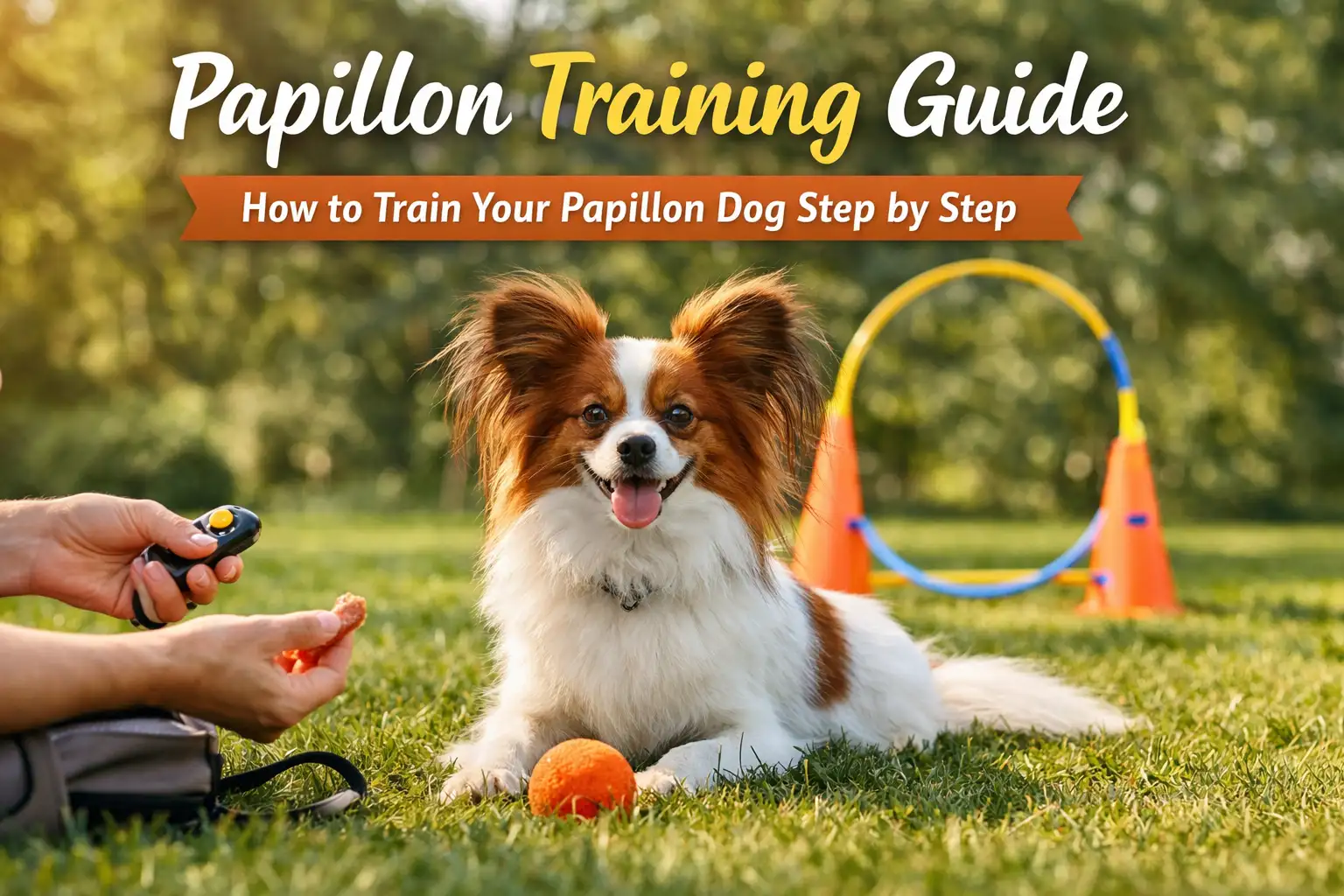
Training a Papillon is one of the most important parts of living with this smart, active, and confident small dog. Papillons may look delicate, but they are energetic, alert, and quick learners. Because of this, Papillon training should not only focus on basic commands. It should also help your dog stay calm, listen around distractions, reduce barking, and behave safely in daily life.
Papillons usually learn fast, but they can also get bored fast. This means training sessions should be short, positive, and consistent. Long or confusing lessons can make a Papillon lose focus. Clear rewards, simple commands, and regular practice work much better than pressure or punishment.
This Papillon training guide is made for both puppies and adult dogs. You will learn how Papillons think, how they learn best, which training problems are common in this breed, and how to build better behavior step by step at home.
If you are still learning about this breed, you can also read the Papillon Dog Full Guide to understand their personality, size, lifespan, and care needs before starting training.
Age also matters when training a Papillon. A puppy, adult, and senior Papillon may need different training routines, patience levels, and daily activity. To understand your dog’s current life stage, you can check the Papillon Dog Age Calculator before planning a training routine.
In this guide, we will cover why Papillon training is important, how this breed learns, how to train a Papillon step by step, and which common problems owners should fix early.
Papillon Training Guide: What You’ll Learn
- Why Papillon training is important
- Understanding Papillon behavior and learning style
- Are Papillons easy to train?
- Step-by-step Papillon training basics
- Papillon puppy training tips
- Common Papillon training problems
Why Papillon Training Is Important
Papillon training is important because this breed is intelligent, energetic, and naturally alert. A Papillon that does not receive enough guidance may bark too much, ignore commands, jump from unsafe places, or act nervous around new people and dogs.
Even though Papillons are small, they are not lazy lap dogs. They need mental exercise, clear rules, and daily interaction. Without training, their confidence can turn into stubborn behavior. With the right training, that same confidence becomes focus, obedience, and better manners.
Good training also keeps a Papillon safe. Small dogs can get injured more easily if they run toward larger dogs, jump from furniture, or ignore recall outdoors. Basic commands like “come,” “stay,” “leave it,” and “wait” can help prevent accidents.
Training also improves your bond with your dog. When your Papillon understands what you want, daily life becomes easier. Walks, grooming, feeding, travel, and meeting guests all become less stressful when your dog has learned calm behavior.
Why training matters for Papillons:
| Training Area | Why It Matters |
|---|---|
| Safety | Helps prevent risky behavior, running away, and unsafe jumping |
| Obedience | Teaches your Papillon to listen to basic commands |
| Barking control | Helps reduce barking caused by boredom, alertness, or excitement |
| Confidence | Helps nervous Papillons feel more secure in new situations |
| Social behavior | Makes it easier for your Papillon to meet people, pets, and visitors |
| Owner bond | Builds trust and improves communication between you and your dog |
Training is not about being harsh or strict. It is about teaching your Papillon what behavior is safe, calm, and acceptable in your home and outside.
Understanding Papillon Behavior and Learning Style
Before you start Papillon dog training, it is important to understand how this breed thinks. Papillons are smart, alert, and eager to interact with their owners. They often enjoy learning, but they need training that feels fun and rewarding.
Papillons usually respond best to positive reinforcement. Small treats, praise, toys, and a happy voice can help your dog understand which behavior you want. Harsh correction, yelling, or rough handling can make a Papillon nervous or less willing to learn.
This breed is also very aware of sounds and movement. That is why some Papillons bark at visitors, doorbells, other dogs, or unfamiliar noises. This does not always mean the dog is badly behaved. In many cases, the dog is alert and needs training to learn when to stop reacting.
Papillon puppies usually learn quickly, but their attention span is short. Adult Papillons can also learn well, but they may need more time if they already have habits like barking, pulling, jumping, or ignoring commands. The key is to train in short sessions and repeat the same rules every day.
Your training environment also matters. Start in a quiet room where your Papillon can focus. Once your dog understands a command indoors, slowly practice in harder places such as the yard, sidewalk, park, or around visitors.
Papillon learning style at a glance:
| Trait | What It Means for Training |
|---|---|
| Highly intelligent | Can learn quickly, but needs mental stimulation |
| Alert | May bark at sounds, movement, or strangers |
| Sensitive | Responds better to rewards than harsh correction |
| Energetic | Needs short training sessions plus daily activity |
| Social | Benefits from early exposure to people, pets, and places |
When you train in a way that matches your Papillon’s personality, your dog is more likely to stay focused, confident, and willing to learn.
Are Papillons Easy to Train?
Yes, Papillons are usually easy to train because they are intelligent, alert, and eager to interact with their owners. Many Papillons learn basic commands quickly when training is positive, short, and consistent.
However, easy to train does not mean automatic. Papillons can become stubborn, distracted, or noisy if they are bored or if rules are not clear. Their intelligence is a strength, but it also means they need mental stimulation and regular practice.
The best way to train a Papillon is to use reward-based training. Small treats, praise, toys, and a happy voice usually work well. Harsh correction is not a good fit for this breed because Papillons can be sensitive and may become nervous or confused.
For first-time owners, Papillon training is usually manageable as long as the training routine stays simple. Start with attention, name response, sit, come, stay, and leash manners. Once your dog understands the basics, slowly add distractions so the behavior becomes reliable outside the home.
Quick answer: Papillons are easy to train compared with many small breeds, but they still need patience, structure, and daily practice to become calm and well behaved.
Step-by-Step Papillon Training Basics
Training a Papillon works best when you keep the process simple. You do not need long lessons or complicated tools. You need short sessions, clear commands, fast rewards, and consistent rules.
Start with your Papillon’s name. Say the name once in a happy voice. When your dog looks at you, reward immediately. This teaches your dog that paying attention to you is a good thing.
Next, teach simple commands such as “sit,” “come,” “stay,” and “leave it.” Practice one command at a time. Do not move too quickly from one skill to another, because this can confuse your dog.
Keep training sessions short. For most Papillons, 5 to 10 minutes is enough. Two or three short sessions per day are usually better than one long session. Always end with something your dog can do successfully, so training stays positive.
Once your Papillon listens well at home, slowly add distractions. Practice near a doorway, in the yard, during walks, and around quiet visitors. This teaches your dog to listen in real-life situations, not only in a quiet room.
Basic Papillon training plan:
| Training Part | Recommended Approach |
|---|---|
| Session length | 5 to 10 minutes |
| Sessions per day | 2 to 3 short sessions |
| Best rewards | Small treats, praise, toys, or gentle play |
| First commands | Name response, sit, come, stay, leave it |
| Best training place | Quiet indoor area before moving to distractions |
| Training style | Positive, calm, consistent, and reward-based |
Do not rush the process. A Papillon may learn a command quickly, but it still needs repetition before the behavior becomes reliable. Slow, steady practice is what turns basic training into everyday obedience.
Papillon Puppy Training Tips
Papillon puppy training should start early, but it should stay gentle and simple. Puppies learn quickly, but they also get tired and distracted easily. Short lessons, clear routines, and positive rewards are the best way to build good habits from the beginning.
Start with name response and attention training. Say your puppy’s name once, wait for eye contact, and reward immediately. This teaches your Papillon puppy to focus on you before you move into commands like sit, come, stay, and leave it.
Potty training should also begin right away. Take your Papillon puppy outside after waking up, after eating, after playing, and before bedtime. Reward outdoor potty breaks immediately so your puppy understands what you want.
Socialization is another important part of Papillon puppy training. Slowly introduce your puppy to normal household sounds, visitors, gentle handling, car rides, safe dogs, and new places. Do this calmly and avoid overwhelming your puppy with too much too soon.
Because Papillons are small, you should also teach safe handling early. Help your puppy learn not to jump from high furniture, rush through open doors, or pull too hard on the leash. These small habits can prevent bigger problems later.
Simple Papillon puppy training schedule:
| Training Area | What to Practice |
|---|---|
| Name response | Reward your puppy for looking at you when called |
| Potty training | Use a regular outdoor schedule and reward success immediately |
| Basic commands | Practice sit, come, stay, and leave it in short sessions |
| Socialization | Introduce people, sounds, places, and gentle handling slowly |
| Leash training | Reward calm walking and stop when pulling starts |
| Barking control | Reward quiet behavior and redirect attention before barking builds |
Do not expect perfect behavior too quickly. A Papillon puppy needs repetition before training becomes reliable. The goal is not to force fast results, but to build habits that will make your dog easier to manage as an adult.
Common Papillon Training Problems and When to Get Help
Even with consistent Papillon training, some behavior problems are common in this breed. Papillons are intelligent, alert, and energetic, so they can develop habits like barking, ignoring commands outside, jumping, nervous behavior, or potty training delays if they do not get clear guidance.
The good news is that most Papillon dog training problems can improve with patience, short daily practice, and a calm routine. The key is to understand why the behavior is happening instead of only trying to stop it.
One of the most common problems is barking. Papillons often bark because they are alert, excited, bored, or unsure about something new. Instead of yelling, teach your dog a quiet command, reward calm behavior, and give enough physical and mental exercise during the day.
Another common issue is not listening in new places. A Papillon may obey well at home but ignore you outside because there are too many distractions. To fix this, practice commands first in a quiet room, then slowly move to the yard, sidewalk, park, and busier places.
Some Papillons also become nervous around strangers, loud sounds, children, or other dogs. This usually happens when training moves too fast or the dog has not been slowly introduced to new experiences. Use gentle rewards, keep distance from stressful triggers, and build confidence step by step.
Potty training can also take time, especially with Papillon puppies. Small dogs have smaller bladders, so they may need more frequent bathroom breaks. A regular schedule, praise after outdoor potty breaks, and supervision inside the home can help reduce accidents.
Age also affects training progress. Papillon puppies may learn quickly but get distracted easily. Adult Papillons can still learn new habits, but behavior changes may take longer if the dog has repeated the same problem for months or years. To better understand your dog’s current life stage, you can check the Papillon Dog Age Calculator before planning a training routine.
Common Papillon training problems and fixes:
| Problem | Possible Reason | Simple Fix |
|---|---|---|
| Too much barking | Alertness, boredom, excitement, or fear | Reward quiet behavior, add mental games, and avoid yelling |
| Not listening outside | Too many distractions | Practice commands in quiet places before moving to harder environments |
| Nervous behavior | Stress, fear, or lack of socialization | Use gentle exposure, calm rewards, and slow progress |
| Potty accidents | Small bladder, weak routine, or poor supervision | Use a regular potty schedule and reward outdoor success immediately |
| Jumping on people | Excitement or attention-seeking | Reward sitting calmly before greeting people |
| Pulling on leash | Excitement or lack of leash practice | Stop when pulling starts and reward walking beside you |
Training problems should improve slowly with consistent practice. If your Papillon shows strong fear, aggression, biting, extreme separation stress, or no progress after several weeks of steady training, it may be time to get help from a qualified dog trainer or behavior professional.
Professional help is especially useful if the behavior feels unsafe, stressful, or too difficult to manage at home. Getting support early can prevent small training issues from becoming long-term behavior problems.
Common Questions Papillon Owners Ask About Training
Many Papillon owners ask similar questions because this breed is small, smart, active, and sometimes noisy. Understanding these common concerns can help you train your Papillon with more confidence.
Why does my Papillon bark so much?
Papillons often bark because they are alert and quick to notice sounds, movement, people, or other animals. Barking can also happen when they are bored, excited, anxious, or trying to get attention. The best approach is to reward quiet behavior, redirect your dog before barking builds, and give enough daily activity and mental stimulation.
Why does my Papillon listen at home but not outside?
This usually happens because outdoor places have stronger distractions. Your Papillon may understand the command indoors but struggle when there are new smells, dogs, people, or noises. Practice in easy places first, then slowly move to harder environments so your dog learns to listen in real-life situations.
Are Papillons hard to potty train?
Papillons are not impossible to potty train, but some puppies need extra consistency because they are small and may need more frequent bathroom breaks. A regular schedule, close supervision, and immediate praise after outdoor potty breaks can make potty training much easier.
Can Papillons be trained off leash?
Some Papillons can learn strong recall, but off-leash training should be handled carefully. This breed is small, fast, and curious, so safety matters. Practice recall first in a secure area before trusting your Papillon in open spaces. For many owners, a leash or long training line is the safer choice outdoors.
Do Papillons need professional training?
Many Papillons can be trained at home with patience and consistency. Professional training may help if your dog shows strong fear, aggression, biting, separation stress, or behavior that does not improve after several weeks of steady practice.
Papillon Training FAQ
How do you train a Papillon?
Train a Papillon with short, positive, and consistent sessions. Start with name response, sit, come, stay, and leave it. Reward good behavior immediately and slowly add distractions once your dog understands the command at home.
Are Papillons easy to train?
Yes, Papillons are usually easy to train because they are intelligent and responsive. However, they still need structure, patience, and daily practice because they can become distracted, bored, or vocal without clear guidance.
When should I start training a Papillon puppy?
You can start training a Papillon puppy as soon as it comes home. Begin with simple routines, name response, potty training, gentle handling, and short basic command sessions.
How long should Papillon training sessions be?
Most Papillon training sessions should be about 5 to 10 minutes. Two or three short sessions per day usually work better than one long session because Papillons learn quickly but can lose focus fast.
How do I stop a Papillon from barking too much?
To reduce Papillon barking, reward quiet behavior, teach a calm command, avoid yelling, and give your dog enough exercise and mental stimulation. Barking often gets worse when a Papillon is bored, overstimulated, or unsure.
Are Papillons good for first-time dog owners?
Papillons can be good for first-time dog owners who are ready to train consistently. They are smart and affectionate, but they need daily attention, clear rules, socialization, and patience with barking or high energy.

Ata Ur Rehman is the founder of Pet Age in Human Years Calculator, an educational platform that provides age conversion charts and lifespan guides for dogs, cats, birds, and other companion animals. His work focuses on helping pet owners understand how animal ages translate into human years using commonly accepted age conversion formulas and published lifespan averages.
The website compiles breed and species lifespan data from kennel clubs, breed organizations, and general animal lifespan studies to present simple and easy-to-understand guides for pet owners worldwide.
This website was created to centralize animal age conversion charts into one easy reference platform for pet owners.