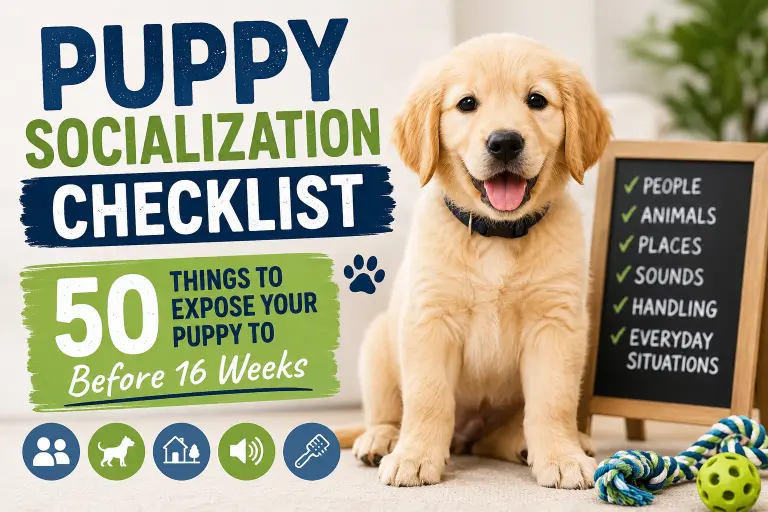
The first 16 weeks of a puppy’s life are one of the most important periods for socialization. During this time, puppies are naturally more open to new experiences, making it easier for them to build confidence and adapt to the world around them.
Recommended Dog Care Products
Based on your dog’s age, these products may help with comfort, health, grooming, and daily care.

Purina Pro Plan Veterinary Supplements
Daily probiotics for dogs to support digestive and gut health.
View on Amazon ↗
Earth Rated Poop Bags for Dogs
Leak-proof, extra thick waste bag refill rolls with lavender scent.
View on Amazon ↗
Greenies Pill Pockets for Dogs
Large dog treats for capsule medication, peanut butter flavor.
View on Amazon ↗
HONEY CARE All-Absorb Dog Wrap
Small male dog wraps, 50 count, useful for daily care support.
View on Amazon ↗
Seresto Flea & Tick Collar
Flea and tick treatment and prevention for dogs over 18 lbs.
View on Amazon ↗
Milk-Bone MaroSnacks
Small dog treats with real bone marrow in a 40 oz canister.
View on Amazon ↗
Vital Essentials Dog Treats
Freeze dried beef liver dog treats, grain free and single ingredient.
View on Amazon ↗
Stain & Odor Eliminator
Enzyme cleaner for pet stains, carpet messes, and strong odors.
View on Amazon ↗
Pur Luv Chicken Jerky Treats
Dog treats made with real chicken breast, high protein and chew-friendly.
View on Amazon ↗
Milk-Bone Flavor Snacks
Mini crunchy dog biscuits in a 36 oz canister for small rewards.
View on Amazon ↗As an Amazon Associate, we may earn from qualifying purchases.
A good puppy socialization checklist isn’t about exposing your puppy to as many things as possible in a short time. It’s about creating positive experiences with different people, animals, environments, sounds, and everyday situations. When done correctly, socialization helps your puppy learn that new things are safe rather than scary.
Use this checklist as a practical guide to expose your puppy to a variety of puppy experiences before 16 weeks. You don’t need to complete everything in a single week. Focus on positive, controlled introductions and let your puppy progress at a comfortable pace.
How to Use This Puppy Socialization Checklist
Focus on Positive Experiences
Every item on this puppy socialization checklist should be introduced in a way that helps your puppy feel safe and comfortable. If an experience becomes overwhelming, the goal isn’t simply to “get through it.” Instead, increase distance, slow down, and use treats, praise, or play to create a positive association.
For example, hearing traffic from a distance is often more beneficial than standing directly beside a busy road if your puppy appears nervous.
Go at Your Puppy’s Pace
Not every puppy responds to new experiences in the same way. Some puppies confidently approach new people and environments, while others need more time to observe before interacting.
Allow your puppy to:
- Watch before participating
- Choose whether to approach people
- Explore new places gradually
- Take breaks when needed
Avoid forcing interactions. A puppy that is pressured into situations can develop fear instead of confidence.
Track Completed Experiences
As you work through the checklist, keep track of what your puppy has already experienced. This helps you identify gaps and ensures you’re exposing your puppy to a wide variety of situations rather than repeating the same ones.
Remember that quality matters more than quantity. One positive experience is more valuable than several stressful ones.
Recommended Dog Care Products
Based on your dog’s age, these products may help with comfort, health, grooming, and daily care.
Purina Pro Plan Veterinary Supplements
Daily probiotics for dogs to support digestive and gut health.
View on Amazon ↗
Earth Rated Poop Bags for Dogs
Leak-proof, extra thick waste bag refill rolls with lavender scent.
View on Amazon ↗
Greenies Pill Pockets for Dogs
Large dog treats for capsule medication, peanut butter flavor.
View on Amazon ↗
HONEY CARE All-Absorb Dog Wrap
Small male dog wraps, 50 count, useful for daily care support.
View on Amazon ↗
Seresto Flea & Tick Collar
Flea and tick treatment and prevention for dogs over 18 lbs.
View on Amazon ↗
Milk-Bone MaroSnacks
Small dog treats with real bone marrow in a 40 oz canister.
View on Amazon ↗
Vital Essentials Dog Treats
Freeze dried beef liver dog treats, grain free and single ingredient.
View on Amazon ↗
Stain & Odor Eliminator
Enzyme cleaner for pet stains, carpet messes, and strong odors.
View on Amazon ↗
Pur Luv Chicken Jerky Treats
Dog treats made with real chicken breast, high protein and chew-friendly.
View on Amazon ↗
Milk-Bone Flavor Snacks
Mini crunchy dog biscuits in a 36 oz canister for small rewards.
View on Amazon ↗As an Amazon Associate, we may earn from qualifying purchases.
Puppy Socialization Checklist: 50 Experiences Before 16 Weeks
Use the following checklist to expose your puppy to a broad range of people, animals, environments, sounds, and everyday situations.
People Your Puppy Should Meet
- Adult women
- Adult men
- Teenagers
- Young children
- Elderly people
- People wearing hats
- People wearing sunglasses
- People carrying umbrellas
- People with beards
- People wearing uniforms
- Delivery drivers
- Joggers and runners
- People using wheelchairs
- People using walkers or canes
- Visitors entering your home
The goal is not for your puppy to interact closely with everyone. Simply seeing different types of people and remaining relaxed is valuable socialization.
Animals Your Puppy Should Encounter
- Calm, vaccinated adult dogs
- Puppies of a similar age
- Small dogs
- Large dogs
- Dogs with different coat types and appearances
- Cats
- Livestock such as horses, sheep, or cows (if relevant to your area)
- Birds
- Small pets viewed safely from a distance
- Wildlife commonly seen in your environment
Always prioritize safe, controlled introductions. Avoid dog parks until your puppy is old enough and your veterinarian recommends it.
Places Your Puppy Should Visit
- Your veterinarian’s office
- A friend’s home
- A pet-friendly store
- A quiet residential street
- A moderately busy street
- A local park
- A parking lot
- A sidewalk with pedestrian traffic
- Outdoor dining areas
- Different indoor environments
The objective is to help your puppy experience a variety of locations so unfamiliar places don’t become stressful later in life.
Sounds Your Puppy Should Hear
- Traffic noise
- Doorbells
- Vacuum cleaners
- Hair dryers
- Washing machines
- Household alarms
- Children playing
- Thunder recordings
- Fireworks recordings
- Construction sounds
Start at a low volume whenever possible and gradually increase exposure while rewarding calm behavior.
Handling and Grooming Experiences
- Paw handling
- Ear inspections
- Gentle mouth and tooth checks
- Brushing and combing
- Nail trimmer or nail grinder exposure
Many adult dogs struggle with grooming because these experiences weren’t introduced early. Short, positive sessions can make future veterinary visits and grooming appointments much easier.
Everyday Situations and Objects to Continue Introducing
Although the checklist above covers 50 core experiences, continue exposing your puppy to common daily situations throughout the socialization period, including:
- Car rides
- Crate time
- Leash walks
- Elevators
- Strollers
- Bicycles
- Skateboards
- Shopping carts
- People carrying bags
- Visitors coming and going
These routine puppy experiences help build confidence in the environments your dog is most likely to encounter throughout life.
Socialization Milestones by Age
The checklist is most effective when you spread experiences throughout the socialization window rather than trying to complete everything at once. Use these age ranges as a guide for prioritizing exposures.
8–10 Weeks: Build a Foundation at Home and Nearby
At this stage, your puppy is adjusting to a new environment and learning that the world is a safe place.
Recommended Dog Care Products
Based on your dog’s age, these products may help with comfort, health, grooming, and daily care.
Purina Pro Plan Veterinary Supplements
Daily probiotics for dogs to support digestive and gut health.
View on Amazon ↗
Earth Rated Poop Bags for Dogs
Leak-proof, extra thick waste bag refill rolls with lavender scent.
View on Amazon ↗
Greenies Pill Pockets for Dogs
Large dog treats for capsule medication, peanut butter flavor.
View on Amazon ↗
HONEY CARE All-Absorb Dog Wrap
Small male dog wraps, 50 count, useful for daily care support.
View on Amazon ↗
Seresto Flea & Tick Collar
Flea and tick treatment and prevention for dogs over 18 lbs.
View on Amazon ↗
Milk-Bone MaroSnacks
Small dog treats with real bone marrow in a 40 oz canister.
View on Amazon ↗
Vital Essentials Dog Treats
Freeze dried beef liver dog treats, grain free and single ingredient.
View on Amazon ↗
Stain & Odor Eliminator
Enzyme cleaner for pet stains, carpet messes, and strong odors.
View on Amazon ↗
Pur Luv Chicken Jerky Treats
Dog treats made with real chicken breast, high protein and chew-friendly.
View on Amazon ↗
Milk-Bone Flavor Snacks
Mini crunchy dog biscuits in a 36 oz canister for small rewards.
View on Amazon ↗As an Amazon Associate, we may earn from qualifying purchases.
Focus on:
- Meeting household members and trusted visitors
- Hearing common household sounds
- Gentle handling exercises
- Short car rides
- Exploring different floor surfaces
- Seeing strollers, bicycles, and people from a comfortable distance
- Visiting safe outdoor locations
Keep sessions short and positive. A few successful exposures each day are more valuable than a long outing that leaves your puppy overwhelmed.
10–12 Weeks: Expand Social Experiences
As your puppy becomes more confident, begin introducing a wider variety of people, places, and situations.
Focus on:
- People of different ages and appearances
- Pet-friendly locations
- Calm, vaccinated dogs
- Outdoor cafés and public spaces
- Busier streets with moderate activity
- Additional sounds such as traffic and construction
This is a good time to increase the variety of experiences while continuing to reward calm and curious behavior.
12–16 Weeks: Increase Variety and Real-World Exposure
By this age, your puppy should be experiencing more of the environments they are likely to encounter throughout adulthood.
Focus on:
- Different neighborhoods
- New walking routes
- Veterinary clinic visits that include treats and positive interactions
- More complex environments with controlled distractions
- Continued exposure to unfamiliar people and objects
Don’t stop introducing new experiences simply because your puppy seems confident. Repetition and variety help reinforce positive associations.
The goal by 16 weeks isn’t perfection. It’s helping your puppy develop a positive history with a wide range of sights, sounds, people, animals, and environments.
Signs Your Puppy Is Comfortable vs Overwhelmed
A successful socialization experience depends less on what your puppy encounters and more on how they feel during the experience.
Recommended Dog Care Products
Based on your dog’s age, these products may help with comfort, health, grooming, and daily care.
Purina Pro Plan Veterinary Supplements
Daily probiotics for dogs to support digestive and gut health.
View on Amazon ↗
Earth Rated Poop Bags for Dogs
Leak-proof, extra thick waste bag refill rolls with lavender scent.
View on Amazon ↗
Greenies Pill Pockets for Dogs
Large dog treats for capsule medication, peanut butter flavor.
View on Amazon ↗
HONEY CARE All-Absorb Dog Wrap
Small male dog wraps, 50 count, useful for daily care support.
View on Amazon ↗
Seresto Flea & Tick Collar
Flea and tick treatment and prevention for dogs over 18 lbs.
View on Amazon ↗
Milk-Bone MaroSnacks
Small dog treats with real bone marrow in a 40 oz canister.
View on Amazon ↗
Vital Essentials Dog Treats
Freeze dried beef liver dog treats, grain free and single ingredient.
View on Amazon ↗
Stain & Odor Eliminator
Enzyme cleaner for pet stains, carpet messes, and strong odors.
View on Amazon ↗
Pur Luv Chicken Jerky Treats
Dog treats made with real chicken breast, high protein and chew-friendly.
View on Amazon ↗
Milk-Bone Flavor Snacks
Mini crunchy dog biscuits in a 36 oz canister for small rewards.
View on Amazon ↗As an Amazon Associate, we may earn from qualifying purchases.
Learning to recognize your puppy’s body language can help you adjust situations before fear develops.
Positive Socialization Signals
These signs usually indicate your puppy is comfortable and ready to continue exploring:
- Loose, relaxed body posture
- Soft eyes
- Curious investigation
- Willingness to take treats
- Normal play behavior
- Relaxed tail movement
- Choosing to approach people or objects
A confident puppy may look around, observe something new, and then continue exploring without concern.
Stress Signals to Watch For
These signs suggest your puppy may need more distance, a break, or a slower introduction:
- Cowering or crouching
- Tail tucked tightly
- Refusing treats
- Excessive panting when not hot
- Trembling
- Trying to hide behind you
- Barking or lunging out of fear
- Attempting to escape
- Freezing in place
If you notice these behaviors, avoid forcing the interaction.
Instead:
- Move farther away from the trigger.
- Allow your puppy to observe from a safe distance.
- Use treats to create positive associations.
- End the session if your puppy remains uncomfortable.
A common mistake during puppy socialization is assuming every exposure must involve direct interaction. In reality, calmly observing a new experience from a distance is often more productive than pushing a puppy beyond their comfort level.
Successful puppy socialization is measured by confidence and comfort—not by how many experiences you can check off in a single day.
Printable Puppy Socialization Tracking Sheet
A tracking sheet helps ensure you’re exposing your puppy to a wide range of experiences rather than repeating only the easy ones. You can print this list or save it digitally and check off items as they are completed.
People
- Adult women
- Adult men
- Teenagers
- Young children
- Elderly people
- People wearing hats
- People wearing sunglasses
- People carrying umbrellas
- People with beards
- People wearing uniforms
- Delivery drivers
- Joggers
- Wheelchair users
- People using walkers or canes
- Visitors entering the home
Animals
- Calm adult dogs
- Puppies
- Small dogs
- Large dogs
- Dogs with different appearances
- Cats
- Livestock
- Birds
- Small pets
- Local wildlife
Places
- Veterinary clinic
- Friend’s home
- Pet-friendly store
- Quiet street
- Busy street
- Park
- Parking lot
- Sidewalk with foot traffic
- Outdoor café
- New indoor environment
Sounds
- Traffic
- Doorbell
- Vacuum cleaner
- Hair dryer
- Washing machine
- Household alarm
- Children playing
- Thunder recording
- Fireworks recording
- Construction sounds
Handling and Grooming
- Paw handling
- Ear checks
- Tooth inspection
- Brushing
- Nail trimmer exposure
Weekly Progress Tracking
Each week, ask yourself:
- Did my puppy experience something new?
- Were the experiences positive?
- Did I expose my puppy to different people, places, sounds, and situations?
- Did I avoid pushing my puppy beyond their comfort level?
- Which experiences still need to be introduced?
A completed checklist isn’t the finish line. Continue providing positive exposures throughout adolescence to maintain your puppy’s confidence as they grow.
Frequently Asked Questions
When should puppy socialization start?
Socialization should begin as soon as your puppy comes home. The earlier you start introducing safe, positive experiences, the more opportunities your puppy has to develop confidence during the critical socialization period.
Can I socialize my puppy before all vaccinations are complete?
Yes. Many important socialization experiences do not require contact with unfamiliar dogs. Your puppy can safely observe people, hear new sounds, visit controlled environments, and experience different surfaces while following your veterinarian’s recommendations.
How many new experiences should my puppy have each week?
There is no exact number. Focus on steady exposure to new experiences while keeping interactions positive. Several successful experiences each week are far more valuable than trying to rush through a long checklist.
What if my puppy seems scared during socialization?
Create more distance from whatever is causing concern and allow your puppy to observe without pressure. Use treats and praise to build positive associations. If your puppy remains uncomfortable, end the session and try again later at a lower intensity.
Is 16 weeks too late to socialize a puppy?
No. Dogs continue learning throughout their lives. However, the first 16 weeks are a particularly important developmental period, which is why early socialization is strongly encouraged whenever possible.
Conclusion
A puppy socialization checklist is most effective when it focuses on positive experiences rather than simply checking boxes. By exposing your puppy to a variety of people, animals, environments, sounds, and handling exercises before 16 weeks, you’re helping them develop the confidence needed to navigate everyday life.
Work through the checklist at your puppy’s pace, pay attention to their body language, and prioritize quality over quantity. The goal isn’t to create a puppy that loves everything—it’s to help raise a dog that can calmly and confidently handle the world around them.