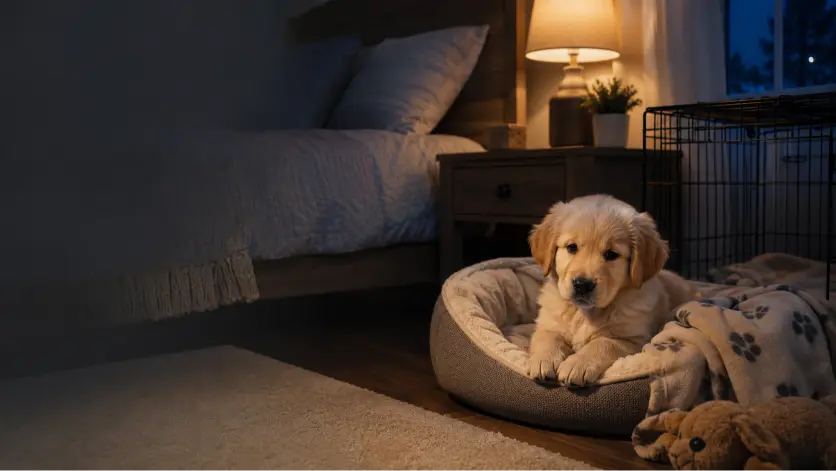
Bringing a puppy home is exciting, but the first night can feel harder than many new owners expect. Your puppy has just left everything familiar: their mother, littermates, smells, sounds, and routine. So if they cry, wake up often, or seem unsettled, it does not automatically mean you are doing something wrong.
Recommended Dog Care Products
Based on your dog’s age, these products may help with comfort, health, grooming, and daily care.

Purina Pro Plan Veterinary Supplements
Daily probiotics for dogs to support digestive and gut health.
View on Amazon ↗
Earth Rated Poop Bags for Dogs
Leak-proof, extra thick waste bag refill rolls with lavender scent.
View on Amazon ↗
Greenies Pill Pockets for Dogs
Large dog treats for capsule medication, peanut butter flavor.
View on Amazon ↗
HONEY CARE All-Absorb Dog Wrap
Small male dog wraps, 50 count, useful for daily care support.
View on Amazon ↗
Seresto Flea & Tick Collar
Flea and tick treatment and prevention for dogs over 18 lbs.
View on Amazon ↗
Milk-Bone MaroSnacks
Small dog treats with real bone marrow in a 40 oz canister.
View on Amazon ↗
Vital Essentials Dog Treats
Freeze dried beef liver dog treats, grain free and single ingredient.
View on Amazon ↗
Stain & Odor Eliminator
Enzyme cleaner for pet stains, carpet messes, and strong odors.
View on Amazon ↗
Pur Luv Chicken Jerky Treats
Dog treats made with real chicken breast, high protein and chew-friendly.
View on Amazon ↗
Milk-Bone Flavor Snacks
Mini crunchy dog biscuits in a 36 oz canister for small rewards.
View on Amazon ↗As an Amazon Associate, we may earn from qualifying purchases.
The first night with a puppy is usually about comfort, safety, and helping them adjust without creating habits that will be difficult to change later. You may not get a perfect night of sleep, but with the right setup and expectations, you can make the night calmer for both of you.
This guide explains what is normal on your puppy’s first night home, how to prepare before bedtime, how to handle the crate first night, and what to do if your puppy cries at night.
What to Expect on Your Puppy’s First Night Home
Your puppy’s first night home is usually not peaceful from start to finish. Some puppies settle quickly, but many cry, whine, pace, or wake up several times. This is normal. Your puppy is not being difficult; they are adjusting to a completely new place.
The most important thing to understand is that your puppy is likely tired, confused, and looking for reassurance. They may not understand where they are supposed to sleep yet. They may also need to go outside during the night because young puppies cannot hold their bladder for long.
A realistic first night may include:
- Crying or whining when placed in the crate or sleeping area
- Waking up after short periods of sleep
- Needing one or more potty breaks
- Restlessness before settling
- Wanting to be close to you
- Refusing to sleep alone at first
This does not mean your puppy hates the crate, has separation anxiety, or will never sleep through the night. It usually means they are young, newly separated from their litter, and unsure of their surroundings.
Normal First-Night Behaviors
Crying is one of the most common first-night behaviors. A puppy crying at night may be scared, lonely, uncomfortable, or needing to potty. The sound can be stressful, especially when you are tired, but it helps to pause before reacting.
Ask yourself:
- Did the puppy recently go potty?
- Is the crate or sleeping area comfortable?
- Is the room too hot or too cold?
- Is the puppy crying intensely or just fussing?
- Has the puppy been left completely alone in a new room?
Mild whining or short bursts of crying can be normal as the puppy learns to settle. But if the crying is frantic, continuous, or paired with signs of distress, it is worth checking calmly.
Recommended Dog Care Products
Based on your dog’s age, these products may help with comfort, health, grooming, and daily care.
Purina Pro Plan Veterinary Supplements
Daily probiotics for dogs to support digestive and gut health.
View on Amazon ↗
Earth Rated Poop Bags for Dogs
Leak-proof, extra thick waste bag refill rolls with lavender scent.
View on Amazon ↗
Greenies Pill Pockets for Dogs
Large dog treats for capsule medication, peanut butter flavor.
View on Amazon ↗
HONEY CARE All-Absorb Dog Wrap
Small male dog wraps, 50 count, useful for daily care support.
View on Amazon ↗
Seresto Flea & Tick Collar
Flea and tick treatment and prevention for dogs over 18 lbs.
View on Amazon ↗
Milk-Bone MaroSnacks
Small dog treats with real bone marrow in a 40 oz canister.
View on Amazon ↗
Vital Essentials Dog Treats
Freeze dried beef liver dog treats, grain free and single ingredient.
View on Amazon ↗
Stain & Odor Eliminator
Enzyme cleaner for pet stains, carpet messes, and strong odors.
View on Amazon ↗
Pur Luv Chicken Jerky Treats
Dog treats made with real chicken breast, high protein and chew-friendly.
View on Amazon ↗
Milk-Bone Flavor Snacks
Mini crunchy dog biscuits in a 36 oz canister for small rewards.
View on Amazon ↗As an Amazon Associate, we may earn from qualifying purchases.
Some puppies also seem wide awake at bedtime. This can happen if they napped too much in the evening, became overstimulated, or are nervous in the new environment. Keep the response calm and boring. The goal is not to start playtime; it is to show them that nighttime is quiet.
When Crying Is Normal vs. When It May Signal a Problem
Normal first-night crying usually improves when the puppy feels safe, has had a potty break, and is near enough to sense you. It may come and go during the night, especially after the puppy wakes up.
Crying may need attention if your puppy:
- Has not had a recent potty break
- Is panting, trembling, or panicking
- Is trying to escape the crate forcefully
- Seems physically uncomfortable
- Has vomiting, diarrhea, coughing, or unusual weakness
For most healthy puppies, the first night is simply an adjustment period. Your job is to respond with calm reassurance, meet basic needs, and avoid turning every cry into play, food, or extended attention.
How to Prepare Before Bedtime
A smoother puppy first night home starts before you go to bed. The evening should be calm, predictable, and focused on helping your puppy feel secure. Too much excitement right before bedtime can make it harder for them to settle.
Try to bring your puppy home earlier in the day if possible. This gives them time to explore, eat, potty, and become familiar with the house before nighttime. If they arrive late in the evening, keep things simple and quiet instead of overwhelming them with introductions, toys, and visitors.
Set Up the Sleeping Area
Decide where your puppy will sleep before bedtime arrives. For many puppies, a crate near your bed works well because they can hear and smell you. This helps them feel less alone while still giving them a safe, defined sleeping space.
The sleeping area should be:
- Quiet
- Safe
- Warm but not hot
- Free from loose items they could chew or swallow
- Close enough for you to hear if they need a potty break
If you are using a crate, keep it simple. Add a comfortable crate mat or blanket if your puppy is not likely to chew it. Some puppies are comforted by a soft toy, but avoid anything with small parts, stuffing, or pieces that could be swallowed.
Do not place the crate far away in an isolated room on the first night unless the puppy is already used to sleeping alone. Being alone in a new home can make crying worse and make the first night harder than it needs to be.
Recommended Dog Care Products
Based on your dog’s age, these products may help with comfort, health, grooming, and daily care.
Purina Pro Plan Veterinary Supplements
Daily probiotics for dogs to support digestive and gut health.
View on Amazon ↗
Earth Rated Poop Bags for Dogs
Leak-proof, extra thick waste bag refill rolls with lavender scent.
View on Amazon ↗
Greenies Pill Pockets for Dogs
Large dog treats for capsule medication, peanut butter flavor.
View on Amazon ↗
HONEY CARE All-Absorb Dog Wrap
Small male dog wraps, 50 count, useful for daily care support.
View on Amazon ↗
Seresto Flea & Tick Collar
Flea and tick treatment and prevention for dogs over 18 lbs.
View on Amazon ↗
Milk-Bone MaroSnacks
Small dog treats with real bone marrow in a 40 oz canister.
View on Amazon ↗
Vital Essentials Dog Treats
Freeze dried beef liver dog treats, grain free and single ingredient.
View on Amazon ↗
Stain & Odor Eliminator
Enzyme cleaner for pet stains, carpet messes, and strong odors.
View on Amazon ↗
Pur Luv Chicken Jerky Treats
Dog treats made with real chicken breast, high protein and chew-friendly.
View on Amazon ↗
Milk-Bone Flavor Snacks
Mini crunchy dog biscuits in a 36 oz canister for small rewards.
View on Amazon ↗As an Amazon Associate, we may earn from qualifying purchases.
Plan Potty Breaks Before Bed
Take your puppy outside shortly before bedtime, even if they went recently. Use the same potty spot if possible, keep the trip quiet, and praise gently when they go.
Avoid turning the final potty break into playtime. If your puppy starts running around or getting excited, bedtime will become harder. Keep the routine simple:
- Go outside.
- Give them time to potty.
- Praise calmly.
- Bring them back inside.
- Settle them in their sleeping area.
Young puppies often need to go out during the night. This is not a training failure. It is part of having a puppy. The goal is to make overnight potty breaks boring and consistent so your puppy learns the difference between nighttime potty and daytime play.
Keep the Evening Calm and Predictable
The first evening should not be packed with stimulation. Your puppy is already processing a lot. Loud voices, constant handling, visitors, children chasing them, or too many new spaces can make them overtired and harder to settle.
A better evening routine is simple:
- Let your puppy explore a small safe area.
- Offer water and food according to their normal schedule.
- Give them a chance to potty.
- Allow short, gentle play.
- Help them wind down before bed.
If your puppy falls asleep before bedtime, let them rest, but try to take them out for a final potty break before placing them in the crate or sleeping area. A calm puppy with an empty bladder has a better chance of settling than a puppy who is overstimulated or uncomfortable.
The first night may still be broken, but preparation gives you a clear plan. That alone makes the night easier to handle.
Crate First Night: How to Set Up Success
The crate first night should feel safe, not like punishment. Your puppy may not love it immediately, especially if they have never slept in a crate before, but the way you introduce it can make a big difference.
The goal is not to force your puppy to “tough it out” alone. The goal is to give them a secure sleeping space while helping them understand that nighttime is calm, predictable, and safe.
If possible, introduce the crate before bedtime. Let your puppy sniff it, walk in and out, and find something pleasant inside, such as a safe chew or a small treat. Keep your tone relaxed. Do not wait until the puppy is exhausted and then suddenly shut them inside an unfamiliar crate.
Recommended Dog Care Products
Based on your dog’s age, these products may help with comfort, health, grooming, and daily care.
Purina Pro Plan Veterinary Supplements
Daily probiotics for dogs to support digestive and gut health.
View on Amazon ↗
Earth Rated Poop Bags for Dogs
Leak-proof, extra thick waste bag refill rolls with lavender scent.
View on Amazon ↗
Greenies Pill Pockets for Dogs
Large dog treats for capsule medication, peanut butter flavor.
View on Amazon ↗
HONEY CARE All-Absorb Dog Wrap
Small male dog wraps, 50 count, useful for daily care support.
View on Amazon ↗
Seresto Flea & Tick Collar
Flea and tick treatment and prevention for dogs over 18 lbs.
View on Amazon ↗
Milk-Bone MaroSnacks
Small dog treats with real bone marrow in a 40 oz canister.
View on Amazon ↗
Vital Essentials Dog Treats
Freeze dried beef liver dog treats, grain free and single ingredient.
View on Amazon ↗
Stain & Odor Eliminator
Enzyme cleaner for pet stains, carpet messes, and strong odors.
View on Amazon ↗
Pur Luv Chicken Jerky Treats
Dog treats made with real chicken breast, high protein and chew-friendly.
View on Amazon ↗
Milk-Bone Flavor Snacks
Mini crunchy dog biscuits in a 36 oz canister for small rewards.
View on Amazon ↗As an Amazon Associate, we may earn from qualifying purchases.
Where the Crate Should Be Located
For the first night with a puppy, the crate is usually best placed near your bed or close enough that your puppy can hear and smell you. This helps reduce panic because your puppy does not feel completely abandoned in a strange house.
Keeping the crate nearby also helps you hear the difference between normal fussing and a real potty signal. If your puppy wakes and starts whining after sleeping for a while, they may need to go outside.
You do not have to keep the crate beside your bed forever. Once your puppy becomes more comfortable, you can slowly move it to the long-term sleeping location if that is your plan. But on the first night, closeness often helps everyone sleep a little better.
What to Put Inside the Crate
Keep the crate simple and safe. A young puppy does not need a pile of blankets, toys, and accessories. Too many items can become distractions or chewing hazards.
Good crate items may include:
- A comfortable crate mat or washable blanket
- One safe soft toy, if your puppy does not chew or shred it
- A familiar-smelling item from the breeder or rescue, if available
- A crate cover only if it does not cause overheating or stress
Avoid putting food bowls, lots of toys, or anything the puppy could tear apart and swallow inside the crate overnight. Water may be needed in some situations, but for many healthy puppies, leaving a full water bowl in the crate overnight can lead to spills and extra potty breaks. Follow your vet’s advice if your puppy has specific health needs or is very young.
The crate should be large enough for your puppy to stand, turn around, and lie down comfortably, but not so large that one end becomes a potty area. If the crate is too big, use a divider if available.
What Not to Do During the First Night
Do not use the crate as punishment. If your puppy connects the crate with fear or isolation, future crate training becomes harder.
Also avoid putting your puppy in the crate and disappearing immediately if they are already anxious. Sit nearby for a few minutes. Speak softly if needed. Let them know you are close without turning bedtime into playtime.
Try not to open the crate every time your puppy makes a tiny sound. If every whine leads to attention, your puppy may learn that crying brings you back instantly. At the same time, do not ignore intense distress or a likely potty need. The first night requires balance: calm reassurance, not constant entertainment.
How to Handle Puppy Crying at Night
Puppy crying at night is one of the hardest parts of the first night home. It can make you feel guilty, frustrated, or unsure whether you should comfort your puppy or let them settle.
The best response depends on why your puppy is crying. A puppy may cry because they need the toilet, feel lonely, are unsure of the crate, or simply woke up and does not know how to settle again.
Before reacting, pause for a moment and listen. Is it light whining that may fade? Or is it urgent, escalating, or happening after your puppy has been asleep for a while?
If the Puppy Needs a Potty Break
If your puppy wakes up crying after sleeping, assume they may need to potty, especially if they are very young. Take them outside calmly and quietly.
Keep the potty break boring:
- No playing
- No excited talking
- No treats that turn it into a party
- No wandering around the house afterward
Carry or guide your puppy to the potty spot, give them a chance to go, then return them to the crate or sleeping area. Gentle praise is fine, but keep the mood sleepy.
This teaches your puppy that nighttime crying for potty needs will be answered, but nighttime is not for games or attention.
If the Puppy Is Simply Seeking Comfort
If your puppy has recently gone potty and is softly whining because they want comfort, you can reassure them without fully taking them out and starting over.
You might:
- Place a hand near the crate
- Speak softly for a few seconds
- Sit nearby until they calm down
- Keep the room dim and quiet
The key is to be comforting but boring. You are not rewarding crying with play or freedom; you are helping a young puppy feel safe enough to sleep.
Some owners worry that any comfort will “spoil” the puppy. But the first night is not about testing independence. Your puppy is in a new environment and may genuinely need reassurance. You can comfort them while still keeping boundaries.
Signs You Should Check on Your Puppy
You should check on your puppy if the crying sounds panicked, sharp, or unusual. You should also check if your puppy is scratching hard at the crate, panting heavily, gagging, coughing, vomiting, or having diarrhea.
A quick check does not mean you failed at crate training. It means you are making sure your puppy is safe.
When you check, stay calm. Avoid turning on bright lights or speaking in an excited voice. Handle the need, then return to the bedtime routine.
If your puppy cries constantly for long periods and cannot settle at all, the setup may need adjusting. The crate may be too far away, the puppy may need a warmer or quieter space, or they may need a gentler crate introduction during the day.
A Simple First-Night Schedule You Can Follow
A clear plan makes the puppy first night home less stressful. You may still wake up, but you will know what to do instead of guessing at 2 a.m.
This schedule does not need to be perfect. Use it as a flexible guide based on your puppy’s age, energy level, and potty needs.
Evening Routine
In the early evening, give your puppy time to explore a small, safe area of your home. Do not give them access to every room right away. Too much freedom can lead to accidents and overstimulation.
Offer dinner according to their normal feeding schedule. Avoid making sudden food changes on the first night unless your vet has advised it. After eating, take your puppy outside for a potty break.
Keep play gentle and short. A little activity can help your puppy release energy, but rough or exciting play too close to bedtime can make settling harder.
A good evening flow looks like this:
- Explore a small safe area.
- Eat dinner.
- Go outside for potty.
- Have short, calm playtime.
- Begin winding down.
Bedtime Routine
About 30 to 60 minutes before bed, start making the environment calmer. Lower the energy in the house. Avoid loud games, visitors, or lots of handling.
Take your puppy outside for a final potty break right before bed. Give them enough time to go, then bring them back inside quietly.
Place them in the crate or sleeping area with minimal fuss. You can sit nearby for a few minutes if they seem unsure. Keep your voice soft and your actions predictable.
The first bedtime may not be smooth, but consistency matters. If your puppy learns that bedtime follows the same quiet pattern each night, settling usually becomes easier.
Overnight Potty Expectations
Most young puppies cannot sleep through the entire night without a potty break. Some may need one break; others may need more, depending on age, size, and how recently they ate or drank.
When your puppy wakes you, think in this order:
- Do they likely need to potty?
- Are they safe and comfortable?
- Are they asking for attention after their needs have been met?
For potty breaks, keep everything quiet and direct. Take them out, give them a chance to go, then return them to bed.
Do not expect the first night to be perfect. A successful first night is not necessarily a full night of sleep. It is a night where your puppy stays safe, begins learning the routine, and starts to understand that their new home is secure.
What the Second Night and First Week Usually Look Like
The second night is often a little better, but not always. Some puppies settle faster once they recognize the crate, your scent, and the bedtime routine. Others cry just as much or even more because they are still adjusting.
This does not mean the first night failed. A puppy first night home is only the beginning of the adjustment period.
During the first week, you may notice small improvements such as:
- Shorter crying periods
- Faster settling after potty breaks
- More confidence in the sleeping area
- Fewer startle reactions to household sounds
- A more predictable potty pattern
Progress is usually gradual. Your puppy may have one good night followed by a difficult one. That is normal, especially if the daytime routine changes, the puppy naps too much in the evening, or they are still learning where and when to potty.
The best thing you can do is keep the routine consistent. Use the same sleeping area, the same potty spot, and the same calm response during the night. Puppies learn through repetition, and a predictable routine helps them feel secure.
If your puppy is still crying intensely every night after several days, look at the setup before assuming it is a behavior problem. The crate may be too far away, the puppy may not be getting enough daytime crate practice, or they may be waking because they need more structured potty breaks.
You should also pay attention to physical signs. Crying paired with vomiting, diarrhea, coughing, weakness, refusal to eat, or unusual distress should not be treated as normal first-week adjustment. In that case, contact your vet for guidance.
For most puppies, the first week is about learning three simple things:
- This new place is safe.
- Nighttime is quiet.
- Potty breaks happen outside, then we go back to sleep.
You do not need to solve every training issue in the first few nights. Focus on safety, comfort, and consistency.
Conclusion
Your puppy’s first night home may be noisy, broken, and tiring, but that does not mean anything is wrong. Most puppies need time to adjust after leaving their litter and entering a completely new environment.
A successful first night is not about perfect sleep. It is about setting up a safe sleeping space, responding calmly to real needs, keeping overnight potty breaks boring, and helping your puppy feel secure without turning nighttime into playtime.
Expect some crying, plan for potty breaks, and keep the routine simple. With consistency, most puppies begin to settle better as the new home starts to feel familiar.
FAQs About a Puppy’s First Night Home
Should I ignore my puppy crying the first night?
Not completely. First, consider whether your puppy needs a potty break, feels unsafe, or is uncomfortable. If they recently went potty and are only fussing lightly, give them a little time to settle.
If the crying becomes intense, panicked, or unusual, check on them calmly. The goal is to meet real needs without teaching your puppy that every small whine leads to play, freedom, or lots of attention.
Where should my puppy sleep on the first night?
Most puppies do best in a crate or safe sleeping area near their owner for the first night. Being close enough to hear and smell you can help them feel less alone.
You can move the crate gradually later if you want your puppy to sleep in another room long term. The first night should focus on safety, comfort, and helping your puppy settle.
How long will my puppy cry the first night?
It depends on the puppy. Some cry for only a few minutes, while others wake and cry several times through the night.
Crying is common during the first night with a puppy because everything is unfamiliar. If your puppy is safe, has had a potty break, and is not showing signs of illness or distress, some whining can be part of the adjustment process.
How often should I take my puppy out at night?
Young puppies often need at least one overnight potty break, and some need more. Age, size, evening water intake, and individual bladder control all matter.
When you do take your puppy out, keep the trip quiet and boring. Go outside, give them a chance to potty, then return them to the crate or sleeping area.
Is it normal for a puppy not to sleep well the first night?
Yes. Many puppies do not sleep well on their first night home. They may cry, wake often, or struggle to settle because they are away from their litter and in a new environment.
The first night is usually the hardest. A calm setup, predictable bedtime routine, and patient responses can help your puppy adjust over the next few nights.