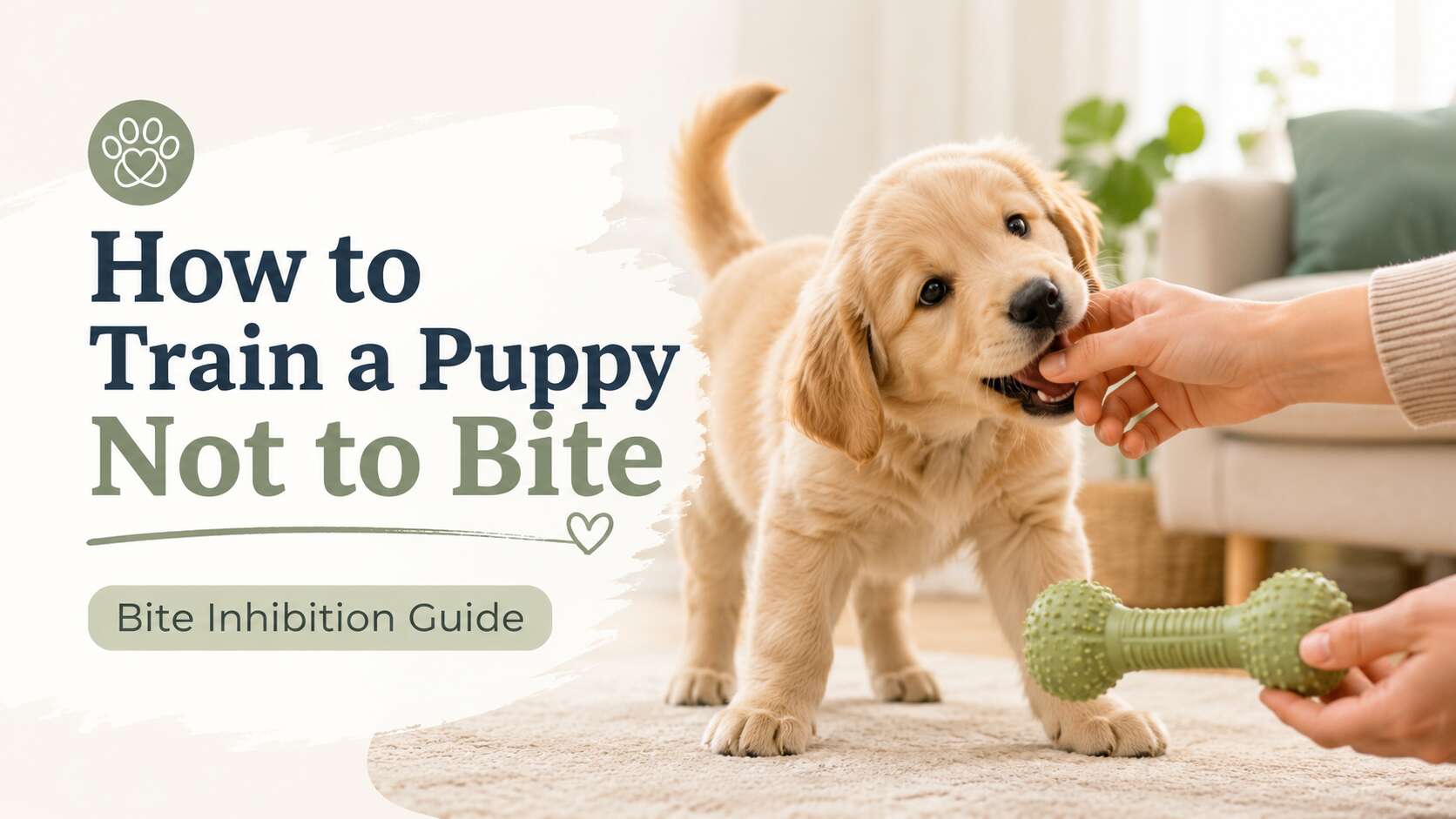
Puppy biting can feel cute at first, but it quickly becomes painful when your puppy starts biting hands, feet, clothes, or ankles every day.
Recommended Dog Care Products
Based on your dog’s age, these products may help with comfort, health, grooming, and daily care.

Purina Pro Plan Veterinary Supplements
Daily probiotics for dogs to support digestive and gut health.
View on Amazon ↗
Earth Rated Poop Bags for Dogs
Leak-proof, extra thick waste bag refill rolls with lavender scent.
View on Amazon ↗
Greenies Pill Pockets for Dogs
Large dog treats for capsule medication, peanut butter flavor.
View on Amazon ↗
HONEY CARE All-Absorb Dog Wrap
Small male dog wraps, 50 count, useful for daily care support.
View on Amazon ↗
Seresto Flea & Tick Collar
Flea and tick treatment and prevention for dogs over 18 lbs.
View on Amazon ↗
Milk-Bone MaroSnacks
Small dog treats with real bone marrow in a 40 oz canister.
View on Amazon ↗
Vital Essentials Dog Treats
Freeze dried beef liver dog treats, grain free and single ingredient.
View on Amazon ↗
Stain & Odor Eliminator
Enzyme cleaner for pet stains, carpet messes, and strong odors.
View on Amazon ↗
Pur Luv Chicken Jerky Treats
Dog treats made with real chicken breast, high protein and chew-friendly.
View on Amazon ↗
Milk-Bone Flavor Snacks
Mini crunchy dog biscuits in a 36 oz canister for small rewards.
View on Amazon ↗As an Amazon Associate, we may earn from qualifying purchases.
The good news is that puppy biting is normal. Puppies explore with their mouths, play with their teeth, and often nip when they are excited, tired, or teething. But normal does not mean you should ignore it.
To train a puppy not to bite, you need to teach two things: biting people ends the fun, and gentle behavior gets rewarded. This is called bite inhibition. It helps your puppy learn how to control the pressure of their mouth before they learn to stop using their teeth on people completely.
The goal is not to scare your puppy, punish them, or make them afraid of your hands. The goal is to calmly show them what is allowed and what is not allowed, every single time.
Why Puppies Bite and Nip
Puppies bite and nip because it is part of how they learn about the world. They use their mouths to play, explore, chew, and interact with people. If your puppy is biting your fingers, sleeves, pants, or feet, it does not automatically mean they are aggressive.
Most puppy biting happens because of one of these reasons:
- Your puppy wants to play.
- Your puppy is teething and wants to chew.
- Your puppy is overstimulated.
- Your puppy is tired and needs rest.
- Your puppy has learned that biting gets attention.
This last point is important. Even if you say “no,” pull your hand away quickly, or chase your puppy to stop them, your puppy may see that as part of the game. To a puppy, moving hands, loud reactions, and fast movement can make biting more exciting.
That is why stopping puppy biting is not just about saying “no.” It is about teaching your puppy what to do instead.
Your puppy needs to learn that human skin is sensitive, biting people makes play stop, and toys are the right thing to chew. Once your puppy understands that pattern, puppy nipping usually becomes easier to manage.
How to Train a Puppy Not to Bite Step by Step
The most effective way to train a puppy not to bite is to respond the same way every time their teeth touch your skin. Your puppy learns through patterns. If biting sometimes gets attention and sometimes ends play, they will stay confused.
Recommended Dog Care Products
Based on your dog’s age, these products may help with comfort, health, grooming, and daily care.
Purina Pro Plan Veterinary Supplements
Daily probiotics for dogs to support digestive and gut health.
View on Amazon ↗
Earth Rated Poop Bags for Dogs
Leak-proof, extra thick waste bag refill rolls with lavender scent.
View on Amazon ↗
Greenies Pill Pockets for Dogs
Large dog treats for capsule medication, peanut butter flavor.
View on Amazon ↗
HONEY CARE All-Absorb Dog Wrap
Small male dog wraps, 50 count, useful for daily care support.
View on Amazon ↗
Seresto Flea & Tick Collar
Flea and tick treatment and prevention for dogs over 18 lbs.
View on Amazon ↗
Milk-Bone MaroSnacks
Small dog treats with real bone marrow in a 40 oz canister.
View on Amazon ↗
Vital Essentials Dog Treats
Freeze dried beef liver dog treats, grain free and single ingredient.
View on Amazon ↗
Stain & Odor Eliminator
Enzyme cleaner for pet stains, carpet messes, and strong odors.
View on Amazon ↗
Pur Luv Chicken Jerky Treats
Dog treats made with real chicken breast, high protein and chew-friendly.
View on Amazon ↗
Milk-Bone Flavor Snacks
Mini crunchy dog biscuits in a 36 oz canister for small rewards.
View on Amazon ↗As an Amazon Associate, we may earn from qualifying purchases.
Use this simple approach: pause, redirect, reward, and repeat.
Stop Play Calmly When Teeth Touch Skin
When your puppy bites your hand, arm, foot, or clothes, stop the interaction immediately.
Do not yell. Do not hit. Do not push your puppy away roughly. Just make the moment boring.
You can freeze your hand, stop moving, and calmly remove attention for a few seconds. If your puppy was playing with you, the game should pause. This helps them understand that biting does not continue the fun.
You can use a short phrase like:
- “Too bad.”
- “Gentle.”
- “No bite.”
The words matter less than your consistency. Say it calmly, stop play, and avoid turning the moment into a bigger reaction.
If your puppy bites harder when you pull away, try not to jerk your hand back quickly. Fast movement can trigger more chasing and nipping. Instead, stay still for a second, then calmly remove your hand when the puppy loosens their mouth.
The lesson is simple: teeth on skin means attention stops.
Redirect the Puppy to a Toy
After you pause the interaction, give your puppy something appropriate to bite.
This is where many people make a mistake. They only tell the puppy what not to do, but they do not show what the puppy should do instead.
Recommended Dog Care Products
Based on your dog’s age, these products may help with comfort, health, grooming, and daily care.
Purina Pro Plan Veterinary Supplements
Daily probiotics for dogs to support digestive and gut health.
View on Amazon ↗
Earth Rated Poop Bags for Dogs
Leak-proof, extra thick waste bag refill rolls with lavender scent.
View on Amazon ↗
Greenies Pill Pockets for Dogs
Large dog treats for capsule medication, peanut butter flavor.
View on Amazon ↗
HONEY CARE All-Absorb Dog Wrap
Small male dog wraps, 50 count, useful for daily care support.
View on Amazon ↗
Seresto Flea & Tick Collar
Flea and tick treatment and prevention for dogs over 18 lbs.
View on Amazon ↗
Milk-Bone MaroSnacks
Small dog treats with real bone marrow in a 40 oz canister.
View on Amazon ↗
Vital Essentials Dog Treats
Freeze dried beef liver dog treats, grain free and single ingredient.
View on Amazon ↗
Stain & Odor Eliminator
Enzyme cleaner for pet stains, carpet messes, and strong odors.
View on Amazon ↗
Pur Luv Chicken Jerky Treats
Dog treats made with real chicken breast, high protein and chew-friendly.
View on Amazon ↗
Milk-Bone Flavor Snacks
Mini crunchy dog biscuits in a 36 oz canister for small rewards.
View on Amazon ↗As an Amazon Associate, we may earn from qualifying purchases.
Keep a soft toy, rope toy, or chew toy nearby when you are playing with your puppy. When your puppy starts nipping, move the toy into their mouth and encourage them to bite that instead.
For example, if your puppy bites your hand during play, stop for a moment, then offer the toy. When your puppy grabs the toy, continue playing.
This teaches a clear difference:
Human hands are not for biting.
Toys are for biting.
If your puppy keeps going back to your hands, the play may be too exciting. Slow down the game. Use longer toys that keep your hands away from your puppy’s mouth. Avoid rough wrestling with your hands because it can confuse the puppy and make puppy biting worse.
Reward Gentle Mouth Behavior
Do not only react when your puppy bites. Also reward the moments when your puppy is being gentle.
If your puppy licks your hand, sniffs calmly, sits near you, or plays with a toy instead of biting your fingers, praise them softly. You can also give a small treat when they choose gentle behavior.
This helps your puppy understand what you want.
Instead of only learning, “Biting gets stopped,” your puppy also learns, “Being gentle gets attention.”
That balance matters. Puppies repeat behaviors that work. If calm behavior gets ignored but biting gets a big reaction, your puppy may keep biting because it gets more attention.
Recommended Dog Care Products
Based on your dog’s age, these products may help with comfort, health, grooming, and daily care.
Purina Pro Plan Veterinary Supplements
Daily probiotics for dogs to support digestive and gut health.
View on Amazon ↗
Earth Rated Poop Bags for Dogs
Leak-proof, extra thick waste bag refill rolls with lavender scent.
View on Amazon ↗
Greenies Pill Pockets for Dogs
Large dog treats for capsule medication, peanut butter flavor.
View on Amazon ↗
HONEY CARE All-Absorb Dog Wrap
Small male dog wraps, 50 count, useful for daily care support.
View on Amazon ↗
Seresto Flea & Tick Collar
Flea and tick treatment and prevention for dogs over 18 lbs.
View on Amazon ↗
Milk-Bone MaroSnacks
Small dog treats with real bone marrow in a 40 oz canister.
View on Amazon ↗
Vital Essentials Dog Treats
Freeze dried beef liver dog treats, grain free and single ingredient.
View on Amazon ↗
Stain & Odor Eliminator
Enzyme cleaner for pet stains, carpet messes, and strong odors.
View on Amazon ↗
Pur Luv Chicken Jerky Treats
Dog treats made with real chicken breast, high protein and chew-friendly.
View on Amazon ↗
Milk-Bone Flavor Snacks
Mini crunchy dog biscuits in a 36 oz canister for small rewards.
View on Amazon ↗As an Amazon Associate, we may earn from qualifying purchases.
Try to notice the small good moments:
- Your puppy plays with the toy instead of your hand.
- Your puppy lets go when you stop moving.
- Your puppy takes the treat gently.
- Your puppy sits instead of jumping and nipping.
- Your puppy calms down after a short break.
Reward those moments. That is how bite inhibition becomes part of daily life, not just something you practice during training sessions.
Use Short Time-Outs When Biting Continues
Sometimes redirecting is not enough. Your puppy may be too excited, too tired, or too worked up to listen.
If your puppy keeps biting after you stop play and offer a toy, use a short time-out from attention.
This does not mean locking the puppy away as punishment. It simply means removing the reward they want: your attention.
You can stand up, turn away, step behind a baby gate, or calmly move out of reach for 20 to 60 seconds. Keep it short and boring.
When your puppy calms down, return and try again with a toy or a simple cue like “sit.”
If the biting starts again immediately, repeat the same process. Stay calm. The training works because of repetition, not because of one perfect correction.
A short time-out teaches your puppy:
“When I bite too hard, people stop playing with me.”
That is one of the most important lessons in bite inhibition.
How Bite Inhibition Works
Bite inhibition means your puppy learns to control the pressure of their mouth.
This matters because puppies do not automatically know how sensitive human skin is. When puppies play with other puppies, they bite, mouth, and wrestle. If one puppy bites too hard, the other puppy usually stops playing. That teaches the biting puppy to use a softer mouth.
You can teach the same lesson at home in a calm and safe way.
The aim is not only to stop puppy biting overnight. First, your puppy needs to learn that hard biting is not acceptable. Then, over time, they learn that teeth should not touch people at all.
Teach Soft Mouth Before No Mouth
Many puppy owners want biting to stop immediately. That is understandable, especially when the puppy is biting children, ankles, or hands. But in many cases, the first goal is to reduce the force of the bite.
If your puppy bites hard, stop play right away.
If your puppy mouths softly without pressure, stay calm and redirect them before they get more excited.
If your puppy chooses a toy instead of your skin, praise them.
This helps your puppy understand levels of pressure. Hard bites end the fun. Gentle choices keep the interaction going.
Over time, you can become stricter. At first, you may stop play only for painful bites. Later, you stop play any time teeth touch skin. This teaches your puppy that even gentle mouthing is not the right way to interact with people.
That is how bite inhibition develops step by step.
Be Consistent With Every Bite
Puppies learn faster when the rules are the same every time.
If one family member allows rough hand play, another yells, and another redirects calmly, the puppy will not know what the rule is. They may keep testing different behaviors because the result keeps changing.
Everyone in the home should follow the same basic response:
- Stop attention when teeth touch skin.
- Redirect to a toy.
- Reward gentle behavior.
- Use a short break if biting continues.
This is especially important with children. Kids often move quickly, squeal, run, or pull their hands away, which can make puppy nipping worse. Children should not be expected to train a biting puppy alone. An adult should guide the interaction, keep toys nearby, and end play before the puppy becomes too excited.
Consistency does not mean being harsh. It means being clear.
When the puppy gets the same calm message every time, the behavior becomes easier to change.
What Not to Do When Your Puppy Bites
The way you react to puppy biting can either reduce the behavior or accidentally make it stronger.
A puppy that bites is usually not trying to be “bad.” They are learning how to play, how to use their mouth, and how to get attention. Strong reactions can confuse them, scare them, or make the biting more exciting.
Do Not Hit, Yell, or Hold the Mouth Shut
Do not hit your puppy, shout in their face, pin them down, or hold their mouth closed when they bite.
These reactions may stop the behavior for a moment, but they do not teach your puppy what to do instead. They can also make your puppy afraid of your hands, defensive around people, or more likely to bite when they feel stressed.
Holding the mouth shut can be especially confusing. Your puppy may see your hands coming toward their face and learn to avoid, snap, or bite harder.
Training should teach your puppy that people are safe and predictable. Calmly stopping play is clearer and safer than using force.
Do Not Turn Biting Into a Game
Many puppies bite more because the human reaction feels like play.
If your puppy bites your pants and you start chasing them, they may think, “Great, now we are playing.” If they bite your hands and you wave your fingers around, they may see your hands as toys. If you wrestle with your puppy using your hands, they may not understand why biting is allowed sometimes but not other times.
Avoid games that encourage your puppy to target your skin or clothes.
Instead, use toys that create distance between your hands and your puppy’s mouth. Tug toys, soft ropes, and longer plush toys can help your puppy play without grabbing your fingers.
Also, try not to pull clothing away while your puppy is attached to it. That can turn sleeves, pants, and shoelaces into tug toys. Stay still, calmly interrupt, and redirect to a real toy.
The less exciting your reaction is, the faster your puppy learns that biting people is not rewarding.
How to Reduce Puppy Biting During Daily Routines
Training in the moment is important, but prevention matters too.
If your puppy is biting all day, the problem may not be the training method alone. Your puppy may be overtired, overstimulated, bored, teething, or getting too much rough play. Managing the daily routine can reduce biting before it starts.
Give Enough Sleep and Calm Breaks
Many puppies bite more when they are tired.
This surprises many new puppy owners because they expect a tired puppy to lie down and sleep. But puppies often act wild when they are overtired. They may run around, nip hands, grab clothes, bark, or bite harder than usual.
If your puppy has been awake for a while and suddenly becomes extra bitey, they may need rest, not more play.
Create calm breaks during the day. Use a crate, playpen, quiet room, or safe puppy area where your puppy can settle without too much stimulation. Keep the break calm and positive. This is not punishment. It is helping your puppy rest before they lose control.
A rested puppy is usually easier to train than an exhausted puppy.
Use Chew Toys During Teething
Teething can make puppy biting worse because your puppy’s gums may feel uncomfortable. During this stage, your puppy needs safe things to chew.
Keep chew toys available in the places where biting usually happens. For example, if your puppy bites your hands on the sofa, keep a toy beside the sofa. If they nip your ankles in the kitchen, keep a chew toy nearby before the behavior starts.
The timing matters. Offer the toy before your puppy is fully worked up.
You can also rotate toys so they feel more interesting. If the same toy is always on the floor, your puppy may ignore it. Bringing out a toy at the right moment can make it more valuable.
The goal is not to fill the house with toys. The goal is to give your puppy a better option when they feel the urge to bite.
Practice Short Training Sessions
Short training sessions can reduce puppy nipping because they give your puppy something else to do with their energy.
You do not need long lessons. A few minutes at a time is enough.
Practice simple cues like:
- Sit
- Touch
- Drop it
- Leave it
- Come
These cues help you redirect your puppy before biting starts. For example, if your puppy is running toward your feet, you can ask for “sit” and reward that instead of waiting for them to nip your ankles.
Training also helps your puppy learn self-control. A puppy that learns to pause, look at you, and respond to simple cues will be easier to guide when they get excited.
Keep sessions short, positive, and easy. End before your puppy becomes frustrated or too hyper.
When Puppy Biting Is Not Normal
Most puppy biting is normal play, teething, or excitement. But some biting needs closer attention, especially if it feels intense, repeated, or difficult to interrupt.
You should take puppy biting more seriously if your puppy shows signs like:
- Biting hard enough to break skin often
- Stiff body posture before biting
- Growling with a hard stare
- Guarding food, toys, beds, or people
- Lunging toward hands, faces, or children
- Biting that becomes worse even with consistent training
- Snapping when touched, picked up, or moved
These signs do not always mean your puppy is aggressive, but they do mean you should slow down and look at the full situation. Pain, fear, lack of sleep, poor handling, overstimulation, or resource guarding can all make biting worse.
If your puppy’s biting feels unsafe, do not try to “dominate” them or force them to submit. That can increase fear and make the problem worse.
Instead, focus on safety first. Give your puppy more space, avoid rough handling, stop situations that trigger hard biting, and speak with a qualified dog trainer or veterinary behavior professional. If biting happens suddenly or your puppy seems sensitive when touched, a vet check is also a good idea.
The earlier you respond to serious biting patterns, the easier they are to manage.
FAQs About Training a Puppy Not to Bite
At what age do puppies stop biting?
Many puppies start improving as they grow, finish teething, and learn better self-control. But you should not wait for puppy biting to disappear on its own.
Training should start as soon as your puppy comes home. Even young puppies can learn that biting people ends play and toys are the right thing to chew.
Some puppies reduce biting quickly with consistent training. Others take longer, especially if they are very energetic, overtired, teething, or used to rough hand play.
Should I yelp when my puppy bites me?
A short yelp works for some puppies, but not all.
Some puppies pause when they hear a quick sound because it tells them the bite was too hard. But other puppies become more excited and bite again. If yelping makes your puppy more playful, louder, or more intense, stop using it.
A calmer method is usually better: freeze, stop attention, redirect to a toy, and reward gentle behavior.
The best response is the one that helps your puppy calm down and learn, not the one that makes them more excited.
Why does my puppy bite more at night?
Puppies often bite more at night because they are tired, overstimulated, or struggling to settle.
By evening, your puppy may have had too much activity, too much attention, or not enough rest. Instead of relaxing, they may start running around, grabbing clothes, biting hands, or nipping ankles.
When this happens, more play is not always the answer. Your puppy may need a calm routine, a chew toy, a toilet break, and then rest.
If your puppy gets bitey at the same time every night, plan a quiet break before that time instead of waiting for the biting to start.
How do I stop my puppy from biting my hands?
Stop using your hands as toys.
When your puppy bites your hands, freeze for a moment, calmly stop play, and redirect them to a toy. If they take the toy, praise them and continue playing with the toy instead of your fingers.
Also avoid waving your hands around your puppy’s face, rough wrestling, or letting them chew your fingers when they are small. Those habits can teach your puppy that hands are for biting.
Your hands should mean calm touch, treats, grooming, and gentle interaction. Toys should be the things your puppy bites.
Is puppy biting a sign of aggression?
Most puppy biting is not aggression. It is usually play, teething, excitement, or lack of bite inhibition.
However, biting should still be trained early. A small puppy bite may not seem serious now, but the habit can become painful and harder to manage as your puppy grows.
Watch the full body language. Loose, bouncy, playful biting is different from stiff, intense biting with growling, guarding, or repeated hard bites. If you are unsure, get help from a professional trainer or vet behaviorist instead of guessing.
Final Thoughts
Training a puppy not to bite is not about one magic command. It is about giving the same clear message every time: biting people ends attention, gentle behavior gets rewarded, and toys are the right place for teeth.
Start with calm play pauses, redirect your puppy to a toy, reward soft behavior, and use short breaks when biting continues. Then support the training with enough sleep, safe chew toys, and simple daily routines.
Puppy biting can be frustrating, but with consistency, your puppy can learn bite inhibition and become much gentler with people.

Ata Ur Rehman is the founder of Pet Age in Human Years Calculator, an educational platform that provides age conversion charts and lifespan guides for dogs, cats, birds, and other companion animals. His work focuses on helping pet owners understand how animal ages translate into human years using commonly accepted age conversion formulas and published lifespan averages.
The website compiles breed and species lifespan data from kennel clubs, breed organizations, and general animal lifespan studies to present simple and easy-to-understand guides for pet owners worldwide.
This website was created to centralize animal age conversion charts into one easy reference platform for pet owners.