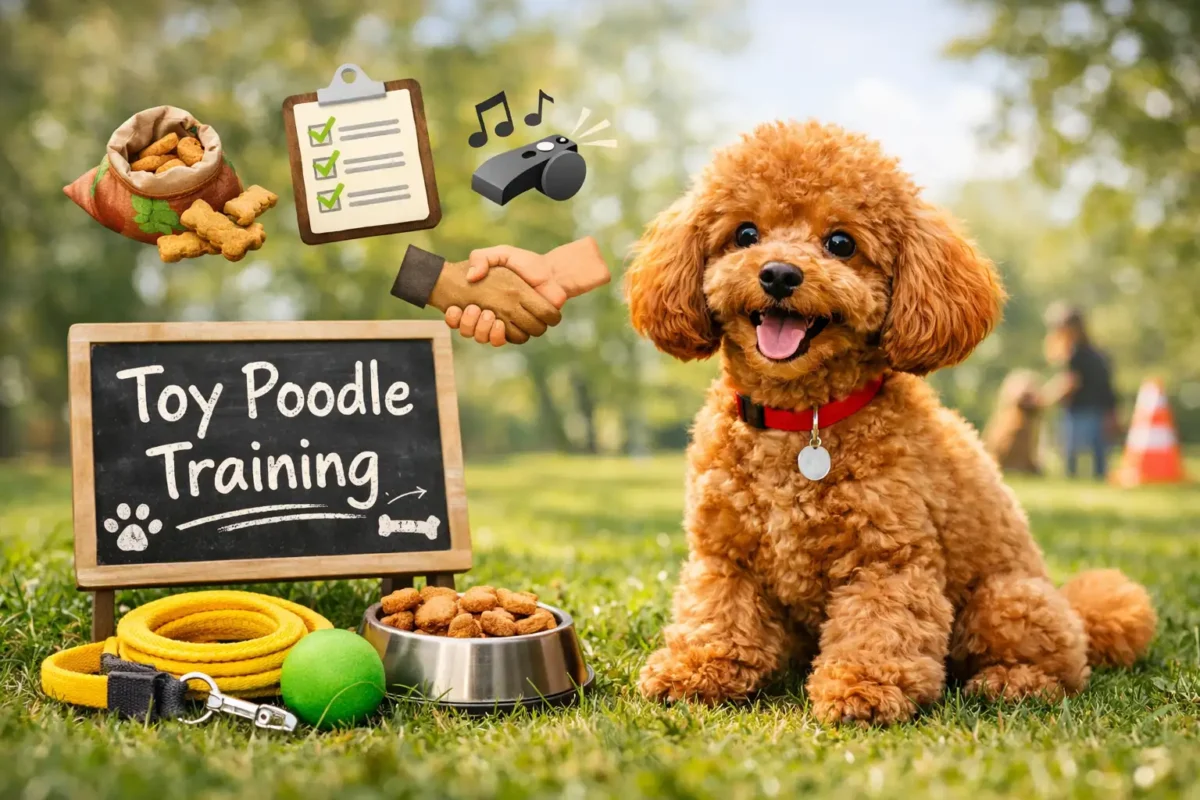
Training a Toy Poodle the right way can turn a smart but sensitive dog into a calm, obedient, and confident companion. Because Toy Poodles learn quickly, early training can produce fast results when you use the right routine.
To train a Toy Poodle successfully, focus on short daily sessions, clear commands, positive reinforcement, and steady practice. Toy Poodles respond best when training is calm, consistent, and rewarding, especially during puppy stage.
You can also understand your dog’s development better by using a Toy Poodle age calculator, which helps you adjust training based on your dog’s age.
In this step-by-step guide, you will learn how to train a Toy Poodle, what to teach first, how long each stage may take, and how to handle common problems like barking, distraction, and stubborn behavior. Whether you have a puppy or an adult dog, this guide will help you build better habits and more reliable obedience.
How to Train a Toy Poodle Step by Step
Training a Toy Poodle works best when you follow simple, clear steps. Always use rewards like treats, happy praise, and gentle encouragement. Try to train in a quiet place first so your dog can focus.
This training process works in stages. Start with basic commands, then build consistency, and finally practice in real-life situations. Following this order helps your Toy Poodle learn faster and with fewer mistakes.
Follow these steps to train a Toy Poodle successfully:
Step 1: Start with short daily training sessions
Toy Poodles learn best with short, happy sessions of about 5 to 10 minutes. Train once or twice a day in a quiet place with few distractions so your dog can focus.
Repeat each training exercise 5 to 10 times per session. If your Toy Poodle loses focus, stop early and continue later. Short, successful sessions work better than long sessions.
Step 2: Teach basic commands first
Begin with simple commands like sit, stay, come, and down. These commands build obedience and make later training easier. Reward your Toy Poodle immediately when they respond correctly.5
If your Toy Poodle does not follow the command, do not repeat it too many times. Instead, guide them gently using a treat and reward even small progress. Move to the next command only when your dog responds correctly most of the time.
Step 3: Use positive reinforcement every time
Use treats, praise, and a cheerful voice to reward good behavior. Toy Poodles are sensitive dogs, so they respond much better to encouragement than to punishment or shouting.
Timing is important. Always reward within 1 to 2 seconds of the correct behavior so your Toy Poodle understands exactly what they did right.
Step 4: Build a clear routine
Use the same words, same rules, and same daily routine every day. Consistency helps your Toy Poodle understand what is expected and prevents confusion.
If different family members use different commands or rules, your Toy Poodle may become confused. Make sure everyone follows the same training approach.
Step 5: Practice in different places
Once your Toy Poodle listens well at home, practice the same commands in new places like the yard or during walks. This helps your dog stay calm and obedient in real-life situations.
If your Toy Poodle gets distracted in new places, go back to a quieter environment and practice again before slowly increasing distractions.
Start with basic obedience. Teach simple commands like sit, stay, come, and down. Reward your dog with healthy treats based on a proper Toy Poodle diet and feeding guide. Practice every day for a few minutes instead of one long session. Short lessons help your Toy Poodle learn faster and enjoy training.
Move to the next stage of training only when your Toy Poodle responds correctly most of the time in a calm environment. If your dog still needs frequent guidance, stay on the same step a little longer before making training harder.
House training and crate training are also important, especially for puppies. Take your Toy Poodle outside often, praise them when they do the right thing, and keep a routine. Crate training helps with potty training, traveling, and gives your dog a safe space to relax.
Leash training teaches your Toy Poodle to walk calmly without pulling. Use a comfortable harness and practice walking slowly, rewarding your dog for staying near you. Socialization is important too. Let your dog meet new people, friendly dogs, and visit safe places so they become confident and calm in new situations.
Here is a simple table to understand training timing and progress:
| Training Area | Frequency | Session Time | Expected Progress |
|---|---|---|---|
| Basic commands | Daily | 5–10 minutes | 1–3 weeks |
| House training | Daily routine | Throughout the day | Few weeks |
| Crate training | Daily | Short calm time | 1–3 weeks |
| Leash training | Few times a week | 10–15 minutes | 2–4 weeks |
| Socialization | Regularly | Everyday situations | Ongoing |
Stay patient, stay positive, and make training fun. Your Toy Poodle will respond with love and quick learning.
Best Age to Start Training a Toy Poodle
The best time to start training a Toy Poodle is as early as possible. Most Toy Poodle puppies can begin simple training at 8 weeks old. Early training helps your puppy build good habits before bad behaviors become harder to fix.
At a young age, focus on basic routines such as name recognition, potty training, crate comfort, gentle handling, and simple commands like sit and come. As your Toy Poodle grows, you can slowly add leash training, socialization, and more advanced obedience.
Adult Toy Poodles can also be trained successfully. They may need a little more patience if they already have bad habits, but because Toy Poodles are intelligent and eager to learn, they usually respond very well to kind and consistent training.
Toy Poodle Puppy vs Adult Training
Toy Poodle puppies and adult dogs can both learn well, but their training needs are slightly different. Puppies learn faster and are easier to shape into good habits, while adult dogs may need more repetition if they already have stubborn behavior or poor routines.
With puppies, focus first on potty training, crate training, socialization, and simple obedience. Keep sessions short and playful. With adult Toy Poodles, focus more on correcting old habits, improving consistency, and rewarding calm behavior.
In both cases, patience and positive reinforcement are the keys to success. Toy Poodles are smart and sensitive, so they do best when training feels clear, calm, and rewarding.
Most Important Commands to Teach First
Toy Poodles respond best when training starts with a few clear commands that build focus, control, and communication. These early commands create the foundation for reliable obedience and make everyday situations much easier to manage.
Sit
Hold a treat above your Toy Poodle’s nose and slowly move it back. As their head follows the treat, their body will naturally sit. Say “sit” and reward immediately.
If your Toy Poodle does not respond, do not force the command. Reset calmly, guide them again with a treat, and reward small progress. Consistent practice will improve results over time.
Stay
Ask your dog to sit, then hold your hand up and say “stay.” Take a small step back. If your Toy Poodle stays in place, reward them. Slowly increase the distance over time.
If your Toy Poodle does not respond, do not force the command. Reset calmly, guide them again with a treat, and reward small progress. Consistent practice will improve results over time.
Come
Call your Toy Poodle in a happy voice using the word “come.” Reward them as soon as they reach you. This command is very important for safety.
If your Toy Poodle does not respond, do not force the command. Reset calmly, guide them again with a treat, and reward small progress. Consistent practice will improve results over time.
Down
From a sitting position, move a treat slowly toward the ground. As your dog follows it, their body will lower. Say “down” and reward when they lie down.
If your Toy Poodle does not respond, do not force the command. Reset calmly, guide them again with a treat, and reward small progress. Consistent practice will improve results over time.
Toy Poodle Training Schedule
Following a simple daily routine helps your Toy Poodle learn faster and stay consistent. Short and regular sessions are more effective than long, tiring training.
| Time | Activity |
|---|---|
| Morning | Short training session (5–10 minutes) + potty break |
| Afternoon | Playtime + social interaction + light training |
| Evening | Leash walk + command practice |
| Night | Calm routine + crate or sleep time |
Keep sessions short, positive, and consistent. Toy Poodles learn best when training is part of their daily routine.
Toy Poodle Training Timeline (What to Expect)
Training a Toy Poodle happens in stages. Knowing what to expect helps you stay consistent and patient during the process.
| Time Period | Training Focus |
|---|---|
| Week 1–2 | Basic commands like sit and name recognition |
| Week 3–4 | Stay, come, and simple routine building |
| Month 2–3 | Leash training, socialization, and consistency |
| Ongoing | Reinforcing good behavior and advanced training |
Every Toy Poodle learns at a slightly different pace, but with daily practice and positive reinforcement, most dogs show clear improvement within a few weeks.
How Long Does Toy Poodle Training Take?
Most Toy Poodles begin to learn basic commands within the first one to two weeks of consistent training. However, reliable behavior takes longer and depends on how often you practice.
Simple commands like sit and come can be learned quickly, while leash training, social behavior, and calm habits may take several weeks of daily reinforcement. Puppies often learn faster, but they also need more repetition.
The key to faster progress is consistency. Short daily training sessions, clear rewards, and a calm routine will help your Toy Poodle improve steadily over time.
What to Do If Training Is Not Working
Sometimes Toy Poodle training does not go smoothly at first. This does not mean your dog cannot learn. It usually means the training method, timing, or environment needs to be adjusted.
If your Toy Poodle ignores commands
Go back to a quieter place with fewer distractions and use a treat to guide the behavior again. Keep the session short and reward even small success.
If your Toy Poodle gets distracted easily
Train indoors first, then slowly move to more distracting places only after your dog responds well at home. Do not increase difficulty too quickly.
If your Toy Poodle seems stubborn
This usually happens when training feels repetitive, confusing, or unrewarding. Use clearer timing, better treats, and shorter sessions to keep your dog engaged.
If progress suddenly stops
Take a step back and repeat easier commands your dog already knows well. This rebuilds confidence and helps your Toy Poodle return to a positive routine.
How to Know Your Toy Poodle Training Is Working
You will usually see progress in Toy Poodle training through small but clear signs. Looking for these signs helps you know when to keep going and when to slow down.
- Faster responses: Your Toy Poodle follows commands with less delay.
- Less guidance needed: Your dog needs fewer treat prompts or hand signals.
- Better focus: Your Toy Poodle stays attentive for the full session.
- More consistency: Commands work more often at home and in quiet outdoor places.
- Calmer behavior: Barking, pulling, or stubborn behavior starts to reduce over time.
Best Training Tips for Toy Poodles
- Keep sessions short and focused: Toy Poodles learn quickly but can lose focus if training runs too long.
- Train in stages: Start in a quiet place, then slowly introduce distractions as your dog improves.
- Reward instantly: Give treats or praise within seconds so your dog clearly understands the correct behavior.
- Stay consistent every day: Using the same commands and routine helps your Toy Poodle learn faster.
- Adjust when needed: If training is not working, simplify the step instead of pushing forward too quickly.
Common Toy Poodle Training Mistakes to Avoid
Even small mistakes can slow down your Toy Poodle’s training progress. Avoid these common problems to make training easier and more effective.
- Long training sessions: Toy Poodles lose focus quickly. Keep sessions short and positive.
- Inconsistent commands: Use the same words every time to avoid confusing your dog.
- Ignoring good behavior: Always reward good actions so your dog knows what is right.
- Using harsh punishment: Toy Poodles are sensitive and may become fearful instead of learning.
- Skipping daily practice: Regular training builds habits faster than occasional sessions.
Why Toy Poodle Training Matters
Training a Toy Poodle is important because it helps your dog understand how to behave, stay calm, and feel safe. Without training, Toy Poodles can develop habits like barking, stubbornness, or anxiety.
Good training builds trust, improves behavior, and makes daily life easier. It also helps your Toy Poodle stay confident and well-behaved at home and in public.
Understanding Toy Poodle Behavior and Learning Style
Toy Poodles are very intelligent and learn quickly, which makes training easier. However, they can also pick up bad habits if not guided properly. They are sensitive dogs, so they respond best to calm, positive training methods.
They learn fastest through rewards like treats, praise, and play. Harsh training methods can confuse or scare them, so it is important to keep sessions short, clear, and encouraging.
Because Toy Poodles are very attached to their owners, they may become anxious or clingy without proper training and routine. Consistent training helps them stay calm, confident, and well-behaved.
Common Toy Poodle Training Problems
Some Toy Poodles may still develop training challenges, especially if routines are inconsistent or they do not get enough mental stimulation. The most common issues include barking, separation anxiety, leash pulling, and stubborn behavior.
Most of these problems improve with short daily training, clear routines, rewards, and patience. If your Toy Poodle shows extreme fear, aggression, or sudden behavior changes, it is best to speak with a professional trainer or veterinarian.
| Problem | Simple Fix |
|---|---|
| Barking too much | Teach a quiet command and increase mental activity |
| Separation anxiety | Practice short alone time and build confidence slowly |
| Pulling on leash | Reward calm walking and practice in short sessions |
| Stubborn behavior | Use short, clear, reward-based training every day |
Training works best when it is part of full breed care. You can also learn more from our guides on Toy Poodle grooming and Toy Poodle ownership costs.
Toy Poodle Training FAQs
Are Toy Poodles easy to train?
Yes, Toy Poodles are very easy to train because they are intelligent, alert, and eager to please. They learn fastest with positive reinforcement, short daily sessions, and gentle guidance.
How long does Toy Poodle training take?
Basic Toy Poodle training usually takes a few weeks with consistent daily practice. More advanced behavior training and social skills continue to improve over time with regular reinforcement.
How do I stop my Toy Poodle from barking?
To reduce barking, teach a quiet command, reward calm behavior, and provide enough mental stimulation. Most Toy Poodles bark less when they are trained, exercised, and mentally engaged.
When should I start training a Toy Poodle puppy?
It is best to start training a Toy Poodle puppy at around 8 weeks old. Early training helps build good habits, confidence, and basic obedience from the beginning.
How often should I train my Toy Poodle?
Most Toy Poodles do best with one or two short training sessions each day. Sessions of 5 to 10 minutes work well because they keep your dog focused without becoming tired or bored.
How do I potty train a Toy Poodle?
Take your Toy Poodle outside on a regular schedule, especially after eating, waking up, and playing. Reward them immediately when they go in the right place and keep the routine consistent every day.
Are Toy Poodles hard to train?
No, Toy Poodles are usually easy to train because they are intelligent and eager to please. They learn fastest when training is gentle, consistent, and reward-based.
What is the best way to stop Toy Poodle barking?
The best way is to teach a quiet command, reward calm behavior, and make sure your dog gets enough mental stimulation and routine. Barking often improves when training is consistent.
How do I train a stubborn Toy Poodle?
Train a stubborn Toy Poodle with shorter sessions, clearer timing, and better rewards. What looks like stubbornness is often confusion, distraction, or loss of interest rather than refusal to learn.
How do I train a Toy Poodle not to bite?
If your Toy Poodle nips or bites, stop play calmly, redirect to an appropriate toy, and reward gentle behavior. Puppies often need repeated practice to learn bite control.
Can Toy Poodles be trained to stay home alone?
Yes, Toy Poodles can learn to stay alone for short periods when you build confidence gradually. Start with short absences, keep departures calm, and avoid making alone time feel stressful.

Ata Ur Rehman is the founder of Pet Age in Human Years Calculator, an educational platform that provides age conversion charts and lifespan guides for dogs, cats, birds, and other companion animals. His work focuses on helping pet owners understand how animal ages translate into human years using commonly accepted age conversion formulas and published lifespan averages.
The website compiles breed and species lifespan data from kennel clubs, breed organizations, and general animal lifespan studies to present simple and easy-to-understand guides for pet owners worldwide.
This website was created to centralize animal age conversion charts into one easy reference platform for pet owners.