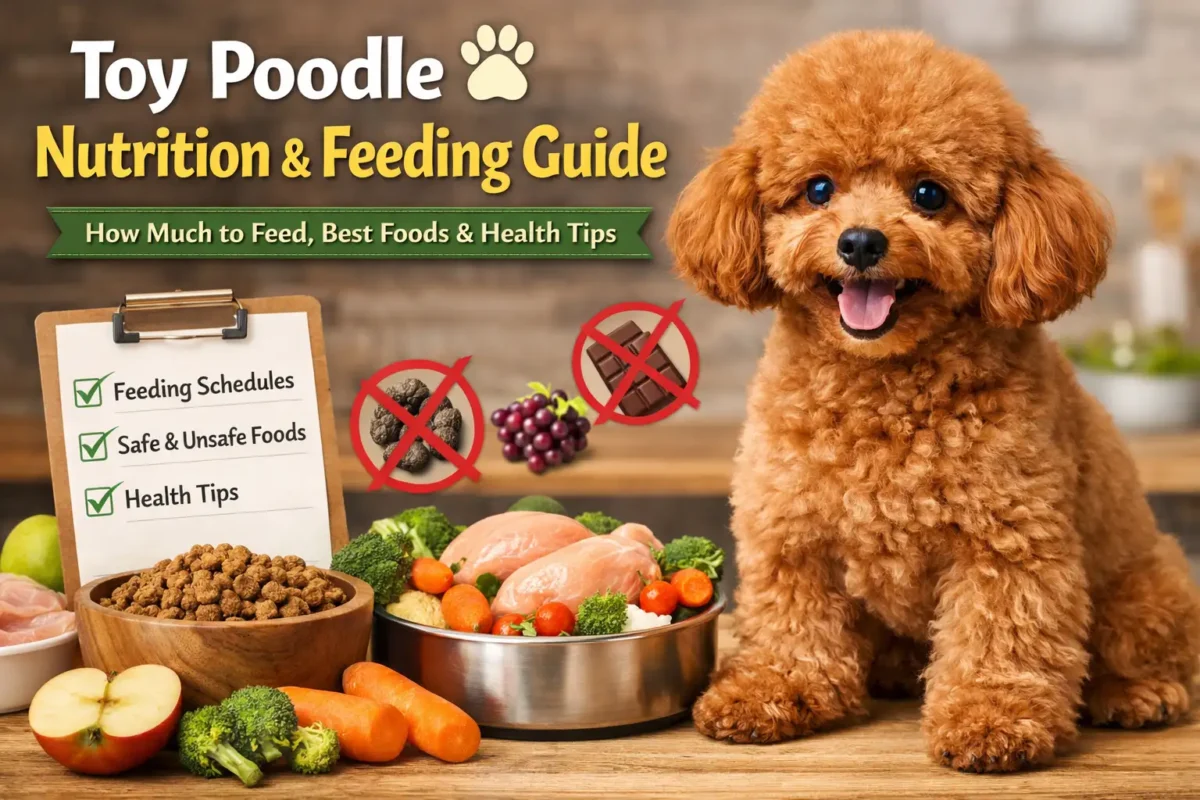
A Toy Poodle should eat about ¼ to ½ cup of high-quality dog food per day, split into two meals. Puppies usually need 3–4 small meals daily, while adult and senior Toy Poodles usually do best with 2 meals per day. The exact amount depends on age, weight, activity level, and the type of food you use.
If you want to better understand your dog’s life stage before adjusting portions, try this Toy Poodle age calculator.
Feeding your Toy Poodle the right amount of food is one of the most important parts of keeping them healthy. It means knowing how much to feed, how often to feed, and which foods are safe at every life stage. Good nutrition supports healthy weight, strong muscles, better digestion, steady energy, and overall long-term health.
Toy Poodle dogs are small dogs with fast metabolisms, so they need food that gives them energy without causing weight gain. They also benefit from high-quality ingredients, balanced nutrients, and the right feeding routine. When you feed your Toy Poodle correctly, you are helping them live a longer, healthier, and more comfortable life.
In this guide, you will learn what nutrients Toy Poodles need, how much and how often to feed them, what foods are safe or unsafe, and what to do if your dog has special diet needs or feeding problems.
Understanding Toy Poodle Nutrition Needs
Toy Poodles need a balanced diet with high-quality protein, healthy fats, and controlled portions. Because they have a fast metabolism, they need nutrient-dense food that supports energy, digestion, and overall health without causing weight gain.
Toy Poodles may be small, but their bodies need strong nutrition to stay healthy. They have a faster metabolism than many bigger dogs, which means they burn energy quicker. So, they need food that is rich in good-quality protein, healthy fats, and balanced nutrients. Poor-quality food can lead to weak muscles, dry skin, dull coat, weight gain, or stomach problems.
Protein helps build muscles and keeps your Toy Poodle strong. Healthy fats support brain health, energy, and coat shine—learn more about coat care in this Toy Poodle grooming guide. Carbohydrates give steady energy when used in the right amount. Vitamins and minerals help protect the immune system, bones, and organs. Always choose dog food made for small breeds or Toy Poodles when possible, as the kibble size and nutrition balance are better suited for them.
Here is a simple nutrition guide to help you understand what matters most:
Toy Poodle Basic Nutrition Guide
| Nutrient | Ideal Range / Importance | Why It Matters |
|---|---|---|
| Protein | Around 22% or higher | Builds muscles and keeps body strong |
| Fat | Around 10%–15% | Gives energy and supports coat health |
| Carbohydrates | Moderate amount | Provides steady energy |
| Fiber | 3%–5% | Supports digestion |
| Vitamins & Minerals | Balanced in quality dog food | Supports bones, immune system, organs |
Try to choose food that lists real meat as the first ingredient, avoids too many fillers, and is made by trusted brands. If your Toy Poodle has allergies or stomach issues, your vet may suggest a special diet.
How Much and How Often to Feed a Toy Poodle
Most adult Toy Poodles eat about ¼ to ½ cup of dog food per day, divided into two meals. Puppies usually need 3–4 meals per day, while seniors often stay on 2 meals daily with adjusted portions based on activity and weight.
Knowing how much to feed a Toy Poodle is just as important as choosing the right food. Because Toy Poodles are small, even a little extra food can quickly lead to weight gain. Feeding too little can also make your dog weak, tired, and unhealthy.
How much food your Toy Poodle needs depends on:
- Age
- Weight
- Activity level
- Overall health
Toy Poodle puppies need more frequent meals to support fast growth and healthy development. Adult Toy Poodles need steady portions to maintain a healthy weight. Seniors may need fewer calories but still need high-quality nutrition. You can also use this Toy Poodle age chart to better understand feeding needs at each life stage.
Here is an easy Toy Poodle feeding chart to help you estimate daily portions and meal frequency:
Toy Poodle Feeding Chart by Weight (Daily Amount)
This Toy Poodle feeding chart by weight gives a quick estimate of how much food a Toy Poodle may need per day. Always check your dog food label and adjust based on age, activity level, and body condition.
| Weight | Daily Food Amount | Meals Per Day |
|---|---|---|
| 2–4 lbs | ¼ cup | 3–4 meals for puppies, 2 meals for adults |
| 4–6 lbs | ¼ to ½ cup | 2–3 meals for puppies, 2 meals for adults |
| 6–8 lbs | ½ cup | 2 meals |
Toy Poodle Feeding Chart by Age and Portion Size
This Toy Poodle feeding chart by age helps you quickly see how much to feed a Toy Poodle at each life stage. Puppies need small, frequent meals for growth, while adult and senior Toy Poodles need steady portions to maintain a healthy weight.
Many owners search for a Toy Poodle feeding chart by age, by weight, or by daily amount. These charts give a starting point, but your dog may need a little more or less food per day depending on activity level, metabolism, and body condition.
| Life Stage | Meals Per Day | Daily Food Amount |
|---|---|---|
| Puppy (2–6 months) | 3–4 meals daily | ¼ cup per day, split into small meals |
| Puppy (6–12 months) | 2–3 meals daily | ¼ to ½ cup per day |
| Adult (1–7 years) | 2 meals daily | ¼ to ½ cup per day |
| Senior (7+ years) | 2 meals daily | ¼ to ½ cup per day (adjust for activity) |
| Very Active Toy Poodles | 2 meals + small snack | Up to ½ cup per day |
| Low Activity / Overweight | 2 smaller meals | Less than ½ cup per day |
Always check the feeding amount on your dog food bag for your dog’s weight, then adjust the total amount per day if your Toy Poodle seems too skinny or is gaining weight.
What to Feed a Toy Poodle: Food Types, Treats, and Foods to Avoid
Toy Poodles can do well on good-quality dry kibble, wet food, or fresh food, as long as it is balanced and made for dogs. Small-breed formulas are often best because they have the right nutrition and smaller kibble size, which is easier to chew. Avoid very cheap foods with lots of fillers and low-quality ingredients, as they may not provide enough nutrition.
Treats are fine in moderation, but too many treats can cause weight gain and health problems—and they can also increase your overall Toy Poodle ownership costs. Try to keep treats to less than 10% of your Toy Poodle’s daily food intake. Fresh water should always be available, and your dog should be encouraged to drink regularly.
Here is a simple table to help you understand safe and unsafe food choices:
Safe vs Unsafe Foods for Toy Poodles
| Safe Foods | Use Carefully | Toxic / Avoid |
|---|---|---|
| Cooked chicken (plain) | Cheese (small amounts) | Chocolate |
| Plain rice | Peanut butter (no xylitol) | Grapes & raisins |
| Carrots | Cooked eggs (small amounts) | Onions & garlic |
| Plain pumpkin | Some fruits (watch sugar) | Avocado |
| Dog-safe treats | High-fat human foods | Alcohol / caffeine |
Always avoid feeding spicy foods, salty snacks, cooked bones, and anything containing xylitol (a sweetener deadly to dogs). If your Toy Poodle has allergies, stomach trouble, or chronic itching, a special diet may be needed—always ask your vet.
Special Diets, Common Feeding Problems, and When to See a Vet
Not every Toy Poodle eats the same way. Some have allergies, some have sensitive stomachs, and some are picky eaters. Others may gain weight easily or need extra calories because they are very active. Understanding these problems early helps keep your Toy Poodle healthy and comfortable.
Toy Poodles can sometimes have food allergies or stomach sensitivities. Signs may include itchy skin, ear infections, vomiting, loose poop, or constant licking. In these cases, a vet may suggest a special diet such as hypoallergenic food, limited-ingredient food, or a sensitive stomach formula.
Weight problems are also common. Overweight Toy Poodles need portion control, fewer treats, and sometimes a weight management food. Very thin Toy Poodles may need more frequent meals or higher-calorie food. Picky eaters often do better with routine feeding times, slightly warmed food, or fresh food mixed with kibble.
Here is a simple guide to help with common feeding problems:
Common Feeding Problems & What To Do
| Problem | Likely Cause | Simple Solution | Vet Needed? |
|---|---|---|---|
| Picky eating | Boredom or habits | Set meal times, limit treats | If it continues |
| Loose stool or vomiting | Food sensitivity or sudden change | Switch food slowly | Yes if ongoing |
| Weight gain | Too many calories or treats | Smaller portions, more activity | If no improvement |
| Underweight | Not enough calories or illness | More frequent meals | Yes if sudden |
| Itchy skin or allergies | Possible food allergy | Try special diet | Yes to confirm |
Final Answer: Most Toy Poodles eat about ¼ to ½ cup of food per day, divided into two meals. Puppies need 3–4 smaller meals daily, while adult and senior Toy Poodles usually eat twice per day.
See a vet if your Toy Poodle stops eating, loses weight suddenly, has ongoing diarrhea, vomiting, constant itching, or any sudden health change. A vet or veterinary nutritionist can help choose the best diet.
With the right food, feeding routine, and portion control, your Toy Poodle can stay healthy, active, and maintain a proper weight. You can also use a Toy Poodle age calculator to better understand their life stage and adjust feeding amounts more accurately.
Quick answer: most adult Toy Poodles eat around ¼ to ½ cup of food per day, usually split into two meals. Puppies need more frequent meals, and exact portion size depends on age, weight, and activity level.
Frequently Asked Questions About Feeding Toy Poodles
How much should a Toy Poodle eat per day?
Most adult Toy Poodles eat about ¼ to ½ cup of high-quality dog food per day, split into two meals. Toy Poodle puppies usually need 3–4 smaller meals each day, while very active dogs may need slightly more food and less active dogs may need slightly less.
How often should I feed my Toy Poodle?
Toy Poodle puppies should be fed three to four times a day, while adult and senior Toy Poodles usually do best with two meals per day. A consistent feeding schedule helps maintain healthy digestion and stable energy levels.

Ata Ur Rehman is the founder of Pet Age in Human Years Calculator, an educational platform that provides age conversion charts and lifespan guides for dogs, cats, birds, and other companion animals. His work focuses on helping pet owners understand how animal ages translate into human years using commonly accepted age conversion formulas and published lifespan averages.
The website compiles breed and species lifespan data from kennel clubs, breed organizations, and general animal lifespan studies to present simple and easy-to-understand guides for pet owners worldwide.
This website was created to centralize animal age conversion charts into one easy reference platform for pet owners.