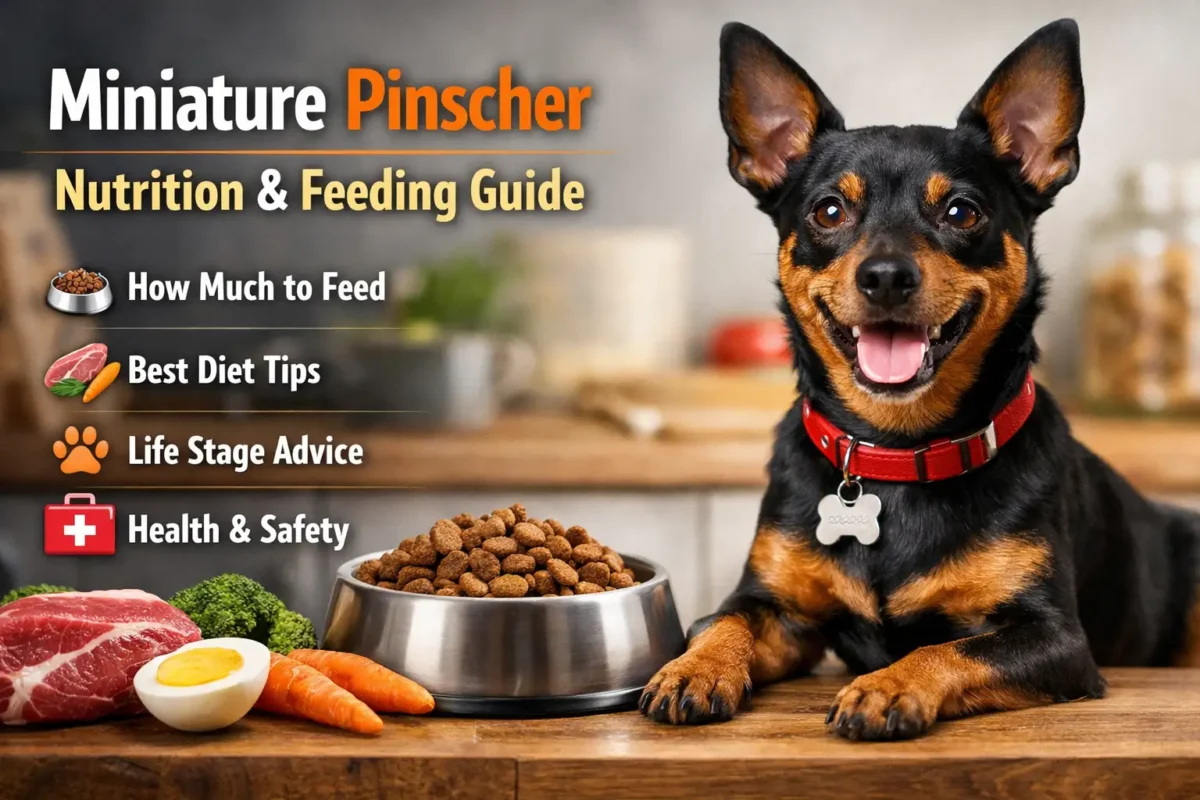
A Miniature Pinscher typically needs about 300–450 calories per day, which equals roughly ½ to 1 cup of high-quality dry dog food daily, split into 2 meals.
- Puppies: 3 small meals per day
- Adults: 2 meals per day
- Seniors: 2–3 smaller meals per day
The exact amount depends on your dog’s weight, activity level, and metabolism. Active Miniature Pinschers may need slightly more, while less active dogs need less.
These feeding guidelines are based on general veterinary nutrition standards for small-breed dogs.
How Much to Feed a Miniature Pinscher
The average Miniature Pinscher should eat about ½ to 1 cup of food per day, split into 2 meals.
Feeding needs can vary based on your Miniature Pinscher’s size, activity level, and metabolism. Use the guidelines below to adjust portions more precisely for your dog.
| Miniature Pinscher Type | Daily Food Amount | Meals Per Day |
|---|---|---|
| Puppy | Follow food label by age and weight; usually small portions spread across the day | 3 |
| Adult (under 4 kg) | About ½ to ¾ cup | 2 |
| Adult (4–5 kg) | About ¾ to 1 cup | 2 |
| Senior | Usually similar or slightly less, depending on activity and weight | 2–3 smaller meals |
| Very active Min Pin | May need slightly more than standard daily amount | 2 |
Miniature Pinschers have high energy but small stomachs, so portion control is important to prevent underfeeding or weight gain.
- Very active Min Pins need a little more
- Couch-potato or low-activity dogs may need less
Feeding amounts should always be checked on the dog food label too, because different foods have different calorie levels — and you can also estimate your dog’s needs more accurately based on their age using this Miniature Pinscher age calculator.
Feeding schedule:
- Puppies: 3 meals per day
- Adults: 2 meals per day
- Seniors: 2 smaller meals per day (sometimes 3 smaller meals if needed)
Split daily food into multiple meals to support digestion and maintain steady energy levels.
- Small Min Pin (under 4 kg): about ½ to ¾ cup per day (split into meals)
- Medium Min Pin (4–5 kg): about ¾ to 1 cup per day
- Very active Min Pin: may need slightly more
- Overweight Min Pin: slightly less food + more exercise
How to Tell If You’re Feeding the Right Amount
- Ideal weight: You can feel your dog’s ribs but not see them clearly
- Overweight: Ribs are hard to feel, and the body looks round
- Underweight: Ribs are clearly visible and easy to feel
Adjust food portions slowly based on your dog’s body condition and monitor changes over a few weeks.
Water is also important. Fresh, clean water should always be available because Miniature Pinschers are active and dehydrate faster than big dogs.
The simple rule is: feed good food, feed the right amount, check their body shape, and adjust slowly.
This covers the essential feeding guidelines for most Miniature Pinschers. The sections below provide additional details on diet quality, food types, and long-term nutrition.
Miniature Pinschers are small but very active dogs, so feeding the right amount and choosing the right food both matter. A good diet supports energy, muscle, healthy skin and coat, digestion, and long-term health.
This guide covers how much to feed a Miniature Pinscher, the best diet choices, foods to avoid, and feeding tips for puppies, adults, and seniors.
What to Feed a Miniature Pinscher (Quick Diet Overview)
The best food for a Miniature Pinscher is a high-quality, small-breed dog food with real meat as the first ingredient, healthy fats for energy, and easy-to-digest ingredients. Because Min Pins are active and have fast metabolisms, their food should be nutrient-dense, balanced, and made specifically for small dogs.
Good quality dog food should include:
- Real meat as the first ingredient (chicken, beef, turkey, lamb, fish)
- Healthy fats like fish oil or chicken fat for skin, brain, and coat health
- Easily digestible carbs like brown rice, oats, or sweet potato for energy
- Vitamins and minerals to support bones, immune system, and body functions
You can feed a Miniature Pinscher:
- Dry kibble (most common and easy to use)
- Fresh or gently cooked food (great taste and digestibility)
- Canned/wet food (good for picky eaters)
- Raw food (only if planned carefully and safely)
Each has its pros and cons, but the most important thing is that the food is well balanced and complete according to AAFCO or similar dog nutrition standards.
Foods Miniature Pinschers Should Avoid
Miniature Pinschers should never eat certain foods because even small amounts can be toxic.
Low-quality dog food ingredients to avoid:
- List “meat by-products” or “animal digest” without saying which animal
- Use too many fillers like corn, wheat, or soy as main ingredients
- Have lots of artificial colors, flavors, or preservatives
- Contain too much salt, sugar, or cheap fats
Toxic foods Miniature Pinschers should never eat
- Chocolate
- Grapes and raisins
- Onions and garlic
- Alcohol
- Xylitol (artificial sweetener)
- Coffee and tea
- Very salty, spicy, or fried foods
Simple takeaway
Choose high-quality food made for small dogs, check that real meat is the first ingredient, and avoid foods full of chemicals or low-quality fillers. This helps your Miniature Pinscher stay strong, active, and healthy.
Miniature Pinscher Life Stage and Health Diet Needs: Puppy, Adult, Senior, Weight Control and Sensitive Stomach Diets
Miniature Pinschers have different nutrition needs at different ages and health stages. Feeding the same type and amount of food for their whole life is not the best idea. Their body changes, their energy level changes, and their health needs change too. So their diet must change with them.
Miniature Pinscher Nutrition Requirements
- Calories: Around 300–450 calories per day for most adults, depending on activity level
- Protein: High-quality animal protein to support lean muscle and energy
- Fats: Healthy fats (like fish oil) for energy, brain function, and coat health
- Carbohydrates: Easily digestible carbs like rice, oats, or sweet potato for steady energy
- Vitamins & Minerals: Essential for immune system, bones, and overall health
Understanding their overall traits, behavior, and energy level can also help you feed them better — as explained in this Miniature Pinscher breed guide.
Frequently asked questions
Can I give my Miniature Pinscher treats every day?
Yes, Miniature Pinschers can have treats every day, but treats should make up no more than 10% of their daily calories. Too many treats can quickly lead to weight gain in small dogs, so choose healthy, low-calorie treats and reduce meal portions if needed.
Can Miniature Pinschers eat human food?
Some human foods are safe for Miniature Pinschers in small amounts, such as cooked chicken, rice, and certain vegetables. However, many foods like chocolate, grapes, onions, and xylitol are toxic. Always check food safety before sharing human food with your dog.
Why does my Miniature Pinscher have soft stool after changing food?
Soft stool in Miniature Pinschers often happens when food is changed too quickly. Their digestive system needs time to adjust. Always transition to new food slowly over 7–10 days by mixing increasing amounts of the new food with the old one.
When should I take my Miniature Pinscher to the vet for feeding problems?
You should see a vet if your Miniature Pinscher stops eating for more than 24 hours, vomits frequently, has blood in the stool, loses weight rapidly, or shows signs of food allergies. Ongoing digestive or feeding issues should always be evaluated by a professional.
Feeding your Miniature Pinscher the right way keeps them happy, active, and healthy. With good food choices and smart feeding habits, you can help your little dog enjoy a long and strong life.

Ata Ur Rehman is the founder of Pet Age in Human Years Calculator, an educational platform that provides age conversion charts and lifespan guides for dogs, cats, birds, and other companion animals. His work focuses on helping pet owners understand how animal ages translate into human years using commonly accepted age conversion formulas and published lifespan averages.
The website compiles breed and species lifespan data from kennel clubs, breed organizations, and general animal lifespan studies to present simple and easy-to-understand guides for pet owners worldwide.
This website was created to centralize animal age conversion charts into one easy reference platform for pet owners.