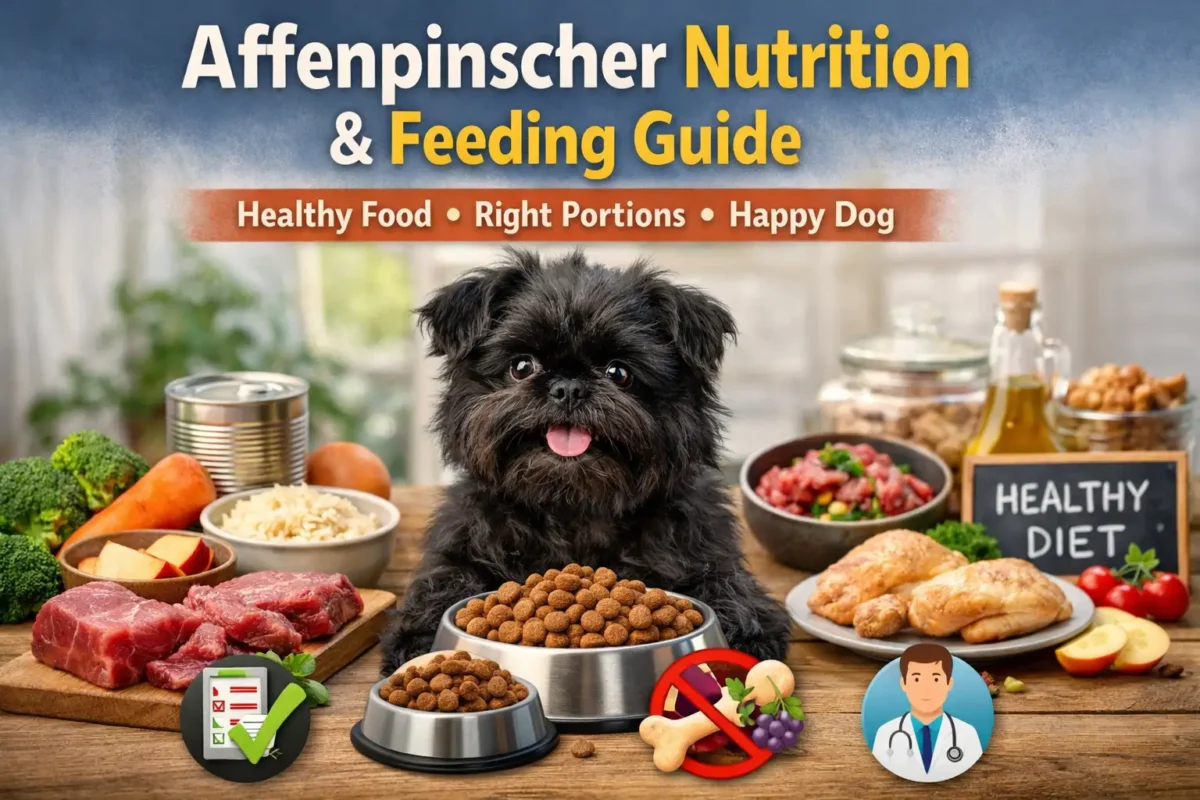
This guide gives you exact feeding amounts, schedule, and food choices for every life stage.
Affenpinscher puppy nutrition guide: Affenpinscher puppies need a high-protein, nutrient-dense diet made for small breeds to support healthy growth, energy, digestion, and development.
Most Affenpinscher puppies should be fed 3–4 small meals per day, with portions adjusted by age, weight, activity level, and body condition. As they grow into adults, feeding usually changes to 2 meals per day with more controlled portions.
This Affenpinscher feeding guide explains what to feed, how much to feed, the best feeding schedule, safe foods, foods to avoid, and how nutrition needs change from puppy to adult and senior age.
An Affenpinscher puppy feeding guide explains the right food, portions, and feeding schedule needed for healthy growth.
Affenpinscher Puppy Feeding Guide: Quick Answer
- Best food: High-quality small-breed puppy food with real meat as the first ingredient.
- Meals per day: 3–4 meals for puppies, then 2 meals for most adults.
- Daily calories: About 250–450 calories for puppies, depending on age, size, and activity.
- Portion style: Small, measured meals with controlled Affenpinscher food portions instead of free feeding.
- Key goal: Support growth without causing weight gain or digestive upset.
Want to adjust feeding by age? Use our Affenpinscher Age Calculator to better understand your dog’s life stage before adjusting portions.
Affenpinscher Puppy Feeding Schedule (How Much and How Often)
Affenpinscher puppies should be fed 3–4 times per day, while adults usually need 2 meals daily. Affenpinscher puppies need small, frequent meals to support growth and prevent low blood sugar. Feeding amounts should be based on weight, age, and activity level.
Feeding the right amount is just as important as choosing the right food. Affenpinschers are small dogs with small stomachs, so they need the right calories without overeating. Too much food can cause weight gain, joint stress, diabetes risk, and shorter life. Too little food can cause weakness and health problems.
A good basic rule is to follow calories, not only “cups of food,” because different foods have different calorie levels, you can also use this Affenpinscher age calculator to better understand how your dog’s age affects feeding needs.
Affenpinscher Feeding Chart (Daily Calories Guide)
How much to feed an Affenpinscher puppy depends on size and age, and this Affenpinscher feeding chart shows typical calorie needs.
| Dog Type | Weight | Calories Per Day |
|---|---|---|
| Puppy | 2–4 kg | 250–450 kcal |
| Adult | 3–4.5 kg | 220–350 kcal |
| Senior | 3–4.5 kg | 190–300 kcal |
Affenpinscher Puppy Feeding Frequency
These feeding tips help maintain proper portions, digestion, and overall health for Affenpinschers.
| Life Stage | Meals Per Day |
|---|---|
| Puppy (up to 6 months) | 3–4 meals |
| Adult | 2 meals |
| Senior | 2 smaller meals (sometimes 3 smaller meals work well) |
Helpful real-life tips
- If your dog is very active → they may need a bit more
- If they are lazy, sleep a lot, or gain weight easily → slightly less
- Always measure food using a measuring cup
- Do not “free feed” (leaving food in the bowl all day)
- Watch your dog’s body shape, not only the bowl
A healthy Affenpinscher should have a visible waist and you should feel the ribs lightly when touching, not see them sticking out.
Hydration also matters. Your dog should always have clean, fresh water available. Small dogs can get dehydrated quickly, especially in heat.
If you are unsure, your vet can help you decide the right calories for your dog’s age, health, and lifestyle.
What to Feed an Affenpinscher Puppy (Nutrition Requirements)
Affenpinscher puppies should eat high-protein, small-breed dog food with balanced fats and easy-to-digest ingredients.
What to feed an Affenpinscher puppy depends on quality protein, digestibility, and balanced nutrients. Affenpinscher puppy nutrition requirements focus on high protein, healthy fats, and easy digestion to support fast growth and energy needs.
Your Affenpinscher needs food that is balanced, safe, and easy to digest. The goal is simple: give your dog the right mix of protein, healthy fats, and quality ingredients so they stay strong, active, and healthy.
Protein is the main building block for muscles, body strength, and energy. Good protein comes from real meat like chicken, turkey, beef, lamb, fish, or high-quality meat meals.
Healthy fats help with brain health, shiny coat, skin health, and steady energy. Look for fats like chicken fat, fish oil, or salmon oil.
Carbohydrates give steady energy and help digestion when they come from good sources like rice, oats, barley, sweet potato, or vegetables.
Vitamins and minerals support bones, immunity, heart health, nerves, and metabolism. A balanced dog food should already include them, so most dogs do not need extra supplements unless a vet says so.
When choosing dog food, always check the label:
- Look for real meat listed as the first ingredient
- Make sure it says AAFCO or FEDIAF approved (this means it meets nutrition standards)
- Avoid foods that are mostly fillers like corn and wheat with no real meat
- Avoid unknown “meat by-products” with no clear source
- Choose food made for small dogs when possible (it suits smaller stomachs and higher energy needs)
About grain-free vs grain food: many Affenpinschers do well with grains unless they have allergies. Grain-free is not automatically “better.” The best choice is food that your dog digests well and keeps them healthy.
Keep this rule in mind: quality matters more than brand hype. If your Affenpinscher has good energy, normal poop, shiny coat, normal weight, and no itching or tummy problems, the food is likely working well.
Affenpinscher Food Guide (Best Food Types and Diet Options)
The best food type depends on your dog, but most Affenpinschers do well on high-quality dry kibble or mixed diets. This Affenpinscher feeding guide compares different food types to help you choose the best option for your dog.
There are many food choices for Affenpinschers, and each type has its own benefits. The best food is the one that is safe, balanced, your dog enjoys, and keeps them healthy.
Food type comparison
| Food Type | Main Benefits | Things to Consider |
|---|---|---|
| Dry Kibble | Easy to store, helps teeth, usually cheaper | Quality can vary |
| Wet / Canned Food | Tasty, good for picky eaters, more moisture | Can be costly, watch portion size |
| Fresh / Cooked Food | Very digestible, natural ingredients | Needs balance, usually expensive |
| Raw Diet | Some owners prefer it, can be high protein | Needs expert guidance, risk of bacteria |
| Freeze-Dried / Dehydrated | Long shelf life, usually good quality | Can be expensive |
Many Affenpinschers do well on good-quality dry kibble or a mix of kibble and wet food. Avoid very cheap foods with low meat content and too many fillers.
What Can Affenpinschers Eat? (Safe Human Foods)
Some human foods are safe for Affenpinschers when given in small amounts as treats.
- Plain chicken or turkey (no spices)
- Plain cooked fish
- Rice
- Carrots
- Apples without seeds
- Pumpkin
- Plain yogurt (small amount)
Never feed these because they are dangerous or toxic
- Chocolate
- Grapes and raisins
- Onions and garlic
- Coffee or caffeine
- Alcohol
- Xylitol (sweetener in gum, candy, peanut butter)
- Cooked bones (they can break and injure your dog)
Treats are okay, but they should not be more than 10% of your dog’s daily calories. Too many treats can cause weight gain and stomach issues.
Because Affenpinschers are small dogs, avoid large hard bones or very tough treats that can damage teeth. Dental sticks made for small dogs are usually safer.
If your dog ever vomits, has diarrhea, or seems unwell after eating something, contact your vet.
Proper nutrition supports coat health, which is important for grooming. Learn more in this Affenpinscher grooming guide.
Best Dog Food for Affenpinschers
The best dog food for Affenpinschers is high-protein, made for small breeds, and uses real meat as the main ingredient.
- Dry kibble: supports dental health
- Wet food: useful for picky eaters
- Fresh food: highly digestible option
- Small-breed formulas: best for size and metabolism
Affenpinscher Diet Guide (Special Diets, Feeding Problems & Vet Advice)
This section of the Affenpinscher feeding guide covers special diets, common feeding issues, and when to seek veterinary advice.
Some Affenpinschers may need special diets at different times in life. This can be due to allergies, stomach issues, weight problems, age, or health conditions. Always talk to your vet before starting a medical or special diet.
Affenpinscher Special Diet Needs
- Allergies or itchy skin → limited ingredient food or hypoallergenic diet
- Sensitive stomach → easy-to-digest food with simple ingredients
- Overweight → low-calorie diet with controlled portions
- Underweight or poor appetite → higher calorie food in small meals
- Senior dogs → food that supports joints, digestion, and heart health
Common Affenpinscher Feeding Problems and Solutions
| Problem | Possible Reason | What You Can Do |
|---|---|---|
| Dog refuses food | Picky, sudden change, stress | Try gradual food change, warm food slightly, talk to vet if it continues |
| Loose stool or diarrhea | Fast food switch, rich treats, wrong food | Switch food slowly, avoid spicy/oily food, see vet if it lasts more than 1–2 days |
| Vomiting after eating | Eating too fast, wrong food | Use slow-feeder bowl, smaller meals, see vet if repeated |
| Weight gain | Too many treats, big portions, low activity | Measure food, reduce treats, add gentle exercise |
| Always hungry | Low-quality food or not enough calories | Check calories, choose better quality food, talk to vet |
| Bad breath or dental issues | Poor dental care, wrong food texture | Use dental treats, tooth brushing, check with vet |
Affenpinscher Feeding FAQs
These answers cover the most common Affenpinscher feeding questions.
How much should an Affenpinscher puppy eat?
Affenpinscher puppies typically need 250–450 calories per day depending on their size, age, and activity level, divided into 3–4 meals.
How often should I feed an Affenpinscher puppy?
Puppies should be fed 3–4 times daily to support growth and stable energy levels.
What is the best food for an Affenpinscher?
The best dog food for Affenpinschers is high-quality, protein-rich, and made for small breeds, with real meat as the first ingredient.
How much food should I give my Affenpinscher?
Affenpinscher food portions depend on weight, age, and activity, but should always be measured and adjusted to maintain a healthy body condition.
Can Affenpinschers be picky eaters?
Yes, some Affenpinschers can be picky eaters. Smaller, fresh, or slightly warmed meals can help improve appetite.
Can I switch my Affenpinscher’s food suddenly?
No, food should always be changed gradually over 7–10 days to avoid digestive upset.
How do I know if food suits my dog?
Good energy, normal stool, a shiny coat, and a healthy weight are signs the food is working well.
Should I give vitamins to my Affenpinscher?
Most balanced dog foods already include necessary nutrients. Supplements should only be given if recommended by a vet.
Feeding routines also support training consistency, which you can learn more about in this Affenpinscher training guide.
To adjust feeding based on your dog’s exact age and life stage, use our Affenpinscher Age Calculator.

Ata Ur Rehman is the founder of Pet Age in Human Years Calculator, an educational platform that provides age conversion charts and lifespan guides for dogs, cats, birds, and other companion animals. His work focuses on helping pet owners understand how animal ages translate into human years using commonly accepted age conversion formulas and published lifespan averages.
The website compiles breed and species lifespan data from kennel clubs, breed organizations, and general animal lifespan studies to present simple and easy-to-understand guides for pet owners worldwide.
This website was created to centralize animal age conversion charts into one easy reference platform for pet owners.