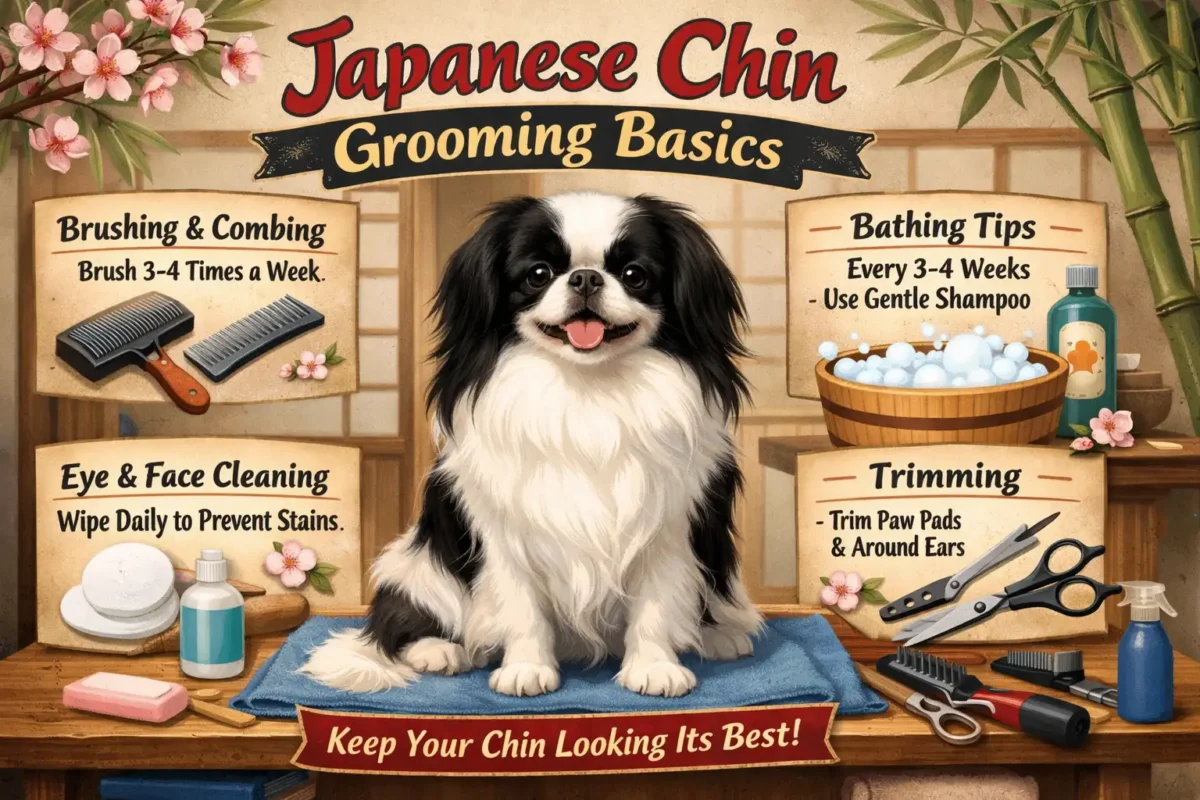
Grooming a Japanese Chin is simple when you follow a regular routine. This guide explains how to brush, bathe, manage shedding, and maintain eyes, ears, nails, and teeth for a healthy and comfortable dog.
Brushing 2–3 times per week, bathing every 3–4 weeks, and maintaining the eyes, ears, nails, and teeth regularly keeps your Japanese Chin clean and healthy. This simple routine keeps their silky coat clean, reduces shedding, and prevents common issues like tangles, tear stains, and irritation.
Japanese Chin grooming is the routine of brushing, bathing, and maintaining coat and hygiene areas like eyes, ears, nails, and teeth to keep the dog healthy and comfortable.
Do Japanese Chin shed? Yes — they are light to moderate shedders. Regular brushing helps control loose hair and keeps the coat smooth and healthy.
- Brush: 2–3 times per week
- Bathe: Every 3–4 weeks
- Shedding: Light to moderate
- Eye cleaning: Daily
- Nail trimming: Every 3–4 weeks
Why Japanese Chin Grooming Is Different
To better understand their overall care, you can also read this Japanese Chin dog guide. These traits require gentle brushing, regular eye care, and careful handling to avoid irritation or damage.
Proper Japanese Chin grooming is not just about keeping the dog looking elegant, it plays a direct role in their comfort, skin health, and overall well-being. Although this breed is often described as “low maintenance,” that label can be misleading. Japanese Chins have a silky, feathered single coat, compact body, and flat facial structure, so their grooming needs are specific and should not be ignored.
Regular grooming helps prevent painful tangles, reduces shedding around the home, and allows owners to spot early signs of health problems such as skin irritation, ear infections, dental disease, or eye issues. For a small toy breed like the Japanese Chin, even minor grooming neglect can quickly turn into discomfort or medical concerns.
From a behavioral standpoint, consistent gentle grooming also helps Japanese Chin dogs stay calm and cooperative. If your dog is sensitive during brushing or nail trims, use short sessions, rewards, and calm handling. For more support, see this Japanese Chin training guide.
This guide is designed to help you:
- Understand shedding and coat type
- Follow a simple grooming routine
- Prevent mats and skin issues
- Maintain hygiene areas easily
Whether you’re caring for a puppy or an adult Japanese Chin, proper grooming is one of the easiest ways to improve their quality of life—and strengthen your bond at the same time. To better understand your dog’s age and adjust grooming routines, use this Japanese Chin age calculator.
Do Japanese Chin Shed? Shedding Level and Control
Answer: Japanese Chin shed lightly to moderately, and regular brushing is enough to control loose hair.
This breed sheds lightly to moderately throughout the year. Because they lack a thick undercoat, shedding happens gradually instead of heavily. Regular brushing 2–3 times per week helps control loose hair and keeps shedding manageable.
Understanding the Japanese Chin Coat and Grooming Needs
TTo manage grooming properly, it helps to understand their coat structure. This breed has a single coat, not a thick double coat like Huskies or Golden Retrievers. Even so, their coat still needs regular care to stay clean, smooth, and tangle-free.
Because they do not have a thick undercoat, Japanese Chin shedding is usually manageable with regular brushing, especially in feathered areas like the ears, legs, and tail.
Quick answer: Japanese Chin shed lightly to moderately, and regular brushing is enough to manage loose hair.
Their hair is medium to long and grows longer in certain areas. These long areas are called feathering, and you will see them on the ears, chest, legs, and tail. This is why consistent brushing is more important than occasional grooming.
Most shedding happens when old hair falls out naturally or during seasonal changes. Regular brushing helps remove loose hair before it ends up on furniture or clothing.
Shedding control tips: brush regularly, avoid over-bathing, and use a gentle comb to remove loose hair.
The table below shows how coat features affect grooming needs:
Japanese Chin Coat Characteristics and Care Impact
| Coat Feature | What It Means | Grooming Impact |
|---|---|---|
| Silky single coat | No thick undercoat | Does not need shaving or heavy deshedding |
| Feathered areas | Longer hair on ears, legs, tail | Higher risk of small mats |
| Soft texture | Hair slides easily | Needs gentle brushing to avoid breakage |
| Moderate shedding | Hair sheds slowly over time | Regular brushing keeps shedding under control |
Because of their coat type, Japanese Chin dogs do best with light but frequent grooming, not harsh tools or rough handling. Japanese Chin require light grooming compared to heavy-coated breeds, but consistency is important.
Here is a simple grooming schedule:
Grooming Frequency for Japanese Chin
| Task | Frequency | Purpose |
|---|---|---|
| Brushing | 2–3 times per week | Prevents tangles and loose hair buildup |
| Bathing | Every 3–4 weeks | Keeps coat clean without drying skin |
| Ear check | Weekly | Helps prevent infections |
| Nail trimming | Every 3–4 weeks | Prevents pain and walking problems |
| Eye cleaning | Daily or as needed | Reduces tear stains and irritation |
Some areas of the body need extra attention. Mats often form behind the ears, under the front legs, around the collar area, and on the tail. These spots rub together when the dog moves, making tangles more likely.
Common problem: skipping brushing leads to small mats that quickly turn into painful tangles, especially in feathered areas.
Japanese Chin Grooming Routine for Beginners
If you are new to grooming, start with a simple routine: brush regularly, keep sessions short, and focus on consistency instead of perfection.
Japanese Chin Grooming Routine (Simple Weekly Plan)
A simple routine helps keep your Japanese Chin clean, comfortable, and stress-free. This routine works for both puppies and adult dogs.
- Brush coat 2–3 times per week
- Check and clean eyes daily
- Inspect ears once a week
- Trim nails every 3–4 weeks
- Bathe every 3–4 weeks
How to Groom a Japanese Chin at Home: Brushing, Bathing, and Coat Care
Learning how to groom a Japanese Chin at home is simple when you follow a calm routine. You do not need many tools or daily grooming. The key is gentle handling, the right tools, and regular care.
Pro tip: Short, calm grooming sessions are better than long sessions. This helps your Japanese Chin stay relaxed and cooperative.
This section explains what tools you need, how to brush correctly, and how to bathe your Japanese Chin without stress.
Best grooming tools for Japanese Chin: slicker brush, metal comb, mild dog shampoo, soft towel, and optional low-heat dryer.
Grooming tools you actually need
You only need a few basic tools. The right tools make grooming easier and safer.
| Tool | What It Is Used For | Notes for Japanese Chin |
|---|---|---|
| Slicker brush | Removes loose hair and small tangles | Use gently, do not press hard |
| Metal comb | Finds hidden knots | Great for ears, legs, and tail |
| Dog shampoo | Cleans coat and skin | Use mild, dog-only shampoo |
| Towel | Dries excess water | Soft towels work best |
| Low-heat dryer (optional) | Dries coat fully | Always use low heat and low air |
A metal comb is especially useful because it helps find small, hidden knots. After brushing, gently run the comb through feathered areas like the ears, legs, and tail. Always start at the tips of the hair and work slowly toward the skin to avoid pulling or discomfort.
Avoid using human shampoo, as it can cause dryness or irritation. A dog’s skin is different and human products can cause dryness or itching.
How to Brush a Japanese Chin Properly
Brushing should be gentle and calm:
- Brush 2–3 times per week
- Start at the head and move toward the tail
- Brush small sections at a time
- Pay extra attention behind the ears and under the legs
If you find a small knot, do not pull—work it out gently. Hold the hair near the skin and slowly work the knot out with a comb.
How to Bathe a Japanese Chin Safely
This breed does not require frequent bathing. Over-bathing can dry out the skin.
| Grooming Task | How Often | Helpful Tips |
|---|---|---|
| Brushing | 2–3 times a week | Prevents mats and loose hair |
| Bathing | Every 3–4 weeks | Use lukewarm water only |
| Drying | After every bath | Dry fully to avoid skin issues |
Follow these steps when bathing:
Simple grooming flow: brush → bathe → dry → comb → clean sensitive areas.
- Brush before the bath to remove tangles
- Use warm (not hot) water
- Gently massage shampoo into the coat
- Rinse very well so no soap stays on the skin
- Dry with a towel, then air dry or use a low-heat dryer
Because Japanese Chin dogs have flat faces, never blow air directly into the face. Always keep air away from the nose and eyes.
Important: Avoid rough brushing or harsh tools, as they can damage the coat.
This also helps reduce shedding and maintain skin health.
Japanese Chin Grooming: Nails, Ears, Eyes, Teeth and Skin Care
Grooming includes more than brushing and bathing. Japanese Chin dogs also need regular care for their nails, ears, eyes, teeth, and skin. These small steps help prevent pain, infection, and strong odors.
Because Japanese Chin are small dogs, issues can develop quickly if these areas are ignored. The good news is that most of this care is quick and easy.
Nail care
Japanese Chin nails grow fast. Long nails can make walking painful and may cause slipping.
- Trim nails every 3 to 4 weeks
- Use dog nail clippers or a nail grinder
- Cut small amounts at a time
- Stop if you see pink inside the nail (this is the quick)
If you feel unsure, a groomer or vet can trim nails safely.
Ear cleaning
Their ears should look clean and smell normal.
- Check ears once a week
- Clean only if you see dirt or wax
- Use a dog ear cleaner, not water
- Never push cotton swabs deep into the ear
Redness, bad smell, or heavy discharge means you should see a vet.
Eye care and tear stains
Japanese Chin often have tear stains because of their flat face and large eyes.
- Wipe around the eyes daily with a soft, damp cloth
- Keep hair around the eyes trimmed short
- Never use harsh chemicals near the eyes
Heavy staining, thick discharge, or squinting can be signs of an eye problem.
Dental care
Small dogs are more likely to have dental issues.
- Brush teeth 2 to 3 times a week
- Use dog toothpaste only
- Dental chews can help, but do not replace brushing
Bad breath, red gums, or trouble eating are warning signs.
Skin health
Healthy skin should be smooth, not red or flaky.
- Watch for itching, redness, or hair loss
- Do not bathe too often
- Use gentle dog shampoos only
Use this checklist to keep grooming consistent: Coat and skin health also depend on diet. See this Japanese Chin feeding guide for better results.
- Brush coat regularly
- Clean eyes daily
- Check ears weekly
- Trim nails regularly
- Maintain dental hygiene
| Area | How Often | What to Watch For |
|---|---|---|
| Nails | Every 3–4 weeks | Clicking on floors, curling nails |
| Ears | Weekly | Redness, smell, dark wax |
| Eyes | Daily | Tear stains, discharge |
| Teeth | 2–3 times weekly | Bad breath, red gums |
| Skin | Ongoing | Itching, bumps, dryness |
Regular care keeps your Japanese Chin comfortable and healthy. You can adjust grooming routines based on your dog’s age and life stage.
Common Grooming Mistakes, Professional Grooming, and FAQs for Japanese Chin Owners
Many grooming problems happen due to common mistakes. Japanese Chin dogs have special needs, and small mistakes can lead to discomfort or skin issues. This section helps you groom safely and know when to ask for help.
Common Japanese Chin Grooming Mistakes to Avoid
- Bathing too often, which dries out the skin
- Skipping brushing until mats form
- Pulling on tangles instead of gently working them out
- Using human shampoo or harsh products
- Shaving the coat, which is not needed and can damage hair growth
- Blowing air directly on the face during drying
Shaving can damage the coat and affect how it grows back. Their coat should be brushed and cleaned, not cut short.
Do Japanese Chin need haircuts? No. This breed has a naturally silky coat that should not be shaved. Light trimming around the feet or eyes is fine, but full haircuts can damage coat quality.
If you are searching for a “puppy cut” or haircut style, that refers to cosmetic trimming, while this guide focuses on healthy grooming and coat maintenance for Japanese Chin dogs.
Grooming at home vs professional grooming
Some grooming tasks are easy to do at home, while others are safer with a professional groomer.
| Grooming Task | Safe at Home | Better With a Professional |
|---|---|---|
| Brushing | Yes | No |
| Bathing | Yes | Optional |
| Nail trimming | Sometimes | Yes if unsure |
| Mat removal | Small mats only | Heavy mats |
| Full grooming session | No | Yes |
A professional groomer is helpful if your dog has heavy mats, is nervous, or needs careful handling. If you plan long-term grooming costs, tools, and professional visits, see this Japanese Chin cost guide.
Japanese Chin Grooming FAQs
How often should you brush a Japanese Chin?
Brush a Japanese Chin 2–3 times per week to prevent tangles and control shedding.
Is Japanese Chin grooming difficult?
No, Japanese Chin grooming is considered low to moderate effort. Their single coat does not mat easily if brushed regularly.
Do Japanese Chin shed a lot?
Japanese Chin shed lightly to moderately. They do not have a thick undercoat, and regular brushing helps keep shedding under control.
Can I cut my Japanese Chin’s hair?
Light trimming around the feet or eyes is okay. Full haircuts or shaving are not recommended because they can damage the coat.
How often should my Japanese Chin see a groomer?
Most Japanese Chin dogs visit a professional groomer every 6 to 8 weeks, depending on coat condition and comfort with home grooming.
What if my Japanese Chin hates grooming?
Start slowly, keep sessions short, and use treats and praise. Gentle, calm grooming routines help build trust over time.
What happens if Japanese Chin grooming is ignored?
Ignoring grooming can lead to mats, skin irritation, bad odor, and discomfort. Early care prevents most of these problems.
Why is my Japanese Chin shedding more than usual?
Seasonal changes, stress, or poor diet can increase shedding. Regular brushing helps reduce excess hair.
Can I groom my Japanese Chin at home?
Yes, most grooming tasks can be done at home with basic tools and a calm routine.
When to see a vet?
See a veterinarian if you notice:
- Constant scratching or hair loss
- Red or swollen skin
- Thick eye discharge
- Bad ear smell or pain
- Trouble eating or bleeding gums
These are health issues, not just grooming problems. For complete care, combine grooming with proper feeding, training, and age-based routines. You can explore all Japanese Chin guides or directly use the age calculator to personalize your dog’s care plan.
For complete care, combine grooming with proper feeding, training, and routine health checks.
Japanese Chin Grooming Summary
With a consistent routine, Japanese Chin grooming becomes simple and easy to manage. For a complete understanding of your dog’s age and care needs, use the Japanese Chin age calculator. Focus on brushing 2–3 times per week, bathing every 3–4 weeks, and maintaining eyes, ears, nails, and teeth. This keeps the dog comfortable, healthy, and looking its best.
Explore related Japanese Chin guides on feeding, training, cost of ownership, and age-based care to build a complete routine around your dog’s needs.

Ata Ur Rehman is the founder of Pet Age in Human Years Calculator, an educational platform that provides age conversion charts and lifespan guides for dogs, cats, birds, and other companion animals. His work focuses on helping pet owners understand how animal ages translate into human years using commonly accepted age conversion formulas and published lifespan averages.
The website compiles breed and species lifespan data from kennel clubs, breed organizations, and general animal lifespan studies to present simple and easy-to-understand guides for pet owners worldwide.
This website was created to centralize animal age conversion charts into one easy reference platform for pet owners.