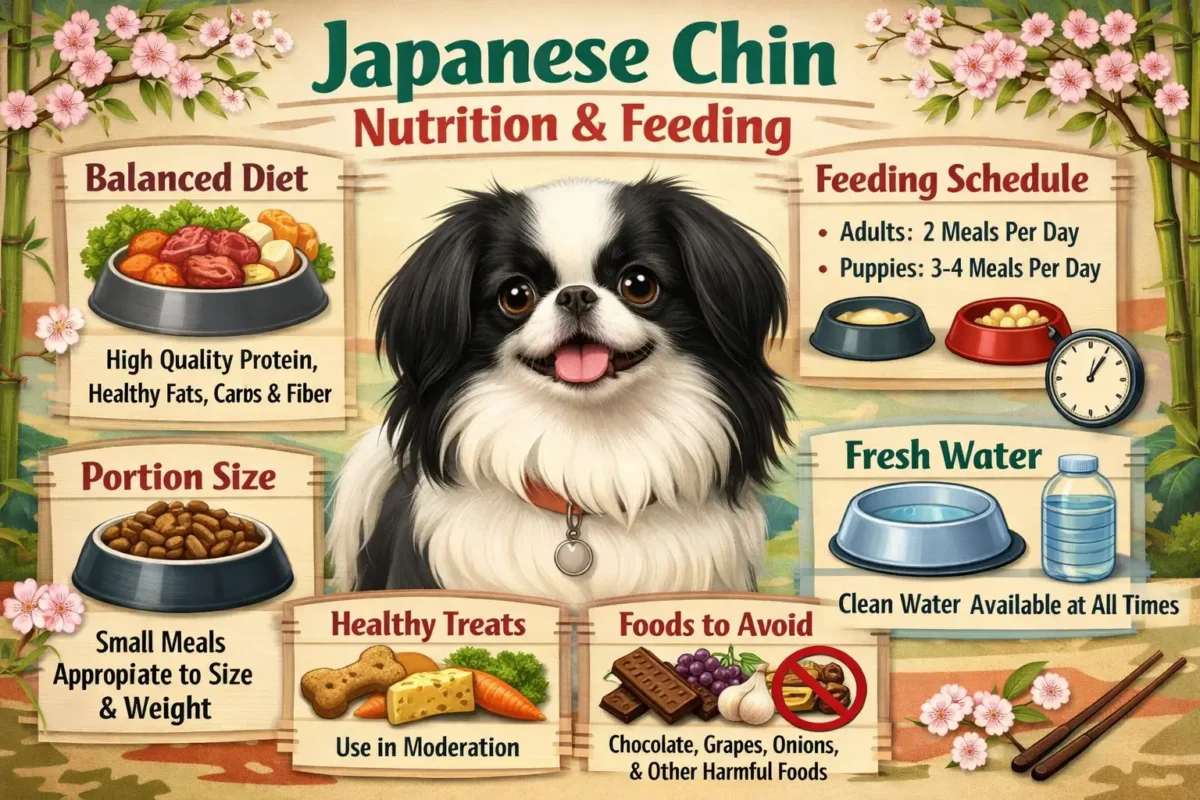
This Japanese Chin feeding guide explains exactly how much to feed, what to feed, and how to choose the best food for each life stage.
How much should a Japanese Chin eat?
Most adult Japanese Chins need 140 to 280 calories per day, which equals about 1/4 to 1/2 cup of high-quality small-breed dog food daily, split into two meals. Puppies need 3–4 meals per day, while seniors may need slightly fewer calories.
Japanese Chin feeding needs are different from general small dog diets. This toy breed has a compact body and relatively low daily calorie needs. Even small overfeeding can quickly lead to weight gain and digestive issues in this breed.
If you want a full overview of the breed (size, temperament, and care needs), read this Japanese Chin full guide.
Why Diet Matters for Japanese Chin Dogs
Japanese Chins are small, low-activity companion dogs, which means their diet must be carefully controlled. Even small overfeeding can lead to weight gain, while poor nutrition can affect energy, coat health, and digestion.
Japanese Chins are typically indoor companion dogs with moderate activity levels, their diet needs to deliver high nutritional density without excess calories. The right balance of protein, fats, carbohydrates, and micronutrients supports lean muscle, healthy skin and coat, stable digestion, dental health, and consistent energy—while the wrong diet can contribute to obesity, picky eating, soft stools, and reduced quality of life.
Diet also affects key breed-specific traits:
- Small stomach capacity means large meals don’t work well
- Rapid metabolism makes portion accuracy critical
- Toy breeds gain and lose weight faster than medium or large dogs
- Dental crowding increases the importance of food texture and chewing habits
This guide helps you make practical feeding decisions based on your dog’s age, weight, and activity level. You’ll learn what Japanese Chins actually need to eat, how much to feed, which foods work best for this breed, and how to avoid the most common feeding mistakes owners make.
The best food for a Japanese Chin should be calorie-controlled, easy to digest, and sized for small mouths. Most Japanese Chins do best on a complete and balanced small-breed dog food with quality animal protein, moderate fat, and gentle carbohydrates like rice or oats. Feed two small meals per day as part of a consistent Japanese Chin feeding schedule, keep treats under 10% of calories, and adjust portions based on activity level.
Japanese Chin Diet: What Do Japanese Chins Eat?
A proper Japanese Chin diet should focus on simple, balanced food, not fancy or extreme diets. Because they are small dogs, they need high-quality nutrition in small amounts. Every meal should give them enough energy and nutrients without extra calories.
A balanced Japanese Chin diet is built around four key nutrients: protein, fat, carbohydrates, and fiber. Each one plays a clear role in your dog’s body.
Core Nutritional Needs for Japanese Chins
| Nutrient | Why It Matters for Japanese Chins | General Guideline |
|---|---|---|
| Protein | Keeps muscles strong and supports the immune system | Moderate, high-quality animal protein |
| Fat | Gives energy and keeps skin and coat healthy | Enough for energy, but not too much |
| Carbohydrates | Provides steady energy and helps digestion | Easy-to-digest sources like rice or oats |
| Fiber | Supports gut health and firm stools | Small amounts to avoid gas or loose stool |
Protein is especially important, but more is not always better. Japanese Chins do best with digestible animal protein, not very high-protein diets meant for working or hunting dogs.
Carbohydrates are not bad for dogs. When chosen well, they help with energy and digestion. Fiber supports gut health, but too much can cause bloating or loose stools in small dogs.
Vitamins, Minerals, and Supplements
Most healthy Japanese Chins get all essential vitamins and minerals from a complete and balanced dog food appropriate for your dog’s life stage. This includes nutrients that support:
- Bones and teeth
- Eyes and heart
- Skin and coat
Extra supplements are usually not needed unless your vet recommends them. Giving supplements without guidance can do more harm than good, especially for small dogs.
How to Read Dog Food Labels (Without Confusion)
When choosing food, always check for a statement that says the food is complete and balanced and meets standards set by AAFCO. This means the food meets basic nutrition rules for dogs.
Simple tips:
- The first ingredient should be a named animal protein
- Avoid foods with unclear labels like “meat by-products” only
- Ignore marketing words like “premium” or “luxury”
- Focus on nutrition, not the picture on the bag
You do not need the most expensive food, but you do need nutritionally balanced food designed for small breeds. You need the right food for a small, low-activity breed like the Japanese Chin. If you’re planning your monthly budget for food, grooming, and vet care, check this Japanese Chin cost of ownership guide.
How Much Should a Japanese Chin Eat? (Portions, Calories, Feeding Guide)
Most Japanese Chins eat about 1/4 to 1/2 cup of food per day, depending on size, activity level, and food calorie density. Even small overfeeding can quickly lead to weight gain in a Japanese Chin. Feeding too little can cause low energy and health problems. The goal is to feed the right amount every day based on consistent measurement and routine.
Japanese Chin Feeding Chart (Portions by Weight)
This feeding chart gives a quick estimate of how much food your dog needs daily based on weight.
| Weight | Daily Food (Cups) | Calories Per Day |
|---|---|---|
| 4–6 lbs | 1/4 – 1/3 cup | 140–180 kcal |
| 6–8 lbs | 1/3 – 1/2 cup | 170–210 kcal |
| 8–10 lbs | 1/2 cup | 200–280 kcal |
Daily Calorie Needs for Japanese Chins
Most adult Japanese Chins need very few calories compared to bigger dogs. Use the chart below as a general guide, not an exact rule. Every dog is slightly different depending on metabolism, activity level, and food type.
To better understand your dog’s exact age and adjust feeding accordingly, use this Japanese Chin age calculator.
| Japanese Chin Weight | Low Activity (Indoor, Calm) | Moderate Activity (Daily Walks, Play) |
|---|---|---|
| 4–6 lbs (1.8–2.7 kg) | 140–180 calories/day | 170–210 calories/day |
| 6–8 lbs (2.7–3.6 kg) | 170–210 calories/day | 200–240 calories/day |
| 8–10 lbs (3.6–4.5 kg) | 200–240 calories/day | 230–280 calories/day |
If your Japanese Chin is gaining weight, reduce food slightly. If ribs feel too sharp or energy is low, a small increase may help.
Always check the calorie information on your dog food label, as portion sizes can vary by brand. If your dog has health issues, consult your veterinarian before adjusting food.
Japanese Chin Portion Size Tips (Daily Feeding Guide)
- Measure food with a cup or scale, not by eye
- Split daily food into 2 small meals
- Treats should be less than 10% of daily calories
- Table scraps add calories fast and are easy to forget
Do not overfeed—Japanese Chins gain weight quickly even with small extra portions. Begging does not always mean hunger.
Feeding Schedule by Life Stage
Japanese Chins need different feeding schedules as they grow and age. You can also use this Japanese Chin age chart for a quick reference.
| Life Stage | Meals Per Day | Notes |
|---|---|---|
| Puppy (under 6 months) | 3–4 meals | Small, frequent meals help growth |
| Adult (6 months–7 years) | 2 meals | Keeps energy steady |
| Senior (7+ years) | 2 smaller meals | Helps digestion and weight control |
Puppies burn energy fast, while seniors burn fewer calories and need lighter portions.
Checking Your Dog’s Body Condition
A healthy Japanese Chin should have:
- Have a waist when viewed from above
- Have ribs you can feel but not see
- Move easily without getting tired fast
If your dog feels round, gains weight fast, or has trouble jumping, food amounts may need adjustment.
Best Food for a Japanese Chin: Kibble, Wet, Fresh, or Raw?
There is no single best food for every Japanese Chin because each dog has different age, health, and activity needs. The best choice depends on your dog’s age, health condition, activity level, and digestion, and what you can feed every day without stress. Small dogs do best with food that is easy to chew, digest, and moderate in calories.
Comparing Food Types for Japanese Chins
Use this comparison to choose the best food for your Japanese Chin based on lifestyle and needs.
| Food Type | Pros | Cons | Best For Japanese Chin Dogs |
|---|---|---|---|
| Dry kibble (small-breed) | Easy to store, helps teeth, affordable | Can be dry or boring for picky eaters | Most healthy adult Japanese Chins |
| Wet/canned food | Very tasty, adds moisture | Higher cost, softer texture | Picky eaters, seniors |
| Fresh or gently cooked | High taste, simple ingredients | Short shelf life, higher cost | Owners who want fresh food |
| Freeze-dried / air-dried | Nutrient-dense, easy to serve | Calorie-dense, can be pricey | Small portions, travel |
| Raw or homemade | Full ingredient control | Risk of imbalance if done wrong | Only with vet guidance |
Fresh or gently cooked food can work well for Japanese Chins if it is complete and balanced for dogs. Always choose food that is complete and balanced for small breeds. These diets usually use lightly cooked meats, vegetables, and grains instead of raw ingredients. Because fresh food is often more calorie-dense, portion control is very important, and changes should be introduced slowly over 7–10 days to avoid stomach upset.
Your dog’s age affects feeding needs, especially during puppy, adult, and senior stages.
How to Choose the Best Dog Food for a Japanese Chin
The best dog food for a Japanese Chin is one that matches their small size, low calorie needs, and sensitive digestion. Instead of focusing on brand names, look for food that meets these key criteria:
- AAFCO “complete and balanced” statement for your dog’s life stage
- Small-breed kibble size or soft texture for easy chewing
- Moderate fat levels to prevent weight gain
- Clear animal protein as the first ingredient
- Easy-to-digest carbohydrates like rice or oats
- Calorie information listed clearly on the package
Best choices by need:
- Picky eaters: Small-breed kibble mixed with a small amount of wet food
- Sensitive stomachs: Limited-ingredient diets with one protein source
- Seniors: Lower-calorie food with good protein and softer texture
- Overweight dogs: Lower calorie density with carefully measured portions
Foods Japanese Chins Can Eat vs Foods to Avoid
Some human foods are safe for Japanese Chins in small amounts, while others are toxic and should always be avoided.
| Safe (Small Amounts) | Unsafe / Toxic Foods |
|---|---|
| Plain cooked chicken | Chocolate |
| Plain rice or oats | Grapes and raisins |
| Cooked carrots | Onions and garlic |
| Plain pumpkin | Xylitol (sweetener) |
| Apple slices (no seeds) | Alcohol |
| Blueberries | Fatty or fried foods |
Human food should never exceed 10% of your Japanese Chin’s daily calories.
Treats and Snacks for Japanese Chins
Japanese Chin treats are useful for training and bonding, but they add calories fast.
Simple rules:
- Treats should be less than 10% of your Japanese Chin’s daily calorie intake
- Use tiny treats—Japanese Chins don’t need big ones
- Break treats into small pieces
- Avoid giving treats all day long
Dental chews can help teeth, but they also count as food.
Japanese Chin Feeding Problems, Special Diets, and When to See a Vet
Many Japanese Chin owners face feeding problems, especially related to diet and portion control. Because this breed is small and sensitive, diet issues show up quickly. The good news is that most problems can be fixed with small, smart changes.
Common Feeding Problems and Simple Fixes
| Problem | Likely Cause | What You Can Try First |
|---|---|---|
| Picky eating | Too many treats, boredom with food | Set meal times, remove food after 20 minutes |
| Loose stool or gas | Food change too fast, rich food | Slow food switch over 7–10 days |
| Weight gain | Overfeeding, extra snacks | Measure food, cut treats in half |
| Always acting hungry | Learned behavior, not real hunger | Stick to routine, avoid table scraps |
| Low energy | Too few calories or poor nutrition | Check portions and food quality |
Do not change foods every few days. This can upset your dog’s stomach and make picky eating worse.
Special Diet Needs in Japanese Chins
Some Japanese Chins need extra care with food.
- Sensitive stomachs: Simple ingredients and gentle foods work best
- Food allergies: Common signs include itching, ear issues, or soft stool
- Seniors: Older dogs need fewer calories but good protein
- Overweight dogs: Smaller portions, fewer treats, more light activity
Avoid grain-free diets unless your veterinarian recommends them based on your dog’s health needs. Many Japanese Chins digest grains just fine.
Switching Dog Food Safely
When switching Japanese Chin food, always change diet slowly:
- Days 1–3: 75% old food, 25% new food
- Days 4–6: 50% old, 50% new
- Days 7–9: 25% old, 75% new
- Day 10: 100% new food
If vomiting or diarrhea continues for more than two days, stop the change and talk to your vet.
When to See a Veterinarian
You should contact your vet if your Japanese Chin:
- Refuses food for more than 24–48 hours
- Loses or gains weight fast
- Has ongoing diarrhea or vomiting
- Shows signs of pain while eating
- Has sudden changes in appetite or behavior
A veterinarian can help rule out dental problems, illness, or true food allergies.
How Much Food Does a Japanese Chin Need Per Day?
A Japanese Chin typically needs about 140 to 280 calories per day, adjusted based on weight and activity level.
Japanese Chin Feeding FAQs
What is the best food for a Japanese Chin dog?
The best food for a Japanese Chin is a complete and balanced small-breed dog food with quality animal protein, moderate fat, and easy-to-digest carbohydrates. Portion control is especially important because this breed gains weight easily.
Can Japanese Chins eat dry kibble every day?
Yes, Japanese Chins can eat dry kibble daily as long as it is complete and balanced for small breeds. Many owners also mix kibble with wet food for better taste and hydration.
How much should a Japanese Chin eat per day?
Most adult Japanese Chins need about 140 to 280 calories per day, depending on weight, size, and activity level. It’s best to split daily food into two small meals and keep treats under 10% of total calories.
Can Japanese Chins eat fresh or gently cooked food?
Yes, Japanese Chins can eat fresh or gently cooked food if it is complete and balanced for dogs. These diets should be introduced slowly and fed in small portions to avoid weight gain or stomach upset.
Why is my Japanese Chin a picky eater?
Picky eating is often caused by too many treats, frequent food changes, or learned begging behavior. Consistent meal times and limiting snacks usually help improve appetite.
How often should I feed a Japanese Chin?
Adult Japanese Chins should be fed twice a day, while puppies need 3–4 smaller meals. Seniors may also benefit from smaller, consistent portions.
What human foods are safe for Japanese Chins?
In small amounts, Japanese Chins can eat plain cooked chicken, rice, oats, pumpkin, carrots, and blueberries. Avoid toxic foods like chocolate, grapes, onions, garlic, and anything with xylitol.
What should I avoid feeding a Japanese Chin?
Avoid chocolate, grapes, onions, garlic, xylitol, alcohol, and fatty foods. These can be toxic or harmful to small dogs.
Track Your Dog’s Age and Adjust Diet
Your dog’s age directly affects how much and what you should feed. Use this Japanese Chin age calculator to make better feeding decisions.
Final Note
Feeding a Japanese Chin becomes easy once you understand the right portions and food choices. For a complete understanding of this breed, you can also explore the Japanese Chin full guide.

Ata Ur Rehman is the founder of Pet Age in Human Years Calculator, an educational platform that provides age conversion charts and lifespan guides for dogs, cats, birds, and other companion animals. His work focuses on helping pet owners understand how animal ages translate into human years using commonly accepted age conversion formulas and published lifespan averages.
The website compiles breed and species lifespan data from kennel clubs, breed organizations, and general animal lifespan studies to present simple and easy-to-understand guides for pet owners worldwide.
This website was created to centralize animal age conversion charts into one easy reference platform for pet owners.