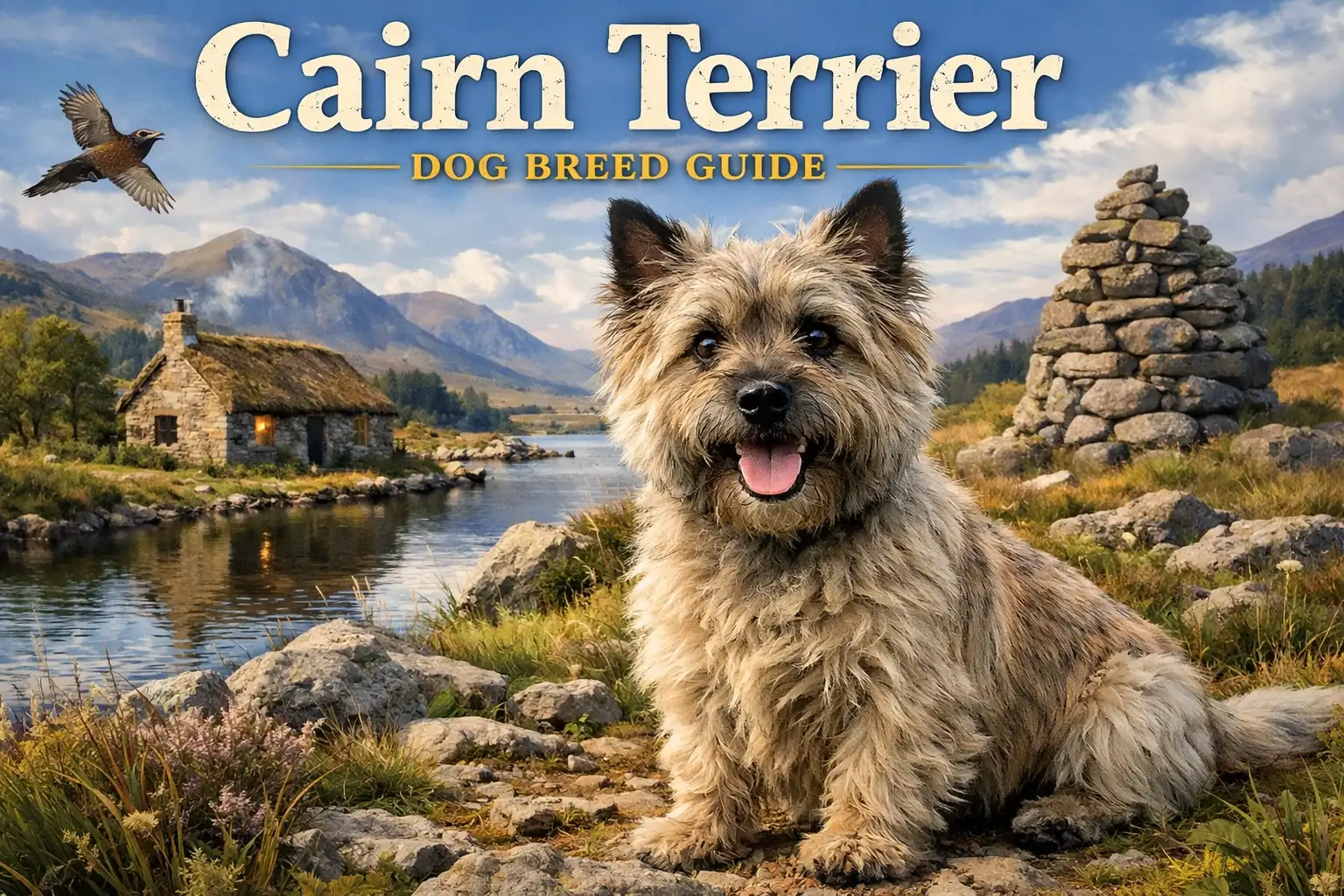
The Cairn Terrier is a small, confident terrier known for its bold temperament, alert personality, sturdy size, and long lifespan. Originally developed in the rugged Scottish Highlands, this breed was created to work independently, make quick decisions, and chase vermin from stone cairns. That working background still shapes the modern Cairn Terrier’s behavior today.
At first glance, Cairn Terriers look cheerful and approachable, with their fox-like expression, scruffy coat, and compact body. In daily life, they are intelligent, curious, active dogs that enjoy being involved with their family. They are affectionate, but they are not usually passive lapdogs. A Cairn Terrier often wants attention, activity, and freedom to explore.
This breed is best for owners who want a small dog with a strong personality. Cairn Terriers can do well in apartments, family homes, and active households, but only when their exercise, training, and mental stimulation needs are taken seriously. If those needs are ignored, common Cairn Terrier problems such as barking, digging, chasing, and selective listening can quickly appear.
Before we look deeper at the Cairn Terrier’s temperament, size, lifespan, pros and cons, and care needs, the table below gives a quick snapshot of what living with this breed is usually like.
Cairn Terrier at a Glance
| Trait | Details |
|---|---|
| Breed Group | Terrier |
| Country of Origin | Scotland |
| Size | Small dog breed |
| Height | 9–10 inches (23–25 cm) |
| Weight | 13–14 lbs (6–6.5 kg) |
| Lifespan | 13–15 years |
| Energy Level | High for a small dog |
| Shedding | Low to moderate |
| Coat Type | Double coat with a harsh, wiry outer coat |
| Temperament | Confident, alert, independent, playful |
| Best Known For | Bold personality, intelligence, watchdog ability, and strong terrier instincts |
Cairn Terriers typically live between 13 and 15 years, which makes them one of the longer-living small dog breeds. Their long lifespan also means owners should understand how their needs change from puppyhood to adulthood and into the senior years.
If you want to estimate your dog’s age more accurately, you can use our Cairn Terrier age calculator to check your Cairn Terrier’s age in human years.
This guide is designed for readers who want more than surface-level Cairn Terrier facts. In the sections below, we’ll cover the breed’s origin, temperament, personality, size, lifespan, pros and cons, care needs, and whether this spirited small terrier is the right fit for your lifestyle.
Cairn Terrier History, Origin, and Breed Purpose
The Cairn Terrier is one of the oldest working terrier breeds from Scotland. Long before it became a family companion, this small but fearless dog was bred to hunt vermin around farms, rocky land, and piles of stones called cairns. That is where the breed gets its name.
Cairn Terriers were not originally created to be quiet lapdogs. They were working dogs with a clear job. Farmers needed a compact, brave, and independent terrier that could crawl into tight spaces, chase small animals, and make quick decisions without constant human direction. This explains why the modern Cairn Terrier temperament is still bold, alert, intelligent, and sometimes stubborn.
The breed’s tough background also shaped its body and personality. Cairn Terriers had to work in cold weather, rough ground, and difficult outdoor conditions. Because of that, they developed a sturdy small-dog build, a weather-resistant coat, strong prey drive, and a confident attitude that often makes them act bigger than they really are.
For many years, Cairn Terriers were grouped with other Scottish terriers. Over time, breeders began to separate them based on their appearance, coat, size, and working style. Today, the Cairn Terrier is recognized as its own breed and is known for its lively personality, long lifespan, and classic scruffy terrier look.
The table below shows how the Cairn Terrier’s working history still affects its behavior, care needs, and daily life today.
How History Shapes the Cairn Terrier Today
| Historical Role | What It Means Today |
|---|---|
| Vermin hunter | Strong prey drive and a natural desire to chase |
| Worked independently | Smart, confident, and sometimes stubborn personality |
| Lived in harsh weather | Double coat that helps protect against wind and cold |
| Needed to stay alert | Good watchdog instincts and frequent barking if not managed |
| Small but brave | Fearless attitude despite being a small dog breed |
Understanding this background is important because it explains many common Cairn Terrier behaviors, including barking, digging, chasing, independence, and high energy. It also helps owners understand why this breed needs regular activity, clear training, and age-appropriate care as it moves from puppyhood into adulthood and senior life.
To better understand your dog’s current life stage, you can use our Cairn Terrier age calculator to estimate your Cairn Terrier’s age in human years.
Cairn Terrier Appearance, Size, and Physical Characteristics
The Cairn Terrier is a small dog breed, but it is not delicate or fragile. This breed was developed to work in rocky areas, so its body is compact, sturdy, and practical. Many owners are surprised by how solid and strong a Cairn Terrier feels for its size.
Most Cairn Terriers stand around 9–10 inches tall and weigh about 13–14 pounds. This clearly places them in the small dog category, but their confident personality and strong terrier instincts often make them seem much bigger than they are.
Cairn Terriers are low to the ground, with strong legs, a deep chest, and a body that is slightly longer than it is tall. This shape helped them move through narrow spaces while hunting. Even though they look cute and scruffy, they are active working terriers with strength, balance, and endurance.
Their face is one of their most recognizable features. Cairn Terriers usually have a fox-like expression, bright alert eyes, small pointed ears, and a short tail carried upright. Their overall look should feel natural, confident, and slightly rugged rather than overly polished.
Cairn Terrier Size and Build
| Feature | Description |
|---|---|
| Size Category | Small dog breed |
| Average Height | 9–10 inches |
| Average Weight | 13–14 pounds |
| Body Type | Compact, sturdy, and slightly longer than tall |
| Legs | Short but strong |
| Chest | Deep enough to support active movement |
| Tail | Short and carried upright |
Is a Cairn Terrier a Small or Medium Dog?
A Cairn Terrier is considered a small dog, not a medium dog. Although the breed is energetic, tough, and confident, its average height and weight place it firmly within the small-breed range. This makes the Cairn Terrier a good size for apartments and smaller homes, as long as it still gets enough daily exercise and mental stimulation.
Male and female Cairn Terriers are usually close in size. Some males may look slightly heavier or more solid, while some females may appear a little lighter, but the difference is usually small. A healthy Cairn Terrier should look sturdy and balanced, not thin, oversized, or toy-like.
One of the most important physical features of the Cairn Terrier is its coat. This breed has a double coat that helps protect it from cold, wind, rain, and rough outdoor conditions. The outer coat is harsh and wiry, while the undercoat is softer and denser.
Cairn Terrier colors can also change as the dog grows. Many puppies become darker or lighter with age, which is normal for the breed. This means a young Cairn Terrier may not look exactly the same as an adult Cairn Terrier later in life.
Cairn Terrier Coat and Colors
| Coat Feature | Details |
|---|---|
| Coat Type | Double coat |
| Outer Coat | Harsh, wiry, and weather-resistant |
| Undercoat | Soft and dense |
| Common Colors | Wheaten, red, brindle, gray, or nearly black |
| Color Changes | Common as puppies mature into adults |
| Shedding | Low to moderate |
Because of their coat and body type, Cairn Terriers often look a little messy even when they are clean and healthy. This natural scruffy appearance is part of the breed’s charm. A Cairn Terrier should not look overly smooth, fancy, or fragile.
Understanding the Cairn Terrier’s size, coat, and body structure helps owners make better decisions about grooming, exercise, feeding, and long-term care. This is especially important because a small dog with high energy can still need more daily activity than many people expect.
Cairn Terrier Temperament, Personality, and Daily Life
The Cairn Terrier temperament is bold, alert, playful, and independent. This is a small dog with a large personality. A Cairn Terrier usually does not act shy or fragile. Instead, it is curious, confident, and quick to investigate anything happening around the home.
At home, Cairn Terriers are lively and affectionate without being overly needy. They enjoy spending time with their family, joining daily activities, watching their surroundings, and playing interactive games. However, they usually do not enjoy being treated like a toy or carried around all day. They prefer respect, movement, and something interesting to do.
Cairn Terriers are intelligent dogs, but their intelligence often comes with independence. They can learn quickly, but they may also question commands, test boundaries, or ignore instructions if the reward is not interesting enough. This is why many owners describe the Cairn Terrier personality as smart, funny, stubborn, and full of character.
The table below explains the most common Cairn Terrier temperament traits and what they usually mean in daily life.
Cairn Terrier Temperament Traits
| Trait | Level | What This Means |
|---|---|---|
| Confidence | High | Acts bold, fearless, and alert |
| Intelligence | High | Learns fast but may test rules |
| Independence | High | Likes making its own choices |
| Affection | Medium to high | Loving with family but not usually clingy |
| Energy Level | High | Needs daily walks, play, and mental activity |
| Alertness | High | Notices sounds, visitors, and movement quickly |
| Prey Drive | High | May chase squirrels, cats, rabbits, or other small animals |
Are Cairn Terriers Good Family Dogs?
Cairn Terriers can be good family dogs when they are raised with clear rules, gentle handling, and enough daily activity. They often enjoy children who know how to respect a dog’s space. However, because they are terriers, they may not tolerate rough grabbing, teasing, or being handled like a stuffed animal.
For families, the key is supervision and structure. A Cairn Terrier can be playful, loyal, and entertaining, but children should be taught not to pull the dog’s coat, ears, tail, or disturb it while eating or resting. When the relationship is respectful, this breed can become a fun and active family companion.
Do Cairn Terriers Bark a Lot?
Cairn Terriers can bark a lot if their alert nature is not managed. They were bred to notice movement, sounds, and small animals, so barking comes naturally to them. This does not mean every Cairn Terrier is noisy all day, but it does mean owners should expect watchdog behavior.
Barking is more likely when a Cairn Terrier is bored, under-exercised, left alone too long, or allowed to react to every sound without guidance. Daily exercise, training, mental enrichment, and calm redirection can help reduce unnecessary barking.
Can Cairn Terriers Live With Other Pets?
Cairn Terriers can live with other dogs when introduced properly, but small pets can be more difficult. This breed has a strong prey drive, so cats, rabbits, hamsters, birds, and other small animals may trigger chasing behavior. Early socialization can help, but supervision is still important.
If a Cairn Terrier grows up with a cat, the relationship may be manageable, but outdoor cats or fast-moving animals may still be chased. Owners should be realistic about this instinct because it comes from the breed’s original hunting purpose.
The table below shows how this breed usually fits into different lifestyles.
Cairn Terrier Lifestyle Compatibility
| Lifestyle | How Well It Fits | Owner Note |
|---|---|---|
| Families with kids | Good with supervision | Best when children are gentle and respectful |
| First-time owners | Possible, but requires patience | Training consistency is important |
| Apartment living | Good with daily exercise | Barking must be managed |
| Seniors | Best for active seniors | Needs regular walks and engagement |
| Homes with other dogs | Often suitable | Introductions should be controlled |
| Homes with small pets | Challenging | Prey drive can be strong |
Many Cairn Terrier behavior problems, including barking, digging, chewing, chasing, and selective listening, often come from boredom or lack of structure. A busy Cairn Terrier is usually easier to live with than an under-stimulated one. When their mind and body are active, they can be cheerful, loyal, funny, and full of charm.
Caring for a Cairn Terrier: Exercise, Training, Grooming, Health, and Cost
Caring for a Cairn Terrier is not difficult, but it does require consistency. This breed is small, but it is active, intelligent, and independent. A Cairn Terrier usually does best with daily exercise, regular training, proper grooming, a balanced diet, and routine health care.
The biggest mistake many owners make is assuming that a small dog needs very little activity. Cairn Terriers may be compact, but they were bred to work, chase, dig, and stay alert. Without enough physical and mental stimulation, they can become noisy, stubborn, restless, or destructive.
Cairn Terrier Exercise Needs
Most Cairn Terriers need around 45–60 minutes of exercise per day. This can include walks, indoor play, fetch, sniffing games, training practice, and puzzle toys. A short walk alone may not be enough, especially for younger or more energetic dogs.
Mental activity is just as important as physical exercise. Cairn Terriers enjoy problem-solving, scent games, hide-and-seek, and short training sessions. A tired Cairn Terrier is usually easier to live with than one that has been left bored for hours.
Cairn Terrier Training Needs
Training a Cairn Terrier takes patience because this breed is smart but independent. They can learn quickly, but they may also test boundaries or ignore commands if training feels boring. Positive reinforcement, clear rules, and short sessions usually work best.
Harsh training is not a good fit for this breed. It can make a Cairn Terrier more stubborn or less willing to cooperate. Instead, owners should focus on reward-based training, consistency, recall practice, leash manners, and early socialization.
For a deeper step-by-step approach, read our Cairn Terrier training guide.
Cairn Terrier Grooming Needs
Grooming is an important part of Cairn Terrier care. Their rough double coat is low to moderate shedding, but it still needs regular brushing to prevent tangles and keep the coat healthy. Many Cairn Terriers benefit from weekly brushing and regular coat maintenance.
Some owners choose hand-stripping to maintain the natural wiry coat texture, while others use trimming for easier maintenance. Nails, ears, teeth, and skin should also be checked regularly because small dogs can be prone to dental issues and skin irritation.
For a complete grooming routine, see our Cairn Terrier grooming guide.
Cairn Terrier Daily Care Overview
| Care Area | What Is Needed | Why It Matters |
|---|---|---|
| Exercise | 45–60 minutes daily | Helps reduce boredom, barking, and restlessness |
| Mental activity | Daily enrichment | Keeps this intelligent breed engaged |
| Training | Short, regular sessions | Builds obedience and reduces stubborn behavior |
| Grooming | Weekly brushing and coat care | Supports skin and coat health |
| Diet | Balanced small-breed meals | Supports energy, weight, and long-term health |
| Alone time | Should be managed carefully | Long boredom can lead to barking or digging |
Cairn Terrier Diet and Feeding
A Cairn Terrier’s diet should support steady energy, healthy weight, strong teeth, and long-term health. Because this is a small but active dog, portion control matters. Overfeeding can lead to weight gain, while poor-quality food may affect skin, coat, digestion, and energy levels.
Owners should adjust food based on age, activity level, body condition, and vet guidance. Puppies, adults, and senior Cairn Terriers may all need slightly different feeding routines.
For a more detailed feeding plan, visit our Cairn Terrier nutrition and feeding guide.
Cairn Terrier Lifespan and Aging
Cairn Terriers typically live around 13–15 years, which makes them a long-living small dog breed. Their care needs can change as they move from puppyhood to adulthood and then into their senior years. Younger Cairn Terriers usually need more training and activity, while older dogs may need joint support, dental care, weight control, and more frequent health checks.
If you want to understand your dog’s current life stage, use our Cairn Terrier age calculator. You can also review the full Cairn Terrier age chart in human years for a clearer age-by-age breakdown.
Mini Cairn Terrier Age Chart
| Cairn Terrier Age | Life Stage | Owner Focus |
|---|---|---|
| 1 year | Young adult | Training, socialization, exercise habits |
| 3 years | Adult | Routine care, activity, weight control |
| 7 years | Mature adult | Dental care, joint support, regular vet checks |
| 10+ years | Senior | Comfort, mobility, senior diet, health monitoring |
Common Health Concerns in Cairn Terriers
Cairn Terriers are generally healthy dogs, but like all breeds, they can be prone to certain health concerns. Regular vet visits, dental care, weight management, responsible breeding, and early attention to symptoms can help reduce long-term problems.
| Health Issue | Owner Note |
|---|---|
| Luxating patella | A knee issue that can affect small dogs |
| Eye conditions | Regular eye checks may be helpful as the dog ages |
| Allergies | May appear as skin irritation, itching, or food sensitivity |
| Dental issues | Teeth cleaning and dental monitoring are important |
| Weight gain | Portion control and daily activity help protect long-term health |
Cost of Owning a Cairn Terrier
Owning a Cairn Terrier also means planning for regular costs. The initial puppy price can vary based on breeder, location, health testing, and availability. Long-term expenses usually include food, grooming, vet care, dental care, toys, training, and possible pet insurance.
For a more detailed budget breakdown, visit our Cairn Terrier cost of ownership guide.
| Expense Type | Estimated Cost | Notes |
|---|---|---|
| Puppy price | $800–$2,500 | Can vary by breeder and location |
| Yearly vet care | $300–$700 | Routine checks, vaccines, and preventive care |
| Grooming per year | $300–$600 | Depends on coat care method and frequency |
| Food and supplies | Varies | Small size helps keep food costs manageable |
| Insurance | Optional | May help with unexpected medical costs |
Pros and Cons of a Cairn Terrier
Before choosing this breed, it is important to understand both the good and challenging sides. A Cairn Terrier can be a wonderful dog for the right owner, but it is not the best match for someone who wants a very quiet, low-energy, or highly obedient lapdog.
| Pros | Cons |
|---|---|
| Small size makes them suitable for many homes | Can bark often if not trained or exercised properly |
| Confident, playful, and full of personality | Independent nature can feel stubborn |
| Long lifespan compared with many breeds | Strong prey drive may cause chasing |
| Low to moderate shedding | Coat still needs regular care |
| Good watchdog instincts | May react quickly to sounds, visitors, or movement |
| Intelligent and fun to train with rewards | Can lose interest if training is boring or repetitive |
The main advantage of a Cairn Terrier is its lively, loyal, and entertaining personality. The main challenge is that this same personality needs structure. Owners who provide exercise, training, enrichment, and clear rules usually get the best results from this breed.
A Cairn Terrier is best for people who enjoy active small dogs with strong personalities. It is not ideal for someone who wants a silent, lazy, or extremely low-maintenance pet.
Related Cairn Terrier Guides
If you want to learn more about your Cairn Terrier’s age, care, training, grooming, feeding, and ownership costs, these related guides can help you explore each topic in more detail.
- Cairn Terrier Age Calculator — estimate your Cairn Terrier’s age in human years and understand their current life stage.
- Cairn Terrier Age Chart — see a clearer age-by-age breakdown from puppyhood to senior years.
- Cairn Terrier Training Guide — learn how to manage barking, stubbornness, recall, and basic obedience.
- Cairn Terrier Grooming Guide — understand brushing, coat care, hand-stripping, trimming, and grooming frequency.
- Cairn Terrier Nutrition and Feeding Guide — review feeding routines, portion control, and diet tips for this active small breed.
- Cairn Terrier Cost of Ownership Guide — estimate puppy price, yearly care costs, grooming expenses, and long-term ownership budget.
Cairn Terrier FAQs
How long do Cairn Terriers live?
Cairn Terriers typically live between 13 and 15 years. Their lifespan can vary based on genetics, diet, exercise, dental care, weight control, and regular vet checkups. You can estimate your dog’s life stage using our Cairn Terrier age calculator.
What is a Cairn Terrier’s temperament like?
The Cairn Terrier temperament is confident, alert, playful, intelligent, and independent. This breed is affectionate with family but not usually clingy. Cairn Terriers like being involved in daily life, but they also enjoy making their own choices.
What is a Cairn Terrier’s personality like?
The Cairn Terrier personality is lively, curious, brave, and full of character. They are small dogs with strong terrier instincts, so they often enjoy exploring, chasing, digging, playing, and watching everything around them.
Are Cairn Terriers good family dogs?
Yes, Cairn Terriers can be good family dogs when children are taught to treat them gently and respectfully. They usually enjoy playtime and family activity, but they may not tolerate rough handling, teasing, or being carried around too much.
Do Cairn Terriers bark a lot?
Cairn Terriers can bark a lot if they are bored, under-exercised, or allowed to react to every sound. They are naturally alert watchdogs, so barking is part of their temperament. Training, exercise, and mental enrichment can help reduce unnecessary barking.
Do Cairn Terriers do well in apartments?
Cairn Terriers can do well in apartments because they are small, but they still need daily exercise and mental stimulation. Apartment owners should also manage barking, because this breed may react quickly to hallway noise, visitors, or outdoor movement.
How much exercise does a Cairn Terrier need?
Most Cairn Terriers need about 45–60 minutes of daily exercise, along with mental enrichment. Walks, playtime, puzzle toys, sniffing games, and short training sessions can all help keep this breed calm and balanced.
Are Cairn Terriers small or medium dogs?
Cairn Terriers are small dogs. Most stand around 9–10 inches tall and weigh about 13–14 pounds. They may act bold and fearless, but their height and weight place them clearly in the small dog category.
What are the disadvantages of a Cairn Terrier?
The main disadvantages of a Cairn Terrier are barking, digging, stubbornness, and strong prey drive. These traits are manageable, but they require training, exercise, supervision, and clear rules. This breed is not ideal for someone who wants a very quiet or lazy dog.
Are Cairn Terriers high maintenance?
Cairn Terriers are moderate maintenance. They do not need extreme grooming, but they do need regular brushing, coat care, exercise, training, and mental activity. Their independence and energy level can make them more demanding than some people expect from a small dog.
If you enjoy active small dogs with strong personalities and can provide daily structure, a Cairn Terrier can be a rewarding companion. To better understand your dog’s age and life stage, use our Cairn Terrier age calculator or review the full Cairn Terrier age chart in human years.

Ata Ur Rehman is the founder of Pet Age in Human Years Calculator, an educational platform that provides age conversion charts and lifespan guides for dogs, cats, birds, and other companion animals. His work focuses on helping pet owners understand how animal ages translate into human years using commonly accepted age conversion formulas and published lifespan averages.
The website compiles breed and species lifespan data from kennel clubs, breed organizations, and general animal lifespan studies to present simple and easy-to-understand guides for pet owners worldwide.
This website was created to centralize animal age conversion charts into one easy reference platform for pet owners.