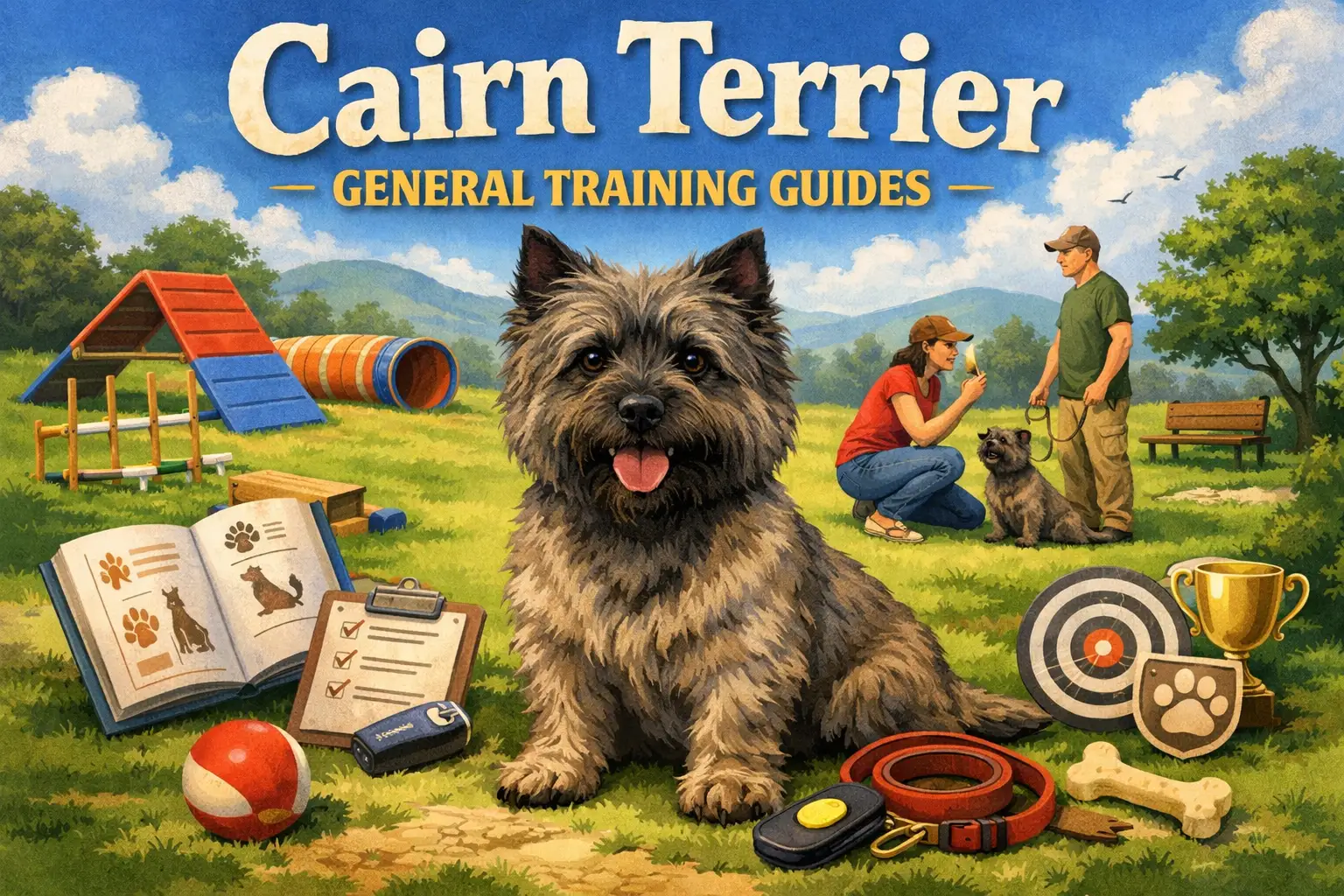
Cairn Terrier training works best when you understand the breed’s natural instincts instead of trying to fight them. Cairn Terriers are intelligent, independent, energetic dogs, so the right training approach should be short, positive, consistent, and built around their terrier personality. For a broader breed overview, you can also read our complete Cairn Terrier dog guide.
This guide explains the most effective Cairn Terrier training methods for puppies and adults. Whether you are starting with a young puppy or improving behavior in an older dog, the goal is the same: build reliable obedience, better manners, stronger focus, and a calm relationship without harsh punishment or frustration.
You’ll learn how to train a Cairn Terrier step by step, including how long training sessions should be, which rewards work best, what to teach first, and how to handle common problems like barking, leash pulling, chasing, digging, and stubborn behavior.
Quick answer: The best Cairn Terrier training method is short, reward-based practice. Most Cairn Terriers learn fastest when training uses treats, praise, toys, or play, lasts around 5–15 minutes, and focuses on one skill at a time. Start with name response, recall, leash manners, and impulse control before moving into harder distractions.
- Use positive reinforcement instead of punishment.
- Keep sessions short, clear, and consistent.
- Train recall and leash manners early because Cairn Terriers have strong chasing instincts.
- Reward calm behavior to reduce barking, jumping, and overexcitement.
- Adjust expectations based on whether your Cairn Terrier is a puppy, adolescent, adult, or senior.
Cairn Terrier Training Methods That Work Best
The best Cairn Terrier training methods are reward-based, short, and consistent. This breed is smart, curious, and independent, so training works better when your dog understands what behavior earns a reward instead of simply being corrected for mistakes.
Positive reinforcement should be the foundation of Cairn Terrier training. Reward good behavior with small treats, praise, toys, or play as soon as your dog does the right thing. This helps your Cairn Terrier connect the action with the reward and makes them more likely to repeat the behavior.
Short training sessions are especially important for this breed. Cairn Terriers usually learn best with 5 to 15 minutes of focused practice, one to three times per day. Long, repetitive sessions can lead to boredom, selective listening, or stubborn behavior.
Harsh or punishment-based methods are not recommended for Cairn Terriers. Yelling, physical punishment, or strong leash corrections can damage trust and may make the dog more resistant. Calm rules, clear cues, and consistent rewards usually produce better long-term results.
Simple Cairn Terrier Training Tips for Better Behavior
Use these Cairn Terrier training tips to make each session more effective:
- Keep training sessions short, focused, and predictable.
- Use high-value treats, praise, toys, or play as rewards.
- Teach name response, recall, and leash manners early.
- Practice indoors or in a quiet space before adding distractions.
- Reward calm behavior instead of only reacting to barking or jumping.
- Use the same cue words every time so your dog does not get confused.
- End each session after a small success to keep training positive.
For best results, choose one skill per session. For example, practice recall in one session, leash manners in another, and calm behavior at the door in a separate session. This keeps training simple and helps your Cairn Terrier learn faster.
Understanding Cairn Terrier Temperament and Behavior
To train a Cairn Terrier well, you first need to understand the breed’s temperament. Cairn Terriers are small, confident, alert, and independent dogs. They were originally bred to hunt and work with determination, so they often like to make their own decisions instead of waiting quietly for instructions.
This does not mean Cairn Terriers are hard to train. It means Cairn Terrier training needs to be clear, rewarding, and consistent. If lessons are boring, too long, or too strict, many Cairn Terriers will lose focus or start ignoring commands. If training feels like a fun game with a clear reward, they usually learn quickly.
For a broader look at the breed’s personality, daily care, size, and general needs, you can also read our complete Cairn Terrier dog guide.
Here are the main Cairn Terrier traits that affect training:
| Cairn Terrier Trait | What You May Notice at Home | What It Means for Training |
|---|---|---|
| Independent | May ignore commands when distracted | Use strong rewards, simple cues, and consistent rules |
| Intelligent | Learns quickly but gets bored easily | Keep sessions short, varied, and focused on one skill |
| High prey drive | May chase birds, squirrels, cats, or moving objects | Teach recall, “leave it,” and impulse control early |
| Alert and vocal | May bark at sounds, visitors, or movement outside | Reward calm behavior and teach a quiet cue before barking becomes a habit |
| Energetic | May become restless, mouthy, or destructive without activity | Combine obedience training with walks, play, and mental enrichment |
| Confident | May test boundaries or repeat behaviors that get attention | Set clear household rules and reward the behavior you want repeated |
Cairn Terriers usually respond better to praise, treats, toys, and play than to force or punishment. Harsh training can make them shut down, become more stubborn, or lose trust. Calm, patient training builds better results because your dog learns what to do instead of only learning what to avoid.
Age also affects training expectations. A puppy may need very short lessons, more potty breaks, and early socialization. An adolescent Cairn Terrier may test limits and need more consistency. An adult dog may learn well but may also need time to replace old habits. You can use our Cairn Terrier age chart to understand life-stage differences, or use the Cairn Terrier age calculator to set more realistic training expectations.
Understanding these traits helps you train fairly. A Cairn Terrier may never be the quietest or slowest-moving dog, but with the right training methods, they can become polite, responsive, and easier to manage at home and outdoors.
How to Train a Cairn Terrier Step by Step
To train a Cairn Terrier successfully, follow a simple step-by-step routine: build focus first, teach basic cues, practice leash manners, strengthen recall, and then work on impulse control around distractions. Cairn Terriers learn quickly, but they need short lessons, clear rewards, and consistent rules.
Think of training as daily guidance, not a one-time lesson. A few minutes of practice every day will usually work better than one long session once a week. The goal is to make good behavior easy to understand and rewarding to repeat.
Step 1: Start with name response and focus
Before teaching advanced commands, your Cairn Terrier should learn to look at you when you say their name. Say your dog’s name once, wait for eye contact, then reward immediately with a treat, praise, or toy. This builds attention and makes every other training skill easier.
Practice this indoors first. Once your dog responds well in a quiet room, repeat the same exercise in the yard, near the front door, and later during walks with mild distractions.
Step 2: Teach basic obedience cues
Start with simple commands like “sit,” “come,” “stay,” and “leave it.” Use one cue at a time and reward the correct behavior quickly. Cairn Terriers can become confused if too many commands are introduced at once, so keep each lesson focused on one skill.
For example, when teaching “sit,” hold a small treat near your dog’s nose, slowly move it upward, and reward when their bottom touches the ground. Keep the tone calm and positive so your dog wants to keep learning.
Step 3: Practice recall early
Recall is one of the most important Cairn Terrier training skills because this breed often has a strong chasing instinct. Start indoors by saying “come” in a cheerful voice, then reward your dog when they move toward you. Never punish your dog after they come to you, even if they were slow.
Once recall improves indoors, practice in a fenced yard or safe enclosed space. Keep your Cairn Terrier on a leash or long line in open areas until their recall is reliable around distractions like birds, squirrels, other dogs, or moving objects.
Step 4: Build leash manners
Cairn Terriers are energetic and curious, so leash pulling is common. Teach loose-leash walking by rewarding your dog when they walk near you without pulling. If they pull forward, stop walking, wait for the leash to relax, then continue.
Keep early walks short and focused. Your goal is not only exercise; it is also teaching your Cairn Terrier that calm walking earns movement, praise, and rewards.
Step 5: Add impulse control training
Impulse control helps reduce jumping, barking, chasing, door rushing, and grabbing objects. Teach simple exercises like waiting before meals, sitting before going outside, and responding to “leave it” before chasing or picking something up.
For a Cairn Terrier, impulse control should be practiced slowly. Start with easy situations, reward calm choices, and only increase difficulty when your dog is ready.
Cairn Terrier Puppy Training: What to Focus on First
Cairn Terrier puppy training should focus on building good habits early, not perfect obedience. Puppies have short attention spans, so lessons should be gentle, positive, and very consistent.
The first priorities are potty training, name recognition, crate comfort, gentle handling, and basic focus. Take your puppy outside frequently, especially after sleeping, eating, playing, or drinking water, and reward them immediately when they go in the right place.
Crate training can help with potty training and prevent destructive behavior when you cannot supervise. The crate should always feel safe and comfortable, never like a punishment. Add short, positive crate sessions during the day before expecting your puppy to stay inside for longer periods.
Early socialization is also important. Calm exposure to people, household sounds, grooming touch, car rides, and new environments can help reduce fear and stubborn behavior later in life. Keep the experiences positive and do not force your puppy into situations that feel overwhelming.
Cairn Terrier Training Schedule by Age
Cairn Terriers usually do better with short, regular sessions instead of long training periods. Puppies need very short practice, while adults can handle slightly longer sessions if the training stays interesting.
| Age Stage | Session Length | Sessions Per Day | Main Training Focus |
|---|---|---|---|
| Young puppy | 5–7 minutes | 3–4 | Name response, potty training, crate comfort, gentle handling |
| Older puppy | 7–10 minutes | 2–3 | Basic cues, recall, leash introduction, socialization |
| Adolescent | 8–12 minutes | 2–3 | Impulse control, leash manners, barking control, consistency |
| Adult | 10–15 minutes | 1–2 | Obedience practice, problem behavior correction, real-life manners |
| Senior | 5–10 minutes | 1–2 | Gentle refreshers, calm enrichment, low-stress practice |
Always end training on a good note. If your dog does one thing right, reward the behavior and stop before they lose interest. This keeps training positive and makes your Cairn Terrier more willing to participate next time.
Use Rewards Your Cairn Terrier Actually Wants
Most Cairn Terriers work well for small treats, toys, praise, or a short play session. The best reward depends on the dog. Some Cairn Terriers are food-motivated, while others respond better to a favorite toy or a chance to play.
Use higher-value rewards for harder tasks like recall, leash manners around distractions, or staying calm when visitors arrive. If you use treats often, keep them small and adjust meal portions so training rewards do not lead to unhealthy weight gain. For feeding guidance, see our Cairn Terrier nutrition and feeding guide.
Avoid punishment during training. Yelling, grabbing, or pulling the leash can create fear or resistance. Calm guidance and consistent rewards help your Cairn Terrier understand what behavior you want repeated.
Train the Most Important Skills First
Focus first on skills that keep your Cairn Terrier safe, easier to manage, and more responsive in daily life.
| Skill | Why It Matters | When to Start |
|---|---|---|
| Name response | Builds focus before every other command | First days at home |
| Recall | Helps manage chasing and improves safety | Early puppy stage |
| Leash manners | Makes walks calmer and easier to control | After basic focus |
| Sit and stay | Builds patience and everyday control | Puppy to adult |
| Leave it | Helps reduce chasing, grabbing, and unsafe behavior | As early as possible |
| Quiet cue | Helps manage alert barking | When barking becomes frequent |
Practice these skills in quiet places first. Once your Cairn Terrier does well indoors, slowly add distractions such as the yard, sidewalk, visitors, other dogs, or a park environment.
Be Patient and Consistent
Cairn Terriers may test limits, especially during adolescence. If rules change from day to day, they can become confused or choose the behavior that gets the most attention. Use the same cue words, rewards, routines, and household rules every time.
Progress may feel slow some days, but steady practice is what creates reliable behavior. A Cairn Terrier does not need harsh control to learn well; they need clear expectations, daily repetition, and rewards that make good behavior worth repeating.
Common Cairn Terrier Training Problems and Solutions
Even with good training, many Cairn Terrier owners face the same behavior problems. Barking, chasing, digging, leash pulling, and selective listening are common because they connect to the breed’s natural terrier instincts. These behaviors do not mean your dog is bad; they mean your Cairn Terrier needs clearer guidance, better rewards, and more consistent practice.
The goal is not to punish your Cairn Terrier for being a terrier. The goal is to teach safer, calmer, and more acceptable behavior in everyday situations.
| Training Problem | Why It Happens | What Helps Most |
|---|---|---|
| Stubborn or selective listening | Independent terrier nature, boredom, weak rewards | Shorter sessions, better rewards, clearer cue words |
| Excessive barking | Alert instinct, excitement, boredom, visitors, outside sounds | Reward calm behavior, teach a quiet cue, increase mental exercise |
| Digging | Natural terrier instinct, boredom, stored energy | Redirect to a safe digging area and provide more activity |
| Chasing animals | Strong prey drive and movement sensitivity | Practice recall, “leave it,” impulse control, and leash safety |
| Leash pulling | Excitement, curiosity, fast walking pace | Stop-and-go walking, reward loose leash, practice focus outdoors |
| Jumping on people | Excitement and attention-seeking | Reward four paws on the floor and ask for “sit” before greeting |
How to handle stubborn or selective listening
If your Cairn Terrier ignores commands, the problem is often distraction, boredom, or a reward that is not valuable enough. Go back to a quieter space, shorten the session, and reward faster when your dog responds correctly.
Use one clear cue and avoid repeating the same command many times. For example, say “come” once, encourage your dog with movement or a cheerful voice, then reward when they move toward you. Repeating the cue again and again can teach your dog that the first command does not matter.
How to stop Cairn Terrier barking
Cairn Terrier barking is usually caused by alertness, excitement, boredom, or frustration. Instead of yelling, teach your dog what to do after they notice something. When your Cairn Terrier barks, calmly redirect their attention, reward quiet moments, and practice a simple “quiet” cue.
A simple barking training routine is: let your dog notice the trigger, say “quiet” when they pause, reward the quiet moment, then guide them into another behavior such as “sit” or “come.” The reward should come when your dog is quiet, not while they are still barking.
More daily enrichment can also reduce barking. Short walks, sniffing games, puzzle toys, and basic obedience practice help release energy before it turns into noise, pacing, or destructive behavior.
How to manage chasing and prey drive
Cairn Terriers often chase birds, squirrels, cats, or fast-moving objects because of their prey drive. This behavior should be managed with training and safety, not punishment. Keep your dog on a leash or long line in open areas until recall is reliable around distractions.
Practice “leave it” and recall in easy situations first. Reward your Cairn Terrier for looking away from a distraction, returning to you, or walking calmly past movement. Build difficulty slowly so your dog learns that listening to you is more rewarding than chasing.
How to reduce digging
Digging is a natural terrier behavior, so it is usually better to redirect it than try to remove it completely. If your Cairn Terrier digs in the yard, provide a safe digging spot and reward them for using that area instead of flower beds, fences, or soft soil near walls.
If digging increases suddenly, check whether your dog is bored, under-exercised, left alone too long, or trying to escape. More activity, supervision, and mental enrichment can reduce unwanted digging over time.
How to fix leash pulling
Leash pulling happens because Cairn Terriers are curious and energetic. Teach loose-leash walking by stopping whenever the leash becomes tight. When your dog turns back, checks in, or the leash relaxes, reward and continue walking.
Practice in low-distraction areas first. Once your Cairn Terrier can walk calmly near home, slowly move to busier places. Reward check-ins often, especially when your dog chooses to stay near you instead of rushing toward smells, people, or movement.
Progress may not be perfect every day. Some days your Cairn Terrier may be more excited, distracted, or stubborn than usual. Stay consistent, keep sessions short, and measure improvement over weeks rather than expecting instant results.
Cairn Terrier Training FAQs
Are Cairn Terriers hard to train?
Cairn Terriers are not hard to train, but they can be stubborn if training is boring, too long, or inconsistent. They are intelligent independent dogs, so they respond best to short reward-based training sessions, clear rules, and patient repetition.
Are Cairn Terriers easy to train?
Cairn Terriers can be easy to train when the method matches their personality. They usually learn quickly with treats, praise, toys, and play, but they may ignore commands when distracted. Start in quiet spaces, reward fast, and slowly add harder distractions.
What is the best training method for a Cairn Terrier?
The best training method for a Cairn Terrier is positive reinforcement. Reward good behavior with treats, praise, toys, or play so your dog understands what to repeat. Harsh punishment, yelling, or physical corrections can create fear, resistance, or selective listening.
How do you train a Cairn Terrier puppy?
To train a Cairn Terrier puppy, start with potty training, name response, crate comfort, gentle handling, and simple commands like “sit” and “come.” Keep lessons short, use rewards immediately, and socialize your puppy calmly with people, sounds, and safe new environments.
How long should Cairn Terrier training sessions be?
Cairn Terrier training sessions should usually last 5 to 15 minutes. Young puppies do best with 5 to 7 minutes, while adult Cairn Terriers can often handle 10 to 15 minutes. Short, frequent sessions work better than long repetitive lessons.
How do I stop my Cairn Terrier from barking so much?
To reduce Cairn Terrier barking, reward quiet behavior, teach a simple “quiet” cue, and provide enough exercise and mental stimulation. Avoid yelling, because it can make barking worse. If barking is caused by boredom, add walks, sniffing games, puzzle toys, and short training sessions.
How do I stop my Cairn Terrier from chasing animals?
To reduce chasing, practice recall, “leave it,” and impulse control in easy situations before adding bigger distractions. Keep your Cairn Terrier on a leash or long line in open areas until recall is reliable around birds, squirrels, cats, or fast-moving objects.
When to Get Professional Help for Cairn Terrier Training
Most Cairn Terriers can be trained at home with short sessions, patience, and daily consistency. However, professional help is useful when behavior problems feel unsafe, stressful, or difficult to improve on your own.
You should consider getting help from a qualified reward-based trainer or behavior professional if you notice any of these warning signs:
| Warning Sign | Why It Matters | Who Can Help |
|---|---|---|
| Aggressive behavior | Can create risk for people, dogs, or other pets | Certified dog trainer or behavior professional |
| Extreme fear or anxiety | May affect your dog’s confidence and quality of life | Veterinarian or veterinary behaviorist |
| Constant barking that does not improve | May be linked to stress, boredom, or poor routine | Reward-based trainer |
| No progress after several weeks | The training method may not fit your Cairn Terrier | Certified dog trainer |
| Sudden behavior changes | Could be linked to pain, illness, or age-related changes | Veterinarian first |
| Severe leash reactivity | Can make walks stressful or unsafe | Trainer experienced with reactive dogs |
A good trainer should explain each step clearly and use reward-based training methods. Avoid trainers who rely mainly on fear, pain, intimidation, or harsh corrections. These methods can make Cairn Terriers more anxious, defensive, or stubborn.
If your dog shows sudden fear, aggression, confusion, pain, or behavior changes, speak with a veterinarian first. Health problems can sometimes look like training problems, especially in adult or senior dogs.
Getting help does not mean you failed. It means you are taking the right step before small behavior issues become harder to manage.
For your next step, you can also use our Cairn Terrier age calculator to understand your dog’s life stage and set more realistic training expectations.

Ata Ur Rehman is the founder of Pet Age in Human Years Calculator, an educational platform that provides age conversion charts and lifespan guides for dogs, cats, birds, and other companion animals. His work focuses on helping pet owners understand how animal ages translate into human years using commonly accepted age conversion formulas and published lifespan averages.
The website compiles breed and species lifespan data from kennel clubs, breed organizations, and general animal lifespan studies to present simple and easy-to-understand guides for pet owners worldwide.
This website was created to centralize animal age conversion charts into one easy reference platform for pet owners.