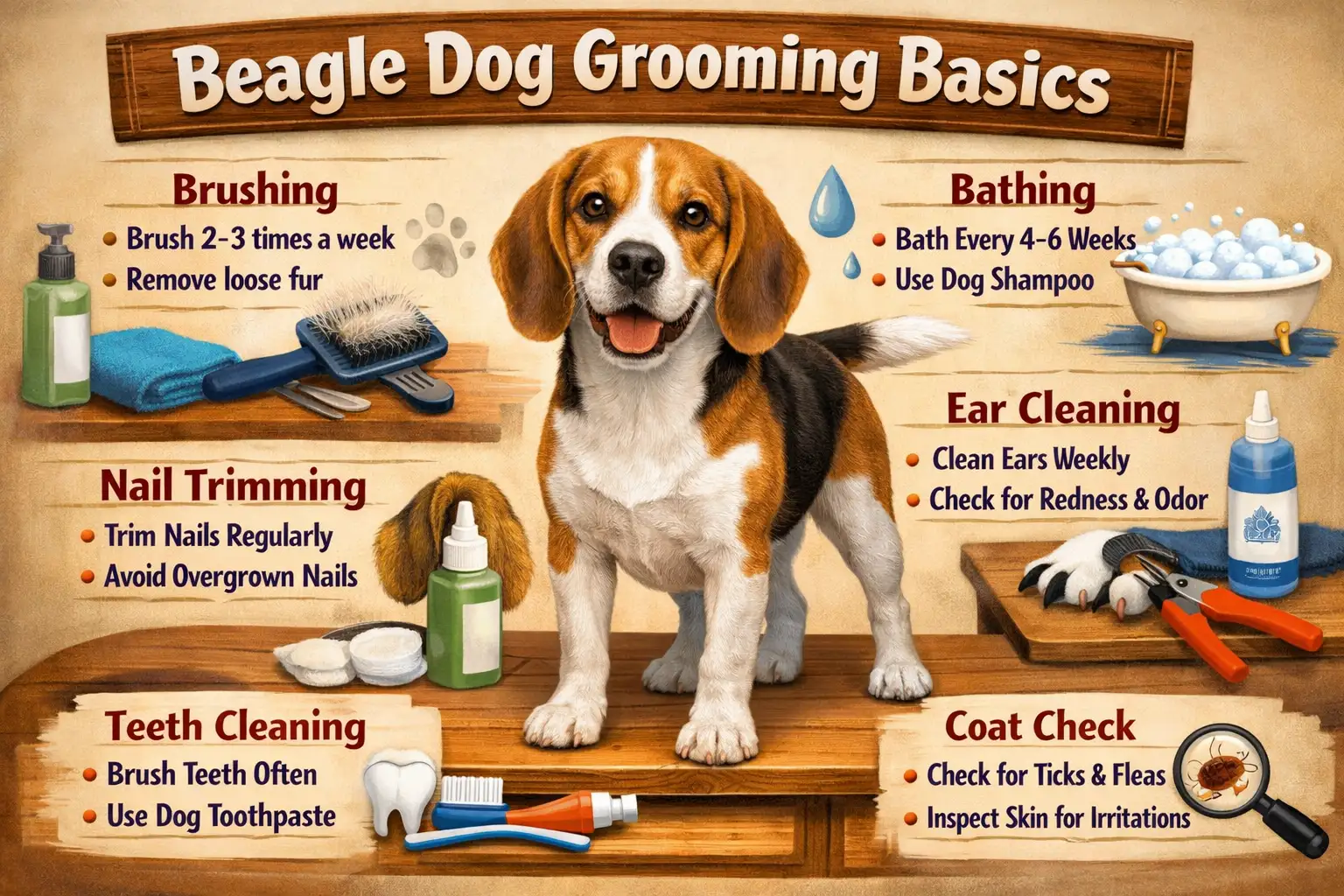
Beagle grooming is often misunderstood because Beagles have short hair. Many owners assume a short coat means very little care, but Beagles still need regular grooming to control shedding, reduce odor, protect the skin, and keep their coat healthy.
Beagles have a short, dense double coat that sheds year-round. Their coat also produces natural oils, which help protect the skin but can trap dirt, loose hair, and odor when grooming is skipped. This is why Beagle grooming is not just about appearance. It is about shedding control, coat health, skin comfort, and overall hygiene.
Quick answer: Beagles should be brushed 2–3 times per week, bathed about every 4–6 weeks, have their ears checked weekly, and have their nails trimmed every 3–4 weeks. Beagles shed throughout the year, with heavier shedding in spring and fall. They should not be shaved unless a veterinarian recommends it for a medical reason.
Beagle Grooming Guide: What This Article Covers
- Understanding the Beagle coat and shedding patterns
- Beagle grooming routine at home
- Beagle nail, ear, skin, and dental care
- Beagle grooming tips, mistakes, and professional grooming
- Beagle grooming FAQs
Regular Beagle grooming helps:
- Reduce loose hair around your home
- Control year-round Beagle shedding
- Distribute natural skin oils evenly
- Keep the coat smooth, clean, and healthy
- Catch early signs of ear, nail, skin, or dental problems
- Improve comfort during heavy shedding seasons
Another reason grooming matters is comfort. A Beagle that is brushed, bathed properly, and checked regularly is often less itchy, less restless, and easier to handle. Grooming sessions also help your dog become more comfortable with nail trims, ear checks, brushing, and vet visits over time.
One of the biggest myths about Beagle grooming is that they “do not need much care.” In reality, Beagles are moderate year-round shedders. Skipping grooming usually leads to more loose hair, stronger dog odor, irritated skin, and more cleaning around the home.
This guide explains how to groom a Beagle at home using a simple routine. You do not need professional equipment or daily grooming, but you do need consistency, the right brushing schedule, proper bathing habits, and regular checks for ears, nails, skin, and teeth.
If you also want to understand your Beagle’s life stage and age-related care needs, you can use the Beagle Age Calculator after reading this guide.
Understanding the Beagle Coat and Shedding Patterns
To groom a Beagle properly, you first need to understand how the coat works. Beagles have a short but dense double coat. This means they have a soft undercoat beneath a tougher outer coat. Even though the hair is short, the coat can still release a lot of loose fur.
Do Beagles shed? Yes, Beagles shed throughout the year. Their shedding is usually moderate, but it can become heavier during seasonal coat changes. Most Beagles shed more in spring and fall, when the coat adjusts to warmer or cooler weather.
During Beagle shedding season, old hair falls out so new coat growth can come in. This is normal, but without regular brushing, loose hair spreads across furniture, carpets, clothing, and bedding. It can also sit close to the skin and trap dirt or oil.
Beagle coats also produce natural oils. These oils help protect the coat and skin, but they can cause a stronger dog smell if loose hair, dirt, and oil build up. Bathing too often can make this worse by stripping the coat and encouraging the skin to produce more oil.
Do Beagles have an undercoat? Yes. Beagles have an undercoat as part of their double coat. This undercoat is one reason they shed more than many people expect from a short-haired dog.
It is also important to know that Beagles should not be shaved. Their double coat helps protect them from heat, cold, sun exposure, and skin irritation. Shaving can damage the coat, make shedding problems worse, and increase the risk of skin issues.
Below is a simple table that explains how Beagle coat features affect grooming needs.
| Beagle Coat Feature | What It Means | Grooming Impact |
|---|---|---|
| Short double coat | Soft undercoat beneath a short outer coat | Needs regular brushing even though the hair is short |
| Year-round shedding | Loose hair falls throughout the year | Brush 2–3 times weekly to control loose fur |
| Seasonal shedding | Heavier shedding often happens in spring and fall | Brush more often during shedding season |
| Natural skin oils | Oils protect the coat and skin | Over-bathing can cause dryness, odor, and irritation |
| Floppy ears | Ears can trap moisture and dirt | Weekly ear checks help prevent problems |
Understanding these coat traits makes Beagle grooming easier and more effective. When you groom with the coat type in mind, you reduce shedding, control odor, protect the skin, and keep your Beagle more comfortable.
Beagle Grooming Routine at Home: Step-by-Step
A good Beagle grooming routine does not need to be complicated. Because Beagles have short hair, most grooming can be done at home with simple tools and a consistent schedule. The main goal is to control shedding, keep the coat clean, prevent odor, and check the ears, nails, skin, and teeth before small problems become serious.
For most Beagles, the best routine is brushing several times a week, bathing only when needed, checking the ears weekly, trimming nails regularly, and brushing the teeth as often as possible. During heavy shedding seasons, your Beagle may need more frequent brushing to remove loose undercoat.
Basic Beagle grooming tools you need
You do not need professional grooming equipment for basic Beagle care. The right tools make brushing, bathing, nail trimming, and coat care easier and more comfortable for your dog.
| Grooming Tool | What It Helps With | How Often to Use It |
|---|---|---|
| Rubber grooming brush | Loosens dead hair, dirt, and surface debris | 2–3 times per week |
| Soft bristle brush | Smooths the coat and spreads natural oils | Weekly or after rubber brushing |
| Gentle dog shampoo | Cleans the coat without stripping natural oils | Every 4–6 weeks or when dirty |
| Towel or low-heat pet dryer | Dries the coat after bathing | After every bath |
| Nail clippers or nail grinder | Keeps nails short and comfortable | Every 3–4 weeks |
| Dog ear cleaner and cotton pad | Helps clean dirty outer ears safely | Only when ears look dirty |
| Dog toothbrush and toothpaste | Supports dental health and fresher breath | 2–3 times per week or daily if possible |
Brushing your Beagle
Brushing is the most important part of Beagle grooming. Even though Beagles have short coats, they shed regularly. Brushing removes loose hair before it spreads around your home and helps move natural oils across the coat, which keeps the fur smooth and healthy.
- Brush your Beagle 2–3 times per week
- Brush daily or every other day during heavy shedding seasons
- Use a rubber brush first to loosen dead hair
- Follow with a soft bristle brush to smooth the coat
- Use gentle pressure and short strokes
- Focus on the neck, back, sides, chest, and tail area
If your Beagle is shedding a lot, brushing more often is usually better than bathing more often. Too much bathing can dry the skin, while regular brushing removes loose fur without disturbing the coat’s natural oil balance.
Bathing your Beagle
Beagles do not need frequent baths unless they are dirty, smelly, or have rolled in something unpleasant. For most Beagles, bathing every 4–6 weeks is enough. Bathing too often can dry the skin, strip natural oils, and sometimes make dog odor worse over time.
- Bathe your Beagle every 4–6 weeks or as needed
- Use a gentle dog shampoo, not human shampoo
- Brush before bathing to remove loose fur
- Rinse the coat very well to avoid itchy skin
- Keep water and shampoo out of the ears
- Dry the coat fully with a towel or low-heat pet dryer
A clean, fully dried coat helps reduce odor, skin irritation, and loose hair buildup. If your Beagle smells bad soon after a bath, the issue may be ears, skin, teeth, diet, or allergies rather than the coat itself.
Simple Beagle grooming schedule
The easiest way to stay consistent is to follow a simple weekly and monthly grooming schedule. This keeps your Beagle clean without over-grooming or causing stress.
| Grooming Task | Recommended Frequency | Helpful Tip |
|---|---|---|
| Brushing | 2–3 times weekly | Brush more often during spring and fall shedding |
| Bathing | Every 4–6 weeks | Avoid over-bathing because it can dry the skin |
| Ear check | Once weekly | Look for redness, odor, wax, or head shaking |
| Nail trimming | Every 3–4 weeks | Trim before nails start clicking on the floor |
| Teeth brushing | 2–3 times weekly | Daily brushing is best if your Beagle allows it |
| Skin and coat check | Weekly | Look for itching, flakes, bumps, redness, or hair loss |
This Beagle grooming schedule works well for most healthy adult dogs. Puppies, senior Beagles, dogs with allergies, and dogs that spend more time outdoors may need small adjustments.
Beagle Nail, Ear, Skin, and Dental Care
Beagle grooming is not only about brushing and bathing. Nails, ears, skin, and teeth also need regular attention. These areas are easy to miss, but they often show the first signs of discomfort, infection, allergies, or poor hygiene.
Beagle nail care
Beagle nails should be kept short enough that they do not affect walking. Long nails can press against the ground, change how your dog stands, and make movement uncomfortable.
- Trim your Beagle’s nails every 3–4 weeks
- If you hear nails clicking on the floor, they are likely too long
- Trim small amounts at a time to avoid cutting the quick
- Use treats and praise to keep your Beagle calm
- Stop if your dog becomes too stressed or moves suddenly
If your Beagle is nervous, has dark nails, or pulls away during trims, a groomer or vet can help trim the nails safely.
Beagle ear care
Beagles have long, floppy ears that can trap moisture, wax, and dirt. This makes regular ear checks important. You do not need to clean the ears every day, but you should check them weekly.
- Check your Beagle’s ears once a week
- Clean only when the outer ear looks dirty
- Use a dog-safe ear cleaner and a cotton pad
- Do not use alcohol, water, or cotton swabs deep inside the ear
- Keep the ears dry after bathing
Redness, swelling, strong odor, heavy wax, head shaking, scratching, or pain can be signs of an ear problem. If you notice these signs, it is safer to contact a vet instead of trying to treat the ear at home.
Beagle skin and coat health
Beagles can be prone to itchy skin, allergies, hot spots, and irritation. Grooming gives you a regular chance to check the skin under the coat, especially around the belly, paws, ears, neck, and tail area.
- Look for redness, flakes, bumps, scabs, or hair loss
- Watch for constant scratching, licking, or chewing
- Use gentle dog shampoo only
- Avoid bathing too often
- Brush regularly to remove loose hair and dirt
- Dry the coat fully after baths or wet walks
A healthy Beagle coat should look smooth and feel clean, not greasy, flaky, or sore. If skin problems keep coming back, grooming alone may not fix the cause.
Beagle dental care
Dental care is often ignored in grooming routines, but it matters for your Beagle’s comfort and long-term health. Bad breath, yellow buildup, red gums, or trouble chewing can be signs that your dog needs better dental care.
- Brush your Beagle’s teeth 2–3 times per week
- Daily brushing is best if your dog accepts it
- Use dog toothpaste only
- Start slowly with short sessions
- Ask a vet about dental cleaning if buildup is severe
Below is a simple table showing common grooming-related problems in Beagles and what to watch for.
| Area | Common Problem | Signs to Watch For |
|---|---|---|
| Nails | Overgrowth or discomfort | Clicking nails, limping, avoiding walks |
| Ears | Wax buildup or infection | Odor, redness, head shaking, scratching |
| Skin | Allergies, dryness, or hot spots | Itching, licking, flakes, redness, hair loss |
| Coat | Loose hair and odor buildup | Heavy shedding, greasy coat, strong smell |
| Teeth | Plaque or dental disease | Bad breath, yellow teeth, red gums |
Regular care helps you catch small grooming issues early. If you notice pain, swelling, bleeding, strong odor, or ongoing skin irritation, it is better to get veterinary advice instead of waiting for the problem to worsen.
Beagle Grooming Tips, Common Mistakes, and Professional Grooming
Once you understand the basics of Beagle grooming, the next step is staying consistent and avoiding mistakes that can make shedding, odor, or skin irritation worse. These simple tips help keep grooming easy at home and show you when professional help may be useful.
Beagle grooming tips for daily life
Beagles usually respond best to short, calm grooming sessions. They can be curious, active, and food-motivated, so patience and rewards make grooming easier over time.
- Start grooming early so your Beagle gets used to brushing, ear checks, and nail trims
- Keep grooming sessions short, calm, and positive
- Use treats and praise to build trust
- Brush more often during spring and fall shedding seasons
- Check the ears, nails, teeth, and skin while brushing
- Dry your Beagle fully after baths, rain, or wet outdoor walks
- Use gentle dog-safe grooming products only
Beagle puppies need gentle handling and very short sessions. Senior Beagles may need slower grooming, softer handling, and more comfort breaks. To better understand your Beagle’s life stage and age-related care needs, you can use the Beagle Age Calculator.
Common Beagle grooming mistakes to avoid
Many Beagle grooming problems come from simple mistakes. Avoiding these mistakes can reduce shedding, protect the coat, and keep your dog more comfortable.
- Bathing too often, which can dry the skin and increase odor
- Using human shampoo instead of dog shampoo
- Skipping brushing because Beagles have short hair
- Ignoring the ears, especially after baths or wet walks
- Waiting too long between nail trims
- Leaving the coat damp after bathing
- Shaving the coat without a medical reason
The biggest mistake is treating a Beagle as a “low-grooming” dog only because the coat is short. Beagles do not need complicated grooming, but they do need a regular routine.
Can you shave a Beagle?
No, you should not shave a Beagle for normal grooming. Beagles have a double coat that helps protect the skin and support temperature control. Shaving can disturb the coat, increase the risk of sun exposure, and make skin irritation more likely.
Shaving also does not stop Beagle shedding. It only makes the hair shorter when it falls out. For shedding control, regular brushing is much safer and more effective than shaving.
The only time shaving may be needed is for a medical reason, such as a veterinary procedure, severe skin issue, or treatment area recommended by a vet.
Do Beagles need haircuts?
No, Beagles do not usually need haircuts. Their coat is naturally short and does not grow long like breeds that need trimming. A healthy Beagle grooming routine should focus on brushing, bathing when needed, ear care, nail trimming, dental care, and skin checks.
A groomer may tidy small areas if needed, but full haircuts are not normally part of Beagle grooming.
Home grooming vs professional grooming
Most Beagle grooming can be done at home. However, a professional groomer can help if your Beagle is nervous, sheds heavily, dislikes nail trims, or needs a deeper bath and deshedding session.
| Grooming Task | Can You Do It at Home? | When a Professional Helps |
|---|---|---|
| Brushing | Yes | Helpful during heavy shedding |
| Bathing | Yes | Useful for odor, heavy shedding, or nervous dogs |
| Nail trimming | Yes, with care | Best if your Beagle moves, panics, or has dark nails |
| Ear cleaning | Only light outer-ear cleaning | Needed if there is pain, odor, redness, or heavy wax |
| Heavy deshedding | Limited | Helpful during spring and fall shedding seasons |
| Skin problems | No | A vet is better for itching, redness, sores, or infection signs |
A professional groomer is useful for maintenance, but skin infections, ear infections, painful nails, or ongoing itching should be handled by a vet.
Beagle Grooming FAQs
Do Beagles need grooming?
Yes. Beagles need regular grooming to control shedding, reduce odor, keep the coat healthy, and check the ears, nails, skin, and teeth. They are not high-maintenance grooming dogs, but they should not be ignored.
How often should you groom a Beagle?
Most Beagles should be brushed 2–3 times per week, bathed every 4–6 weeks, checked for ear problems weekly, and have their nails trimmed every 3–4 weeks. During heavy shedding seasons, brushing may be needed daily or every other day.
Do Beagles shed a lot?
Beagles shed throughout the year. Their shedding is usually moderate, but it can feel heavy during spring and fall when the coat changes. Regular brushing is the best way to manage Beagle shedding.
Are Beagles hard to groom?
No, Beagles are not hard to groom. Their short coat is easy to brush, but they still need consistent care because they shed, produce natural oils, and have floppy ears that need regular checks.
Can you shave a Beagle?
No. Beagles should not be shaved for normal grooming. Shaving can disturb the double coat and may increase skin problems. Brushing is a better way to control shedding.
Do Beagles need haircuts?
No. Beagles do not usually need haircuts because their coat is naturally short. They need brushing, bathing, nail care, ear checks, dental care, and skin checks instead.
How often should Beagles be brushed?
Beagles should usually be brushed 2–3 times per week. During heavy shedding seasons, brushing daily or every other day can help reduce loose hair around the home.
Final grooming reminder
Beagle grooming is simple when it is done regularly. Brushing, proper bathing, nail care, ear checks, dental care, and skin checks help keep your Beagle clean, comfortable, and healthy. You do not need a complicated routine—just consistent care that matches your Beagle’s coat and lifestyle.

Ata Ur Rehman is the founder of Pet Age in Human Years Calculator, an educational platform that provides age conversion charts and lifespan guides for dogs, cats, birds, and other companion animals. His work focuses on helping pet owners understand how animal ages translate into human years using commonly accepted age conversion formulas and published lifespan averages.
The website compiles breed and species lifespan data from kennel clubs, breed organizations, and general animal lifespan studies to present simple and easy-to-understand guides for pet owners worldwide.
This website was created to centralize animal age conversion charts into one easy reference platform for pet owners.