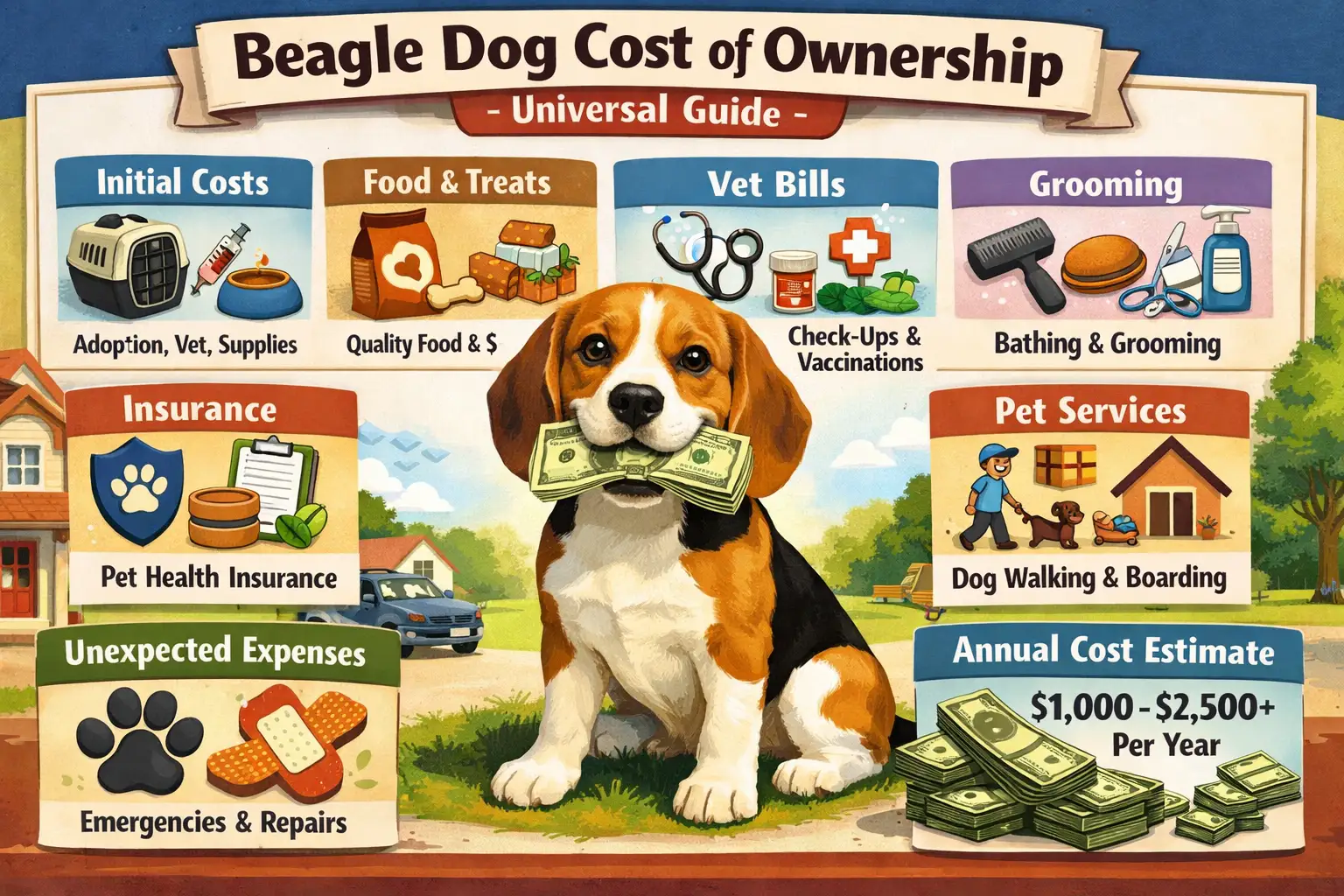
Beagles are often seen as affordable dogs because they are small-to-medium in size, but the real Beagle cost of ownership goes far beyond the initial puppy price or adoption fee. Their food motivation, high energy, stubborn personality, and breed-related health needs can all affect how much you spend over time.
This guide breaks down how much a Beagle costs, including the upfront Beagle price, first-year expenses, monthly costs, annual care, hidden fees, and lifetime ownership cost. The goal is simple: help you understand what you may realistically spend before bringing a Beagle home.
Before looking at the numbers, it helps to understand why Beagle ownership costs can vary so much. Beagles tend to be:
- Very food-driven, which makes portion control, treats, and training important
- Prone to ear infections, obesity, dental issues, and some allergy-related expenses
- Intelligent but stubborn, so many owners spend money on training or enrichment
- Active and curious, which can lead to extra costs for toys, walking, daycare, or damage prevention
- Long-lived, with many Beagles living around 12–15 years, increasing lifetime care costs
Many new owners focus only on the purchase price and forget about recurring costs like food, vet visits, preventatives, grooming basics, training refreshers, boarding, dental care, and emergency treatment. That is why a realistic Beagle budget should include both upfront and long-term expenses.
Quick Cost Snapshot: Beagle Price and Ownership Costs
| Cost Type | Estimated Cost Range |
|---|---|
| Beagle puppy price from a breeder | $800–$2,000+ |
| Adoption fee | $100–$500 |
| First-year Beagle cost | $1,500–$4,500+ |
| Monthly Beagle expenses | $80–$250+ |
| Annual ownership cost after year one | $1,000–$3,000+ |
| Estimated lifetime cost | $15,000–$35,000+ |
These figures are estimates and can change based on your location, vet pricing, breeder quality, adoption source, food choice, insurance, lifestyle, and your Beagle’s health. Beagles are not usually the most expensive breed to own, but they are not a “cheap dog” either when you calculate the full lifetime cost.
Beagle First-Year Cost: Puppy Price, Vet Care, and Setup Expenses
The first year of owning a Beagle is usually the most expensive because you are paying for the dog itself, early veterinary care, basic supplies, training, and home setup at the same time. Even if you adopt instead of buying from a breeder, the first-year Beagle cost can still add up quickly.
On average, you may spend around $1,500 to $4,500+ in the first year, depending on whether you adopt, buy from a breeder, choose pet insurance, pay for training, or need extra vet care.
Beagle puppy price or adoption cost
The upfront Beagle price depends mainly on where you get your dog. Adoption is usually the cheaper option, while a Beagle puppy from a reputable breeder usually costs more.
| Source | Typical Cost Range | What to Know |
|---|---|---|
| Adoption from shelter or rescue | $100–$500 | Often includes basic vet care, but extra supplies and follow-up visits may still be needed |
| Reputable Beagle breeder | $800–$2,000+ | Usually higher upfront cost, especially for health-tested puppies or strong bloodlines |
| Backyard breeder or online seller | Varies widely | May look cheaper upfront but can lead to higher health, behavior, or vet costs later |
A lower purchase price does not always mean a cheaper Beagle long term. A poorly bred or poorly cared-for puppy may need more vet care, training, or behavior support later.
First-year veterinary costs for a Beagle
Vet care is one of the biggest first-year expenses. Puppies usually need multiple visits for vaccines, exams, parasite prevention, and routine care, while adult Beagles may need updated vaccines, dental checks, or treatment for existing issues.
| Veterinary Service | Estimated Cost Range | First-Year Purpose |
|---|---|---|
| Initial vet exam | $50–$150 | Health check and baseline exam |
| Vaccinations | $75–$250 | Protection from common diseases |
| Spay or neuter | $150–$600+ | One-time medical procedure |
| Microchipping | $25–$75 | Permanent identification |
| Deworming and preventatives | $100–$300+ | Parasite protection and early health support |
Puppies usually cost more in vet care than adult Beagles during the first year because they need more scheduled visits. However, an adult Beagle can still be expensive if it has dental problems, ear infections, obesity, allergies, or other health needs.
Beagle setup and starter supplies
Before bringing a Beagle home, you’ll need basic supplies for feeding, sleeping, walking, training, grooming, and safety. These are mostly one-time startup costs, but some items may need replacing as your Beagle grows or chews through them.
| Starter Item | Estimated Cost Range | Why It’s Needed |
|---|---|---|
| Crate or bed | $40–$200 | Safe resting and sleeping space |
| Food and water bowls | $10–$50 | Daily feeding and hydration |
| Leash, collar, and ID tag | $20–$75 | Walks, control, and identification |
| Toys and enrichment items | $25–$100+ | Mental stimulation and chewing control |
| Grooming basics | $20–$80 | Nail, coat, ear, and basic hygiene care |
| Initial food and treats | $40–$120 | Daily meals, training rewards, and transition food |
Beagles are curious, active, and food-motivated, so toys, treats, puzzle feeders, and safe chew items are not just extras. They can help reduce boredom, chewing, and destructive behavior.
Beagle puppy vs adult first-year cost
A Beagle puppy usually costs more in the first year than an adult Beagle because puppies need more vaccines, training, supplies, and supervision. Adult Beagles may cost less upfront, but they can still come with medical, dental, or behavior-related expenses.
| Expense Type | Beagle Puppy | Adult Beagle |
|---|---|---|
| Upfront cost | Often higher from breeders | Often lower through adoption |
| Vet visits | Higher due to vaccines and early care | Lower if healthy, higher if issues already exist |
| Training needs | Higher for house training and basic obedience | Moderate, depending on behavior history |
| Setup supplies | Higher if buying everything new | Similar, but some items may already be trained around |
| Overall first-year cost | Usually higher | Usually lower, but less predictable if health history is unknown |
If you want the lowest first-year cost, adoption may be the better option. If you buy a puppy, it is worth choosing a responsible breeder because poor breeding can create higher costs later.
Why first-year planning matters
If you plan only for the Beagle purchase price, you may underestimate the real cost. The first year sets the foundation for your Beagle’s health, behavior, and long-term expenses.
- Early vet care helps prevent bigger health costs later
- Training reduces behavior problems and damage at home
- Good food and portion control help lower obesity-related risks
- Basic grooming and ear care can reduce avoidable vet visits
- Emergency savings protect you from surprise expenses
Being prepared from the beginning helps you avoid skipping important care and makes Beagle ownership more affordable over the long term.
Monthly and Annual Beagle Expenses
After the first year, most Beagle costs become regular monthly and annual expenses. These are the ongoing costs you should plan for throughout your Beagle’s life, not just during puppyhood.
On average, Beagle owners may spend around $80 to $250+ per month on food, preventatives, grooming basics, enrichment, insurance, and routine care. The exact amount depends on your location, food quality, vet pricing, insurance choice, and your Beagle’s health.
Monthly Beagle expenses
These are the costs you usually pay every month or almost every month. Some are essential, while others depend on your lifestyle and budget.
| Monthly Expense | Estimated Monthly Cost | Why It’s Needed |
|---|---|---|
| Food and treats | $35–$90 | Daily meals, training rewards, and portion-controlled feeding |
| Flea, tick, and worm prevention | $15–$40 | Helps protect your Beagle from parasites |
| Grooming basics | $10–$40 | Nail trimming, brushing, ear cleaning, and basic hygiene |
| Toys and enrichment | $10–$50 | Helps prevent boredom, chewing, and destructive behavior |
| Training or behavior support | $0–$100+ | Useful for stubborn behavior, leash manners, and recall training |
| Pet insurance | $25–$70+ | Optional, but can help with unexpected vet bills |
Food is often one of the biggest monthly Beagle expenses. Beagles are highly food-motivated and can gain weight easily, so proper portions, good-quality food, and controlled treats are important for both health and cost management.
If you want a deeper breakdown of feeding needs, you can review this Beagle nutrition and feeding guide.
Annual Beagle expenses
Some Beagle expenses are paid once or a few times per year. These costs are easy to forget because they do not always appear in your monthly budget, but they still affect the real annual cost of owning a Beagle.
| Annual Expense | Estimated Annual Cost | Purpose |
|---|---|---|
| Routine vet checkup | $75–$250 | General health exam and early issue detection |
| Vaccines and boosters | $50–$200 | Disease protection and routine preventive care |
| Dental care | $200–$700+ | Teeth and gum health, especially as your Beagle ages |
| License and ID renewal | $10–$50 | May be required depending on your location |
| Training refreshers | $100–$500+ | Helpful for behavior, recall, leash pulling, and stubborn habits |
| Replacement supplies | $100–$400+ | Beds, toys, leashes, collars, bowls, or damaged items |
Skipping annual vet visits may look cheaper in the short term, but it can lead to bigger medical bills later. For Beagles, routine dental care, ear checks, weight monitoring, and preventive care are especially important.
Average monthly vs yearly Beagle cost
When you combine regular monthly expenses with annual care, the average cost of owning a Beagle after the first year is usually around $1,000 to $3,000+ per year. This does not include major emergencies, surgeries, or serious medical treatment.
| Time Period | Estimated Cost Range | What It Usually Includes |
|---|---|---|
| Monthly | $80–$250+ | Food, preventatives, grooming basics, toys, insurance, and enrichment |
| Yearly after the first year | $1,000–$3,000+ | Monthly costs plus vet visits, dental care, vaccines, supplies, and renewals |
| Senior years | Often higher | More vet visits, dental care, medication, mobility support, or special diets |
These costs continue for your Beagle’s entire life, which is usually around 12 to 15 years. This is why lifetime budgeting matters more than just comparing the upfront Beagle price.
Planning for long-term Beagle care?
Your Beagle’s age can affect food needs, activity level, vet care, and senior health expenses. Use the Beagle Age Calculator to understand your Beagle’s life stage in human years.
Why ongoing Beagle costs matter
Many people think dog ownership becomes cheap after the first year. In reality, Beagle expenses continue every month and often increase as the dog gets older.
- Food, treats, and preventatives remain regular expenses
- Vet costs can rise as Beagles age
- Dental care and ear care become more important over time
- Training may still be needed because Beagles can be stubborn and scent-driven
- Emergency costs can happen at any age
Planning for these ongoing expenses helps you avoid financial stress and makes it easier to give your Beagle consistent care.
What Makes Beagle Ownership More or Less Expensive
Not every Beagle costs the same to care for. Some owners spend much more than others because of health issues, lifestyle choices, training needs, food quality, insurance, and local vet prices.
Understanding these cost factors helps you create a more realistic Beagle budget before small expenses turn into long-term financial pressure.
Beagle size, appetite, and energy level
Beagles are small-to-medium dogs, but they often have big appetites and high energy levels. This can increase costs for food, treats, toys, walking, enrichment, and training.
- They can overeat easily if portions are not controlled
- They need daily walks, play, and mental stimulation
- Bored Beagles may chew furniture, shoes, or household items
- Puzzle feeders, toys, and training treats may become regular costs
More food, toys, activity, and damage prevention can raise the total cost of owning a Beagle over time.
Health-related costs in Beagles
Beagles are generally sturdy dogs, but they are known for certain health and care needs that can increase ownership costs. These issues do not affect every Beagle, but they should be included in your budget planning.
| Common Issue | Possible Cost Impact | Why It Matters |
|---|---|---|
| Ear infections | Vet visits, medication, and regular cleaning | Beagles have floppy ears that can trap moisture and debris |
| Obesity | Special food, vet monitoring, and possible health treatment | Beagles love food and can gain weight quickly |
| Dental problems | Dental cleanings, tooth care, or extractions | Dental care often becomes more important with age |
| Allergies | Medication, food changes, or repeated vet visits | Skin and food sensitivities can become recurring costs |
| Joint or senior mobility issues | Supplements, medication, or extra vet care | Older Beagles may need more support as they age |
A healthy Beagle usually costs less than one with long-term medical needs. Good food, weight control, regular vet care, dental care, and ear cleaning can help reduce avoidable expenses.
For regular coat, nail, and ear-care planning, you can also review this Beagle grooming basics guide.
Pet insurance and emergency care
Pet insurance is optional, but it can change how you manage emergency costs. Without insurance, your monthly cost may be lower, but you may need to pay large vet bills out of pocket. With insurance, you pay more each month, but serious accidents or illnesses may be easier to handle financially.
| Option | Cost Impact | Best For |
|---|---|---|
| No insurance | Lower monthly cost, higher emergency risk | Owners with a strong emergency savings fund |
| Accident-only insurance | Lower premium than full coverage | Owners mainly worried about sudden accidents |
| Accident and illness insurance | Higher monthly cost, broader protection | Owners who want more help with major vet bills |
Insurance is often worth considering for Beagles because emergencies, surgeries, dental issues, and long-term treatment can become expensive. If you do not use insurance, it is smart to keep a separate emergency fund for your dog.
Living situation and lifestyle
Your lifestyle also affects Beagle ownership cost. A Beagle in a busy household, apartment, or travel-heavy lifestyle may need more paid support than a Beagle with regular home care and daily exercise.
- Apartment living may require more walks, enrichment, or dog daycare
- Homes with secure yards may reduce some activity costs, but walks are still needed
- Frequent travel may require boarding or pet sitting
- Busy owners may need dog walking, daycare, or training support
- First-time owners may spend more on trainers, supplies, and behavior help
The more outside services you need, the higher your monthly and yearly Beagle expenses will be.
Why costs increase as Beagles age
Beagle costs often increase during the senior years. Older Beagles may need more vet visits, blood work, dental care, medication, special food, or support for mobility and weight management.
- Vet visits may become more frequent
- Dental care can become more expensive
- Medications or supplements may be needed
- Senior food or weight-control diets may cost more
- Mobility support may be needed for older Beagles
Senior Beagles often cost more than young adult Beagles, so it is better to plan for rising costs before your dog reaches old age.
Beagle Lifetime Cost, Hidden Expenses, and Budgeting Reality
Owning a Beagle is a long-term financial commitment. Most Beagles live around 12 to 15 years, so the real cost is not just the puppy price, adoption fee, or monthly food bill. The lifetime cost of owning a Beagle includes first-year setup, routine care, senior care, emergency expenses, and many smaller costs that add up over time.
In many cases, the estimated lifetime Beagle cost can range from around $15,000 to $35,000+. This depends on your location, vet pricing, food quality, insurance, grooming habits, training needs, lifestyle, and your dog’s overall health.
Estimated lifetime cost of owning a Beagle
When you add the first year, adult years, and senior years together, the total cost of owning a Beagle becomes much clearer. A Beagle may not be the most expensive dog breed, but over many years, the total amount can still become significant.
| Cost Period | Estimated Cost Range | What It Includes |
|---|---|---|
| First year | $1,500–$4,500+ | Beagle price or adoption fee, vet care, supplies, training, setup items |
| Adult years | $1,000–$3,000+ per year | Food, routine vet visits, preventatives, grooming basics, toys, supplies |
| Senior years | Often $1,500–$4,000+ per year | More vet care, dental care, medication, special food, mobility support |
| Full lifetime | $15,000–$35,000+ | All first-year, adult, senior, routine, and unexpected costs combined |
The lifetime cost can be lower if your Beagle stays healthy and you manage food, weight, dental care, and routine vet visits well. It can be much higher if your dog develops chronic health issues or needs emergency treatment.
Hidden and often forgotten Beagle expenses
Many Beagle owners remember food and vet care but forget the hidden expenses that appear throughout the year. These costs may not happen every month, but they can affect your total Beagle ownership budget.
| Hidden Expense | Estimated Cost Range | Why It Matters |
|---|---|---|
| Boarding or pet sitting | $25–$75+ per day | Needed during travel, emergencies, or busy schedules |
| Dog walking or daycare | $15–$50+ per session | Helpful for active Beagles that need daily exercise and stimulation |
| Emergency vet visits | $300–$2,000+ | Accidents, sudden illness, swallowed objects, or urgent treatment |
| Dental cleanings | $200–$700+ | Dental care becomes more important as Beagles age |
| Ear care and infection treatment | $50–$300+ | Beagles have floppy ears that may need regular cleaning and treatment |
| Chewed furniture or damaged items | Varies widely | Bored or under-exercised Beagles may chew household items |
These expenses are easy to underestimate because they do not always appear in basic cost calculators. For Beagles, activity, food control, ear care, and emergency planning are especially important.
Common Beagle budgeting mistakes
New owners often underestimate the real cost of owning a Beagle because they focus only on the purchase price or monthly food cost. The biggest budgeting mistakes usually happen when owners ignore routine care or delay small expenses until they become larger problems.
- Planning only for the Beagle puppy price or adoption fee
- Forgetting annual vet visits, vaccines, and preventatives
- Ignoring dental care, ear cleaning, and weight management
- Not saving for emergency vet bills
- Buying cheap food without considering long-term health needs
- Skipping training or enrichment, then paying later for behavior problems or damage
These choices may seem cheaper at first, but they can increase long-term costs. Preventive care, training, and proper feeding usually cost less than fixing avoidable health or behavior problems later.
How to budget wisely for a Beagle
A realistic Beagle budget should include both predictable monthly costs and unexpected expenses. Instead of only asking “how much does a Beagle cost,” it is better to plan for the full ownership cycle: puppy or adoption cost, first-year care, adult maintenance, and senior expenses.
- Set aside money every month for routine vet care and preventatives
- Keep a separate emergency fund for sudden illness or accidents
- Feed measured portions to reduce obesity-related health risks
- Plan for dental cleanings, ear care, and senior health checks
- Invest in training early to reduce chewing, escaping, and recall issues
- Compare insurance costs before your Beagle develops health problems
Smart budgeting protects both your wallet and your dog’s health. It also makes it easier to give your Beagle consistent care throughout every life stage.
Helpful next step:
Since age affects your Beagle’s food needs, activity level, vet care, and senior health planning, use the Beagle Age Calculator to better understand your dog’s current life stage.
Final reality check before getting a Beagle
Before bringing a Beagle home, make sure you are ready for both the emotional and financial responsibility. Beagles are loving, playful, and loyal dogs, but they still need consistent care for many years.
- Can I afford Beagle care for the next 12–15 years?
- Can I handle surprise vet bills or emergency treatment?
- Can I budget monthly for food, preventatives, grooming, and routine care?
- Can I manage training, exercise, and enrichment needs?
- Am I prepared for higher senior care costs later in life?
If the answer is yes, a Beagle can be a wonderful companion. The key is to understand the full Beagle cost of ownership before you commit, not after expenses begin to pile up.
FAQs About Beagle Cost of Ownership
How much does a Beagle cost?
A Beagle usually costs around $100 to $500 to adopt or around $800 to $2,000+ from a reputable breeder. However, the purchase price is only one part of the total cost. First-year setup, vet care, food, grooming, training, and long-term expenses can make the full cost much higher.
How much does a Beagle puppy cost?
A Beagle puppy from a reputable breeder often costs around $800 to $2,000+, depending on breeder quality, health testing, bloodline, location, and demand. Cheaper puppies may look attractive, but poor breeding can lead to higher vet bills, behavior problems, or health costs later.
How much does it cost to own a Beagle per month?
The average monthly cost of owning a Beagle is usually around $80 to $250+. This can include food, treats, flea and tick prevention, grooming basics, toys, enrichment, training support, and pet insurance. Costs can be higher if your Beagle needs daycare, special food, medication, or frequent vet care.
What is the first-year cost of owning a Beagle?
The first-year cost of owning a Beagle is often around $1,500 to $4,500+. This includes the Beagle price or adoption fee, initial vet visits, vaccinations, spay or neuter surgery, microchipping, food, supplies, training, toys, grooming basics, and possible insurance.
What is the lifetime cost of owning a Beagle?
The lifetime cost of owning a Beagle can range from around $15,000 to $35,000+. This estimate includes first-year costs, adult-year care, senior care, food, vet visits, dental care, grooming, supplies, preventatives, emergencies, and other ongoing expenses over a typical 12–15 year lifespan.
Are Beagles expensive to own?
Beagles are usually not the most expensive dog breed to own, but they are not truly cheap either. Their manageable size can help control food and grooming costs, but their appetite, energy level, training needs, ear care, dental care, and possible obesity-related issues can increase the total cost over time.
Is it cheaper to adopt or buy a Beagle?
Adopting a Beagle is usually cheaper upfront than buying from a breeder. Adoption fees often range from $100 to $500, while breeder prices are often much higher. However, both adopted Beagles and breeder puppies still need food, vet care, supplies, training, grooming, and long-term budgeting.
Why can Beagle ownership become expensive?
Beagle ownership can become expensive because of recurring food costs, vet visits, dental care, ear infections, weight management, training, enrichment, boarding, pet sitting, and emergency treatment. Beagles are food-driven and active, so poor diet control or lack of exercise can also increase long-term health costs.
How can I reduce the cost of owning a Beagle?
You can reduce Beagle ownership costs by feeding measured portions, preventing obesity, keeping up with routine vet care, cleaning ears regularly, brushing teeth, training early, using durable toys, comparing insurance options, and keeping an emergency fund. Preventive care usually costs less than treating avoidable health or behavior problems later.

Ata Ur Rehman is the founder of Pet Age in Human Years Calculator, an educational platform that provides age conversion charts and lifespan guides for dogs, cats, birds, and other companion animals. His work focuses on helping pet owners understand how animal ages translate into human years using commonly accepted age conversion formulas and published lifespan averages.
The website compiles breed and species lifespan data from kennel clubs, breed organizations, and general animal lifespan studies to present simple and easy-to-understand guides for pet owners worldwide.
This website was created to centralize animal age conversion charts into one easy reference platform for pet owners.