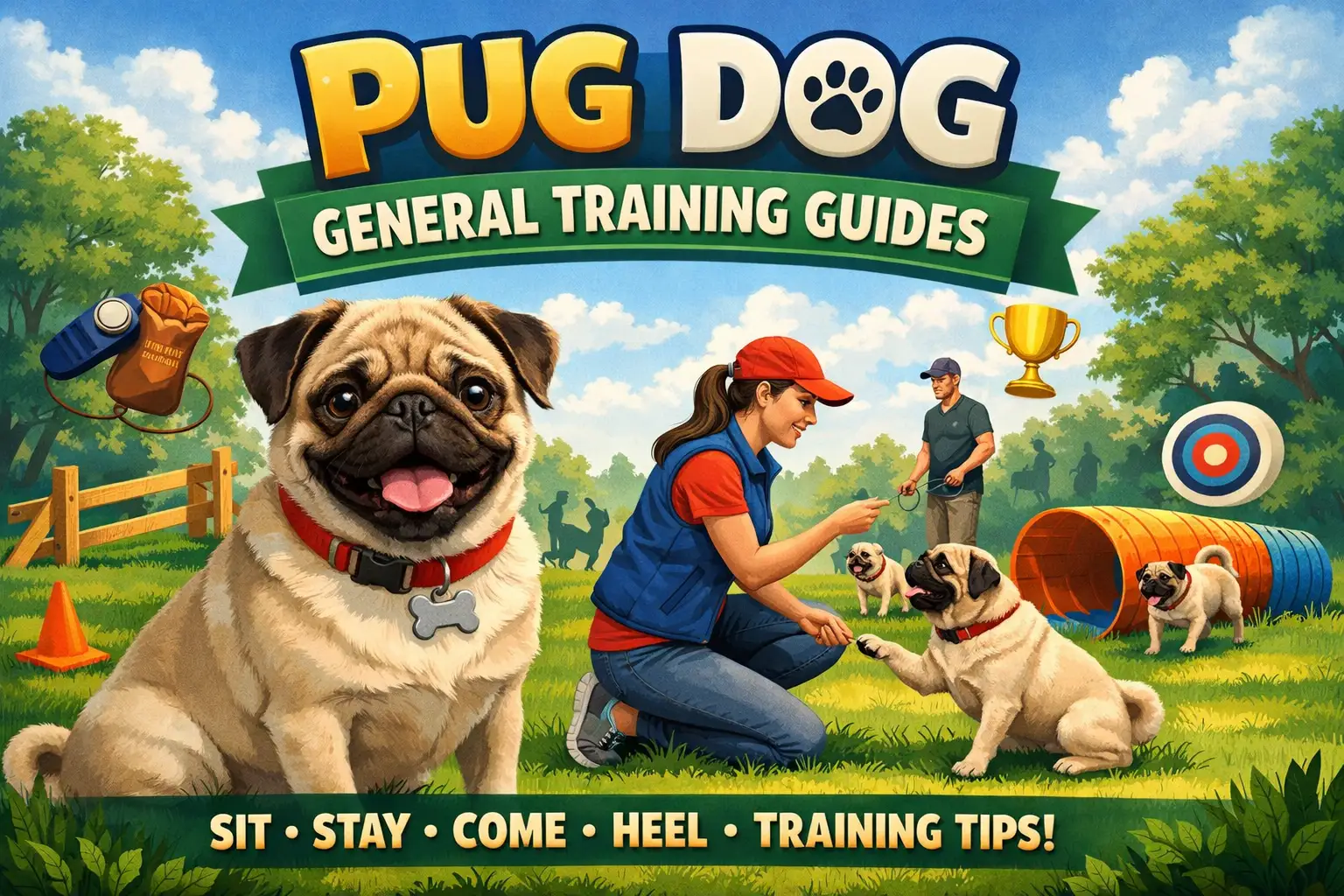
Pug dog training is less about strict obedience and more about understanding how this breed thinks, feels, and learns. Pugs are intelligent, affectionate, and highly people-focused, but they are also known for short attention spans, strong food motivation, and a tendency to test boundaries when training is inconsistent. This guide is designed to help you train your pug in a way that works with those traits, not against them.
Whether you are raising a pug puppy or working with an adult pug, the goal of training is the same: create clear communication, build good habits early, and prevent common behavior problems before they become frustrating. Many pug owners struggle not because pugs are “hard to train,” but because they are trained like other breeds that have very different energy levels and learning styles.
This guide is written for beginners, first-time pug owners, and families, while still offering structure and insight that experienced dog owners can apply immediately. You will learn what realistic training looks like for pugs, how to structure short and effective training sessions, and how to avoid the most common mistakes that slow progress.
By the end of this guide, you should have a clear understanding of how to train your pug calmly, safely, and consistently—without relying on harsh methods or unrealistic expectations.
Why Proper Training Is Essential for Pugs
Training is very important for pugs, even though they are small and friendly dogs. Many people think pugs do not need training because they are cute, calm, or mostly indoors. This belief often leads to behavior problems that could have been prevented early.
Pugs are people-loving dogs. They want attention, food, and comfort. Without training, they may jump on guests, pull on the leash, beg for food, or ignore basic commands. Training helps your pug understand rules and feel more secure in daily life.
Proper training also protects your pug’s health. Pugs have short noses and can get tired or overheated easily. A trained pug walks calmly, listens when called, and handles daily routines with less stress. This is safer for the dog and easier for the owner.
Another reason training matters is long-term behavior. Bad habits grow stronger over time. A puppy that ignores commands can turn into an adult pug that refuses to listen at all. Early and consistent training builds good habits that last for years.
How Training Affects Daily Life With a Pug
| Training Area | Why It Matters for Pugs | What Happens Without Training |
|---|---|---|
| Basic commands | Helps clear communication | Dog ignores owner |
| Leash walking | Reduces breathing strain | Pulling and choking |
| Manners at home | Keeps home calm | Jumping and begging |
| Social behavior | Builds confidence | Fear or overexcitement |
| Routine handling | Makes care easier | Stress during vet visits |
Training is not about control. It is about helping your pug live comfortably and safely in a human home.
Understanding Pug Behavior and Learning Style
Pugs have a very unique personality. They are loving, playful, and strongly attached to their owners. Most pugs want to be close to people all the time. This makes them great family dogs, but it also affects how they learn during training.
Many owners think pugs are stubborn. In most cases, this is not true. Pugs usually stop listening because they are bored, confused, tired, or too distracted. They do best with short lessons, clear signals, and rewards they really enjoy, like small food treats or praise.
Pugs are very food-motivated. This can be a big help in training when used correctly. At the same time, too many treats can cause weight gain. Training treats should be small and training sessions should be short to keep your pug healthy and focused.
Pug puppies learn faster but get distracted easily. Adult pugs may learn more slowly, but they often focus better. Both need patience and consistency. Yelling or harsh corrections do not work well with pugs and can cause fear or shutdown behavior.
Pug Traits and Training Adjustments
| Pug Trait | What It Means | Best Training Approach |
|---|---|---|
| Loves people | Wants attention and closeness | Use praise and calm voice |
| Food-focused | Works for treats | Use tiny, healthy treats |
| Short attention span | Gets bored quickly | Keep sessions very short |
| Sensitive nature | Reacts to tone | Stay calm and positive |
| Low heat tolerance | Tires easily | Train in cool, quiet areas |
Understanding how your pug thinks makes training easier and less stressful. When training matches their nature, pugs learn faster and enjoy the process.
Step-by-Step Pug Training Basics
Training a pug works best when it is simple, calm, and done every day in short sessions. Pugs do not learn well with long lessons or strict rules. They learn faster when training feels fun and rewarding.
Before you start, choose a quiet place with no noise or distractions. Use small treats, a soft voice, and clear hand signals. Always train when your pug is calm and not too tired or hungry.
How to Structure a Pug Training Session
| Training Part | What to Do |
|---|---|
| Session length | 5 to 10 minutes only |
| Daily sessions | 2 to 3 short sessions |
| Best time | After rest, before meals |
| Rewards | Small soft treats or praise |
| When to stop | When your pug loses focus |
Short sessions keep your pug interested and prevent frustration. Ending training on a success helps your pug feel confident.
Basic Commands Every Pug Should Learn
Start with simple commands. Do not rush. Most pugs need many repeats over several days to fully learn a command.
| Command | What It Teaches | Common Mistake | Success Sign |
|---|---|---|---|
| Name response | Attention and focus | Saying name too often | Looks at you fast |
| Sit | Calm behavior | Pushing dog down | Sits on cue |
| Stay | Patience | Moving too far too fast | Holds position |
| Come | Safety | Calling only for bad things | Comes happily |
| Loose leash walk | Calm walking | Pulling back on leash | Walks beside you |
Use one command word at a time. Say it once, wait, then reward when your pug responds. If your pug does not respond, make it easier instead of repeating the command many times.
Training progress may feel slow, but steady practice brings results. Most pugs show clear improvement within a few weeks of daily training.
Common Pug Training Problems and Practical Fixes
Even with good training, many pug owners face problems. This is normal. Most issues come from confusion, inconsistency, or training that moves too fast. The good news is that most pug training problems can be fixed with small changes.
Pugs may ignore commands, pull on the leash, or act too excited around people. This does not mean your pug is bad or untrainable. It usually means the training plan needs to be adjusted to fit your pug better.
Pugs also react strongly to tone of voice. Yelling, pulling the leash, or punishing mistakes can make training worse. Calm repetition and rewards work much better.
Common Pug Training Problems and Solutions
| Problem | Why It Happens | Simple Fix | When to Get Help |
|---|---|---|---|
| Ignores commands | Too distracted or confused | Train in quiet area, shorten sessions | No progress after weeks |
| Pulls on leash | Excitement or poor leash training | Stop walking when pulling | Breathing trouble or panic |
| Barks for attention | Learned barking works | Ignore barking, reward calm | Constant barking |
| Jumps on people | Seeks attention | Reward calm greeting | Knocking people down |
| Stops listening | Overtraining or boredom | End sessions sooner | Refuses all commands |
If problems continue even after consistent training for several weeks, it may be time to ask for professional help. A trainer who understands small breeds and flat-faced dogs can help you adjust your approach safely.
Training a pug is not about being perfect. It is about being patient, kind, and consistent. Small steps every day lead to big improvements over time.
For more official guidance on dog training standards and breed behavior, you can also review the pug training and care resources provided by the American Kennel Club, https://www.akc.org/dog-breeds/pug/ which offers trusted, breed-specific advice for owners and trainers.

Ata Ur Rehman is the founder of Pet Age in Human Years Calculator, an educational platform that provides age conversion charts and lifespan guides for dogs, cats, birds, and other companion animals. His work focuses on helping pet owners understand how animal ages translate into human years using commonly accepted age conversion formulas and published lifespan averages.
The website compiles breed and species lifespan data from kennel clubs, breed organizations, and general animal lifespan studies to present simple and easy-to-understand guides for pet owners worldwide.
This website was created to centralize animal age conversion charts into one easy reference platform for pet owners.