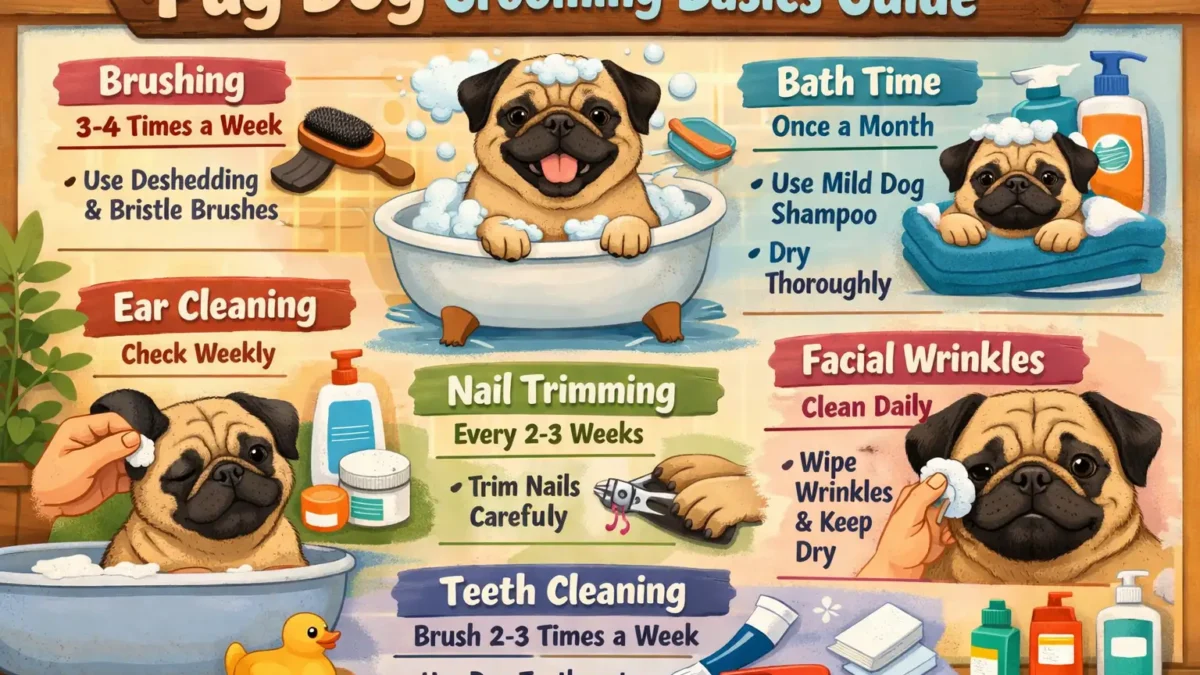
Pug Dog Grooming Basics: Complete Care Guide for Healthy Skin, Coat, and Wrinkles
Grooming a Pug is not about looks — it’s about skin health, comfort, odor control, and early problem detection. Many owners assume that because Pugs have short hair, they need minimal grooming. In reality, Pugs are one of the breeds that benefit the most from consistent, correct grooming due to their coat structure, skin folds, and sensitivity.
Pugs have a short double coat, meaning they shed more than most people expect. Loose hair, trapped oils, and dead skin build up quickly if grooming is irregular, leading to odor, itching, and excessive shedding around the home. Regular grooming helps remove this buildup before it causes problems.
Their wrinkles and facial folds are another critical reason grooming matters. Moisture, food residue, and bacteria can collect in these areas, increasing the risk of skin fold infections if they’re not cleaned properly and routinely.
Grooming also gives you regular, hands-on contact with your Pug. This allows you to notice early warning signs such as redness, irritation, unusual odor, hair thinning, lumps, or sensitivity — issues that are far easier (and cheaper) to address early.
Benefits of Regular Grooming for Pugs
| Grooming Benefit | Why It Matters for Pugs |
|---|---|
| Reduced shedding | Removes loose undercoat hair before it spreads around the home |
| Healthier skin | Prevents oil buildup, clogged pores, and irritation |
| Wrinkle care | Lowers the risk of bacterial and yeast infections in skin folds |
| Odor control | Eliminates trapped moisture, oils, and debris |
| Comfort | Reduces itching, overheating, and skin tightness |
| Early health detection | Helps spot skin issues, infections, or parasites sooner |
Consistent grooming doesn’t need to be complicated or time-consuming. When done correctly and on a routine schedule, it becomes one of the simplest ways to keep a Pug comfortable, clean, and healthy throughout their life.
Understanding the Pug Coat, Skin, and Shedding
Many people think Pugs are low-maintenance because they have short hair. This is one of the most common misunderstandings. Pugs actually need regular grooming because of how their coat and skin work together.
Pugs have a short double coat. This means they have:
- A soft undercoat close to the skin
- A short topcoat that you can see
Because of this, Pugs shed a lot, often all year. Shedding usually gets heavier in spring and fall. Brushing helps remove loose hair before it falls on furniture, clothes, and floors.
Pug skin is also more sensitive than many other breeds. Their skin produces natural oils that protect the coat, but when oils mix with dead skin and loose hair, it can cause:
- Bad smell
- Itching
- Red or irritated skin
Another major factor is wrinkles and skin folds. These folds can trap moisture, food, dirt, and bacteria. If they stay damp, infections can start quickly. This is why coat care and skin care must go together for Pugs.
Pug Coat Characteristics and Grooming Impact
| Feature | What It Means for Grooming |
|---|---|
| Short double coat | Needs frequent brushing despite short hair |
| Heavy shedding | Loose hair must be removed often |
| Sensitive skin | Gentle products are required |
| Wrinkles and folds | Must be kept clean and dry |
| Small body size | Grooming is quick but must be consistent |
Pugs are also more likely to have skin allergies. These may show up as scratching, redness, flaky skin, or hair thinning. Good grooming helps reduce allergy triggers like dust, pollen, and bacteria on the coat.
Common Pug Skin Issues Owners Should Watch For
| Skin Issue | Early Signs |
|---|---|
| Skin fold infection | Redness, bad smell, moisture in wrinkles |
| Dry skin | Flakes, dandruff, dull coat |
| Allergic reaction | Itching, licking paws, red skin |
| Yeast growth | Strong odor, greasy skin, dark areas |
Understanding how a Pug’s coat and skin work makes grooming easier and safer. When you know why your Pug sheds or smells, you can fix the problem before it gets worse.
Core Pug Grooming Routine at Home
A good grooming routine keeps your Pug clean, comfortable, and healthy. The key is simple steps done on a regular schedule. You do not need fancy tools or daily baths. You just need the right routine.
Most Pug grooming can be done at home in short sessions. This also helps your dog stay calm and used to being handled.
Pug Grooming Frequency Guide
| Grooming Task | How Often | Why It Matters |
|---|---|---|
| Brushing | 2–4 times a week | Removes loose hair and reduces shedding |
| Bathing | Every 4–6 weeks | Keeps skin clean without drying it |
| Wrinkle cleaning | 3–4 times a week | Prevents infection and bad smell |
| Full body check | Weekly | Helps spot skin or health problems early |
Brushing Your Pug
Brushing is the most important grooming step for Pugs. Even though their hair is short, they shed a lot.
- Use a soft bristle brush or rubber grooming brush
- Brush gently in the direction of hair growth
- Focus on the back, sides, chest, and neck
- Keep sessions short, about 5–10 minutes
Regular brushing removes loose hair before it falls around your home and helps spread natural oils on the skin.
Bathing a Pug Safely
Pugs do not need frequent baths. Bathing too often can dry out their skin.
- Use a dog shampoo made for sensitive skin
- Use lukewarm water, not hot
- Avoid getting water in the eyes, ears, and nose
- Rinse very well to remove all shampoo
After the bath, dry your Pug fully with a towel. Make sure the skin folds are dry. Damp wrinkles can cause infections.
Bathing Do’s and Don’ts for Pugs
| Do | Don’t |
|---|---|
| Use dog-only shampoo | Use human shampoo |
| Dry skin folds well | Leave wrinkles wet |
| Bathe every few weeks | Bathe every week |
| Stay calm and gentle | Rush the bath |
Cleaning Pug Wrinkles
Wrinkle care is a must for Pugs.
- Use a soft cloth or pet-safe wipe
- Gently clean inside each fold
- Dry the area completely after cleaning
- Never scrub hard or leave moisture behind
Clean wrinkles should look dry and have no strong smell.
Recommended Grooming Tools for Pugs
| Tool | Purpose |
|---|---|
| Soft bristle brush or rubber brush | Controls shedding |
| Dog shampoo (sensitive skin) | Gentle cleaning |
| Soft towel | Drying body and folds |
| Pet-safe wipes | Wrinkle cleaning |
Keeping this routine simple and steady will prevent most grooming problems before they start.
Nail, Ear, Dental, and Skin Health Care for Pugs
Besides brushing and bathing, Pugs also need care for their nails, ears, teeth, and skin. These areas are often ignored, but problems here can cause pain, infections, and behavior changes if not handled early.
The good news is that basic care is easy when done on a regular schedule.
Nail Care for Pugs
Pug nails grow fast and do not always wear down on their own. Long nails can make walking painful and may change how your Pug stands.
- Trim nails every 3–4 weeks
- Use small dog nail clippers or a nail grinder
- Cut a little at a time to avoid bleeding
- If you hear nails clicking on the floor, they are too long
If you are unsure, ask a groomer or vet to show you how to trim safely.
Ear Cleaning Basics
Pugs have small ear canals that can trap wax and moisture. Dirty ears can lead to infection.
- Check ears once a week
- Clean only when they look dirty or smell bad
- Use a dog ear cleaner, never water or alcohol
- Wipe only the visible part of the ear
Never push anything deep into the ear.
Dental Care for Pugs
Pugs are prone to dental problems because of their short face and crowded teeth.
- Brush teeth 2–3 times a week
- Use dog toothpaste only
- Dental chews can help but do not replace brushing
Bad breath is often a sign of dental disease, not just food smell.
Skin Health and Early Warning Signs
Pug skin needs close attention. Catching problems early can prevent serious infections.
Nail, Ear, and Dental Care Schedule
| Care Area | How Often | Why It’s Important |
|---|---|---|
| Nail trimming | Every 3–4 weeks | Prevents pain and joint stress |
| Ear check | Weekly | Stops infections early |
| Ear cleaning | As needed | Removes wax and odor |
| Teeth brushing | 2–3 times a week | Prevents gum disease |
Signs You Should Stop Grooming and See a Vet
| Warning Sign | What It May Mean |
|---|---|
| Red, swollen skin | Infection or allergy |
| Strong bad smell | Bacterial or yeast growth |
| Bleeding nails | Nail cut too short |
| Head shaking | Ear infection |
| Pain when touched | Skin or joint issue |
Regular care of these areas keeps your Pug comfortable and avoids painful problems later.
Common Pug Grooming Mistakes, Safety Tips, and FAQs
Many grooming problems happen because owners follow bad advice or skip simple steps. Knowing what not to do is just as important as knowing what to do.
Common Pug Grooming Mistakes and Better Alternatives
| Common Mistake | Why It’s a Problem | What to Do Instead |
|---|---|---|
| Bathing too often | Dries out skin and causes itching | Bathe every 4–6 weeks |
| Skipping wrinkle care | Leads to infections and bad smell | Clean and dry folds often |
| Using human shampoo | Harsh on dog skin | Use dog shampoo only |
| Shaving a Pug | Damages the coat and skin | Brush regularly instead |
| Ignoring nails | Causes pain and walking issues | Trim every few weeks |
Important Safety Tips for Grooming Pugs
- Never shave a Pug’s coat
- Always dry wrinkles after cleaning or bathing
- Keep grooming sessions calm and short
- Stop grooming if your Pug shows pain or stress
- Use only dog-safe grooming products
Pugs also have short noses, so avoid hot air dryers and long grooming sessions that may cause breathing trouble.
Grooming Puppies, Adult, and Senior Pugs
- Puppies need gentle grooming to build trust
- Adult Pugs need steady routines
- Senior Pugs may need slower grooming and extra comfort
Adjust your grooming style based on age and health.
Home Grooming vs Professional Grooming
Most grooming tasks can be done at home. A professional groomer may be helpful when:
- Nails are very long
- Skin infections are present
- Your Pug is anxious or hard to handle
Frequently Asked Questions
Do Pugs need professional grooming?
Not always. Most grooming can be done at home.
Do Pugs shed a lot?
Yes. Regular brushing helps control shedding.
Why does my Pug smell bad?
Usually from dirty skin folds, ears, or poor skin care.
Can I shave my Pug in summer?
No. Shaving can damage the coat and skin.
For additional breed-specific care guidance, you can also refer to the American Kennel Club Pug breed page, which offers reliable information on Pug care, health, and grooming standards:
https://www.akc.org/dog-breeds/pug/