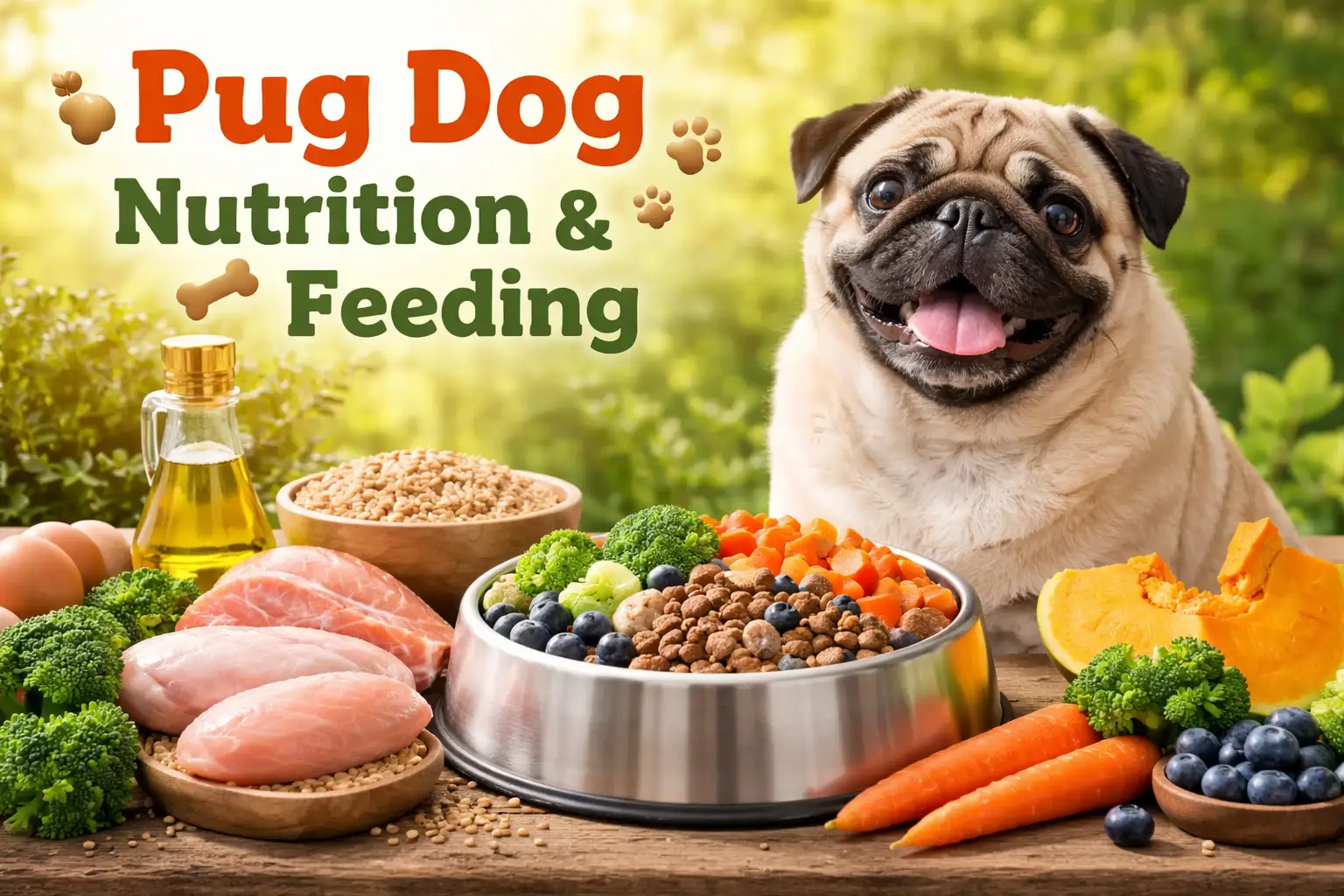
Pugs may be small, but their nutritional needs are surprisingly specific. As a brachycephalic (flat-faced) breed with a compact body, low endurance, and a strong tendency to gain weight, what you feed a Pug—and how much—has a direct impact on their health, comfort, and lifespan.
This guide is designed to help you make practical, evidence-based feeding decisions for your Pug, whether you’re raising a puppy, caring for an adult, or managing an aging companion. Instead of generic “small breed” advice, the focus here is on what actually works for Pugs in real life.
One of the biggest reasons nutrition matters so much for Pugs is their high risk of obesity. Even a small amount of excess weight can worsen breathing difficulties, increase joint strain, and reduce heat tolerance. Many Pugs appear “naturally round,” which leads owners to underestimate weight gain until it starts affecting mobility, stamina, or snoring and respiratory effort.
Diet also plays a major role in common Pug issues such as skin irritation, itching, ear infections, and digestive sensitivity. Poor-quality ingredients, excessive fat, or inappropriate treats can quickly show up as loose stools, excessive shedding, or chronic scratching. On the other hand, a well-balanced diet with the right protein level, controlled calories, and supportive fats can noticeably improve coat quality, energy levels, and overall comfort.
Another important factor is lifestyle. Most Pugs are companion dogs with relatively low daily activity, especially if they live in apartments or warmer climates. Feeding them the same portions as a more active small breed often leads to slow, steady weight gain. Nutrition for Pugs isn’t about feeding less food indiscriminately—it’s about feeding the right amount of the right food.
Throughout this article, you’ll learn how to choose appropriate foods, understand portion sizes, avoid common feeding mistakes, and adapt your Pug’s diet as their needs change. The goal isn’t perfection, but consistency, awareness, and making informed choices that support long-term health.
When you get Pug nutrition right, the benefits are noticeable: easier breathing, healthier skin, better mobility, and a happier dog that maintains a healthy body condition without constant hunger or digestive trouble.
Best Diet for Pugs: Nutrients, Ingredients, and Food Labels
A good diet for a Pug is not about fancy labels or expensive food. It is about balance, quality, and keeping calories under control. Pugs need food that supports their muscles, skin, joints, and digestion without adding extra weight.
This section explains what nutrients Pugs need, which ingredients usually work well, and how to read dog food labels without getting confused.
Key nutrients Pugs need
Pugs do best on diets that are rich in protein, moderate in fat, and easy to digest. Because they gain weight easily, too much fat or too many fillers can cause problems.
Ideal Nutrient Ranges for Pugs
| Nutrient | Why It Matters for Pugs | General Range |
|---|---|---|
| Protein | Supports muscles and keeps Pugs full | 22–30% |
| Fat | Provides energy and supports skin | 8–15% |
| Fiber | Helps digestion and stool quality | 3–6% |
| Moisture | Aids hydration and digestion | Higher is better (wet/fresh foods) |
Protein should come from real animal sources like chicken, turkey, lamb, fish, or eggs. Very low-protein foods often leave Pugs hungry and can cause muscle loss over time.
Ingredients Pugs usually tolerate well
Not all ingredients affect Pugs the same way. Some support digestion and skin health, while others often cause itching or stomach upset.
Ingredients Pugs Do Well On vs Ingredients to Limit
| Works Well for Many Pugs | Often Causes Issues |
|---|---|
| Chicken, turkey, fish | Very fatty meats |
| Brown rice, oats | Corn and wheat (for sensitive Pugs) |
| Sweet potato, pumpkin | Artificial colors and flavors |
| Fish oil, flaxseed | Cheap meat by-products |
Every Pug is different. An ingredient that works for one Pug may not work for another, so changes should be slow and careful.
How to read dog food labels for Pugs
Dog food labels can be confusing. Many words are used to sell the product, not to explain what is inside.
Dog Food Label Cheat Sheet
| Label Part | What to Look For | What to Be Careful With |
|---|---|---|
| Ingredient list | Real meat listed first | Long lists of fillers |
| Guaranteed analysis | Protein and fat within safe ranges | Very high fat levels |
| Marketing terms | “Complete and balanced” | “Premium,” “natural,” “gourmet” |
Always focus on the ingredient list and nutrition numbers, not the picture on the bag or fancy words.
Do Pugs need supplements?
Most healthy Pugs do not need extra supplements if they eat a complete and balanced dog food. Adding supplements without guidance can sometimes do more harm than good.
Supplements may help only in certain cases, such as:
- Senior Pugs with joint stiffness
- Pugs with skin or coat problems
- Dogs on homemade diets (with vet guidance)
If you are unsure, it is best to ask a veterinarian before adding anything to your Pug’s food.
How Much Should a Pug Eat? Feeding Amounts, Calories, and Schedules
Pugs love food, but they do not burn many calories. This makes portion control very important. Feeding the right amount helps your Pug stay healthy, breathe easier, and avoid joint pain.
This section explains how many calories a Pug needs, how much food to put in the bowl, and how often to feed.
Daily calorie needs for Pugs
Calorie needs depend on weight and activity level. Most Pugs are low to moderately active, especially indoor dogs.
Pug Daily Calorie Needs by Weight
| Pug Weight | Low Activity | Moderate Activity |
|---|---|---|
| 10–12 lb | 350–400 kcal | 400–450 kcal |
| 13–15 lb | 400–450 kcal | 450–500 kcal |
| 16–18 lb | 450–500 kcal | 500–550 kcal |
| 19–22 lb | 500–550 kcal | 550–600 kcal |
If your Pug is overweight, start closer to the lower number. If your Pug is very active, you may need slightly more.
How much food should you give?
Most owners think in cups, not calories. The exact amount depends on the food’s calorie density, but this table gives a general idea for dry food.
Pug Feeding Portion Guide (Dry Food Example)
| Pug Weight | Food Per Day | Meals Per Day |
|---|---|---|
| 10–12 lb | ¾–1 cup | 2 |
| 13–15 lb | 1–1¼ cups | 2 |
| 16–18 lb | 1¼–1½ cups | 2 |
| 19–22 lb | 1½–1¾ cups | 2 |
Always check the calorie information on your dog food bag. Some foods are much higher in calories than others.
Feeding schedule by life stage
Pugs need different feeding schedules as they grow and age.
Pug Feeding Schedule by Life Stage
| Life Stage | Meals Per Day | Notes |
|---|---|---|
| Puppy | 3–4 | Smaller meals help digestion |
| Adult | 2 | Helps control hunger and weight |
| Senior | 2 | Easier on digestion and energy |
Avoid free-feeding (leaving food out all day). Pugs will usually overeat if given the chance.
How to tell if you are feeding too much or too little
A healthy Pug should:
- Have a visible waist when viewed from above
- Have ribs that can be felt but not seen
- Move easily without heavy breathing at rest
If your Pug seems hungry all the time, gains weight quickly, or loses energy, the portion size may need adjusting.
Small changes make a big difference for Pugs. Even reducing food by a few tablespoons per day can help with weight control.
Types of Food for Pugs: Kibble, Wet, Fresh, Raw, and Homemade
There are many food choices for Pugs, and it can feel confusing. No single food is perfect for every Pug. The best choice depends on your dog’s age, weight, health, and what they tolerate well.
This section explains the main food types, their pros and cons, and which ones often work best for Pugs.
Common food types for Pugs
Comparison of Dog Food Types for Pugs
| Food Type | Pros for Pugs | Cons for Pugs | Best For |
|---|---|---|---|
| Dry food (kibble) | Easy to measure, helps control calories, affordable | Can be dry, some brands are high in carbs | Most adult Pugs |
| Wet food (canned) | High moisture, tasty, easier to chew | Higher calories, more expensive | Picky eaters, seniors |
| Fresh food | Simple ingredients, good digestion | Costly, needs storage | Sensitive stomachs |
| Raw diet | High protein, fewer fillers | Risk of bacteria, hard to balance | Only with expert help |
| Homemade food | Full control of ingredients | Easy to unbalance nutrients | Vet-guided diets only |
For most Pugs, a high-quality dry or mixed dry-and-wet diet is the safest and easiest option.
Choosing the right food texture for flat faces
Pugs have short noses and flat faces, which can make eating harder. Some tips that help:
- Choose small or round kibble pieces
- Avoid very hard or large kibble
- Use shallow bowls instead of deep ones
- Slow feeders can help fast eaters
These small changes can reduce choking and make meals easier.
Safe human foods and foods to avoid
Some human foods are safe for Pugs in small amounts, while others are dangerous.
Safe Human Foods vs Toxic Foods for Pugs
| Safe in Small Amounts | Never Feed |
|---|---|
| Plain chicken or turkey | Chocolate |
| Cooked carrots | Grapes and raisins |
| Plain rice | Onions and garlic |
| Apple slices (no seeds) | Xylitol (sweetener) |
| Pumpkin (plain) | Alcohol |
Human foods should be treats, not meals. Too many treats can quickly lead to weight gain.
Should you mix food types?
Many owners mix dry and wet food to improve taste and moisture. This can work well if you:
- Measure portions carefully
- Keep total calories under control
- Introduce changes slowly
Avoid changing foods too often, as Pugs can have sensitive stomachs.
Special Diets, Common Pug Feeding Problems, and Practical Tips
Pugs often need small diet changes as they grow older or face health issues. Many feeding problems can be fixed with simple steps once you understand what your Pug needs.
This section covers common situations Pug owners face and how to handle them safely.
Feeding overweight Pugs
Extra weight is one of the biggest health risks for Pugs. Even a little weight gain can make breathing and walking harder.
Helpful tips:
- Reduce portion size slowly, not suddenly
- Choose lower-fat food with enough protein
- Limit treats and table scraps
- Use vegetables like carrots as low-calorie snacks
Diet Adjustments by Pug Condition
| Pug Condition | Feeding Focus | What to Avoid |
|---|---|---|
| Overweight | Fewer calories, high protein | Fatty treats, free-feeding |
| Sensitive stomach | Simple ingredients, slow changes | Sudden food switches |
| Skin allergies | Limited ingredients | Artificial colors, fillers |
| Senior Pugs | Joint support, easy digestion | Very high-calorie foods |
Feeding Pugs with allergies or sensitive stomachs
Some Pugs react badly to certain foods. Signs include itching, red skin, ear problems, or loose stool.
What usually helps:
- Choose foods with fewer ingredients
- Stick to one protein source
- Avoid frequent food changes
- Switch foods slowly over 7 days
Picky eaters and always-hungry Pugs
Pugs are known for begging and acting hungry even when they are not.
To manage this:
- Feed at the same times every day
- Avoid giving food from the table
- Measure meals instead of guessing
- Ignore begging behavior
Most Pugs learn quickly when feeding is routine.
Switching food safely
Changing food too fast often causes stomach upset.
Safe 7-Day Food Transition Plan
| Day | Old Food | New Food |
|---|---|---|
| 1–2 | 75% | 25% |
| 3–4 | 50% | 50% |
| 5–6 | 25% | 75% |
| 7 | 0% | 100% |
If your Pug gets diarrhea or stops eating, slow the transition.
When to see a veterinarian
You should talk to a vet if your Pug:
- Gains or loses weight quickly
- Refuses food for more than a day
- Has ongoing vomiting or diarrhea
- Has skin problems that do not improve
A vet can help adjust the diet or check for health issues.
For official, science-based definitions of what “complete and balanced” means on dog food labels and how dog foods are formulated to meet established nutrient standards, you can visit the AAFCO consumer guide from the Association of American Feed Control Officials to learn how these feeding guidelines work and what to look for on your Pug’s food packaging: https://www.aafco.org/consumers/understanding-pet-food/selecting-the-right-pet-food/

Ata Ur Rehman is the founder of Pet Age in Human Years Calculator, an educational platform that provides age conversion charts and lifespan guides for dogs, cats, birds, and other companion animals. His work focuses on helping pet owners understand how animal ages translate into human years using commonly accepted age conversion formulas and published lifespan averages.
The website compiles breed and species lifespan data from kennel clubs, breed organizations, and general animal lifespan studies to present simple and easy-to-understand guides for pet owners worldwide.
This website was created to centralize animal age conversion charts into one easy reference platform for pet owners.