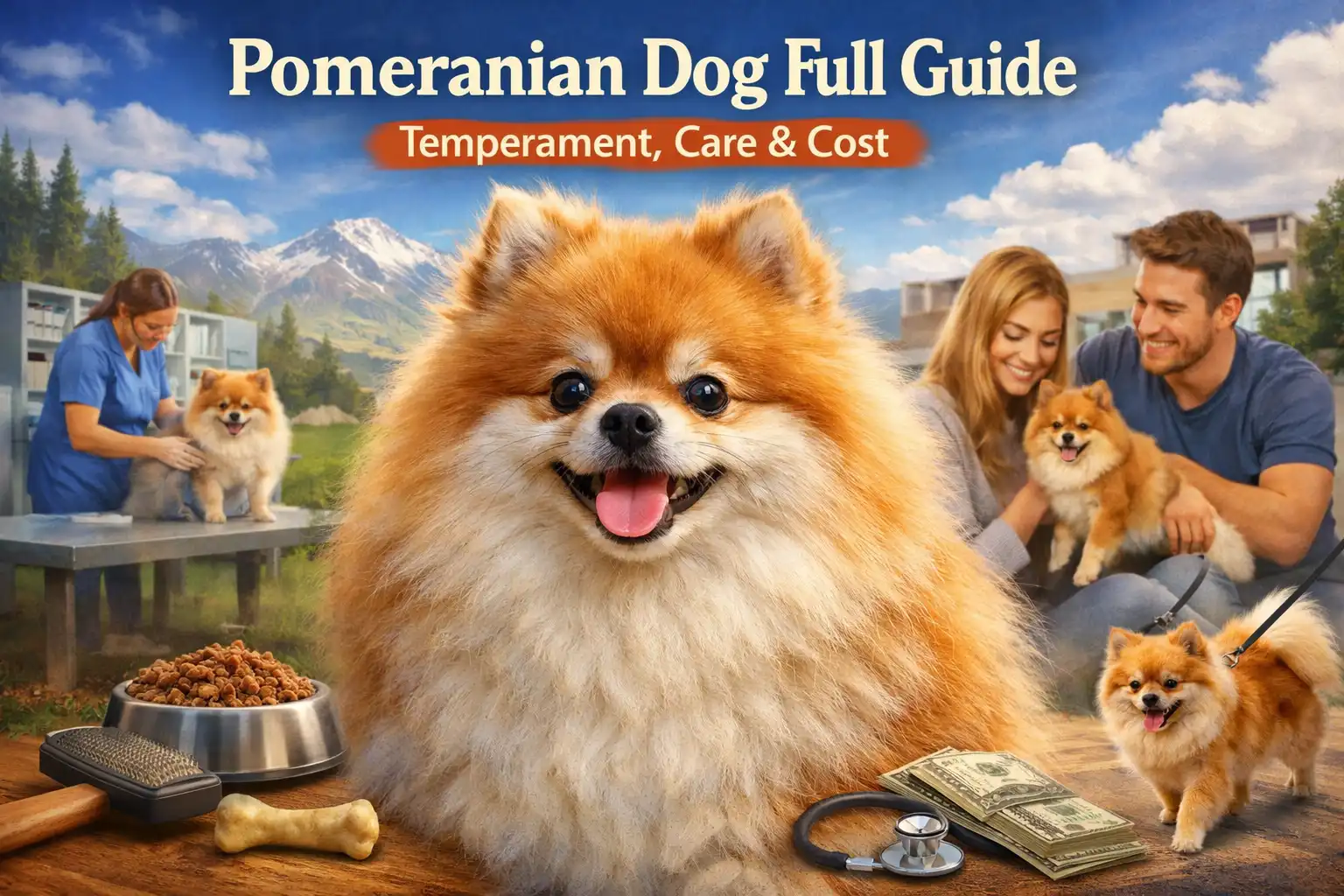
The pomeranian dog is one of the most recognisable small dog breeds in the world. With its fluffy double coat, fox-like face, and confident attitude, this tiny dog often surprises people with how bold and alert it can be. Many first-time owners assume that a pomeranian is simply a cute lap dog, but in reality, this breed has a strong personality packed into a very small body.
This pomeranian dog full guide is written to help you understand what living with this breed is really like. From daily care and temperament to health concerns and long-term costs, this guide focuses on the questions people actually search for before bringing a pomeranian home. Whether you live in a flat, have children, or are looking for a loyal companion, knowing the breed beyond its appearance is essential. If you are also curious about how their age compares to humans, you can explore this pomeranian age chart in human years for a quick overview.
Pomeranians are known for forming close bonds with their owners, often acting much bigger than they truly are. They can be playful, intelligent, and surprisingly vocal, which makes them both entertaining and demanding. When properly cared for and trained, they can adapt well to indoor living and become deeply devoted family dogs.
Pomeranian Dog Origin, Appearance, and Size
The pomeranian dog comes from a group of dogs called spitz breeds. These dogs were once much larger and were used for work like pulling sleds and guarding homes in cold regions. Over time, people in europe began breeding them smaller because they liked their fluffy coats and sharp faces. This is how the modern pomeranian became a companion dog instead of a working dog.
Today’s pomeranian is a toy-sized dog, but it still keeps the confident attitude of its larger ancestors. Even though it is small, it often acts brave and alert, which surprises many people.
In appearance, the pomeranian dog is easy to recognise. It has a thick double coat, a pointed face, small upright ears, and a fluffy tail that curls over the back. The coat can come in many colours, including orange, cream, white, black, brown, and mixed shades. Some colours are more common, but all are accepted.
One thing many people ask about is size. Pomeranians are very small dogs, but they should still be strong and well-balanced, not fragile.
Here is a simple size and weight table to make this easy to understand:
| Feature | Average Range |
|---|---|
| Height | 18 to 22 cm |
| Weight | 1.8 to 3.5 kg |
| Body type | Compact and sturdy |
| Coat type | Thick double coat |
You may also hear about “teacup pomeranians.” This is not an official size. Dogs advertised as teacup are often bred to be extra small, which can increase health problems. A healthy pomeranian should be small but strong, not tiny and weak.
Understanding the origin and physical traits of the pomeranian dog helps explain why this breed looks cute but acts confident and alert at the same time.
Pomeranian Dog Temperament, Personality, and Behaviour
The pomeranian dog may be small, but its personality is big. This breed is known for being alert, confident, and very aware of its surroundings. Many owners say their pomeranian acts like a much larger dog trapped in a small body.
Pomeranians usually form a very strong bond with their owners. They like to stay close and often follow their favourite person from room to room. This makes them loving companions, but it also means they may not enjoy being left alone for long hours.
With family members, pomeranians are playful and affectionate. They enjoy attention and like to be involved in daily life. With children, they do best in homes where kids are gentle and understand how to handle a small dog. Rough play can scare or hurt them, so supervision is important.
When it comes to strangers, the pomeranian dog is often cautious. Many will bark when someone new enters the home. This is part of their watchdog nature. Even though they are not guard dogs, they are very good at alerting owners to sounds and movement.
Pomeranians can live with other pets, but early socialisation is important. They may try to act dominant around bigger dogs, not realising their own size. With cats and calm dogs, they usually adjust well if introduced properly.
Barking is one of the most talked-about behaviours in this breed. Pomeranians are vocal and like to “talk,” especially when bored, excited, or protecting their space. Training and daily mental activity can help reduce excessive barking. If barking or stubborn behaviour becomes difficult to manage, following a structured pomeranian training guide can make it much easier to build better habits.
Here is a simple table that shows common temperament traits:
| Trait | What It Means |
|---|---|
| Alert | Notices sounds and movement quickly |
| Confident | Acts brave despite small size |
| Affectionate | Loves close contact with owners |
| Intelligent | Learns fast but can be stubborn |
| Vocal | Barks to communicate or warn |
Many people believe small dogs are easy and quiet. This is not always true. A pomeranian needs attention, training, and clear rules to behave well. When owners understand this, the breed becomes a joyful and loyal companion.
Pomeranian Dog Care, Training, Exercise, and Grooming
Caring for a pomeranian dog is not hard, but it does need daily attention. Because this breed is small, many people think it needs very little care. In real life, pomeranians need both physical activity and mental exercise to stay happy.
Exercise for a pomeranian does not mean long runs. Short daily walks, indoor play, and games are usually enough. These dogs enjoy moving around the house, chasing toys, and playing with their owners. Too much exercise can be risky for their small legs, so gentle and regular activity is best.
Training a pomeranian dog can be both fun and challenging. They are smart and learn quickly, but they can also be stubborn. Some pomeranians like to do things their own way. Training works best when it is calm, patient, and reward-based. Shouting or harsh methods can make them scared or stubborn.
One common challenge is house training. Small dogs have small bladders, so accidents can happen, especially in puppies. A routine and praise for good behaviour help a lot.
Grooming is a big part of pomeranian care. Their thick double coat needs regular brushing to prevent knots and matting. Even though they look fluffy, they should not be shaved. The coat helps protect them from both heat and cold. For a complete routine and step-by-step instructions, this pomeranian grooming guide covers everything you need to know.
Here is a simple daily care breakdown:
| Care Type | What Is Needed |
|---|---|
| Exercise | Short walks and indoor play |
| Mental activity | Toys, training, simple games |
| Training | Short sessions with rewards |
| Supervision | Needed due to small size |
Grooming tasks are also easy to understand when broken down:
| Grooming Task | How Often |
|---|---|
| Brushing | 3 to 4 times a week |
| Bathing | Every 4 to 6 weeks |
| Nail trimming | Every 3 to 4 weeks |
| Teeth cleaning | Several times a week |
Pomeranians can be sensitive to heat because of their thick coat. On hot days, keep walks short and make sure they have water and shade.
With the right care, training, and grooming routine, a pomeranian dog can live a clean, active, and happy life indoors.
Pomeranian Dog Health, Lifespan, Cost, and Suitability
The pomeranian dog is usually a healthy breed, but like all dogs, it can have some health problems. Because they are small, certain issues are more common and owners should be aware of them early.
Most pomeranians live a long life. With good care, many live between 12 and 16 years.
To better understand how your dog’s age compares in human terms, you can use this pomeranian age calculator to instantly estimate their real age based on more accurate conversion logic.
A healthy diet, regular vet visits, and safe exercise can help them live longer and feel better as they age.
Feeding plays a major role in long-term health, and this pomeranian feeding guide explains what and how much to feed at each stage.
If you want a detailed breakdown of how age changes over time, this pomeranian age chart in human years explains each stage clearly.
Some health problems seen in pomeranians are linked to their size and body shape. Knowing about these issues helps owners act early and avoid serious trouble later.
Here is a simple table of common health concerns:
| Health Issue | What to Know |
|---|---|
| Tracheal collapse | Causes coughing, common in small dogs |
| Luxating patella | Knee joint problem that affects walking |
| Dental problems | Small mouths lead to crowded teeth |
| Hair loss (alopecia x) | Coat thinning in some adult dogs |
Regular check-ups and good dental care are very important for this breed.
Cost is another thing people often ask about. The price of a pomeranian puppy can change based on breeder, location, and coat colour. Daily costs are not very high, but grooming and vet care should be planned for.
To understand all expected expenses in detail, including grooming, vet visits, and long-term care, see this pomeranian cost of ownership guide.
Here is a simple cost overview:
| Expense Type | Average Cost |
|---|---|
| Puppy price | Medium to high |
| Grooming | Regular but affordable |
| Vet care | Routine with some breed risks |
| Insurance | Helpful but optional |
When it comes to suitability, the pomeranian dog fits well in many homes. They are good for flats and small houses because they do not need much space. They suit seniors and adults who want a close companion. Families with older, gentle children can also do well with this breed.
They may not be the best choice for homes with very young children or people who are away all day. Pomeranians like attention and can feel lonely if ignored.
Here is a quick pros and cons table to help decide:
| Pros | Cons |
|---|---|
| Small and easy to carry | Can bark a lot |
| Loyal and loving | Needs regular grooming |
| Good indoor dog | Can be stubborn to train |
| Long lifespan | Fragile if handled roughly |
In short, the pomeranian dog is best for people who want a small, alert, and loving companion and are ready to give daily care and attention. If you want a quiet dog that needs no grooming or training, this breed may not be the right match.
For official breed standards and detailed information recognised worldwide, you can also refer to the American Kennel Club pomeranian breed profile, which provides trusted insights on history, characteristics, and responsible ownership: https://www.akc.org/dog-breeds/pomeranian/.

Ata Ur Rehman is the founder of Pet Age in Human Years Calculator, an educational platform that provides age conversion charts and lifespan guides for dogs, cats, birds, and other companion animals. His work focuses on helping pet owners understand how animal ages translate into human years using commonly accepted age conversion formulas and published lifespan averages.
The website compiles breed and species lifespan data from kennel clubs, breed organizations, and general animal lifespan studies to present simple and easy-to-understand guides for pet owners worldwide.
This website was created to centralize animal age conversion charts into one easy reference platform for pet owners.