Chihuahua Training Guide: How to Train Puppies and Adult Chihuahuas
Chihuahua training works best when it is short, calm, consistent, and reward-based. Chihuahuas are intelligent and quick learners, but they are also sensitive, alert, and easily overwhelmed. That means training should focus on building confidence, preventing fear-based behavior, and teaching clear rules from the start.
Recommended Dog Care Products
Based on your dog’s age, these products may help with comfort, health, grooming, and daily care.

Purina Pro Plan Veterinary Supplements
Daily probiotics for dogs to support digestive and gut health.
View on Amazon ↗
Earth Rated Poop Bags for Dogs
Leak-proof, extra thick waste bag refill rolls with lavender scent.
View on Amazon ↗
Greenies Pill Pockets for Dogs
Large dog treats for capsule medication, peanut butter flavor.
View on Amazon ↗
HONEY CARE All-Absorb Dog Wrap
Small male dog wraps, 50 count, useful for daily care support.
View on Amazon ↗
Seresto Flea & Tick Collar
Flea and tick treatment and prevention for dogs over 18 lbs.
View on Amazon ↗
Milk-Bone MaroSnacks
Small dog treats with real bone marrow in a 40 oz canister.
View on Amazon ↗
Vital Essentials Dog Treats
Freeze dried beef liver dog treats, grain free and single ingredient.
View on Amazon ↗
Stain & Odor Eliminator
Enzyme cleaner for pet stains, carpet messes, and strong odors.
View on Amazon ↗
Pur Luv Chicken Jerky Treats
Dog treats made with real chicken breast, high protein and chew-friendly.
View on Amazon ↗
Milk-Bone Flavor Snacks
Mini crunchy dog biscuits in a 36 oz canister for small rewards.
View on Amazon ↗As an Amazon Associate, we may earn from qualifying purchases.
This Chihuahua training guide is designed for owners who want practical help with puppies and adult Chihuahuas, including basic commands, potty training, barking, fear, snapping, and stubborn behavior at home. The goal is not to force obedience. The goal is to help your Chihuahua understand what you want while still feeling safe.
Because Chihuahuas are small and emotionally sensitive, training mistakes can quickly turn into bigger behavior problems. Picking them up every time they bark, allowing growling because they are tiny, or using harsh corrections can make fear, reactivity, and house-training issues worse.
For age-related care and development context, you can also use our Chihuahua Dog Age Calculator to understand your Chihuahua’s life stage before choosing the right training routine.
Quick Answer: How Do You Train a Chihuahua?
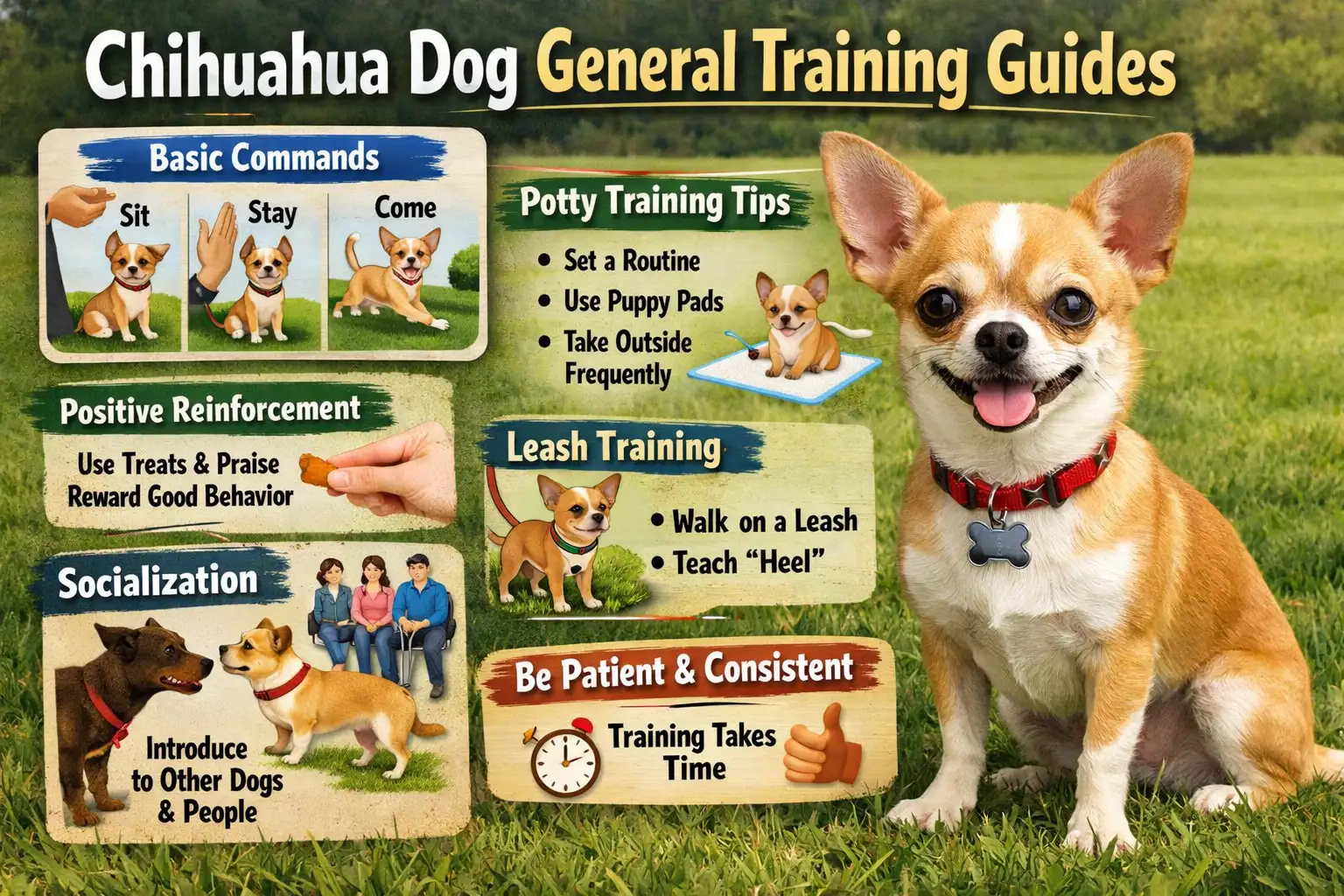
To train a Chihuahua, use short 5–10 minute sessions, reward calm behavior, teach one command at a time, and avoid punishment. Start in a quiet space, use small treats, repeat commands consistently, and practice every day. Chihuahua puppies need early potty training, socialization, and basic commands, while adult Chihuahuas may need extra patience if they already have fear, barking, or snapping habits.
The best Chihuahua training approach includes:
- Short daily training sessions
- Positive reinforcement with treats and praise
- Clear rules for barking, jumping, biting, and potty habits
- Gentle handling to prevent fear-based snapping
- Separate training plans for puppies and adult Chihuahuas
- Consistent routines at home, especially for potty training
What This Chihuahua Training Guide Covers
- Understanding Chihuahua behavior and temperament
- How to train a Chihuahua step by step
- Daily training plans for puppies and adults
- Common Chihuahua training problems
- Potty training, barking, aggression, and fear-based behavior
- Basic commands every Chihuahua should learn
- When professional training help may be needed
Understanding Chihuahua Behavior and Temperament
Before you train a Chihuahua, you need to understand how this breed thinks. Chihuahuas are small dogs with strong reactions. Many behavior problems that look like stubbornness are actually caused by fear, confusion, overstimulation, or inconsistent rules at home.
Chihuahuas are naturally alert. They notice sounds, movement, visitors, other dogs, and changes in the home very quickly. This is one reason barking is so common. Barking is often their way of saying, “Something changed,” “I feel unsure,” or “I need space.” Yelling usually makes the barking worse because it adds more stress.
They are also physically fragile and emotionally sensitive. Rough handling, loud voices, sudden movements, or being grabbed without warning can make a Chihuahua defensive. Growling, snapping, or hiding is often a fear response, not true dominance or “bad attitude.”
Chihuahuas also bond closely with their owners. This can be a strength during training because they often want attention and approval. But it can also lead to clingy behavior, separation anxiety, and over-dependence if the dog is carried everywhere or comforted every time they react.
Recommended Dog Care Products
Based on your dog’s age, these products may help with comfort, health, grooming, and daily care.
Purina Pro Plan Veterinary Supplements
Daily probiotics for dogs to support digestive and gut health.
View on Amazon ↗
Earth Rated Poop Bags for Dogs
Leak-proof, extra thick waste bag refill rolls with lavender scent.
View on Amazon ↗
Greenies Pill Pockets for Dogs
Large dog treats for capsule medication, peanut butter flavor.
View on Amazon ↗
HONEY CARE All-Absorb Dog Wrap
Small male dog wraps, 50 count, useful for daily care support.
View on Amazon ↗
Seresto Flea & Tick Collar
Flea and tick treatment and prevention for dogs over 18 lbs.
View on Amazon ↗
Milk-Bone MaroSnacks
Small dog treats with real bone marrow in a 40 oz canister.
View on Amazon ↗
Vital Essentials Dog Treats
Freeze dried beef liver dog treats, grain free and single ingredient.
View on Amazon ↗
Stain & Odor Eliminator
Enzyme cleaner for pet stains, carpet messes, and strong odors.
View on Amazon ↗
Pur Luv Chicken Jerky Treats
Dog treats made with real chicken breast, high protein and chew-friendly.
View on Amazon ↗
Milk-Bone Flavor Snacks
Mini crunchy dog biscuits in a 36 oz canister for small rewards.
View on Amazon ↗As an Amazon Associate, we may earn from qualifying purchases.
Another common issue is inconsistent boundaries. Because Chihuahuas are tiny, owners often allow behavior they would never allow from a large dog, such as jumping, barking at guests, guarding laps, growling when touched, or refusing to walk. Over time, these habits become harder to change.
Chihuahua Behavior Traits and Training Impact
| Chihuahua trait | What owners often see | Training impact |
|---|---|---|
| High alertness | Barking at noises, visitors, or movement | Reward calm behavior instead of shouting |
| Sensitivity | Shaking, hiding, growling, snapping | Use gentle handling and predictable routines |
| Strong bonding | Clinginess or separation stress | Teach independence slowly |
| Fast learning | Quick progress or quick bad habits | Be consistent every day |
| Small bladder | Potty accidents indoors | Use a strict potty schedule |
When you work with your Chihuahua’s temperament instead of against it, training becomes easier. The aim is to make your dog feel secure enough to listen, learn, and repeat good behavior.
How to Train a Chihuahua Step by Step
The best way to train a Chihuahua is to start with simple skills, reward the behavior you want, and keep each session short. Do not try to teach everything at once. Chihuahuas learn faster when each lesson is clear, calm, and repeated in the same way.
Start in a quiet room with few distractions. Use tiny soft treats, a calm voice, and one command at a time. Once your Chihuahua understands a skill indoors, practice in slightly harder places, such as another room, the yard, or near mild household distractions.
Keep each training session around 5–10 minutes. Two or three short sessions per day are better than one long session. If your Chihuahua walks away, freezes, barks, or stops taking treats, the session is too long or too stressful.
Start Chihuahua training with these basic skills:
- Name recognition
- Sit
- Come when called
- Stay for a few seconds
- Leave it
- Walking calmly on a leash
- Going to a bed or safe place
If you are training a Chihuahua puppy, begin with potty training, socialization, name response, and gentle handling. If you are training an adult Chihuahua, start with trust-building, routine, and one or two basic commands before correcting bigger behavior problems.
For fearful or reactive Chihuahuas, move slower. Reward small wins, such as looking at you, staying calm near a trigger, or choosing not to bark. For confident or stubborn Chihuahuas, keep the lesson fun and end before they lose interest.
Daily Chihuahua Training Plan
| Training part | Recommended approach |
|---|---|
| Session length | 5–10 minutes |
| Sessions per day | 2–3 short sessions |
| Best rewards | Small soft treats, praise, toys |
| Best location | Quiet room before adding distractions |
| Puppy focus | Potty routine, name, sit, handling, socialization |
| Adult focus | Trust, calm behavior, leash manners, problem habits |
| Biggest mistake | Training too long or using punishment |
Training should feel predictable and positive. A Chihuahua that feels safe is more likely to listen, repeat commands, and stay calm in new situations.
Common Chihuahua Training Problems and Solutions
Most Chihuahua training problems come from fear, inconsistent routines, or accidentally rewarding the wrong behavior. The most common issues include potty accidents, barking, snapping, growling, ignoring commands, leash pulling, and separation anxiety.
Recommended Dog Care Products
Based on your dog’s age, these products may help with comfort, health, grooming, and daily care.
Purina Pro Plan Veterinary Supplements
Daily probiotics for dogs to support digestive and gut health.
View on Amazon ↗
Earth Rated Poop Bags for Dogs
Leak-proof, extra thick waste bag refill rolls with lavender scent.
View on Amazon ↗
Greenies Pill Pockets for Dogs
Large dog treats for capsule medication, peanut butter flavor.
View on Amazon ↗
HONEY CARE All-Absorb Dog Wrap
Small male dog wraps, 50 count, useful for daily care support.
View on Amazon ↗
Seresto Flea & Tick Collar
Flea and tick treatment and prevention for dogs over 18 lbs.
View on Amazon ↗
Milk-Bone MaroSnacks
Small dog treats with real bone marrow in a 40 oz canister.
View on Amazon ↗
Vital Essentials Dog Treats
Freeze dried beef liver dog treats, grain free and single ingredient.
View on Amazon ↗
Stain & Odor Eliminator
Enzyme cleaner for pet stains, carpet messes, and strong odors.
View on Amazon ↗
Pur Luv Chicken Jerky Treats
Dog treats made with real chicken breast, high protein and chew-friendly.
View on Amazon ↗
Milk-Bone Flavor Snacks
Mini crunchy dog biscuits in a 36 oz canister for small rewards.
View on Amazon ↗As an Amazon Associate, we may earn from qualifying purchases.
The solution is not to punish the dog harder. The solution is to identify why the behavior is happening, remove confusion, reward the correct behavior, and repeat the same routine every day.
The highest-priority Chihuahua training problems to fix are:
- Potty accidents in the house
- Barking at people, noises, or other dogs
- Growling, snapping, or fear-based aggression
- Ignoring basic commands
- Pulling or freezing on walks
- Separation anxiety and clingy behavior
The next sections should handle these problems one by one, starting with the issues Google searchers care about most: potty training, barking, aggression, and basic commands.
Chihuahua Training Problems and Fixes
Chihuahua training problems are usually easier to fix when you understand the reason behind the behavior. Barking, potty accidents, growling, snapping, and ignoring commands are often signs of fear, confusion, inconsistent routines, or training sessions that are too long.
| Problem | Why it happens | What helps |
|---|---|---|
| Excessive barking | Fear, alertness, guarding, boredom | Reward calm behavior, reduce triggers, teach a quiet cue |
| Potty accidents in the house | Small bladder, weak routine, too much freedom | Fixed potty schedule, supervision, crate or small safe area |
| Snapping or growling | Fear, rough handling, feeling trapped | Gentle handling, trust building, giving the dog space |
| Aggressive-looking behavior | Fear-based reactivity, poor socialization, stress | Slow exposure, calm rewards, avoid forcing interactions |
| Ignoring commands | Training is too long, unclear, or boring | Short sessions, better rewards, one command at a time |
| Pulling or freezing on walks | Fear, overstimulation, lack of leash practice | Practice indoors first, use rewards, build confidence slowly |
| Separation anxiety | Strong attachment and no alone-time practice | Short alone-time sessions, calm departures, gradual progress |
| Jumping or demanding attention | Accidental rewards from owners | Reward calm sitting and ignore pushy behavior |
Avoid common Chihuahua training mistakes like:
- Picking up your Chihuahua every time they bark
- Letting growling or biting slide because the dog is small
- Using punishment, yelling, or harsh corrections
- Training for too long in one session
- Changing rules from one day to the next
- Giving too much freedom before potty training is reliable
- Forcing your Chihuahua to meet people, dogs, or children when scared
Small changes in your daily routine can create major behavior improvements. A Chihuahua learns fastest when the same rules, rewards, and expectations are repeated every day.
When Chihuahua Training Requires Professional Help
Most Chihuahua training problems can improve at home with patience, structure, and positive reinforcement. However, some behavior problems need help from a qualified trainer or behavior professional, especially when fear, snapping, biting, or severe anxiety is involved.
If your Chihuahua shows strong fear, growling, snapping, or biting that does not improve after a few weeks of calm training, treat it as a serious warning sign. These behaviors often mean the dog feels unsafe, overwhelmed, or stressed. Waiting too long can make the habit harder to change.
You should seek professional help if:
- Your Chihuahua bites or tries to bite people
- Growling becomes more frequent or intense
- Fear gets worse instead of better
- Your dog panics during normal handling, walks, or visitors
- Training causes your Chihuahua to shut down, hide, or shake
- Separation anxiety causes constant crying, destruction, or refusal to eat
- Your Chihuahua guards food, toys, beds, or your lap aggressively
A good Chihuahua trainer should focus on reward-based training, confidence building, and safe behavior changes. Avoid trainers who rely on fear, force, dominance methods, or harsh corrections. Chihuahuas are small and physically fragile, so the wrong training method can make behavior problems worse.
Recommended Dog Care Products
Based on your dog’s age, these products may help with comfort, health, grooming, and daily care.
Purina Pro Plan Veterinary Supplements
Daily probiotics for dogs to support digestive and gut health.
View on Amazon ↗
Earth Rated Poop Bags for Dogs
Leak-proof, extra thick waste bag refill rolls with lavender scent.
View on Amazon ↗
Greenies Pill Pockets for Dogs
Large dog treats for capsule medication, peanut butter flavor.
View on Amazon ↗
HONEY CARE All-Absorb Dog Wrap
Small male dog wraps, 50 count, useful for daily care support.
View on Amazon ↗
Seresto Flea & Tick Collar
Flea and tick treatment and prevention for dogs over 18 lbs.
View on Amazon ↗
Milk-Bone MaroSnacks
Small dog treats with real bone marrow in a 40 oz canister.
View on Amazon ↗
Vital Essentials Dog Treats
Freeze dried beef liver dog treats, grain free and single ingredient.
View on Amazon ↗
Stain & Odor Eliminator
Enzyme cleaner for pet stains, carpet messes, and strong odors.
View on Amazon ↗
Pur Luv Chicken Jerky Treats
Dog treats made with real chicken breast, high protein and chew-friendly.
View on Amazon ↗
Milk-Bone Flavor Snacks
Mini crunchy dog biscuits in a 36 oz canister for small rewards.
View on Amazon ↗As an Amazon Associate, we may earn from qualifying purchases.
When choosing a trainer, look for someone who:
- Uses positive reinforcement
- Has experience with small or fearful dogs
- Explains the reason behind each behavior
- Avoids harsh tools, punishment, or intimidation
- Gives you a clear home training plan
- Understands Chihuahua-specific fear, barking, and handling issues
Getting help is not a failure. It is often the safest choice when a Chihuahua is scared, reactive, or difficult to manage at home.
Training also becomes easier when you understand your dog’s life stage. For age-based context, use the Chihuahua Dog Age Calculator before choosing a puppy, adult, or senior training routine.

Ata Ur Rehman is the founder of Pet Age in Human Years Calculator, an educational platform that provides age conversion charts and lifespan guides for dogs, cats, birds, and other companion animals. His work focuses on helping pet owners understand how animal ages translate into human years using commonly accepted age conversion formulas and published lifespan averages.
The website compiles breed and species lifespan data from kennel clubs, breed organizations, and general animal lifespan studies to present simple and easy-to-understand guides for pet owners worldwide.
This website was created to centralize animal age conversion charts into one easy reference platform for pet owners.