Chihuahua Feeding Guidelines: Diet, Food Chart & Nutrition Tips
Chihuahuas are tiny dogs with fast metabolisms, small stomachs, and very little room for feeding mistakes. The right Chihuahua feeding guidelines can help you choose the best diet, measure proper portions, avoid overfeeding, and keep your Chihuahua’s energy steady throughout the day.
Recommended Dog Care Products
Based on your dog’s age, these products may help with comfort, health, grooming, and daily care.

Purina Pro Plan Veterinary Supplements
Daily probiotics for dogs to support digestive and gut health.
View on Amazon ↗
Earth Rated Poop Bags for Dogs
Leak-proof, extra thick waste bag refill rolls with lavender scent.
View on Amazon ↗
Greenies Pill Pockets for Dogs
Large dog treats for capsule medication, peanut butter flavor.
View on Amazon ↗
HONEY CARE All-Absorb Dog Wrap
Small male dog wraps, 50 count, useful for daily care support.
View on Amazon ↗
Seresto Flea & Tick Collar
Flea and tick treatment and prevention for dogs over 18 lbs.
View on Amazon ↗
Milk-Bone MaroSnacks
Small dog treats with real bone marrow in a 40 oz canister.
View on Amazon ↗
Vital Essentials Dog Treats
Freeze dried beef liver dog treats, grain free and single ingredient.
View on Amazon ↗
Stain & Odor Eliminator
Enzyme cleaner for pet stains, carpet messes, and strong odors.
View on Amazon ↗
Pur Luv Chicken Jerky Treats
Dog treats made with real chicken breast, high protein and chew-friendly.
View on Amazon ↗
Milk-Bone Flavor Snacks
Mini crunchy dog biscuits in a 36 oz canister for small rewards.
View on Amazon ↗As an Amazon Associate, we may earn from qualifying purchases.
Most adult Chihuahuas do best with two measured meals per day, while puppies usually need smaller meals more often. Because this breed can gain weight quickly and may be sensitive to long gaps between meals, feeding should be based on age, weight, activity level, body condition, and overall health — not guessing or free-feeding.
Quick answer: most healthy adult Chihuahuas need about 35–45 calories per pound of body weight per day. Puppies, highly active dogs, pregnant dogs, and underweight dogs may need more. Seniors, overweight dogs, or less active Chihuahuas may need less.
This Chihuahua feeding guide covers what to feed a Chihuahua, how much a Chihuahua should eat, safe human foods, feeding schedules by age, calorie needs by weight, and common nutrition mistakes to avoid.
For age-based care planning, you can also use the Chihuahua Dog Age Calculator to better understand your dog’s life stage before adjusting food portions, activity, or senior-care routines.
Proper Chihuahua nutrition supports:
- Steady energy levels throughout the day
- Healthy body weight despite a small appetite
- Strong muscles, bones, and joints
- Better digestion and stool quality
- Dental health, which is a common concern in toy breeds
- Long-term health from puppyhood through senior age
Chihuahuas often live well into their senior years, so nutrition is not only about today’s meal. A consistent, balanced diet helps support their body over many years. Diets that are too rich, poorly measured, or based only on treats and table scraps can slowly lead to weight gain, digestive problems, picky eating, or poor energy.
This guide will help you understand:
- What foods are best for Chihuahuas
- How much food a Chihuahua should eat per day
- How feeding needs change for puppies, adults, and seniors
- How to use a Chihuahua feeding chart by weight
- Which human foods are safe and which foods to avoid
- How to avoid common Chihuahua feeding mistakes
What to Feed a Chihuahua: Best Diet, Food Types, and Safe Choices
The best diet for a Chihuahua is a complete and balanced small-breed dog food served in the right amount. Because Chihuahuas have small mouths, small stomachs, and fast metabolisms, they usually do better with nutrient-dense food made for toy or small breeds.
A good Chihuahua diet should:
Recommended Dog Care Products
Based on your dog’s age, these products may help with comfort, health, grooming, and daily care.
Purina Pro Plan Veterinary Supplements
Daily probiotics for dogs to support digestive and gut health.
View on Amazon ↗
Earth Rated Poop Bags for Dogs
Leak-proof, extra thick waste bag refill rolls with lavender scent.
View on Amazon ↗
Greenies Pill Pockets for Dogs
Large dog treats for capsule medication, peanut butter flavor.
View on Amazon ↗
HONEY CARE All-Absorb Dog Wrap
Small male dog wraps, 50 count, useful for daily care support.
View on Amazon ↗
Seresto Flea & Tick Collar
Flea and tick treatment and prevention for dogs over 18 lbs.
View on Amazon ↗
Milk-Bone MaroSnacks
Small dog treats with real bone marrow in a 40 oz canister.
View on Amazon ↗
Vital Essentials Dog Treats
Freeze dried beef liver dog treats, grain free and single ingredient.
View on Amazon ↗
Stain & Odor Eliminator
Enzyme cleaner for pet stains, carpet messes, and strong odors.
View on Amazon ↗
Pur Luv Chicken Jerky Treats
Dog treats made with real chicken breast, high protein and chew-friendly.
View on Amazon ↗
Milk-Bone Flavor Snacks
Mini crunchy dog biscuits in a 36 oz canister for small rewards.
View on Amazon ↗As an Amazon Associate, we may earn from qualifying purchases.
- Be easy to chew with small kibble or soft texture
- Use quality animal protein as a major ingredient
- Provide enough healthy fat for energy
- Be measured carefully to prevent weight gain
- Limit empty calories from treats and table scraps
- Stay consistent from day to day
Most Chihuahuas can eat dry food, wet food, or a combination of both. The best choice depends on your dog’s age, teeth, appetite, digestion, and body condition.
Dog Food Types for Chihuahuas
| Food Type | Best For | Pros | Watch Out For |
|---|---|---|---|
| Dry food | Most healthy adult Chihuahuas | Easy to measure, stores well, may support dental cleaning | Large kibble can be hard to chew |
| Wet food | Picky eaters, seniors, dogs with dental issues | Soft texture, higher moisture, often more appealing | Can add calories quickly and may increase dental buildup |
| Dry + wet mix | Dogs needing better appetite support | Balances texture, taste, and portion control | Must count calories from both foods |
| Fresh dog food | Owners who want whole-food style meals | Often highly palatable and easy to digest | Can be expensive and must be balanced |
| Homemade food | Special cases with professional guidance | Full control over ingredients | Easy to create nutrient gaps without a proper recipe |
| Raw diet | Experienced owners only | Some owners prefer minimally processed feeding | Higher food-safety risk and difficult to balance correctly |
For most owners, a high-quality small-breed dry food, wet food, or a measured mix of both is the safest and easiest option. Avoid changing foods too often, because frequent switching can make picky eating and digestive upset worse.
Why Small-Breed Dog Food Matters
Chihuahuas usually do better with food made for small or toy breeds. These formulas are often easier for tiny mouths to chew and may provide more calories in smaller portions.
- Smaller kibble pieces are easier to chew
- Higher calorie density helps small dogs meet energy needs
- Small portions are easier to measure accurately
- Toy-breed formulas may better match a Chihuahua’s metabolism
Regular large-breed or all-size kibble may be too big, too hard, or poorly matched to the small portion sizes Chihuahuas need.
What Human Foods Can Chihuahuas Eat?
Chihuahuas can eat some plain human foods in small amounts, but human food should not replace balanced dog food. Because Chihuahuas are so small, even a few extra bites can affect daily calories.
| Safe in Small Amounts | Never Feed |
|---|---|
| Plain cooked chicken | Chocolate |
| Plain cooked turkey | Grapes or raisins |
| Cooked eggs | Onions or garlic |
| Plain rice | Xylitol or sugar-free gum |
| Plain pumpkin | Alcohol |
| Carrots | Fatty or fried foods |
| Apple slices without seeds | Cooked bones |
| Green beans | Heavily seasoned foods |
Use safe human foods as occasional extras only. A Chihuahua’s main meals should still come from complete and balanced dog food.
Treat Rules for Chihuahuas
Treats are one of the most common reasons Chihuahuas gain weight. Because their bodies are so small, a few treats can equal a large share of their daily calories.
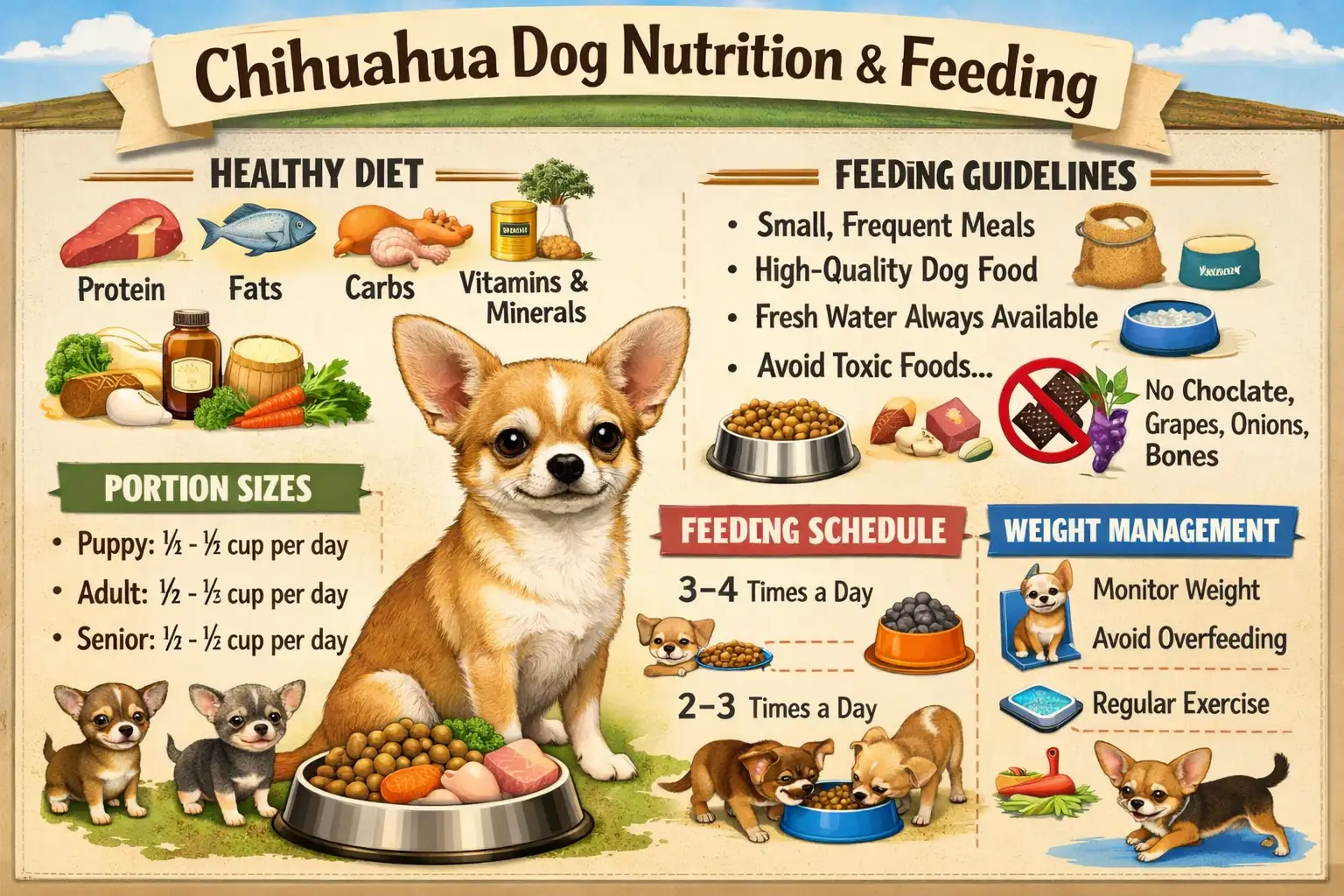
- Keep treats under 10% of daily calories
- Break treats into tiny training pieces
- Avoid sugary, salty, fatty, or heavily processed treats
- Reduce meal portions slightly when giving extra treats
- Use size-appropriate dental chews only
A Chihuahua that begs is not always hungry. Begging often comes from habit, attention-seeking, or getting used to table scraps.
How Much Should a Chihuahua Eat?
How much a Chihuahua should eat depends mainly on weight, age, activity level, metabolism, and whether the dog needs to gain, maintain, or lose weight. Most healthy adult Chihuahuas need about 35–45 calories per pound of body weight per day, including meals and treats.
Use the feeding chart below as a starting point, then adjust based on your Chihuahua’s body condition and your dog food’s calorie label.
Recommended Dog Care Products
Based on your dog’s age, these products may help with comfort, health, grooming, and daily care.
Purina Pro Plan Veterinary Supplements
Daily probiotics for dogs to support digestive and gut health.
View on Amazon ↗
Earth Rated Poop Bags for Dogs
Leak-proof, extra thick waste bag refill rolls with lavender scent.
View on Amazon ↗
Greenies Pill Pockets for Dogs
Large dog treats for capsule medication, peanut butter flavor.
View on Amazon ↗
HONEY CARE All-Absorb Dog Wrap
Small male dog wraps, 50 count, useful for daily care support.
View on Amazon ↗
Seresto Flea & Tick Collar
Flea and tick treatment and prevention for dogs over 18 lbs.
View on Amazon ↗
Milk-Bone MaroSnacks
Small dog treats with real bone marrow in a 40 oz canister.
View on Amazon ↗
Vital Essentials Dog Treats
Freeze dried beef liver dog treats, grain free and single ingredient.
View on Amazon ↗
Stain & Odor Eliminator
Enzyme cleaner for pet stains, carpet messes, and strong odors.
View on Amazon ↗
Pur Luv Chicken Jerky Treats
Dog treats made with real chicken breast, high protein and chew-friendly.
View on Amazon ↗
Milk-Bone Flavor Snacks
Mini crunchy dog biscuits in a 36 oz canister for small rewards.
View on Amazon ↗As an Amazon Associate, we may earn from qualifying purchases.
Chihuahua Feeding Chart by Weight
| Chihuahua Weight | Estimated Daily Calories | Suggested Meal Split |
|---|---|---|
| 2 lb | 70–90 calories | 2–3 small meals |
| 3 lb | 105–135 calories | 2–3 small meals |
| 4 lb | 140–180 calories | 2 meals |
| 5 lb | 175–225 calories | 2 meals |
| 6 lb | 210–270 calories | 2 meals |
| 8 lb | 280–360 calories | 2 meals |
| 10 lb | 350–450 calories | 2 measured meals |
This chart estimates calories, not cups. Cup amounts vary by food brand because some foods are more calorie-dense than others. Always check the calories per cup or calories per can on your dog food label.
Chihuahua Feeding Chart by Age
| Life Stage | Meals Per Day | Feeding Notes |
|---|---|---|
| Chihuahua puppy under 3 months | 4 small meals | Needs frequent meals to support growth and steady blood sugar |
| Chihuahua puppy 3–6 months | 3–4 meals | Use puppy food and monitor weight closely |
| Chihuahua puppy 6–12 months | 2–3 meals | Transition slowly as growth begins to slow |
| Adult Chihuahua | 2 meals | Measure food and adjust based on body condition |
| Senior Chihuahua | 2 smaller meals | May need fewer calories or softer food depending on teeth and activity |
Very small puppies may need food more often than larger puppies. If a Chihuahua puppy becomes weak, shaky, confused, or unusually tired, offer food right away and contact a vet.
How Often to Feed a Chihuahua
Adult Chihuahuas usually do best with two meals per day. Puppies need more frequent meals because they are growing and have smaller energy reserves. Seniors may also do better with smaller meals if they have dental problems, lower appetite, or digestive sensitivity.
- Puppies: 3–4 small meals per day
- Adults: 2 measured meals per day
- Seniors: 2 smaller meals per day, adjusted for activity and weight
Free-feeding is usually not ideal for Chihuahuas because it makes calories harder to control and can lead to picky eating or weight gain.
Portion Size Tips
- Measure food instead of guessing
- Use calories first, then convert to cups based on the food label
- Count treats as part of the daily calorie total
- Adjust portions if weight changes
- Feed on a consistent schedule
- Avoid increasing food only because your Chihuahua begs
How to Tell If You Are Feeding the Right Amount
A healthy Chihuahua should have a visible waist when viewed from above and a slight belly tuck from the side. You should be able to feel the ribs easily, but they should not be sharply visible.
- If ribs are hard to feel, your Chihuahua may be overweight
- If ribs, spine, or hips are very visible, your Chihuahua may be underweight
- If weight changes quickly, review food portions, treats, activity, and health status
Small weight changes matter more in Chihuahuas than in larger dogs. Even half a pound can be significant for a toy breed.
Common Chihuahua Feeding Mistakes
- Guessing portion sizes instead of measuring food
- Using the bag instructions without checking calories
- Giving too many treats or table scraps
- Free-feeding all day
- Switching foods too often
- Feeding adult food to a growing puppy too early
- Ignoring weight gain because the dog still seems small
Good Chihuahua feeding guidelines are simple: choose balanced food, measure portions, feed consistently, limit treats, and adjust based on body condition.
Common Chihuahua Feeding Problems and Special Diet Needs
Many Chihuahua feeding problems are connected to meal timing, portion control, food changes, dental comfort, or too many treats. Because this breed is small and sensitive, problems can show up quickly. The next section explains common issues such as picky eating, low blood sugar, sensitive stomachs, and weight problems.
Common Chihuahua Feeding Problems and What to Do
Chihuahuas can develop feeding problems quickly because they have small stomachs, fast metabolisms, and very little margin for extra calories or missed meals. Most issues are linked to portion size, meal timing, treats, food changes, dental discomfort, or picky eating habits.
| Problem | Possible Cause | What You Can Do |
|---|---|---|
| Won’t eat meals | Too many treats, stress, dental pain, food boredom | Cut back treats, keep a schedule, check teeth, avoid constant food switching |
| Picky eater | Learned behavior, too many food options, table scraps | Serve meals at set times and remove uneaten food after 15–20 minutes |
| Low energy or shaking | Low blood sugar, missed meals, very small body size | Offer food right away, feed smaller meals more often, contact a vet if symptoms continue |
| Loose stool | Food changed too fast, rich food, too many extras | Return to a simple diet and switch foods slowly over 7–10 days |
| Gaining weight | Overfeeding, too many treats, low activity | Measure food, count treats, reduce portions slightly, increase gentle activity |
| Always hungry | Begging habit, low-fiber diet, meals too far apart | Split meals, avoid table scraps, use measured portions only |
| Bad breath or chewing difficulty | Dental buildup, sore teeth, kibble too hard | Try softer texture and schedule a dental check if discomfort continues |
Hypoglycemia in Chihuahuas
Hypoglycemia means low blood sugar. It is especially important in Chihuahua feeding guidelines because puppies and very small adults can be sensitive to long gaps between meals.
Recommended Dog Care Products
Based on your dog’s age, these products may help with comfort, health, grooming, and daily care.
Purina Pro Plan Veterinary Supplements
Daily probiotics for dogs to support digestive and gut health.
View on Amazon ↗
Earth Rated Poop Bags for Dogs
Leak-proof, extra thick waste bag refill rolls with lavender scent.
View on Amazon ↗
Greenies Pill Pockets for Dogs
Large dog treats for capsule medication, peanut butter flavor.
View on Amazon ↗
HONEY CARE All-Absorb Dog Wrap
Small male dog wraps, 50 count, useful for daily care support.
View on Amazon ↗
Seresto Flea & Tick Collar
Flea and tick treatment and prevention for dogs over 18 lbs.
View on Amazon ↗
Milk-Bone MaroSnacks
Small dog treats with real bone marrow in a 40 oz canister.
View on Amazon ↗
Vital Essentials Dog Treats
Freeze dried beef liver dog treats, grain free and single ingredient.
View on Amazon ↗
Stain & Odor Eliminator
Enzyme cleaner for pet stains, carpet messes, and strong odors.
View on Amazon ↗
Pur Luv Chicken Jerky Treats
Dog treats made with real chicken breast, high protein and chew-friendly.
View on Amazon ↗
Milk-Bone Flavor Snacks
Mini crunchy dog biscuits in a 36 oz canister for small rewards.
View on Amazon ↗As an Amazon Associate, we may earn from qualifying purchases.
Low blood sugar is more common in:
- Chihuahua puppies
- Teacup or very small Chihuahuas
- Dogs that skip meals
- Dogs that are sick, stressed, or not eating normally
- Highly active Chihuahuas that are not eating enough
Warning signs may include shaking, weakness, sleepiness, confusion, wobbling, or suddenly lying down. If this happens, offer food right away and contact a vet if your Chihuahua does not quickly improve or if symptoms are severe.
The best prevention is a consistent feeding schedule, especially for puppies. Small, regular meals are safer than one large meal or long gaps without food.
Food Allergies and Sensitive Stomachs
Some Chihuahuas have sensitive stomachs or react poorly to certain foods. This does not always mean a true food allergy. Often, digestive problems come from sudden food changes, too many treats, rich foods, table scraps, or mixing too many ingredients at once.
Common signs of food sensitivity may include:
- Soft stool or diarrhea
- Vomiting
- Gas or stomach noise
- Itchy skin or ears
- Frequent licking or scratching
- Poor appetite after eating certain foods
If your Chihuahua has a sensitive stomach, keep the diet simple. Avoid frequent food changes, limit human food, and introduce any new food slowly. A limited-ingredient small-breed food may help some dogs, but ongoing vomiting, diarrhea, itching, or weight loss should be checked by a vet.
Weight Problems: Too Thin or Too Heavy
Weight control is one of the most important parts of Chihuahua nutrition. Because this breed is so small, even a small amount of extra food can lead to noticeable weight gain over time.
- Overweight Chihuahuas may have more stress on their joints, breathing, heart, and spine.
- Underweight Chihuahuas may have low energy, visible ribs, weakness, or poor muscle condition.
Use body condition, not just the number on the scale. You should be able to feel the ribs easily without them being sharply visible. Your Chihuahua should also have a visible waist from above and a slight belly tuck from the side.
Small changes work best:
- Measure each meal
- Count treats as part of daily calories
- Adjust food slowly instead of making sudden cuts
- Keep meals consistent
- Track weight every few weeks
Never starve a Chihuahua to lose weight. If your dog needs to lose or gain weight, adjust portions gradually and speak with a vet if the change is sudden, extreme, or unexplained.
Switching Chihuahua Food Safely
Sudden food changes are a common cause of loose stool, vomiting, and refusal to eat. When changing your Chihuahua’s food, transition slowly over 7–10 days.
| Day | Old Food | New Food |
|---|---|---|
| Days 1–2 | 75% | 25% |
| Days 3–4 | 50% | 50% |
| Days 5–6 | 25% | 75% |
| Day 7+ | 0% | 100% |
If your Chihuahua develops vomiting, diarrhea, or refuses food during the switch, slow the transition and return to the previous step for a few more days.
Chihuahua Nutrition FAQs, Feeding Tips, and When to See a Vet
These Chihuahua feeding questions cover common concerns about meal frequency, food type, human foods, treats, supplements, and when nutrition problems need professional help.
Common Chihuahua Feeding Questions
Can Chihuahuas eat once a day?
Most adult Chihuahuas do better with two measured meals per day. One meal a day can create long gaps between feedings, which is not ideal for small dogs and may be risky for puppies or very small adults.
How many times a day should a Chihuahua eat?
Adult Chihuahuas usually eat two meals per day. Chihuahua puppies often need three to four small meals per day. Seniors may do best with two smaller meals, especially if they have dental issues or lower appetite.
How much should a Chihuahua eat per day?
Most healthy adult Chihuahuas need about 35–45 calories per pound of body weight per day. The exact amount depends on weight, age, activity level, metabolism, and whether your Chihuahua needs to maintain, gain, or lose weight.
Should Chihuahuas eat wet food or dry food?
Both can work. Dry food is easy to measure and may help reduce dental buildup, while wet food is softer and often more appealing. Many owners use a measured mix of both, but calories from both foods must be counted.
What can I feed my Chihuahua at home?
You can offer small amounts of plain cooked chicken, turkey, egg, rice, pumpkin, carrots, green beans, or apple slices without seeds. These should be occasional extras, not a replacement for complete and balanced dog food.
What foods should Chihuahuas avoid?
Chihuahuas should avoid chocolate, grapes, raisins, onions, garlic, xylitol, alcohol, cooked bones, fatty foods, fried foods, and heavily seasoned table scraps.
Why does my Chihuahua always beg for food?
Begging does not always mean hunger. Chihuahuas may beg because they learned that begging brings attention, treats, or table food. Keep meals measured and avoid rewarding begging with extra food.
Can I free-feed my Chihuahua?
Free-feeding is usually not recommended. It makes calories harder to control and can lead to overeating, picky eating, or weight gain. Scheduled meals are better for most Chihuahuas.
Do Chihuahuas need supplements?
Most Chihuahuas do not need supplements if they eat complete and balanced dog food. Supplements should only be used when recommended for a specific need, especially for puppies, seniors, or dogs with health issues.
Simple Chihuahua Feeding Tips to Remember
- Feed at the same times every day
- Measure food instead of guessing
- Use a Chihuahua feeding chart as a starting point, not a fixed rule
- Count treats as part of daily calories
- Keep human food limited and plain
- Switch foods slowly over 7–10 days
- Always provide fresh water
- Watch weight, appetite, stool quality, and energy levels
Small dogs feel feeding changes faster than larger dogs. A small change in treats, portions, or meal timing can make a big difference for a Chihuahua.
When to See a Vet About Chihuahua Nutrition
Contact a vet if your Chihuahua:
- Refuses food for more than 24 hours
- Has frequent vomiting or diarrhea
- Loses or gains weight quickly
- Shows shaking, weakness, wobbling, or confusion
- Has long-term skin, ear, or stomach problems
- Has trouble chewing or seems painful while eating
- Is a puppy, senior, pregnant dog, or has a known health condition
A vet can help adjust your Chihuahua’s diet safely and check whether symptoms are caused by food, dental disease, digestive problems, or another health issue.
Editorial note: This Chihuahua feeding guide is written for general owner education. Feeding needs can vary by age, weight, activity level, body condition, and health status. For puppies, seniors, pregnant dogs, underweight dogs, overweight dogs, or Chihuahuas with ongoing symptoms, consult a veterinarian before making major diet changes.
Final Thoughts on Chihuahua Feeding Guidelines
Good Chihuahua feeding guidelines come down to balanced food, measured portions, regular meals, limited treats, and careful weight tracking. You do not need trendy food or constant diet changes. What matters most is feeding the right amount consistently for your Chihuahua’s size, age, and activity level.
As your Chihuahua moves from puppyhood to adulthood and senior age, feeding needs can change. Use the Chihuahua Dog Age Calculator to understand your dog’s life stage and support better decisions around food portions, activity, and long-term care.

Ata Ur Rehman is the founder of Pet Age in Human Years Calculator, an educational platform that provides age conversion charts and lifespan guides for dogs, cats, birds, and other companion animals. His work focuses on helping pet owners understand how animal ages translate into human years using commonly accepted age conversion formulas and published lifespan averages.
The website compiles breed and species lifespan data from kennel clubs, breed organizations, and general animal lifespan studies to present simple and easy-to-understand guides for pet owners worldwide.
This website was created to centralize animal age conversion charts into one easy reference platform for pet owners.