Chihuahua Cost of Ownership: Monthly, Yearly, and Lifetime Expenses
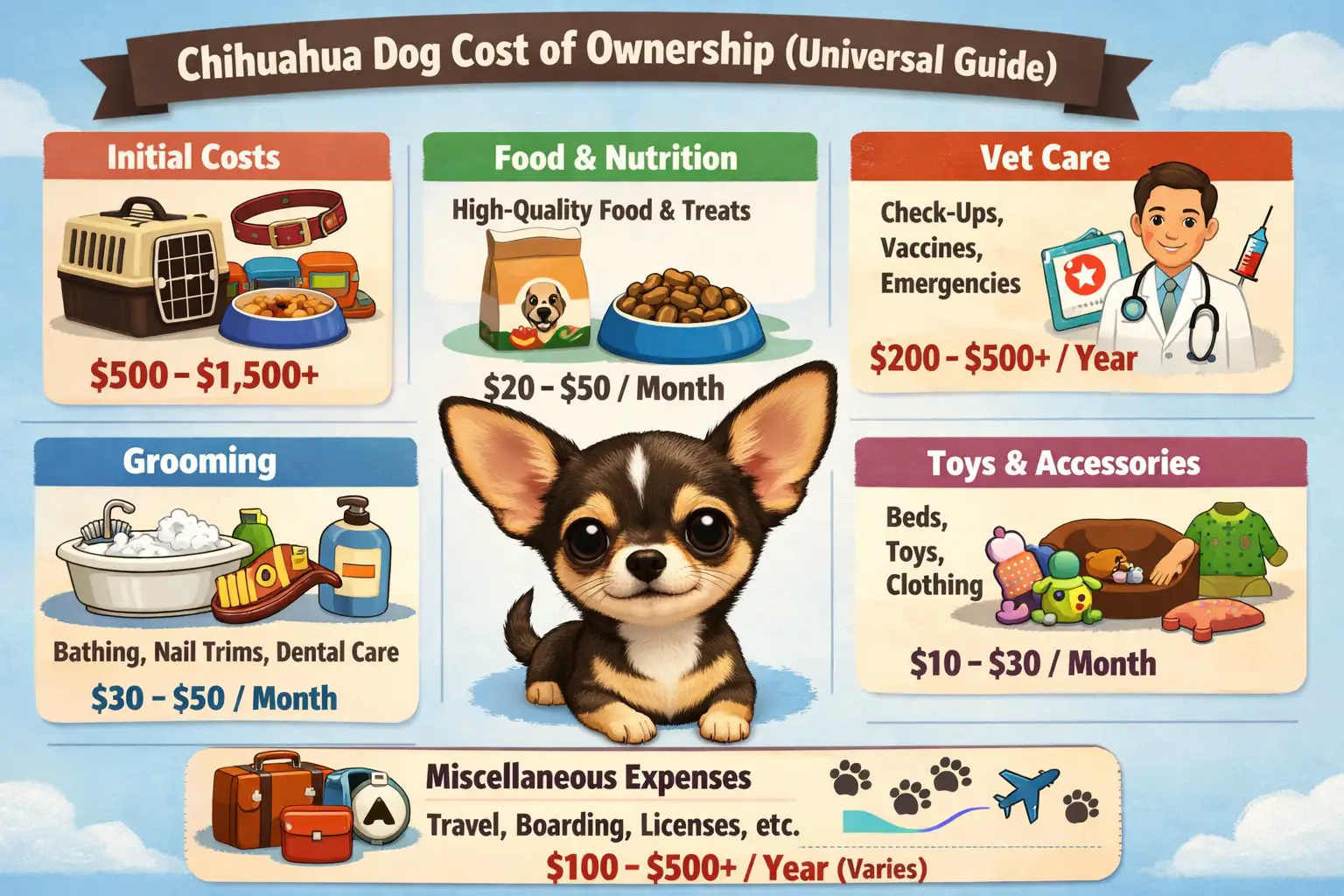
The Chihuahua cost of ownership is usually lower than many larger breeds, but it is not as cheap as many new owners expect. Chihuahuas eat less food because of their small size, but they still need routine vet care, dental care, vaccines, preventatives, supplies, and emergency planning.
Recommended Dog Care Products
Based on your dog’s age, these products may help with comfort, health, grooming, and daily care.

Purina Pro Plan Veterinary Supplements
Daily probiotics for dogs to support digestive and gut health.
View on Amazon ↗
Earth Rated Poop Bags for Dogs
Leak-proof, extra thick waste bag refill rolls with lavender scent.
View on Amazon ↗
Greenies Pill Pockets for Dogs
Large dog treats for capsule medication, peanut butter flavor.
View on Amazon ↗
HONEY CARE All-Absorb Dog Wrap
Small male dog wraps, 50 count, useful for daily care support.
View on Amazon ↗
Seresto Flea & Tick Collar
Flea and tick treatment and prevention for dogs over 18 lbs.
View on Amazon ↗
Milk-Bone MaroSnacks
Small dog treats with real bone marrow in a 40 oz canister.
View on Amazon ↗
Vital Essentials Dog Treats
Freeze dried beef liver dog treats, grain free and single ingredient.
View on Amazon ↗
Stain & Odor Eliminator
Enzyme cleaner for pet stains, carpet messes, and strong odors.
View on Amazon ↗
Pur Luv Chicken Jerky Treats
Dog treats made with real chicken breast, high protein and chew-friendly.
View on Amazon ↗
Milk-Bone Flavor Snacks
Mini crunchy dog biscuits in a 36 oz canister for small rewards.
View on Amazon ↗As an Amazon Associate, we may earn from qualifying purchases.
On average, owning a Chihuahua costs about $80 to $180 per month, around $960 to $2,200 per year, and roughly $12,000 to $30,000+ over a lifetime. The final cost depends on your dog’s age, health, dental needs, insurance choice, breeder or adoption fees, and lifestyle.
Chihuahuas often live 12 to 16 years, so even small monthly expenses can become a major long-term commitment. Dental disease, routine vet visits, emergency care, training, grooming, and travel care are usually the biggest cost drivers—not just food.
Use the quick overview below to understand the expected monthly, yearly, first-year, and lifetime expenses before we break down each category in detail.
Average Chihuahua Cost Overview
| Cost Type | Typical Range |
|---|---|
| Average monthly Chihuahua cost | $80 – $180 |
| Average yearly Chihuahua cost | $960 – $2,200 |
| First-year Chihuahua cost | $600 – $3,700+ |
| Estimated lifetime Chihuahua cost | $12,000 – $30,000+ |
The biggest factors that affect Chihuahua ownership costs include:
- Adoption fee or breeder purchase price
- Routine vet care, vaccines, and preventatives
- Dental cleanings and possible tooth extractions
- Emergency vet visits or unexpected illness
- Pet insurance or out-of-pocket medical planning
- Food quality, grooming, toys, supplies, and training
- Boarding, pet sitting, or travel-related care
A Chihuahua can be affordable with proper budgeting, but skipping preventive care to save money often leads to higher costs later. Dental care is especially important because small breeds are more prone to costly mouth and tooth problems.
Planning long-term costs also depends on your Chihuahua’s age stage. If you want to estimate where your dog is in its life stage, use the Chihuahua Dog Age Calculator before planning senior-care or lifetime expenses.
First-Year and One-Time Costs of Owning a Chihuahua
The first year is usually the most expensive part of Chihuahua ownership. This is when you pay for adoption or purchase, initial vet care, vaccines, spay or neuter surgery, microchipping, and basic supplies.
Most owners should expect the first-year cost of owning a Chihuahua to fall between $600 and $3,700+. The lower end usually applies to adoption from a rescue or shelter, while the higher end often applies to puppies from breeders, especially when more vet visits and setup costs are needed.
Adoption or Breeder Cost
How you get your Chihuahua has the biggest impact on upfront cost.
Recommended Dog Care Products
Based on your dog’s age, these products may help with comfort, health, grooming, and daily care.
Purina Pro Plan Veterinary Supplements
Daily probiotics for dogs to support digestive and gut health.
View on Amazon ↗
Earth Rated Poop Bags for Dogs
Leak-proof, extra thick waste bag refill rolls with lavender scent.
View on Amazon ↗
Greenies Pill Pockets for Dogs
Large dog treats for capsule medication, peanut butter flavor.
View on Amazon ↗
HONEY CARE All-Absorb Dog Wrap
Small male dog wraps, 50 count, useful for daily care support.
View on Amazon ↗
Seresto Flea & Tick Collar
Flea and tick treatment and prevention for dogs over 18 lbs.
View on Amazon ↗
Milk-Bone MaroSnacks
Small dog treats with real bone marrow in a 40 oz canister.
View on Amazon ↗
Vital Essentials Dog Treats
Freeze dried beef liver dog treats, grain free and single ingredient.
View on Amazon ↗
Stain & Odor Eliminator
Enzyme cleaner for pet stains, carpet messes, and strong odors.
View on Amazon ↗
Pur Luv Chicken Jerky Treats
Dog treats made with real chicken breast, high protein and chew-friendly.
View on Amazon ↗
Milk-Bone Flavor Snacks
Mini crunchy dog biscuits in a 36 oz canister for small rewards.
View on Amazon ↗As an Amazon Associate, we may earn from qualifying purchases.
- Adopting a Chihuahua from a shelter or rescue usually costs $100 to $400
- Buying a Chihuahua from a breeder often costs $800 to $2,500+, depending on bloodline, location, demand, and breeder reputation
Adoption can reduce first-year expenses because some rescues include vaccines, spay or neuter surgery, microchipping, or early vet checks in the adoption fee.
Initial Veterinary Care
Initial vet care is not optional. It protects your Chihuahua from preventable illness and helps identify early health concerns before they become expensive.
Common first-year Chihuahua vet costs include:
- Puppy vaccine series or adult booster shots
- Spay or neuter surgery
- Microchipping
- First wellness exams
- Parasite screening and prevention
- Dental checkup or early dental-care planning
These costs are usually higher during the first year than in later years because puppies and newly adopted dogs often need more frequent vet visits.
Setup Supplies and Essentials
Chihuahuas are small, but they still need safe, breed-appropriate supplies. Some items are one-time purchases, while others need replacement as your dog grows or ages.
Typical Chihuahua setup items include:
- Bed and crate
- Food and water bowls
- Small-breed harness, leash, and collar
- Toys and chew items
- Small dog sweaters or jackets for cold weather
- Toothbrush and dog-safe toothpaste
- Puppy pads or house-training supplies if needed
- Car seat, carrier, or travel crate
Chihuahua First-Year Cost Breakdown
| Expense Category | Typical First-Year Cost |
|---|---|
| Adoption or breeder purchase | $100 – $2,500+ |
| Initial vet care | $300 – $700 |
| Supplies and setup | $200 – $500 |
| Training, grooming, and extras | $0 – $300+ |
| Total first-year Chihuahua cost | $600 – $3,700+ |
Puppy vs Adult Chihuahua: First-Year Cost Difference
A Chihuahua puppy usually costs more during the first year than an adult Chihuahua because puppies need more medical visits, more supplies, and more training support.
Puppies often need:
- Full vaccine series
- More frequent wellness exams
- House-training supplies
- Training and socialization
- Replacement harnesses, collars, or beds as they grow
Adult Chihuahuas often have lower first-year costs, especially if adopted from a rescue that already completed vaccines, spay or neuter surgery, and microchipping. However, older adult or senior Chihuahuas may need more dental care or medical testing.
By the end of the first year, most setup costs are complete. After that, the main costs become monthly care, yearly vet visits, dental care, and emergency planning.
Recommended Dog Care Products
Based on your dog’s age, these products may help with comfort, health, grooming, and daily care.
Purina Pro Plan Veterinary Supplements
Daily probiotics for dogs to support digestive and gut health.
View on Amazon ↗
Earth Rated Poop Bags for Dogs
Leak-proof, extra thick waste bag refill rolls with lavender scent.
View on Amazon ↗
Greenies Pill Pockets for Dogs
Large dog treats for capsule medication, peanut butter flavor.
View on Amazon ↗
HONEY CARE All-Absorb Dog Wrap
Small male dog wraps, 50 count, useful for daily care support.
View on Amazon ↗
Seresto Flea & Tick Collar
Flea and tick treatment and prevention for dogs over 18 lbs.
View on Amazon ↗
Milk-Bone MaroSnacks
Small dog treats with real bone marrow in a 40 oz canister.
View on Amazon ↗
Vital Essentials Dog Treats
Freeze dried beef liver dog treats, grain free and single ingredient.
View on Amazon ↗
Stain & Odor Eliminator
Enzyme cleaner for pet stains, carpet messes, and strong odors.
View on Amazon ↗
Pur Luv Chicken Jerky Treats
Dog treats made with real chicken breast, high protein and chew-friendly.
View on Amazon ↗
Milk-Bone Flavor Snacks
Mini crunchy dog biscuits in a 36 oz canister for small rewards.
View on Amazon ↗As an Amazon Associate, we may earn from qualifying purchases.
Monthly and Yearly Chihuahua Expenses
After the first year, Chihuahua ownership costs become more predictable. These recurring expenses include food, preventatives, grooming, routine vet care, dental care, and optional insurance.
Even though Chihuahuas eat less than larger dogs, many expenses do not shrink with body size. Vet exams, dental procedures, diagnostics, emergency care, and insurance can still cost a significant amount.
How Much Does a Chihuahua Cost Per Month?
A Chihuahua usually costs about $80 to $180 per month for normal recurring care. Some owners may spend less in quiet months, while others may spend more if they include pet insurance, grooming, training, medications, or a monthly emergency fund.
| Monthly Expense | Typical Cost Range |
|---|---|
| Food and treats | $15 – $40 |
| Flea, tick, and heartworm prevention | $10 – $30 |
| Grooming and hygiene | $5 – $25 |
| Dental care supplies | $5 – $15 |
| Pet insurance or emergency savings | $20 – $60+ |
| Training, toys, or extras | $0 – $40+ |
| Average monthly Chihuahua cost | $80 – $180 |
Food is one of the lower monthly expenses because Chihuahuas eat small portions. The larger cost risks usually come from vet care, dental disease, insurance decisions, and unexpected emergencies.
Annual Chihuahua Expenses
Some Chihuahua ownership costs are paid once or a few times per year instead of every month. These yearly expenses usually include routine vet exams, vaccinations, dental care, registration, and occasional supply replacement.
On average, the yearly cost of owning a Chihuahua is usually around $960 to $2,200 when monthly expenses, routine vet care, dental planning, and basic yearly care are included.
| Annual Expense | Typical Yearly Cost |
|---|---|
| Routine vet checkups | $100 – $250 |
| Vaccinations and boosters | $50 – $150 |
| Dental care or dental savings | $100 – $400+ |
| License and registration | $10 – $30 |
| Replacement supplies, toys, or clothing | $50 – $200+ |
| Typical yearly non-monthly total | $310 – $1,030+ |
Dental care is one of the most important yearly Chihuahua expenses. Small dogs are more likely to develop dental problems, and professional cleanings or extractions can become expensive if preventive care is skipped.
Why Small Dogs Are Not Always Cheap to Own
Many owners assume a Chihuahua will be cheap because it is a small dog. Food costs are usually lower, but many other expenses do not decrease much with size.
The main reason Chihuahua ownership costs can still feel high is that medical care, diagnostics, dental treatment, and emergency services often cost similar amounts for small and large dogs.
- Vet exams usually cost the same regardless of dog size
- Emergency clinics use the same tests, imaging, and monitoring equipment
- Dental cleanings may require anesthesia and professional treatment
- Small dogs can still develop chronic health problems
- Long lifespans mean more years of recurring care
This is why a Chihuahua can be affordable month to month but still require serious long-term budgeting.
Recommended Dog Care Products
Based on your dog’s age, these products may help with comfort, health, grooming, and daily care.
Purina Pro Plan Veterinary Supplements
Daily probiotics for dogs to support digestive and gut health.
View on Amazon ↗
Earth Rated Poop Bags for Dogs
Leak-proof, extra thick waste bag refill rolls with lavender scent.
View on Amazon ↗
Greenies Pill Pockets for Dogs
Large dog treats for capsule medication, peanut butter flavor.
View on Amazon ↗
HONEY CARE All-Absorb Dog Wrap
Small male dog wraps, 50 count, useful for daily care support.
View on Amazon ↗
Seresto Flea & Tick Collar
Flea and tick treatment and prevention for dogs over 18 lbs.
View on Amazon ↗
Milk-Bone MaroSnacks
Small dog treats with real bone marrow in a 40 oz canister.
View on Amazon ↗
Vital Essentials Dog Treats
Freeze dried beef liver dog treats, grain free and single ingredient.
View on Amazon ↗
Stain & Odor Eliminator
Enzyme cleaner for pet stains, carpet messes, and strong odors.
View on Amazon ↗
Pur Luv Chicken Jerky Treats
Dog treats made with real chicken breast, high protein and chew-friendly.
View on Amazon ↗
Milk-Bone Flavor Snacks
Mini crunchy dog biscuits in a 36 oz canister for small rewards.
View on Amazon ↗As an Amazon Associate, we may earn from qualifying purchases.
Major Cost Drivers That Affect Chihuahua Ownership Costs
Not every owner spends the same amount on a Chihuahua. The total cost depends on your dog’s health, age, dental needs, insurance coverage, lifestyle, location, and whether you adopted an adult dog or bought a puppy from a breeder.
Understanding these cost drivers helps you plan for both predictable expenses and surprise bills.
Common Chihuahua Health Costs
Chihuahuas are small, but they can still have health problems that require regular care. The most common cost risks are dental disease, knee problems, heart conditions, and emergency treatment.
| Common Health Issue | Typical Cost Range |
|---|---|
| Dental disease, cleanings, or extractions | $300 – $1,000+ per treatment |
| Knee problems such as patellar luxation | $1,000 – $4,000+ if surgery is needed |
| Heart conditions or long-term monitoring | $200 – $1,000+ per year |
| Emergency vet visit | $500 – $3,000+ |
Dental care is often the biggest long-term cost risk for Chihuahuas. Brushing your dog’s teeth, scheduling dental checks, and treating problems early can reduce the chance of larger bills later.
Emergency Vet Costs for Chihuahuas
Emergency vet costs are one of the biggest financial shocks for Chihuahua owners. Accidents, sudden illness, poisoning, injuries, breathing trouble, digestive problems, or severe dental infections can require urgent care.
Even though Chihuahuas are small, emergency care may still involve:
- X-rays or ultrasound
- Blood tests and lab work
- IV fluids
- Pain medication or antibiotics
- Overnight monitoring
- Surgery or specialist referral in serious cases
A single emergency visit can cost $500 to $3,000+, depending on the problem and treatment needed. This is why many owners either keep an emergency fund or consider pet insurance.
Pet Insurance Cost for Chihuahuas
Pet insurance can increase your monthly Chihuahua expenses, but it may reduce the financial pressure of large emergency or illness-related vet bills.
| Insurance Type | Typical Monthly Cost |
|---|---|
| Basic accident-only plan | $10 – $20 |
| Accident and illness plan | $20 – $40 |
| Higher coverage with lower deductible | $40 – $60+ |
Insurance may make sense for Chihuahua owners because the breed often has a long lifespan, dental issues can become expensive, and emergency care can cost far more than routine monthly expenses.
Before choosing insurance, compare deductibles, exclusions, reimbursement limits, waiting periods, and whether dental illness or hereditary conditions are covered.
Lifestyle and Living Situation
Your lifestyle also affects the total cost of owning a Chihuahua. Two owners may have the same breed but very different yearly expenses depending on where they live and how much outside care they need.
- City owners may pay higher vet, grooming, boarding, and daycare prices
- Frequent travel can add boarding, pet sitting, or transport costs
- Apartment living may require extra training for barking or separation anxiety
- Cold climates may require sweaters, jackets, boots, or indoor enrichment
- Busy owners may spend more on dog walkers or daytime care
Owners who travel often, live in expensive cities, or need regular help with care usually spend more over the dog’s lifetime.
Lifetime Cost, Hidden Expenses, and Budgeting for Chihuahuas
Owning a Chihuahua is a long-term financial commitment. Most Chihuahuas live 12 to 16 years, which means monthly, yearly, medical, and hidden expenses can add up over a long period.
Before planning lifetime costs, it helps to understand your dog’s current age stage. You can use the Chihuahua Dog Age Calculator to estimate whether your dog is in a puppy, adult, mature, or senior life stage.
Lifetime Cost of Owning a Chihuahua
The lifetime cost of owning a Chihuahua is usually between $12,000 and $30,000+. The lower end usually applies to very healthy dogs with basic care needs, while the higher end applies to dogs with dental disease, chronic health issues, emergencies, or frequent paid care.
| Cost Scenario | Estimated Lifetime Cost |
|---|---|
| Low-cost, very healthy Chihuahua | $12,000 – $15,000 |
| Average care and routine vet needs | $15,000 – $22,000 |
| Higher medical needs, dental problems, or emergencies | $22,000 – $30,000+ |
Dogs with recurring dental disease, knee problems, heart conditions, allergies, or emergency visits usually fall into the higher lifetime-cost range.
Hidden Costs Many Chihuahua Owners Forget
Some Chihuahua expenses are easy to miss because they do not happen every month. These hidden costs can still become expensive when they appear suddenly.
Common hidden Chihuahua ownership expenses include:
- Dental cleanings and tooth extractions
- Emergency vet visits
- Replacement beds, toys, harnesses, or clothing
- Boarding or pet sitting during travel
- Medications for allergies or long-term conditions
- Cold-weather clothing for winter months
- Training for barking, anxiety, or house-training issues
- Senior care, extra testing, or mobility support later in life
These costs may not happen every year, but they should still be part of your Chihuahua budget because they can quickly change the total cost of ownership.
Smart Budgeting Tips for Chihuahua Owners
Good budgeting can lower financial stress without reducing your dog’s quality of care. The goal is not to spend the least possible amount, but to avoid preventable expensive problems.
Helpful Chihuahua budgeting tips include:
- Set aside a monthly emergency fund for unexpected vet bills
- Brush your Chihuahua’s teeth regularly to reduce dental risks
- Keep up with vaccines, checkups, and parasite prevention
- Compare insurance early, before health problems appear
- Buy quality food in appropriate small-breed portions
- Use durable supplies instead of repeatedly replacing cheap items
- Plan extra care costs as your Chihuahua becomes a senior
Final Reality Check
Chihuahuas can be affordable compared with some larger breeds, but they are not cost-free pets. The true Chihuahua cost of ownership comes from long-term care, dental health, vet visits, emergency planning, and lifestyle needs.
If you plan for monthly expenses, yearly care, and unexpected medical costs, a Chihuahua can be a manageable and rewarding companion. The safest approach is to budget for routine care first, then keep a backup plan for emergencies and senior years.

Ata Ur Rehman is the founder of Pet Age in Human Years Calculator, an educational platform that provides age conversion charts and lifespan guides for dogs, cats, birds, and other companion animals. His work focuses on helping pet owners understand how animal ages translate into human years using commonly accepted age conversion formulas and published lifespan averages.
The website compiles breed and species lifespan data from kennel clubs, breed organizations, and general animal lifespan studies to present simple and easy-to-understand guides for pet owners worldwide.
This website was created to centralize animal age conversion charts into one easy reference platform for pet owners.