In This Guide:
- Understanding the Bichon Frise Coat
- Home Grooming Routine
- Brushing Frequency
- Bathing Schedule
- Preventing Matting
- Haircuts & Grooming Styles
- Professional Grooming
- Frequently Asked Questions
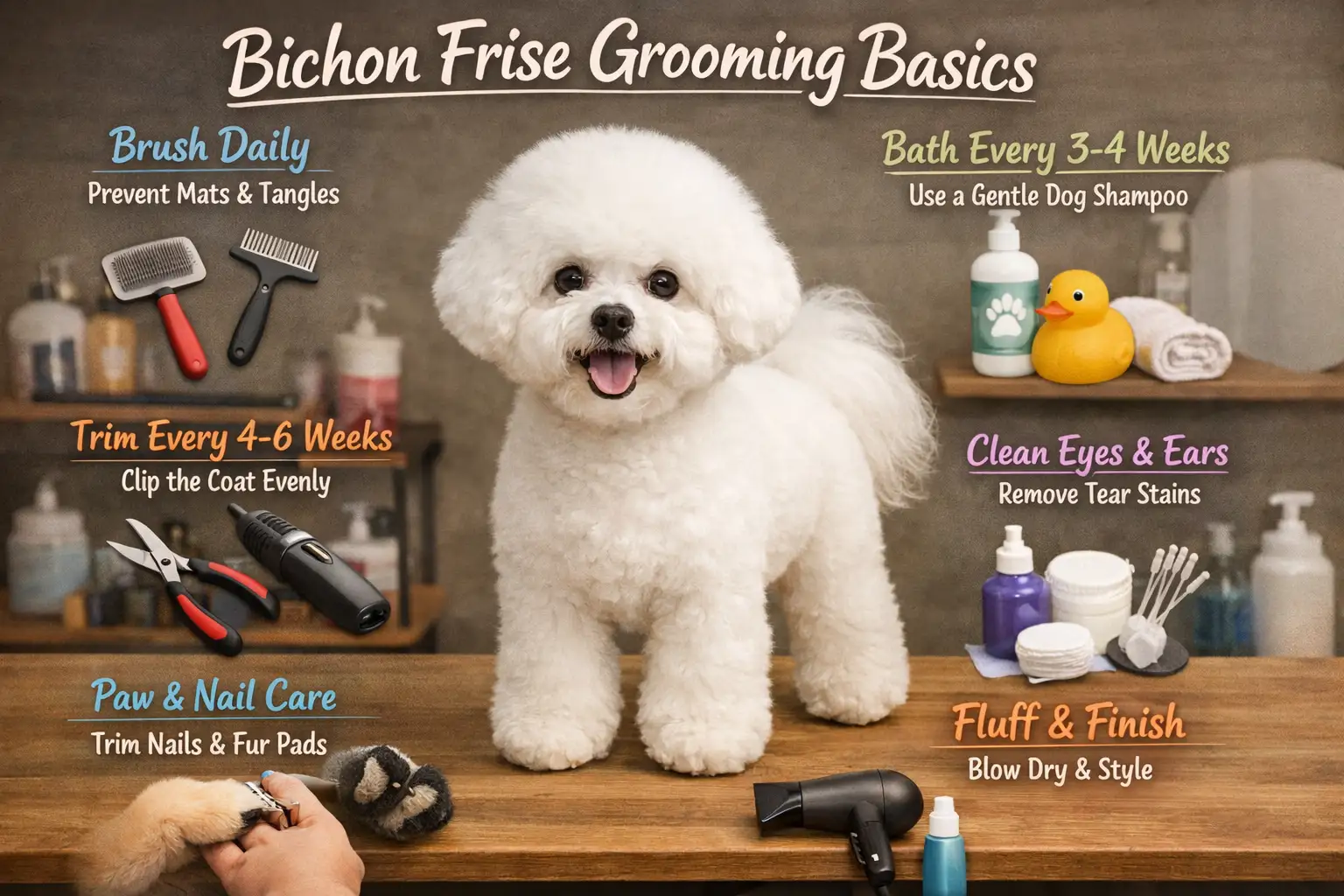
Bichon Frise grooming is not optional or cosmetic — it is a core part of keeping this breed healthy, comfortable, and happy. Bichon Frise grooming includes regular brushing, bathing, trimming, nail care, ear cleaning, and coat maintenance to prevent matting and skin problems. Because their curly coat grows continuously and traps loose hair, this breed requires consistent grooming every week and professional trimming every 4–6 weeks. Although Bichons are small and low-shedding, their unique curly, hair-like coat requires consistent care to prevent matting, skin problems, and discomfort.
Many owners are surprised to learn that Bichon Frise dogs often need more grooming attention than shedding breeds. Their coat continuously grows, traps moisture and debris, and tangles easily if brushing or bathing is skipped. Without proper grooming, mats can form close to the skin, pulling painfully, restricting movement, and creating an environment where bacteria and yeast thrive.

Regular grooming supports your Bichon Frise in several important ways:
- Maintains a soft, tangle-free coat that stays comfortable against the skin
- Reduces painful matting and the need for emergency shaving
- Helps prevent skin irritation, hot spots, and infections
- Keeps the face clean, especially around the eyes where tear staining is common
- Allows early detection of skin issues, parasites, lumps, or injuries
- Improves overall comfort, mobility, and behavior
From a groomer’s perspective, many behavior issues seen on the grooming table — pulling away, snapping, or extreme anxiety — often come from dogs that are already uncomfortable due to mats, overgrown nails, or sore skin. Consistent grooming at home helps your Bichon Frise feel relaxed, confident, and cooperative during both home care and professional grooming visits.
This grooming guide is based on established breed care standards and real-world grooming practices used by professional groomers. It focuses on safe, practical techniques that protect your Bichon Frise’s coat and skin while reducing stress during grooming sessions.
Bichon Frise grooming requires brushing 3–5 times per week, bathing every 3–4 weeks, regular nail trimming, ear cleaning, and professional haircuts every 4–6 weeks. Because their curly coat grows continuously and traps loose hair, consistent grooming prevents matting, skin irritation, and discomfort.
Understanding the Bichon Frise Coat and Grooming Needs
The Bichon Frise has a curly, soft, hair-like coat that is very different from most dogs. This coat does not shed much, but it keeps growing all the time, just like human hair. Because of this, Bichon Frise grooming needs are higher than many owners expect.
Even though you may not see much hair on your furniture, loose hair stays trapped inside the curls. When that loose hair mixes with dirt, moisture, and movement, it turns into knots and mats. Mats often form close to the skin and can become painful if not removed early.
Bichon Frise coats also hold moisture easily. If the coat stays damp after a bath or walk, it can lead to:
- Skin irritation
- Yeast or bacterial infections
- Bad odor
- Itchy or sore skin
This is why brushing, proper bathing, and full drying are very important for this breed.
Key coat traits and what they mean for grooming
| Coat trait | What it means for your dog | Grooming impact |
|---|---|---|
| Curly coat | Hair twists and tangles easily | Needs frequent brushing |
| Low shedding | Loose hair stays in coat | Mats form faster |
| Continuous growth | Hair never stops growing | Regular trims needed |
| Dense texture | Traps dirt and moisture | Thorough drying is required |
Many people believe Bichon Frise dogs are “easy” because they do not shed much. In reality, less shedding means more brushing, not less grooming.
Another common myth is that shaving the coat makes grooming easier. Shaving may remove mats, but it can also:
- Change coat texture
- Increase sunburn risk
- Reduce natural skin protection
A healthy Bichon Frise coat is best maintained with regular brushing, proper bathing, and scheduled grooming, not frequent shaving.
Understanding how the Bichon Frise coat works helps you make better grooming choices and avoid common mistakes that lead to skin problems or painful matting.
Essential Bichon Frise Grooming Routine at Home
A good home grooming routine keeps your Bichon Frise comfortable between professional grooming visits. You do not need to do everything every day, but small, regular care prevents big problems like painful mats or skin infections.
This routine focuses on brushing, bathing, and basic coat care that most owners can safely do at home.
How to Groom a Bichon Frise (Step-by-Step)
If you are wondering how to groom a Bichon Frise properly, follow these safe and simple steps:
- Brush the coat thoroughly before bathing. Remove all tangles using a slicker brush and metal comb. Never bathe a matted coat.
- Bathe with dog-safe shampoo. Use warm water and rinse completely to avoid residue buildup.
- Towel dry, then fully dry with cool air. The coat must be completely dry to prevent matting and odor.
- Comb through again after drying. This ensures no hidden tangles remain close to the skin.
- Trim nails carefully. Cut small amounts and avoid the pink quick inside the nail.
- Clean ears and wipe the face. Use dog-safe cleaner and keep hair away from the eyes.
- Schedule professional trimming every 4–6 weeks. Regular haircuts maintain coat shape and health.
Following this step-by-step grooming process keeps your Bichon Frise comfortable, clean, and free from painful mats.
How often should you groom a Bichon Frise?
The table below shows how often common grooming tasks should be done. This helps you plan your routine without guessing.
| Grooming task | How often | Why it matters |
|---|---|---|
| Brushing | 3–5 times a week | Prevents mats and tangles |
| Full comb check | 1–2 times a week | Finds hidden knots close to skin |
| Bathing | Every 3–4 weeks | Keeps skin clean and healthy |
| Drying after bath | Every bath | Wet coat causes matting and odor |
| Professional grooming | Every 4–6 weeks | Haircut, shaping, deep care |
Skipping brushing for even one week can allow mats to form, especially behind the ears, under the legs, and around the collar area.
Grooming tools you actually need
Using the right tools makes grooming easier and safer. You do not need many tools, but each one has a purpose.
| Tool | What it is used for | Important notes |
|---|---|---|
| Slicker brush | Removes tangles and loose hair | Use gentle pressure |
| Metal comb | Finds small hidden mats | Must reach skin |
| Dog shampoo | Cleans coat and skin | Use dog-only shampoo |
| Towel | Removes water after bath | Press, do not rub |
| Dog dryer or cool air | Dries coat fully | Never use hot air |
What Is the Best Brush for a Bichon Frise?
The best brush for a Bichon Frise is a high-quality slicker brush paired with a metal comb. A slicker brush gently removes tangles and loose hair trapped inside the curls, while a metal comb helps detect small mats close to the skin that brushes may miss.
Always choose a slicker brush with fine, flexible pins and use light pressure to avoid skin irritation. The comb should glide smoothly through the coat all the way to the skin without snagging.
Avoid human shampoo. Dog skin has a different pH, and human products can cause dryness and itching.
Brushing your Bichon Frise
Brushing should be slow and gentle. Always brush before bathing, never after a bath on a tangled coat.
Basic brushing tips:
- Brush in small sections
- Start from the ends of the hair and work toward the skin
- Follow with a comb to check for missed knots
- Stop if your dog shows pain or stress
If you find tight mats close to the skin, do not cut them with scissors. This can easily cause injuries.
How Often Should You Brush a Bichon Frise?
A Bichon Frise should be brushed 3–5 times per week. Frequent brushing prevents mats from forming close to the skin and removes loose hair trapped inside the curls.
If your dog has a longer coat or is between professional grooming appointments, daily brushing may be necessary to keep the coat soft, clean, and tangle-free.
Bathing and drying basics
Bathing helps remove dirt, oil, and allergens, but bathing too often can dry the skin.
Safe bathing tips:
- Use warm (not hot) water
- Wet the coat fully to the skin
- Rinse very well to avoid soap residue
- Towel dry first, then dry fully with air
A Bichon Frise must be completely dry after a bath. Leaving the coat damp can cause odor, itching, and matting within hours.
How Often Should You Bathe a Bichon Frise?
A Bichon Frise should be bathed every 3–4 weeks. This schedule keeps the coat clean without drying out the skin. Bathing too often can cause irritation, while waiting too long allows dirt, oil, and trapped hair to build up inside the curls.
If your Bichon gets dirty frequently, you can rinse with water between baths, but full shampooing should generally stay within the 3–4 week range unless advised by a veterinarian.
This home routine keeps your dog comfortable and makes professional grooming easier and less stressful.
Consistent Bichon Frise grooming also supports long-term coat quality, skin protection, and overall hygiene. When brushing, bathing, trimming, and routine checks are done on schedule, the coat remains soft, manageable, and free from painful tangles. A structured grooming routine prevents emergency shaving and helps maintain the breed’s naturally healthy appearance.
How to Prevent Matting in a Bichon Frise
Matting is one of the most common grooming problems in Bichon Frise dogs. Because their curly coat traps loose hair and moisture, mats can form quickly if brushing is skipped.
To prevent matting:
- Brush 3–5 times per week using a slicker brush and metal comb.
- Always brush before bathing.
- Dry the coat completely after every bath.
- Pay special attention to friction areas like behind the ears, under the legs, and around the collar.
- Maintain professional grooming appointments every 4–6 weeks.
Consistent grooming prevents tight mats from forming close to the skin, reducing discomfort and avoiding the need for shaving.
Face, Nails, Ears, Teeth, and Skin Care for Bichon Frise
Some parts of a Bichon Frise need extra care because they are sensitive. These areas are often where problems start if grooming is skipped. Checking them often helps keep your dog healthy and comfortable.
Face and eye care
Bichon Frise dogs often get tear stains around the eyes. This happens when moisture and bacteria build up in the fur.
Simple face care tips:
- Gently wipe the eye area every day with a clean, damp cloth
- Keep hair trimmed away from the eyes
- Never use harsh cleaners or human wipes
- Watch for redness, swelling, or bad smell
If tear stains are heavy or the eyes look sore, a vet check is important.
Nail trimming and paw care
Long nails can make walking painful and change how your dog stands.
Basic nail care:
- Trim nails every 3–4 weeks
- Nails should not touch the floor when standing
- Go slow and trim small amounts
- Stop if you see pink tissue inside the nail
Also check paw pads for cracks, redness, or objects stuck between toes.
Ear cleaning
Bichon Frise dogs have floppy ears, which can trap moisture.
Safe ear care:
- Check ears once a week
- Clean only the outer ear with dog-safe cleaner
- Never push cotton swabs deep into the ear
- Watch for bad smell, redness, or head shaking
These signs may mean an ear infection and need a vet visit.
Teeth and mouth care
Dental care is often missed but very important.
Easy dental habits:
- Brush teeth with dog toothpaste 2–3 times a week
- Use dental chews made for dogs
- Watch for bad breath, red gums, or loose teeth
Skin health warning signs
While grooming, look for:
- Red or itchy skin
- Flakes or scabs
- Hair loss
- Hot spots
- Strong odor
Early signs are easier to treat than serious skin problems.
Proper nutrition also plays a major role in coat and skin health. Learn what to feed your dog in our detailed Bichon Frise nutrition guide to support a healthy coat from the inside out.
Regular checks during grooming help catch problems early and keep your Bichon Frise feeling good.
Popular Bichon Frise Haircuts and Grooming Styles
When discussing Bichon Frise grooming, haircut style is an important part of coat maintenance. Because the coat grows continuously, regular trimming helps maintain shape, hygiene, and comfort.
Puppy Cut
The puppy cut keeps the coat evenly trimmed short across the body, making daily brushing easier and reducing matting risk. This is one of the most popular grooming styles for pet owners.
Teddy Bear Cut
This style leaves the face rounded and soft while keeping the body moderately trimmed. It maintains the breed’s fluffy appearance while remaining manageable.
Show Cut
The show cut features a fuller, rounded coat shaped carefully to breed standards. It requires frequent brushing and professional grooming to maintain proper form.
Your groomer can recommend the best haircut based on your dog’s coat condition, lifestyle, and how much daily maintenance you prefer.
Professional Grooming, Common Mistakes, and Grooming FAQs
Even with good home care, Bichon Frise dogs still need professional grooming. Their coat grows nonstop and needs proper trimming and shaping that most owners cannot safely do at home.
Home grooming vs professional grooming
Home grooming is great for daily care, but some tasks are better left to trained groomers.
| Grooming task | Safe to do at home | Better with a professional groomer |
|---|---|---|
| Brushing and combing | Yes | — |
| Bathing and drying | Yes | — |
| Face cleaning | Yes | — |
| Nail trimming | Sometimes | If unsure or dog resists |
| Full haircut | No | Yes |
| Mat removal | No | Yes |
Professional groomers have the tools and training to remove mats safely, trim the coat evenly, and check skin health.
Most Bichon Frise dogs should see a groomer every 4–6 weeks.
Professional grooming is also an important part of long-term ownership costs. To plan ahead, review our guide on Bichon Frise cost of ownership, including grooming expenses and routine care.
Common Bichon Frise grooming mistakes
These are mistakes groomers see very often:
- Skipping brushing because the dog “doesn’t shed”
- Bathing without brushing first
- Leaving the coat damp after a bath
- Using human shampoo
- Cutting mats with scissors
- Waiting too long between grooming visits
These mistakes can lead to pain, skin infections, or the need for a full shave.
Grooming puppies, adults, and seniors
- Puppies need short, positive grooming sessions to build trust
- Grooming needs also change as your dog ages. Use our Bichon Frise age calculator to better understand your dog’s life stage and adjust grooming routines accordingly.
- Adult Bichons need a steady routine to prevent matting
- Senior dogs may need gentler handling and shorter sessions
Starting grooming early makes life easier for both the dog and the owner.
Building positive grooming habits works best when combined with proper training. If you’re raising a young dog, read our Bichon Frise training guide to help your puppy become calm and cooperative during grooming sessions.
How Long Does It Take to Groom a Bichon Frise?
Grooming a Bichon Frise at home usually takes 10–20 minutes for brushing sessions. A full professional grooming appointment typically takes 2–3 hours, depending on coat condition and matting.
If the coat is heavily tangled, grooming may take longer because mats must be removed carefully to avoid discomfort. Regular maintenance significantly reduces grooming time.
When should I see a vet?
If you notice skin sores, strong odor, hair loss, ear pain, or constant itching.
Frequently Asked Questions About Bichon Frise Grooming
Does a Bichon Frise shed?
Bichon Frise dogs shed very little. However, loose hair becomes trapped inside their curly coat, which is why regular brushing is necessary to prevent matting.
How often should a Bichon Frise be groomed?
A Bichon Frise should be brushed 3–5 times per week and professionally groomed every 4–6 weeks to maintain coat health and prevent mats.
Can I shave my Bichon Frise?
Shaving may be necessary for severe matting, but it should not be a routine grooming method. Regular brushing and scheduled trims are safer for maintaining coat quality.
What happens if a Bichon Frise is not groomed regularly?
Without regular grooming, mats can form close to the skin, leading to discomfort, restricted movement, skin irritation, and infections.
Final thoughts
Bichon Frise grooming is about regular care, patience, and the right routine. With proper brushing, bathing, and professional support, your dog can stay clean, healthy, and comfortable year-round.
About the Author: This article was written based on established breed care standards and professional grooming practices to help Bichon Frise owners maintain healthy coats and prevent matting.
To learn more about safe grooming practices and overall dog care from a trusted authority, you can also visit the American Kennel Club’s guide to dog grooming here:
https://www.akc.org/expert-advice/health/dog-grooming-basics/

Ata Ur Rehman is the founder of Pet Age in Human Years Calculator, an educational platform that provides age conversion charts and lifespan guides for dogs, cats, birds, and other companion animals. His work focuses on helping pet owners understand how animal ages translate into human years using commonly accepted age conversion formulas and published lifespan averages.
The website compiles breed and species lifespan data from kennel clubs, breed organizations, and general animal lifespan studies to present simple and easy-to-understand guides for pet owners worldwide.
This website was created to centralize animal age conversion charts into one easy reference platform for pet owners.