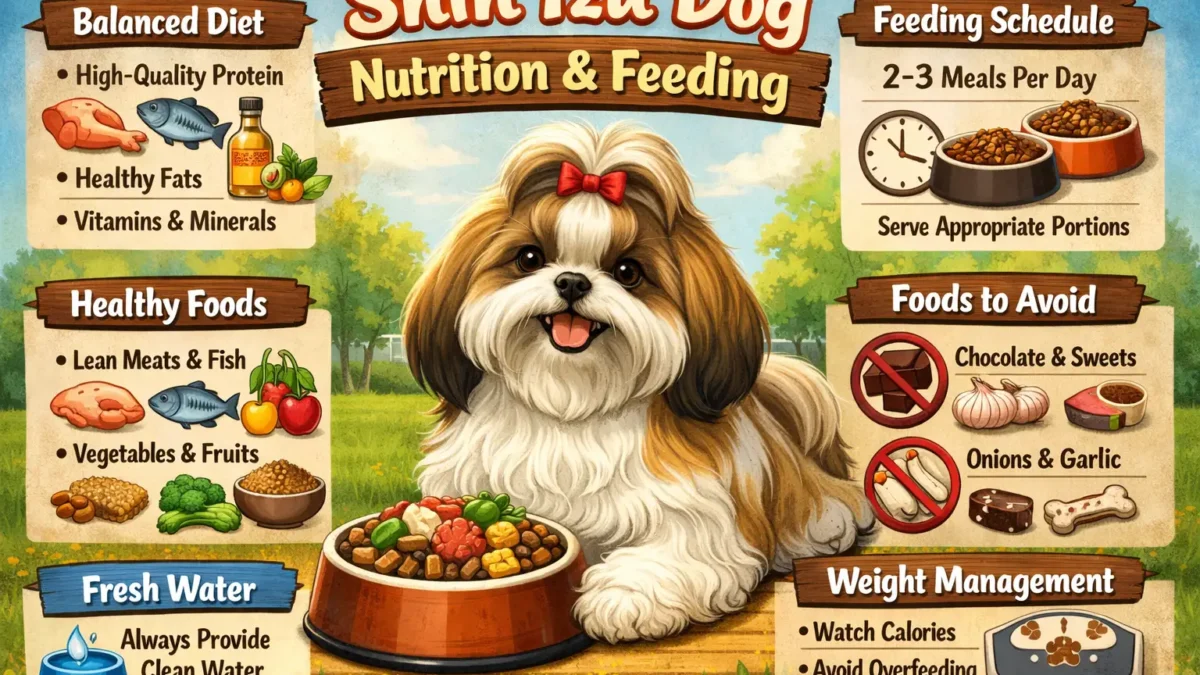
Shih Tzu Dog Nutrition and Feeding Guide
Proper nutrition is one of the biggest factors influencing a Shih Tzu’s health, comfort, and lifespan. Because Shih Tzus are a small, brachycephalic (flat-faced) breed with a naturally lower calorie requirement, even minor feeding mistakes can quickly lead to weight gain, digestive trouble, dental issues, or skin and coat problems. What you put in the bowl—and how much—matters more for this breed than many owners realize.
Many Shih Tzus appear “naturally fluffy,” which can mask early weight gain. By the time excess fat is obvious, the dog may already be dealing with joint strain, reduced stamina, or breathing discomfort. On the other end, underfeeding or poor-quality diets can show up as low energy, dull coats, tear staining, frequent soft stools, or picky eating habits.
Good nutrition for a Shih Tzu isn’t about chasing trends or buying the most expensive food. It’s about matching calories, nutrients, and feeding habits to a small dog with a slow-to-moderate metabolism and a sensitive digestive system.
A well-balanced diet helps support:
- Stable, healthy body weight without constant hunger
- Smooth digestion and firm stools
- Healthy skin and a glossy coat
- Reduced tear staining linked to diet sensitivity
- Steady energy levels without hyperactivity
- Better dental health and easier chewing
Poor nutrition, on the other hand, often leads to:
- Rapid weight gain from slight overfeeding
- Begging behavior caused by calorie imbalance
- Gas, bloating, or loose stool
- Skin irritation, itching, or excessive shedding
- Picky eating and food refusal
- Increased risk of long-term health issues
This guide is designed to help Shih Tzu owners make confident, practical feeding decisions. It focuses on what actually works in daily life—choosing appropriate foods, feeding the right amounts, avoiding common mistakes, and understanding when a diet is or isn’t working. Whether you have a growing puppy, a laid-back adult, or a slowing senior, the goal is the same: a diet that supports long-term health without unnecessary complexity.
What to Feed a Shih Tzu: Nutritional Needs and Best Food Choices
Feeding a Shih Tzu is not about finding a “perfect” food. It is about giving the right nutrients, in the right balance, for a small dog with a sensitive stomach and low calorie needs. Shih Tzus do best on simple, well-balanced diets made for small breeds.
Basic nutritional needs of a Shih Tzu
Shih Tzus need food that supports:
- Lean muscle, not excess fat
- Easy digestion
- Healthy skin and long coat
- Strong teeth and bones
Too much food or the wrong balance can cause fast weight gain, soft stool, or picky eating.
Ideal nutrient balance for Shih Tzus
Shih Tzus do not need extreme protein or very rich food. Balance matters more than high numbers.
Ideal Nutrient Ranges for Shih Tzus
| Nutrient | Recommended Range | Why It Matters |
|---|---|---|
| Protein | 22–28% | Supports muscle and coat without stressing digestion |
| Fat | 10–16% | Provides energy but helps prevent weight gain |
| Carbohydrates | Moderate | Gives energy and supports gut health |
| Fiber | 3–5% | Helps digestion and stool quality |
| Moisture | Higher is helpful | Supports hydration and digestion |
Best dog food types for Shih Tzus
Different food types can work well for Shih Tzus. The best choice depends on digestion, teeth, lifestyle, and budget.
Best Dog Food Types for Shih Tzus (Pros and Cons)
| Food Type | Pros | Cons |
|---|---|---|
| Dry kibble | Easy to store, helps clean teeth, affordable | Low moisture, may be hard for some dogs to chew |
| Wet/canned | Soft texture, good hydration, tasty | Higher cost, does not clean teeth |
| Fresh food | High quality, very digestible | Expensive, short shelf life |
| Freeze-dried | Lightweight, high nutrition | Needs rehydration, higher cost |
| Raw | High protein, fewer fillers | Safety risks if not balanced |
| Homemade | Full ingredient control | Risk of missing nutrients without vet guidance |
Kibble size and texture matter
Shih Tzus have short noses and small mouths. Large or very hard kibble can be hard to chew and may cause choking or food refusal. Small-breed kibble or soft food textures are usually easier for them to eat.
How to read dog food labels (simple guide)
Dog food labels can be confusing. Many words are marketing, not facts.
Dog Food Label Cheat Sheet for Shih Tzu Owners
| Label Item | What to Look For | What to Avoid |
|---|---|---|
| First ingredient | Named meat (chicken, turkey, fish) | “Meat by-products” |
| Protein source | Clear and specific | Vague terms like “animal protein” |
| Fat source | Named fats (chicken fat, fish oil) | Unnamed fats |
| Claims | “Complete and balanced” | Extreme promises |
| Breed wording | “Small breed” is helpful | Buzzwords without proof |
Key reminder for owners
The best food for a Shih Tzu:
- Meets small-breed nutrition needs
- Is easy to chew and digest
- Fits the dog’s activity level
- Keeps weight stable and stool firm
Expensive does not always mean better. What matters is how your Shih Tzu looks, feels, and acts on the food.
How Much to Feed a Shih Tzu and How Often
One of the most common feeding mistakes with Shih Tzus is giving too much food. Because they are small dogs, even a little extra food each day can lead to weight gain over time. Feeding the right amount helps your Shih Tzu stay active, healthy, and comfortable.
Why portion control is important
Shih Tzus burn fewer calories than many larger dogs. They are often indoor dogs and may not get a lot of daily exercise. This means their food portions must be smaller and carefully measured.
Signs you may be feeding too much include:
- Weight gain or a round belly
- Heavy breathing after light activity
- Less interest in playing
- Begging even after meals
Daily calorie needs for Shih Tzus
Calorie needs depend on body weight and activity level. A calm indoor Shih Tzu needs fewer calories than a playful or very active one.
Shih Tzu Daily Calorie Needs by Weight and Activity
| Shih Tzu Weight | Low Activity | Normal Activity | High Activity |
|---|---|---|---|
| 8 lb (3.6 kg) | 250–300 kcal | 300–340 kcal | 350–380 kcal |
| 10 lb (4.5 kg) | 300–340 kcal | 340–380 kcal | 380–420 kcal |
| 12 lb (5.4 kg) | 340–380 kcal | 380–420 kcal | 420–460 kcal |
| 14 lb (6.4 kg) | 380–420 kcal | 420–460 kcal | 460–500 kcal |
These numbers are general guides. Always adjust based on your dog’s body shape and energy level.
How much dry food does that mean?
Calories are more important than cups, but most owners measure food by cups. The amount depends on the calorie content of the food.
Shih Tzu Feeding Amount Guide (Dry Food Example)
| Weight | Daily Food Amount | Meals Per Day |
|---|---|---|
| 8 lb | ¾ to 1 cup | 2 meals |
| 10 lb | 1 to 1¼ cups | 2 meals |
| 12 lb | 1¼ to 1½ cups | 2 meals |
| 14 lb | 1½ to 1¾ cups | 2 meals |
Always check the calorie label on your dog food. Some foods are more calorie-dense than others.
How often should a Shih Tzu eat?
Meal timing matters for digestion and energy.
Feeding Frequency by Life Stage
| Life Stage | Meals Per Day | Why |
|---|---|---|
| Puppy (2–6 months) | 3–4 meals | Supports growth and steady energy |
| Puppy (6–12 months) | 3 meals | Helps prevent low blood sugar |
| Adult | 2 meals | Best for weight control |
| Senior | 2 small meals | Easier digestion |
Free-feeding (leaving food out all day) is not recommended for Shih Tzus. It often leads to overeating and weight problems.
Use body shape, not the bowl, as your guide
Your Shih Tzu should:
- Have a visible waist when viewed from above
- Have ribs you can feel but not see
- Move easily without heavy breathing
If your dog gains or loses weight, adjust food slowly over 1–2 weeks.
Shih Tzu Puppy, Adult, and Senior Feeding Guidelines
Shih Tzus need different food at different ages. Feeding the same way for their whole life can cause weight problems, low energy, or stomach trouble. Small changes at the right time make a big difference.
Feeding a Shih Tzu puppy
Shih Tzu puppies grow fast and need more calories than adults. Their stomachs are small, so they need to eat more often.
Good feeding tips for puppies:
- Use food made for small-breed puppies
- Feed smaller meals more times a day
- Do not skip meals (puppies can get low blood sugar)
- Keep treats very small
Puppy food should support growth, bone strength, and brain development without making the puppy gain too much weight.
Feeding an adult Shih Tzu
Adult Shih Tzus usually need fewer calories than puppies. This is the stage where weight gain often starts.
Adult feeding tips:
- Feed measured meals, not free-feeding
- Choose food made for small breeds or weight control if needed
- Limit treats to less than 10% of daily calories
- Adjust food based on activity level
Most adult Shih Tzus do well with two meals per day.
Feeding a senior Shih Tzu
As Shih Tzus age, they move less and burn fewer calories. Their digestion may also slow down.
Senior feeding tips:
- Slightly lower calories
- Easy-to-digest protein
- More fiber for digestion
- Softer food if teeth are weak
Older dogs still need good nutrition, just not as much food.
Shih Tzu Feeding Needs by Life Stage
| Life Stage | Calories | Protein Needs | Meals Per Day | Common Mistakes |
|---|---|---|---|---|
| Puppy | Higher | Moderate–high | 3–4 | Skipping meals |
| Adult | Moderate | Moderate | 2 | Too many treats |
| Senior | Lower | Moderate | 2 small | Overfeeding |
Treats and snacks for Shih Tzus
Treats are fine, but they add calories fast.
Good treat rules:
- Use tiny treats for training
- Break treats into small pieces
- Avoid giving table scraps daily
Safe and unsafe foods for Shih Tzus
Some human foods are safe in small amounts. Others are dangerous.
Safe vs Unsafe Foods for Shih Tzus
| Safe (Small Amounts) | Unsafe / Toxic |
|---|---|
| Cooked chicken | Chocolate |
| Plain rice | Grapes and raisins |
| Carrots | Onions and garlic |
| Apples (no seeds) | Xylitol (sugar-free gum) |
| Pumpkin (plain) | Alcohol |
When in doubt, do not feed it.
Water matters too
Shih Tzus should always have clean, fresh water. Wet food or adding water to kibble can help dogs that do not drink enough.
Special Diets, Feeding Problems, FAQs, and When to See a Vet
Some Shih Tzus do not do well on regular dog food. Others may eat well but still have problems like itching, loose stool, or weight gain. This section helps you understand when a special diet is needed and what to do when feeding problems happen.
Special diet needs in Shih Tzus
Some Shih Tzus may need special food because of health issues.
Common reasons include:
- Food allergies or food sensitivity
- Sensitive stomach or frequent diarrhea
- Skin itching or tear stains
- Weight gain or obesity
- Low energy in older dogs
In these cases, a vet may suggest limited-ingredient food, sensitive stomach food, or weight-control food. Do not change to special diets without a clear reason.
Common feeding problems and what to do
Common Shih Tzu Feeding Problems and Solutions
| Problem | Possible Cause | What You Can Do | When to See a Vet |
|---|---|---|---|
| Picky eating | Too many treats | Set meal times | If weight drops |
| Always hungry | Overfeeding before | Measure food | If weight gain |
| Loose stool | Fast food change | Switch slowly | If lasts over 2 days |
| Weight gain | Too many calories | Reduce portions | If breathing trouble |
| Not eating | Stress or illness | Monitor closely | If no eating for 24 hours |
Switching dog food safely
Changing food too fast is one of the biggest mistakes owners make.
Safe switching steps:
- Mix old and new food over 7–10 days
- Increase new food slowly
- Watch stool and appetite
- Stop the switch if problems appear
Frequently asked questions
How many treats can a Shih Tzu have?
Treats should be less than 10% of daily calories.
Can Shih Tzus eat human food every day?
No. Human food should be occasional and safe only.
Why is my Shih Tzu gaining weight on the same food?
Activity level may have dropped, or portions may be too large.
Is grain-free food better for Shih Tzus?
Not always. Grain-free is only helpful for true grain allergies.
When to see a veterinarian
You should contact a vet if your Shih Tzu:
- Loses weight without reason
- Refuses food for more than one day
- Has long-term diarrhea or vomiting
- Shows signs of pain while eating
- Has sudden behavior or energy changes
A vet or veterinary nutritionist can help choose the safest and best diet for your dog.
For more detailed, science-based guidance on balanced dog diets and feeding standards, you can also review the official recommendations from the Association of American Feed Control Officials (AAFCO): https://www.aafco.org