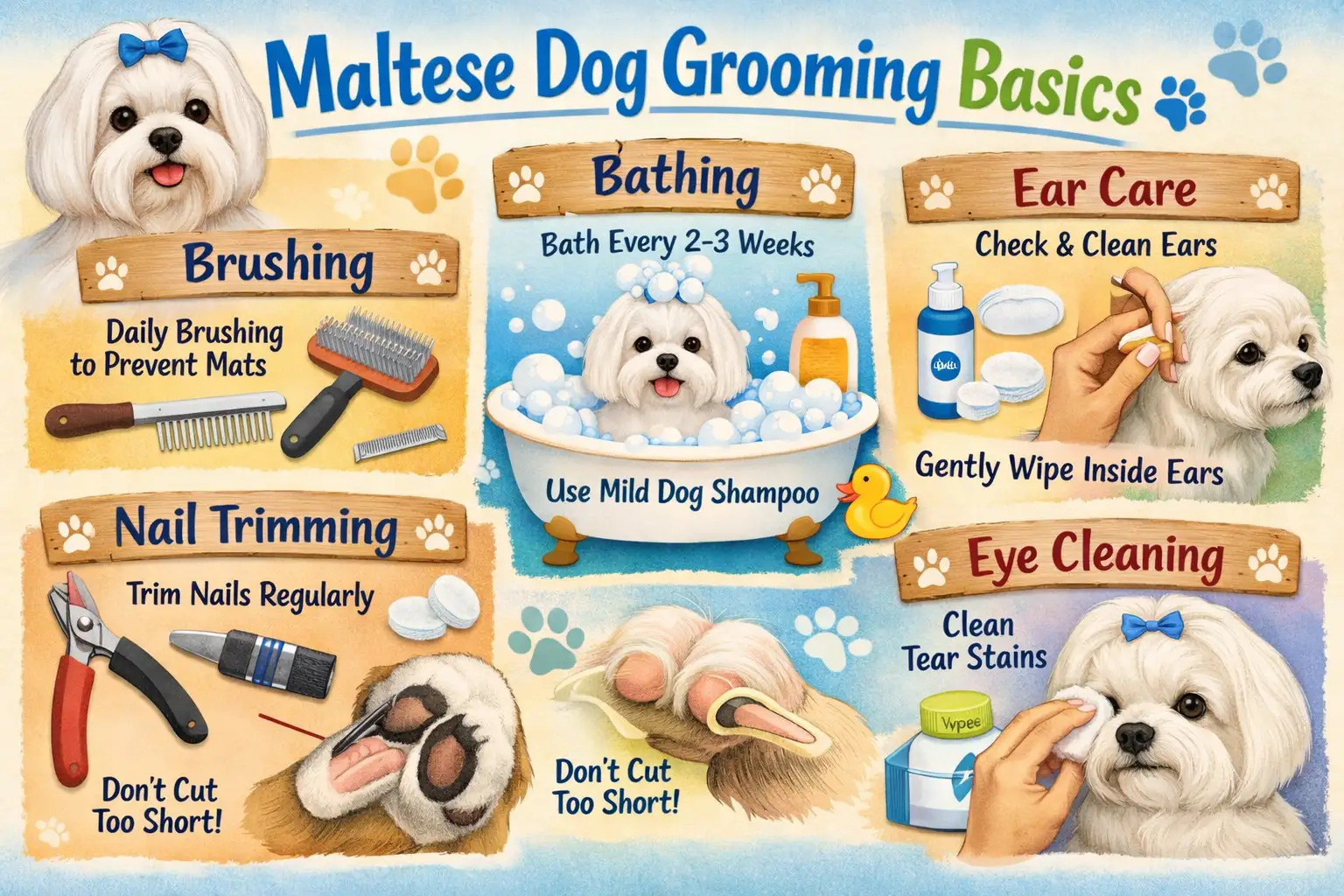
Maltese dog grooming is not just about keeping your dog looking cute and tidy. It plays a direct role in your Maltese’s comfort, skin health, and overall well-being. Many new owners assume that because the Maltese is a small, low-shedding breed, grooming is simple or occasional. In reality, Maltese grooming is frequent, deliberate, and essential.
Unlike many other dogs, the Maltese has hair rather than fur. This single coat grows continuously, similar to human hair, and does not shed in seasonal cycles. Instead of loose hair falling out, dead hair stays trapped in the coat, where it quickly tangles and forms mats. Without regular grooming, these mats tighten against the skin, causing discomfort, pulling, restricted movement, and even skin infections underneath.
Proper grooming also has a major impact on skin health. Regular brushing distributes natural oils along the hair shaft, helping protect the skin barrier and reduce dryness and irritation. Bathing with the right products removes allergens, dirt, and tear residue that commonly affect Maltese dogs, especially around the face, feet, and underside. When grooming is skipped or done incorrectly, owners often notice increased itching, redness, odor, or chronic tear staining.
There is also a strong behavioral benefit to consistent grooming. Maltese dogs that are groomed gently and regularly from an early age are usually calmer during handling, bathing, nail trims, and vet visits. On the grooming table, dogs that follow a predictable routine are less anxious and easier to work with, which reduces stress for both the dog and the owner.
Another important point many owners overlook is that “low-shedding” does not mean “low-maintenance.” Maltese dogs may not leave hair on your furniture, but they require more hands-on grooming than many shedding breeds. Skipping brushing for even a few days can lead to tangles behind the ears, under the legs, and around the collar area. Once mats form, they are far harder and riskier to remove than preventing them in the first place.
In short, proper Maltese dog grooming:
- Keeps the coat soft, clean, and mat-free
- Protects sensitive skin from irritation and infection
- Helps control tear staining and odor
- Improves comfort and mobility
- Builds positive grooming behavior over time
Understanding why grooming matters sets the foundation for everything that follows. Once you know how the Maltese coat works and what it needs, grooming becomes a manageable routine rather than a constant struggle.
Understanding the Maltese Coat and Grooming Frequency
To groom a Maltese properly, you must first understand how their coat works. This helps you know how often to groom, why matting happens, and what routine fits your dog best.
The Maltese has a single coat made of hair, not fur. This hair keeps growing and does not fall out on its own like shedding fur. Because of this, loose hair stays in the coat and easily tangles. If brushing is skipped, those tangles turn into tight mats that pull on the skin and trap moisture and dirt.
Many owners ask, “Does a Maltese shed?” The simple answer is very little. Maltese dogs are often called low-shedding, but that does not mean low-maintenance. Instead of shedding hair around the house, the hair stays on the dog and must be removed through brushing and grooming.
Maltese grooming needs also depend on coat length
A Maltese with a short pet trim needs less daily brushing than a Maltese with a long coat, but all Maltese need regular grooming. Puppies, adults, and seniors also have slightly different needs.
To make this easy, use the table below as a quick guide.
Maltese Grooming Frequency by Coat Length
| Coat Style | Brushing Frequency | Bathing Frequency | Professional Grooming |
|---|---|---|---|
| Short pet trim | 2–3 times per week | Every 3–4 weeks | Every 6–8 weeks |
| Medium length coat | Every other day | Every 2–3 weeks | Every 4–6 weeks |
| Long coat | Daily | Every 1–2 weeks | Every 3–4 weeks |
This table gives a general routine. Your Maltese may need more or less grooming based on lifestyle, skin sensitivity, and activity level.
Puppies, adults, and seniors
- Maltese puppies should be groomed gently and often, even if the sessions are short. This helps them learn that brushing and handling are safe.
- Adult Maltese need a steady routine to prevent mats and skin issues.
- Senior Maltese may need shorter grooming sessions and extra care around joints and thin skin.
Indoor vs outdoor lifestyle
Most Maltese live indoors, which helps keep their coat cleaner. However, indoor dogs still need regular grooming because dust, food, and tear stains build up quickly. Maltese that spend more time outside may need more frequent brushing and bathing.
Understanding the Maltese coat and grooming frequency makes the rest of grooming much easier. Once you know how often your dog needs care, you can build a routine that prevents problems instead of fixing them later.
Core Maltese Grooming Routine at Home
This section shows how to groom a Maltese at home in a simple, safe way. You do not need many tools, but you do need the right routine. Short, regular grooming sessions work better than long ones done once in a while.
Start with the right tools
Using the correct tools makes grooming easier and more comfortable for your dog. The table below shows what you actually need and how to use each item.
Essential Grooming Tools for a Maltese
| Tool | What it is used for | How often to use | Common mistakes to avoid |
|---|---|---|---|
| Slicker brush | Removes tangles and loose hair | Several times a week or daily | Brushing too hard or too fast |
| Pin brush | Gentle brushing for longer coats | Daily for long coats | Skipping mats underneath |
| Metal comb | Checks for hidden mats | After brushing | Not combing down to the skin |
| Dog shampoo | Cleans coat and skin | Every 2–4 weeks | Using human shampoo |
| Dog conditioner | Keeps hair soft and smooth | After shampoo | Skipping conditioner on long coats |
| Towel or low-heat dryer | Dries coat after bath | Every bath | Using high heat |
Always brush your Maltese before bathing. Water makes mats tighter and harder to remove.
Brushing and mat prevention
Brushing is the most important part of Maltese grooming.
- Brush slowly and gently
- Start at the ends of the hair and work up
- Pay extra attention behind the ears, under the legs, and around the collar
- Use a metal comb at the end to make sure there are no hidden tangles
If you find a small mat, try to loosen it with your fingers or a comb. If the mat is tight or close to the skin, do not pull it. This can hurt your dog.
Bathing a Maltese the right way
Maltese dogs do not need weekly baths unless advised by a vet. Too many baths can dry the skin.
Maltese Bathing Guidelines
| Grooming task | How often | Important notes |
|---|---|---|
| Bathing | Every 2–4 weeks | Brush first, use lukewarm water |
| Shampoo | Every bath | Use dog shampoo only |
| Conditioner | Every bath | Helps prevent tangles |
| Drying | Every bath | Dry fully to avoid mats and skin issues |
When bathing:
- Use warm, not hot, water
- Massage shampoo gently into the coat
- Rinse very well so no soap stays on the skin
- Dry the coat fully with a towel or low heat
A damp coat can cause tangles, odor, and skin problems, so drying is very important.
Keeping a simple grooming routine at home helps your Maltese stay clean, comfortable, and mat-free. Even a few minutes every day can prevent big grooming problems later.
Eye, Ear, Nail, Dental, and Skin Care for Maltese Dogs
Grooming a Maltese is not only about brushing and bathing. Small care tasks for the eyes, ears, nails, teeth, and skin help prevent pain and health problems. These areas are often missed, but they matter a lot.
The table below shows how often each area needs care and what problems to watch for.
Maltese Hygiene Care Quick Guide
| Area | How often to care | What to watch for | When to get help |
|---|---|---|---|
| Eyes | Daily | Tear stains, wet fur, redness | Thick discharge, sore skin |
| Ears | Every 1–2 weeks | Bad smell, head shaking | Redness, pain, dark wax |
| Nails | Every 3–4 weeks | Clicking on floors | Cracked or bleeding nails |
| Teeth | Several times a week | Bad breath, yellow teeth | Swollen gums, trouble eating |
| Skin | During grooming | Redness, itching, flakes | Sores, hair loss, hot spots |
Eye care and tear stains
Maltese dogs often get tear stains under their eyes. This happens because their eyes water easily and the hair stays wet.
- Wipe the eye area daily with a soft, damp cloth
- Dry the area after cleaning
- Keep hair around the eyes trimmed
Do not use human wipes or strong products near the eyes. If the skin looks sore or smells bad, talk to a vet.
Ear care basics
Maltese ears can trap moisture, which may cause infections.
- Clean ears every 1–2 weeks
- Use a dog ear cleaner only
- Never push anything deep into the ear
If your dog shakes their head a lot or the ears smell bad, stop cleaning and get help.
Nail trimming and paw care
Long nails can cause pain and make walking hard.
- Trim nails every 3–4 weeks
- Cut small amounts at a time
- Stop if you see a pink area inside the nail
If you are unsure, a groomer can trim nails safely.
Dental care
Maltese dogs are prone to dental problems.
- Brush teeth several times a week
- Use dog toothpaste only
- Watch for bad breath or red gums
Dental care helps prevent pain and tooth loss.
Skin checks during grooming
Always check your Maltese’s skin while grooming.
Look for:
- Red or itchy spots
- Flaky or dry skin
- Lumps or sores
Early signs are easier to treat than serious problems later.
Taking care of these small grooming tasks helps your Maltese stay healthy and comfortable every day.
Professional Grooming, Safety Tips, and Common Mistakes
Some parts of Maltese grooming are easy to do at home. Other parts are safer when done by a professional groomer. Knowing the difference helps protect your dog from pain and injury.
The table below shows what you can do at home and when professional help is better.
Home Grooming vs Professional Grooming for Maltese Dogs
| Grooming task | Safe at home? | When a groomer is better | Why it matters |
|---|---|---|---|
| Brushing | Yes | Rarely needed | Prevents mats and tangles |
| Bathing | Yes | If skin issues exist | Keeps skin clean and healthy |
| Nail trimming | Sometimes | If nails are dark or thick | Avoids cutting the quick |
| Haircuts | No | Always recommended | Clippers can cut or burn skin |
| Mat removal | No | Always recommended | Mats can hide skin damage |
How often should a Maltese see a groomer?
Most Maltese dogs should visit a professional groomer every 4 to 6 weeks. Dogs with long coats may need visits more often. A groomer can safely trim hair, remove mats, clean up the face, and check skin health.
Seasonal grooming safety
Many owners think shaving a Maltese in summer helps keep them cool. This is not true.
- Shaving can cause sunburn
- It can damage the coat
- It can make skin problems worse
In winter, dry air can cause static and tangles, so brushing and conditioner become even more important.
Common Maltese grooming mistakes to avoid
These are mistakes groomers see often:
- Skipping brushing between baths
- Bathing without brushing first
- Using human shampoo or soap
- Pulling mats instead of loosening them
- Waiting too long to get professional help
Small mistakes can turn into big grooming problems if repeated.
When to see a vet instead of a groomer
Go to a veterinarian if you notice:
- Red, sore, or infected skin
- Bad ear smell or pain
- Heavy hair loss
- Severe itching
- Sudden behavior changes during grooming
These signs may point to health issues, not grooming problems.
Proper grooming is about care, patience, and routine. When done right, grooming keeps your Maltese clean, comfortable, and happy.
For trusted, breed-specific grooming and care information, you can also check out the American Kennel Club’s Maltese breed page at https://www.akc.org/dog-breeds/maltese/, which provides official breed characteristics and general care tips that complement this grooming guide.

Ata Ur Rehman is the founder of Pet Age in Human Years Calculator, an educational platform that provides age conversion charts and lifespan guides for dogs, cats, birds, and other companion animals. His work focuses on helping pet owners understand how animal ages translate into human years using commonly accepted age conversion formulas and published lifespan averages.
The website compiles breed and species lifespan data from kennel clubs, breed organizations, and general animal lifespan studies to present simple and easy-to-understand guides for pet owners worldwide.
This website was created to centralize animal age conversion charts into one easy reference platform for pet owners.