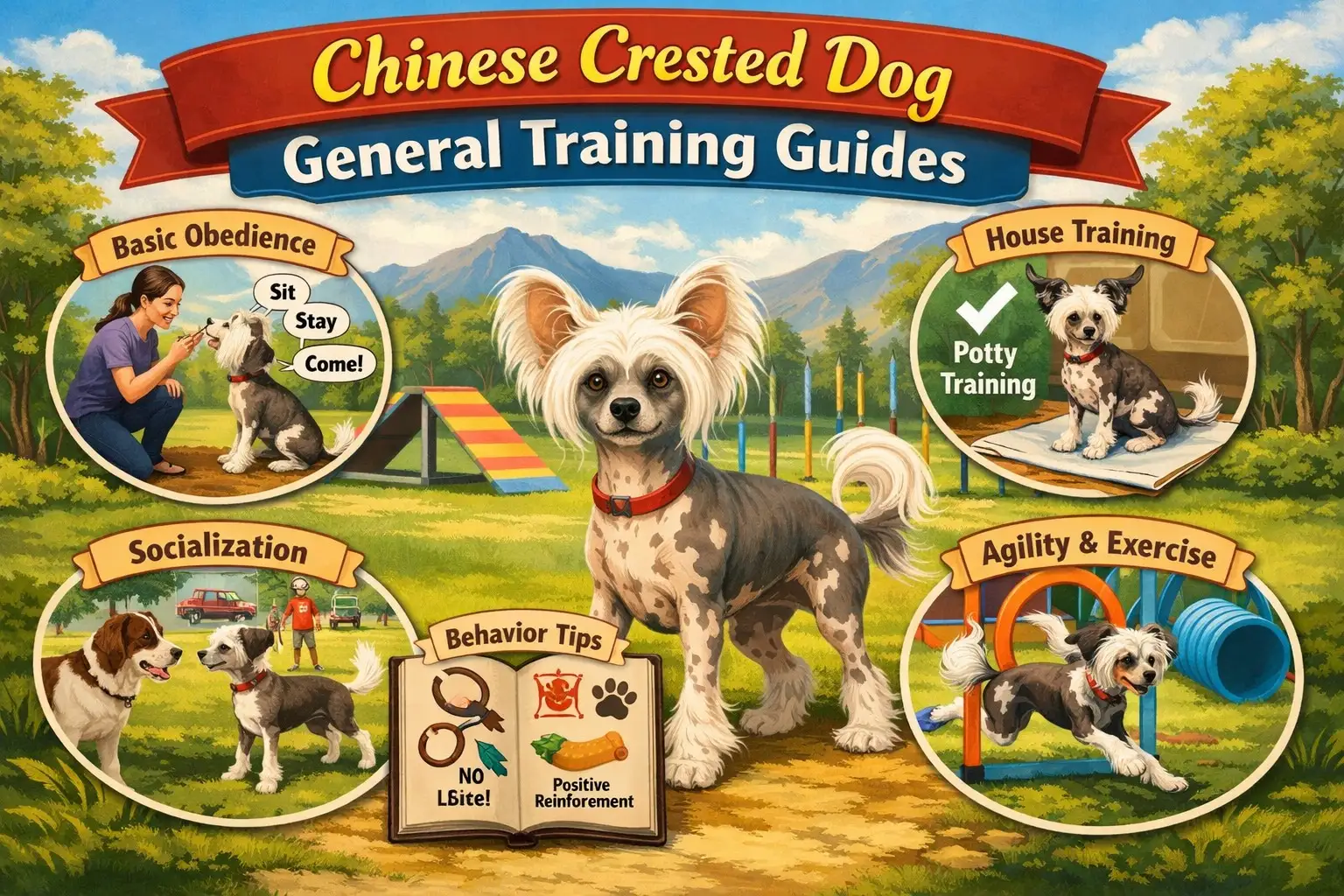
Chinese Crested dog training isn’t difficult, but it is different. This breed is highly sensitive, deeply people-oriented, and emotionally tuned in to its owner’s mood, tone, and reactions. Because of that, training success depends far more on how you train than how often you correct behavior.
This guide is designed for owners who want clear, practical training advice that actually works in real homes. It applies whether you’re raising a Chinese Crested puppy, working with an adult dog, or helping a rescue adjust to a new environment. The focus is on building obedience, calm behavior, and everyday manners without intimidation, overhandling, or unrealistic expectations.
Unlike generic small-dog training advice, this guide takes into account the Chinese Crested’s sensitivity, strong attachment to people, and tendency toward anxiety if training is rushed or inconsistent. The goal is not just a dog that “listens,” but a dog that feels safe, confident, and willing to engage in training.
By the end of this guide, you’ll understand how to train a Chinese Crested in a way that supports their emotional well-being while still creating clear boundaries, reliable behavior, and a peaceful day-to-day life at home.
Why Proper Training Is Essential for Chinese Crested Dogs
Training is not optional for a Chinese Crested. Because this breed is small, sensitive, and very attached to people, a lack of training often leads to emotional problems, not just bad manners.
Many behavior issues seen in Chinese Cresteds are not “stubbornness.” They are stress responses. Without clear guidance, these dogs can become anxious, clingy, fearful, or confused about what is expected of them. Proper training gives them structure, safety, and confidence.
Good training also protects them physically. Chinese Cresteds are delicate dogs. Jumping, pulling on the leash, panic reactions, or poor recall can lead to injuries very quickly. Calm behavior and basic obedience help keep them safe in daily life.
This is especially important for:
- Apartment living
- First-time dog owners
- Homes with children or other pets
- Dogs that spend a lot of time indoors
The table below shows how training directly affects common Chinese Crested behaviors.
How Training Impacts Chinese Crested Behavior
| Training Focus | What Happens Without Training | Benefit of Proper Training |
|---|---|---|
| Alone-time training | Panic, crying, or destruction | Calm behavior when left alone |
| Basic obedience | Ignoring cues, confusion | Clear communication and trust |
| House training | Frequent accidents indoors | Predictable, clean habits |
| Leash manners | Pulling or freezing on walks | Safer, relaxed walks |
| Confidence building | Shaking, hiding, fear | Braver behavior in new places |
When training is done the right way, Chinese Cresteds become relaxed, polite, and easy to live with. When training is skipped or rushed, problems often grow worse over time instead of improving.
Understanding Chinese Crested Behavior and Temperament
To train a Chinese Crested well, you must first understand how this breed thinks and feels. These dogs are not tough or pushy. They are gentle, alert, and very emotional.
Chinese Cresteds form strong bonds with their owners. They like to stay close and often follow their person from room to room. This is why they are sometimes called “velcro dogs.” When handled with patience, this trait makes them very loyal and easy to teach. When handled with pressure or anger, it can lead to fear and stress.
This breed is also very sensitive to:
- Loud voices
- Sudden movements
- Rough handling
- Harsh corrections
Because of this, punishment-based training often backfires. The dog may shut down, freeze, shake, or stop trying. Calm guidance and rewards work much better.
Chinese Cresteds are smart, but they can seem stubborn if they feel unsafe or confused. When training is clear and gentle, they usually learn fast. When training is rushed, they may avoid the task instead of making mistakes.
The table below explains common Chinese Crested traits and how they affect training.
Common Chinese Crested Traits and What They Mean for Training
| Breed Trait | How It Shows at Home | Training Adjustment Needed |
|---|---|---|
| High sensitivity | Shaking, hiding, slow responses | Use calm voice and gentle rewards |
| Strong attachment | Follows owner everywhere | Teach short alone-time skills early |
| High intelligence | Learns quickly, gets bored | Keep sessions short and fun |
| Fear of pressure | Freezing or refusing commands | Avoid force, guide step by step |
| Small, delicate body | Hesitation with jumps or stairs | Focus on safety and confidence |
When you understand these traits, training becomes much easier. You stop fighting the dog’s nature and start working with it. This leads to faster learning and fewer behavior problems.
Step-by-Step Chinese Crested Training Guide
Chinese Crested dog training works best when it is simple, calm, and done in short sessions. This breed learns quickly, but only when they feel safe and relaxed. Long or stressful training sessions often cause confusion or fear.
Always train in a quiet space with few distractions. Use a soft voice and reward good behavior right away. Training should feel like a game, not a test.
Here are the basic rules to follow:
- Keep training sessions short
- Train at the same times each day
- Reward small successes
- Stop before the dog gets tired or stressed
The table below shows how to set up training sessions the right way.
Chinese Crested Training Session Guidelines
| Training Element | Recommended Approach |
|---|---|
| Session length | 5–10 minutes |
| Sessions per day | 2–3 short sessions |
| Best time to train | After rest, before meals |
| Rewards | Small soft treats, praise |
| Training space | Quiet room or calm outdoor area |
| Tone of voice | Calm, happy, and clear |
Start with simple skills like:
- Responding to their name
- Sitting calmly
- Coming when called indoors
- Walking without pulling
House training and crate training should be gentle and consistent. Take your dog outside often, praise them for success, and never punish accidents. Accidents mean the dog needs more help, not correction.
Chinese Cresteds also need time to learn how to be alone. Start with a few seconds, then slowly increase the time. This helps prevent separation anxiety later.
The table below shows realistic training timelines. Every dog is different, but this helps set healthy expectations.
Training Timeline Expectations
| Training Goal | When to Start | Typical Progress Range |
|---|---|---|
| Potty training | 8–12 weeks old | 2–4 months |
| Basic commands | Any age | 1–3 weeks |
| Leash manners | After basic focus | 2–6 weeks |
| Alone-time training | Early puppy stage | Several weeks |
| Calm home behavior | Ongoing | Improves over time |
If progress feels slow, that is normal. Calm and steady training always works better than rushing.
Common Training Problems and When to Get Professional Help
Even with good training, some Chinese Crested dogs may struggle at times. This is normal, especially for sensitive breeds. The key is knowing what problems you can work on at home and when extra help is needed.
Common training problems include:
- Crying or barking when left alone
- Shaking, hiding, or freezing during training
- Refusing to walk on a leash
- Potty accidents after progress was made
- Fear of new people or places
Most of these issues come from fear, confusion, or moving too fast. In many cases, slowing down training, using better rewards, and keeping routines steady will help. Never yell, scare, or force a Chinese Crested to behave. This often makes the problem worse.
You should consider professional help if:
- The dog shows strong fear that does not improve
- Separation anxiety gets worse over time
- The dog growls, snaps, or bites
- Training progress stops for several weeks
- The dog seems very stressed or unhappy
A professional dog trainer who uses positive methods can guide you step by step. In more serious cases, a veterinarian or behavior specialist may be needed to rule out medical or anxiety-related issues.
Getting help early is not a failure. It often saves time and stress for both you and your dog.
For readers who want deeper, science-based guidance on humane dog training methods, the American Veterinary Society of Animal Behavior offers reliable resources that support positive, fear-free training approaches backed by veterinary experts.

Ata Ur Rehman is the founder of Pet Age in Human Years Calculator, an educational platform that provides age conversion charts and lifespan guides for dogs, cats, birds, and other companion animals. His work focuses on helping pet owners understand how animal ages translate into human years using commonly accepted age conversion formulas and published lifespan averages.
The website compiles breed and species lifespan data from kennel clubs, breed organizations, and general animal lifespan studies to present simple and easy-to-understand guides for pet owners worldwide.
This website was created to centralize animal age conversion charts into one easy reference platform for pet owners.