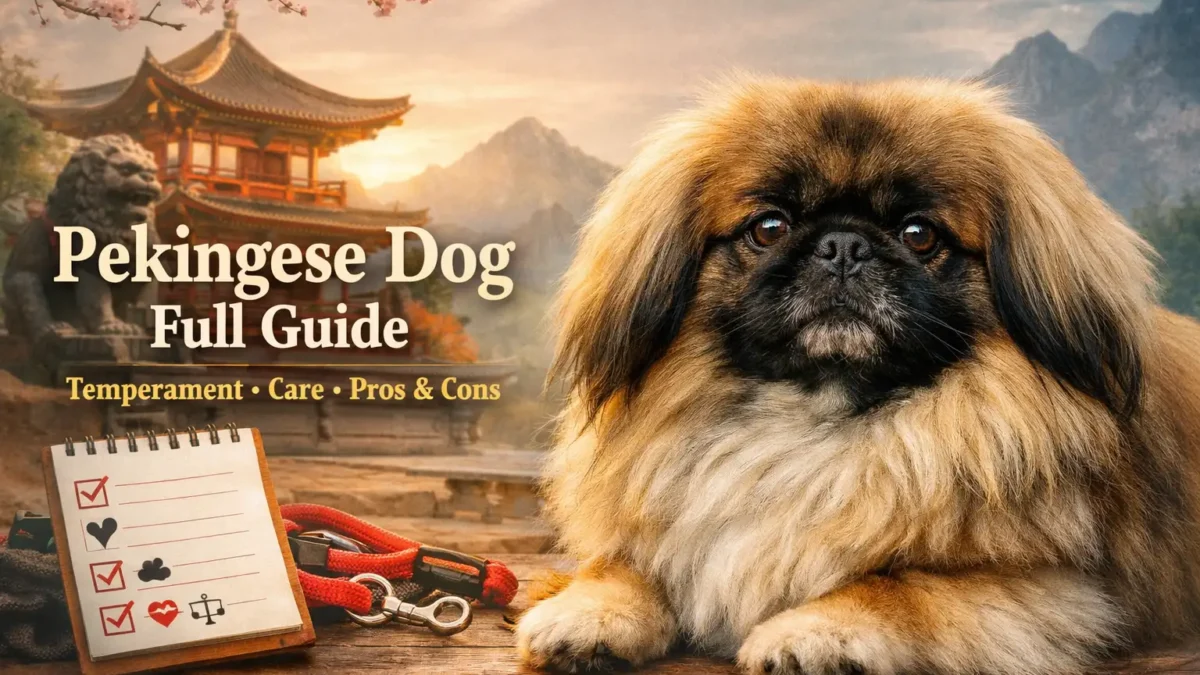
Pekingese Dog Full Guide: Temperament, Care, Pros & Cons, and Suitability
The Pekingese dog is one of the few modern breeds whose personality, posture, and physical structure still reflect a royal past. This is not a dog that was bred to work, hunt, or herd. The Pekingese was bred to be revered. For centuries, these dogs lived exclusively inside the imperial palaces of ancient China, often treated with a status closer to nobility than to pets. That history explains almost everything about how the breed looks and behaves today.
When you look at a Pekingese, the first thing you notice is its lion-like appearance—a broad head, heavy facial furnishings, and a thick mane of hair around the neck and shoulders. This was not accidental. Ancient Chinese breeders deliberately shaped the breed to resemble the guardian lions seen in temple art, believing the dog carried symbolic protection and prestige. Even today, the Pekingese carries itself with a confident, almost self-important demeanor that many owners describe as “regal” or “dignified.”
Physically, the Pekingese is small but surprisingly solid. Despite being a toy breed, it is heavy-boned, compact, and low to the ground, with a wide chest and a distinctive rolling gait. This movement is a direct result of its broad front, short legs, and balanced weight distribution. New owners are often surprised by how sturdy a Pekingese feels when picked up—it is not a fragile lap dog in the traditional sense, even though it enjoys calm indoor living.
The breed’s flat face is another defining trait. The short muzzle, large round eyes, and shallow eye sockets give the Pekingese its expressive, almost human-like facial expressions. While visually striking, these features also explain why the breed requires special care when it comes to breathing, heat tolerance, and eye protection—topics that become important later in ownership.
The coat is long, straight, and abundant, with a dense undercoat beneath the outer layer. It frames the body rather than flowing flat, giving the dog its signature “puffed” outline. Coat colors vary widely and include gold, red, cream, black, fawn, sable, and combinations of these. Color does not affect temperament or quality of the dog, but coat volume and texture do influence grooming commitment.
To help you quickly understand what kind of dog the Pekingese is at a glance, the table below summarizes the breed’s core traits.
| Trait | Details |
|---|---|
| Breed Type | Toy / Companion |
| Average Height | 6–9 inches |
| Average Weight | 7–14 pounds |
| Lifespan | 12–15 years |
| Energy Level | Low to moderate |
| Shedding | Moderate to heavy |
| Apartment Friendly | Yes |
| Climate Tolerance | Poor in heat, moderate in cold |
What makes the Pekingese truly unique is the contrast between its small size and big presence. This is a dog that does not rush, does not beg for constant attention, and does not feel the need to please everyone in the room. Instead, it observes, decides, and then engages on its own terms. Understanding this foundational nature is essential before judging the breed’s temperament, trainability, or suitability for your lifestyle—which is exactly where the next section begins.
Pekingese Temperament, Personality, and Everyday Behavior
The Pekingese dog has a strong and confident personality. Even though this breed is small, it does not think of itself as small. Many owners say a Pekingese behaves more like a big dog trapped in a little body. This mindset shapes how the dog acts at home, with people, and in daily life.
One of the most important things to understand is that a Pekingese is independent. This dog likes affection, but only when it chooses. It may sit beside you quietly instead of jumping into your lap. It enjoys being close, but it does not need constant attention. This calm and self-respecting nature is why many people describe the breed as dignified.
With family members, a Pekingese is deeply loyal. It often forms a very strong bond with one main person in the house. That does not mean it ignores others, but its trust and love are usually strongest with one owner. Once that bond is formed, the dog becomes very devoted and protective in its own quiet way.
Around strangers, Pekingese dogs are usually reserved and cautious. They are not overly friendly with new people, and they do not rush to greet guests. This should not be confused with aggression. Most Pekingese simply prefer to observe first. Early social time helps them stay calm and confident when meeting new faces.
When it comes to children, this breed does best with older, calm kids. Pekingese dogs do not enjoy rough handling, loud play, or being chased. They have a low tolerance for pulling or squeezing. In homes where children are taught to respect space, the breed can do very well. In homes with very young children, close supervision is important.
With other pets, behavior depends on social experience. Many Pekingese dogs live peacefully with other dogs, especially those of similar size and energy level. They can also live with cats if introduced slowly. This breed is not highly playful with other animals, but it usually does not cause trouble either.
A common question people ask is: Are Pekingese dogs stubborn? The answer is yes—but not in a bad way. They are thinkers. They do not rush to obey just to please someone. Instead, they decide if something is worth doing. This trait can look like stubbornness, but it is actually confidence and independence.
Another common concern is barking. Pekingese dogs are alert but not noisy. They will bark if something feels unusual, such as a knock at the door or a strange sound. They are not known for constant or pointless barking, especially when their environment is calm.
In daily life, a Pekingese is quiet, steady, and observant. It enjoys routine, dislikes chaos, and prefers a peaceful home. This personality makes it a good match for people who enjoy calm companionship rather than high-energy play.
Is a Pekingese the Right Dog for You? Lifestyle, Suitability, and Daily Needs
The Pekingese dog is not for everyone, but for the right person, it can be a wonderful companion. This breed fits best in calm homes where people understand that dogs can have personal space and feelings too. Before choosing a Pekingese, it is important to see if your daily life matches what this dog needs.
A Pekingese does very well in apartments and small homes. It does not need a big yard. It is happy living indoors, resting near its owner, and moving around the house quietly. Short daily walks are enough for this breed. Long walks, running, or heavy exercise are not needed and can even be harmful.
For families with children, this breed needs careful thinking. Pekingese dogs do best with older children who know how to be gentle. They do not like rough play, pulling, or loud shouting. If children are calm and respectful, the dog can feel safe and relaxed. Very young children may not be a good match unless adults supervise closely.
For seniors, the Pekingese is often an excellent choice. The dog’s low energy, calm nature, and love for quiet company match well with a slower lifestyle. However, grooming and lifting the dog should be considered, as the coat needs regular care and the body is heavier than it looks.
For first-time dog owners, the Pekingese can be a moderate challenge. This breed is not hard to live with, but it is not eager to obey either. New owners must learn patience, gentle training, and consistency. People who expect quick obedience may feel frustrated at first.
For active or athletic owners, this breed may feel boring. The Pekingese does not enjoy long hikes, jogging, or busy outdoor life. It prefers calm routines and short activity times. If you love high-energy dogs, this breed may not satisfy you.
In multi-pet homes, Pekingese dogs usually do fine when introduced slowly. They are not very playful with other pets, but they also do not seek conflict. They prefer peaceful sharing of space rather than active interaction.
To make things easier to understand, here is a simple lifestyle compatibility table.
| Lifestyle Type | Suitability |
|---|---|
| Apartment Living | Excellent |
| Families with Young Kids | Caution |
| Seniors | Excellent |
| First-Time Owners | Moderate |
| Active / Athletic Owners | Poor |
| Multi-Pet Homes | Moderate |
In daily life, a Pekingese needs:
- Short walks once or twice a day
- Quiet indoor time
- Mental stimulation like simple games or toys
- A cool environment, especially in warm weather
This breed does not like stress, loud homes, or sudden changes. When life is calm and predictable, the Pekingese feels safe and happy.
Pekingese Care, Training Challenges, Grooming, and Health Reality
Caring for a Pekingese dog is not hard, but it does need regular attention. This breed does best with steady routines, gentle handling, and a calm home. Understanding its care needs early helps avoid problems later.
Training a Pekingese can feel slow. This breed is smart, but it is also independent. It does not like being forced. Loud voices, punishment, or pressure do not work. The best results come from short sessions, praise, and treats. Be patient and consistent. Potty training may take longer than with some other breeds, so calm repetition is important.
Exercise needs are low. One or two short walks each day are enough. Indoor play and simple games also help. Avoid long walks, stairs, and jumping, especially when the dog is young or older. Too much exercise can strain the back and joints.
Grooming is one of the biggest responsibilities with this breed. The long coat needs brushing several times a week to prevent mats and tangles. Many owners choose professional grooming to keep the coat clean and manageable. The face needs special care. The folds around the nose and eyes should be cleaned often to prevent irritation and infection.
Shedding is moderate to heavy, especially during seasonal coat changes. Regular brushing helps control loose hair around the home.
Health care is very important for Pekingese dogs. Their flat face makes breathing harder, especially in hot or humid weather. They can overheat quickly, so they should always have shade, water, and a cool place to rest. Eye care is also important because their eyes are large and easily injured.
Below is a simple table showing common health concerns in this breed.
| Health Issue | Why It Matters |
|---|---|
| Breathing Problems | Flat face limits airflow |
| Eye Injuries | Large eyes are easily hurt |
| Back Problems | Long body and short legs |
| Dental Issues | Small mouth causes crowded teeth |
With good care, many Pekingese dogs live long and comfortable lives. Regular vet visits, gentle handling, and proper grooming make a big difference in their health and happiness.
Pekingese Pros and Cons, Costs, and Similar Breed Comparisons
Before choosing a Pekingese dog, it helps to look at the good and the difficult parts of owning this breed. Every dog has strengths and weaknesses, and the Pekingese is no different. This section brings everything together so you can decide clearly.
A Pekingese can be a loving and calm companion. It does not need much space or heavy exercise. It enjoys quiet time and close bonding with its owner. At the same time, it needs patience, grooming time, and careful health management.
Here is a clear look at the main pros and cons.
| Pros | Cons |
|---|---|
| Loyal and devoted to owner | Can be stubborn to train |
| Very good for apartment living | Needs regular grooming |
| Low exercise needs | Sensitive to heat |
| Calm and quiet indoors | Prone to health issues |
| Good companion for seniors | Not ideal for rough kids |
Cost is another important factor.
The price of a Pekingese puppy can vary depending on breeder quality, location, and lineage. Beyond the puppy price, owners should plan for grooming costs, regular vet visits, and possible medical care related to breathing, eyes, and dental health. Because this breed can have health issues, many owners also choose pet insurance to manage long-term expenses.
Many people also compare the Pekingese with similar small breeds before deciding. Below is a simple comparison to help you see how the Pekingese stands next to other popular choices.
| Breed | Energy Level | Grooming Needs | Health Risk |
|---|---|---|---|
| Pekingese | Low | High | High |
| Shih Tzu | Moderate | High | Moderate |
| Pug | Moderate | Low | High |
| Lhasa Apso | Moderate | Moderate | Moderate |
| Japanese Chin | Low | Moderate | Moderate |
A Pekingese is best for someone who wants a quiet, proud, and loyal companion, not a playful or sporty dog. It suits people who enjoy calm routines and can give time to grooming and gentle care. It may not be right for very active families or homes with small children who want an energetic pet.
For official breed standards and detailed background information, you can also review the Pekingese profile provided by the American Kennel Club, which outlines the breed’s history, appearance, and classification.