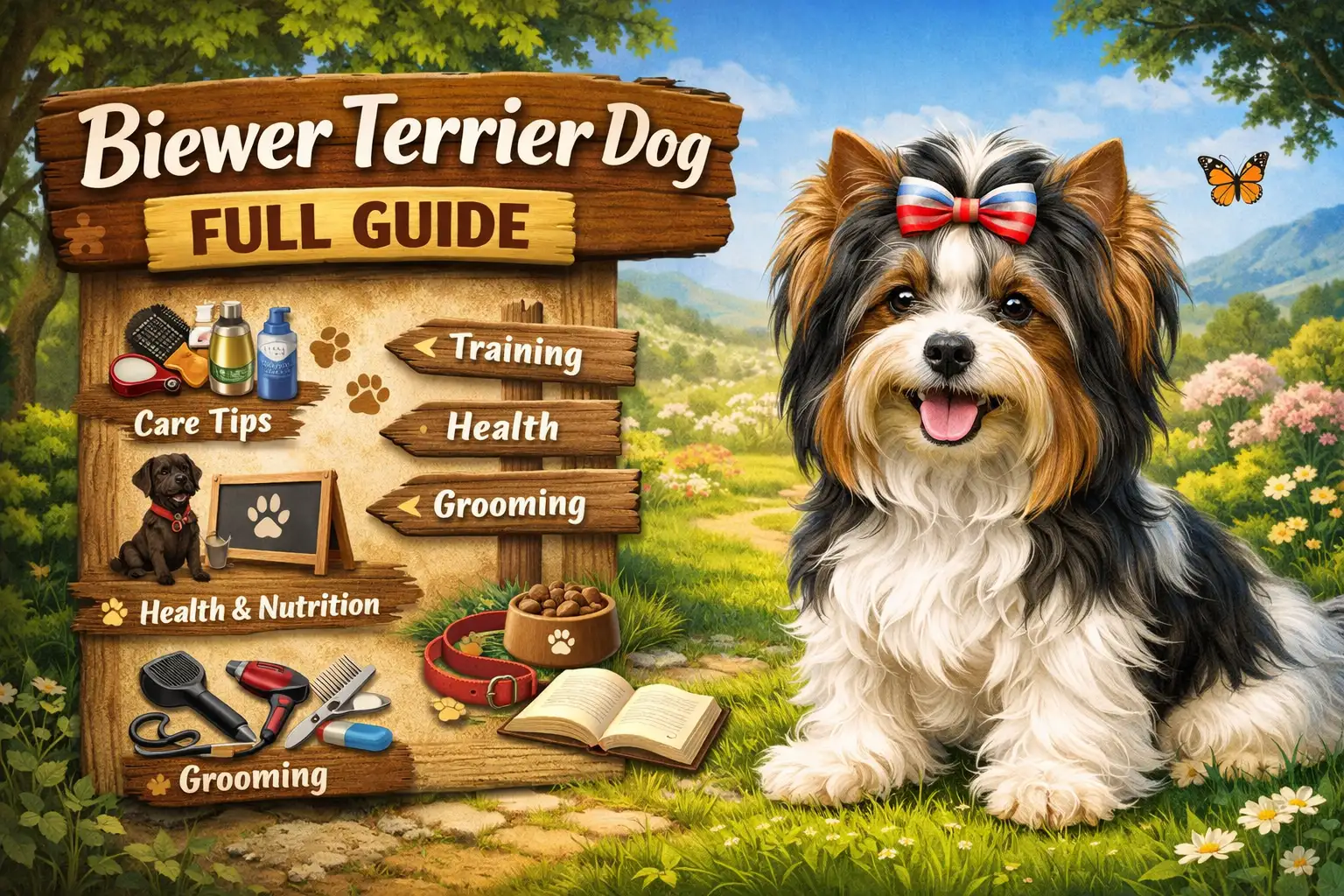
The Biewer Terrier is a small, elegant toy dog known for its long tri-color coat, lively personality, and strong bond with its owner. At first glance, many people mistake this breed for a Yorkshire Terrier, but the Biewer Terrier is its own distinct breed, with a unique history, temperament, and care needs.
This guide is written to help you understand what life with a Biewer Terrier is really like. It goes beyond basic breed descriptions and focuses on real-world ownership, including personality, daily care, suitability for different homes, and what kind of owner this breed thrives with.
If you are considering a Biewer Terrier, already own one, or are simply researching small companion dogs, this article will give you clear, honest, and practical information to help you decide if this breed is the right fit for your lifestyle.
Biewer Terrier Origin, Appearance, and Basic Facts
The Biewer Terrier started in Germany in the 1980s. The breed came from Yorkshire Terriers, but with a special gene that created a white, black (or blue), and gold coat. Over time, careful breeding made the Biewer Terrier a stable and separate breed, not just a color type of the Yorkie.
Today, the Biewer Terrier is known for its balanced body, smooth movement, and calm confidence compared to many other toy dogs.
This is a small dog, but not fragile when handled correctly. The body is compact, the legs are straight, and the dog moves with an easy, flowing walk.
The coat is long, straight, and silky. It grows continuously and does not shed much, which is one reason the breed is popular with people who prefer a cleaner home. The classic look includes a white chest and belly, with darker color along the back and gold on the face.
Most Biewer Terriers live a long life when properly cared for, especially with good dental care, a healthy weight, and regular vet visits.
Below is a quick snapshot to help readers understand the breed at a glance.
Biewer Terrier Quick Facts
| Feature | Details |
|---|---|
| Height | About 7–11 inches |
| Weight | Around 4–8 pounds |
| Lifespan | 12–16 years |
| Coat type | Long, straight, silky |
| Shedding level | Very low |
| Size group | Toy breed |
These basics help set clear expectations before looking deeper into personality and daily life with this breed.
Biewer Terrier Temperament and Everyday Behavior
The Biewer Terrier is best known for its loving and people-focused nature. This breed enjoys being close to its owner and often follows family members from room to room. Many owners describe the Biewer Terrier as a “shadow dog” because it likes to stay nearby.
Even though it is small, this breed is confident and alert. It notices new sounds and visitors quickly and may bark to let you know something is happening. The barking is not usually aggressive, but it can become a habit if not gently guided early.
With family members, Biewer Terriers are affectionate and playful. They enjoy lap time but also like short play sessions throughout the day. With children, they do best in homes where kids know how to handle small dogs gently. Rough play can scare or hurt them.
With strangers, many Biewer Terriers are polite but cautious at first. Once they feel safe, they often warm up quickly. Early social time helps them grow into calm and friendly adults.
When it comes to other pets, this breed usually does well with other dogs. Cats can also be good companions if introductions are slow and positive. Because of their terrier background, some may like to chase small moving animals, but this varies by dog.
Below is a simple overview of the Biewer Terrier’s personality traits.
Temperament at a Glance
| Trait | Level |
|---|---|
| Affection toward family | Very high |
| Energy level | Medium |
| Trainability | Medium |
| Barking tendency | Medium to high |
| Good with children | Yes, with supervision |
| Good with other pets | Usually yes |
This temperament makes the Biewer Terrier a great companion for people who want a close, loving relationship with their dog and can give daily attention.
Caring for a Biewer Terrier: What Owners Should Expect
Caring for a Biewer Terrier is not hard, but it does require daily attention and consistency. This breed does best when routines are clear and gentle.
Biewer Terriers do not need long or intense exercise. Short daily walks and indoor play are usually enough. Puzzle toys, short training games, and playtime help keep their mind active and prevent boredom.
Training is possible, but patience is important. This breed is smart, yet it can be a little stubborn. House training may take extra time, especially in cold or rainy weather. Positive praise and small rewards work much better than harsh corrections.
Grooming is one of the biggest responsibilities. The long coat needs regular brushing to stay clean and knot-free. Many owners choose to keep the coat trimmed short to make care easier. Teeth care is very important for this breed, as small dogs often develop dental problems if brushing is skipped.
Health-wise, most Biewer Terriers are healthy dogs, but regular vet visits are still important. Keeping a healthy weight, caring for the teeth, and watching the knees can help prevent common problems.
Below is a simple care overview to set clear expectations.
Care Overview
| Care Area | What to Expect |
|---|---|
| Daily exercise | Short walks and indoor play |
| Mental needs | Toys, games, gentle training |
| Training difficulty | Medium |
| Grooming needs | Regular brushing and trimming |
| Common concerns | Teeth, knees, digestion |
When cared for properly, the Biewer Terrier is a happy and comfortable companion that fits well into many lifestyles.
Is the Biewer Terrier Right for You? Costs, Suitability, and Alternatives
The Biewer Terrier is a great match for people who want a small, loving companion, but it is not the right dog for everyone. This breed does best in calm homes where owners have time to give attention every day.
Biewer Terriers usually do very well in apartments and small homes. They do not need much space, but they do need daily interaction. Seniors and first-time dog owners often enjoy this breed because of its size and gentle nature. Families with children can also be a good fit, as long as kids are taught to handle small dogs carefully.
Cost is an important thing to think about. Biewer Terrier puppies are often expensive because the breed is still rare and carefully bred. Ongoing costs include grooming, dental care, and regular vet visits. While they are small dogs, they are not a “low-cost” breed.
Below is a quick look at who this breed suits best.
Owner Suitability Snapshot
| Lifestyle | Fit Level |
|---|---|
| Apartment living | Very good |
| First-time owners | Good |
| Seniors | Very good |
| Families with children | Good with supervision |
| Multi-pet homes | Usually good |
Some people compare the Biewer Terrier to similar small breeds before deciding.
Biewer Terrier vs Similar Breeds
| Breed | Grooming Needs | Energy Level | Personality |
|---|---|---|---|
| Biewer Terrier | High | Medium | Affectionate, alert |
| Yorkshire Terrier | High | Medium to high | Bold, confident |
| Maltese | High | Medium | Gentle, playful |
| Havanese | Medium | Medium | Social, easygoing |
If you want a dog that is always close, enjoys calm play, and fits easily into daily life, the Biewer Terrier can be a wonderful choice. If you prefer a dog that is very independent or needs little grooming, another breed may suit you better.
For more trusted and official breed details, you can visit the American Kennel Club’s Biewer Terrier page, which covers the breed’s history, characteristics, and recognition by the AKC: https://www.akc.org/dog-breeds/biewer-terrier

Ata Ur Rehman is the founder of Pet Age in Human Years Calculator, an educational platform that provides age conversion charts and lifespan guides for dogs, cats, birds, and other companion animals. His work focuses on helping pet owners understand how animal ages translate into human years using commonly accepted age conversion formulas and published lifespan averages.
The website compiles breed and species lifespan data from kennel clubs, breed organizations, and general animal lifespan studies to present simple and easy-to-understand guides for pet owners worldwide.
This website was created to centralize animal age conversion charts into one easy reference platform for pet owners.