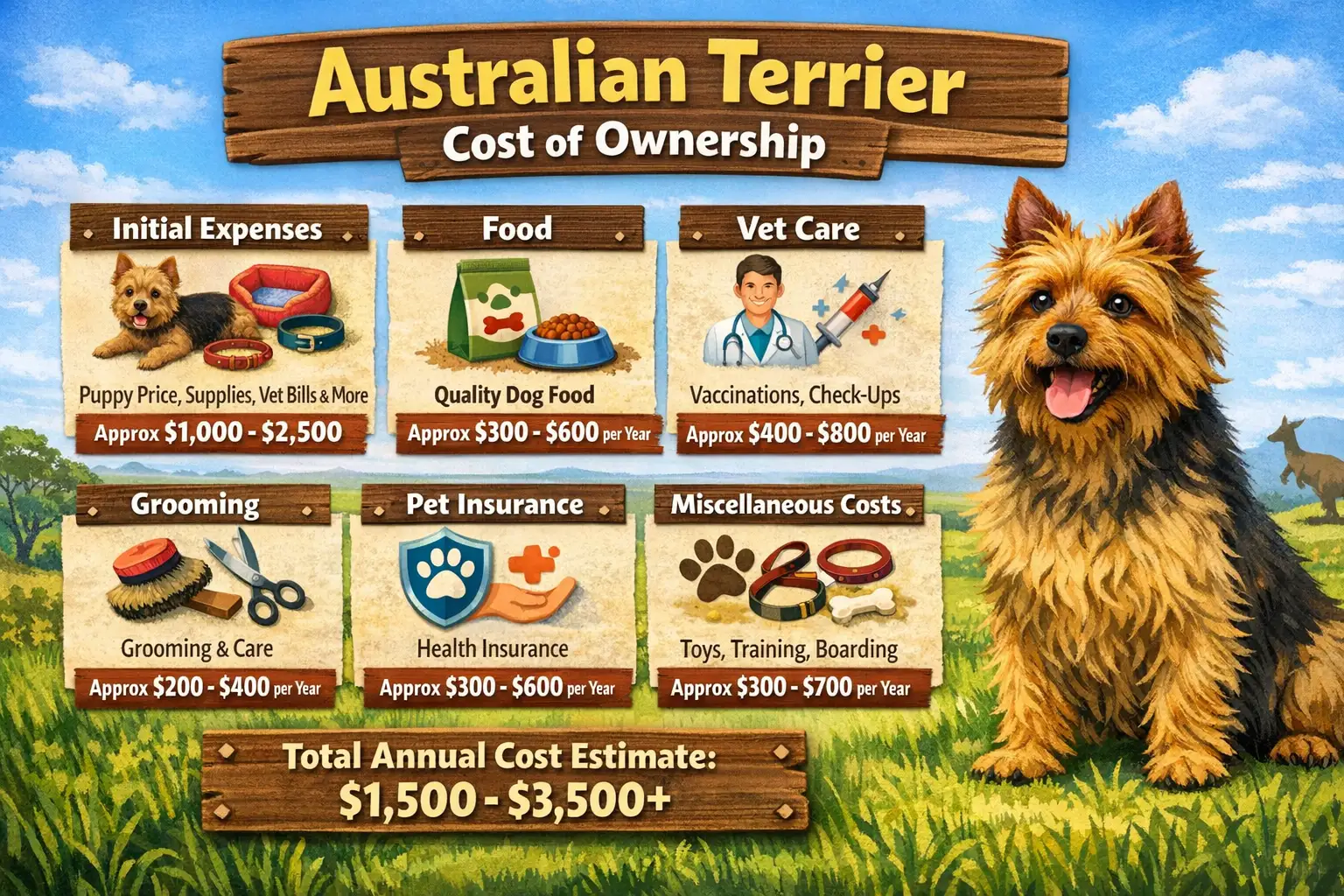
Owning an Australian Terrier is not just about the price you pay to bring one home. The real cost comes from daily care, vet visits, food, grooming, and long-term health needs over many years.
Many people assume small dogs are cheap to own. Australian Terriers are smaller in size, but they are active, confident, and long-lived dogs, which means their lifetime costs can add up more than expected.
This guide focuses on the full financial picture, including:
- what you may spend in the first year
- what ongoing monthly and yearly costs look like
- how expenses can change as your dog gets older
- which costs owners often forget to plan for
Australian Terriers usually live 12–15 years, so owning one is a long-term financial commitment, not a short one. Planning ahead helps avoid stress and ensures your dog gets proper care at every life stage.
By the end of this guide, you should have a clear and realistic idea of whether an Australian Terrier fits your budget and lifestyle.
One-Time and First-Year Australian Terrier Costs
The first year is always the most expensive year when owning an Australian Terrier. This is because you pay many costs only once at the beginning, plus normal care costs for the rest of the year.
These costs can change based on:
- puppy vs adult dog
- your location
- vet prices in your area
- whether you adopt or buy from a breeder
Below is a simple breakdown of what most owners should expect in the first year.
One-Time and First-Year Cost Breakdown
| Expense Type | Estimated Cost Range |
|---|---|
| Adoption or breeder fee | $500 – $2,500 |
| Initial vet visits (vaccines, exams) | $150 – $400 |
| Spay or neuter surgery | $200 – $500 |
| Microchipping | $40 – $80 |
| Basic supplies (bed, crate, leash, bowls, toys) | $150 – $300 |
| First-year total (approximate) | $1,200 – $3,800 |
What these costs mean for owners
- Adoption or breeder fee: Puppies usually cost more than adult rescues. Reputable breeders charge more because of health testing.
- Vet care: Puppies need multiple vet visits in the first year. Adult dogs may need fewer.
- Spay or neuter: This is a one-time surgery but a major early expense.
- Supplies: Most items are bought once but may need replacing if your dog chews or outgrows them.
Puppy vs adult first-year costs
- Puppies cost more in the first year due to extra vaccines and training needs.
- Adult dogs cost less upfront, but may need dental care or health checks sooner.
Planning for these early expenses helps avoid financial stress and makes the first year much smoother.
Monthly and Annual Australian Terrier Expenses
After the first year, most costs become regular and predictable. These are the expenses you pay every month or once a year to keep your Australian Terrier healthy and happy.
Even though this is a small dog, the costs do not disappear. Food, vet care, and grooming are ongoing needs.
Average Monthly Cost Breakdown
| Monthly Expense | Estimated Monthly Cost |
|---|---|
| Food and treats | $30 – $60 |
| Flea, tick, and heartworm prevention | $20 – $40 |
| Grooming (averaged monthly) | $20 – $40 |
| Pet insurance (optional) | $25 – $50 |
| Toys and small supplies | $10 – $20 |
| Estimated monthly total | $105 – $210 |
What to know
- Australian Terriers are active dogs, so they need good-quality food.
- Grooming costs are moderate, but regular brushing helps lower professional grooming visits.
- Insurance is optional but can reduce big emergency bills later.
Average Annual Recurring Costs
| Annual Expense | Estimated Yearly Cost |
|---|---|
| Routine vet checkups | $100 – $300 |
| Vaccinations and boosters | $80 – $150 |
| Dental cleaning (averaged) | $200 – $500 |
| Training refreshers or classes | $100 – $300 |
| License and registration | $10 – $30 |
| Estimated annual total | $490 – $1,280 |
Why annual costs matter
- Dental care is often forgotten but becomes important as dogs age.
- Training may not be yearly, but many owners take refreshers for behavior support.
- Vet costs can rise as your dog gets older.
When you combine monthly and yearly expenses, most owners spend several thousand dollars over time, even without emergencies.
Major Cost Factors That Change Australian Terrier Ownership Costs
Not every Australian Terrier costs the same to care for. Some dogs stay healthy for many years, while others need extra vet care. Your lifestyle and choices also affect how much you spend.
Below are the biggest factors that can raise or lower your total cost.
Health and veterinary care
Australian Terriers are generally healthy, but no dog is medical-expense free. As dogs age, vet bills often increase.
Veterinary and Emergency Cost Examples
| Vet Service | Typical Cost Range |
|---|---|
| Routine vet visit | $60 – $120 |
| Emergency vet visit | $500 – $2,000+ |
| Dental cleaning (with anesthesia) | $300 – $800 |
| Ongoing condition (allergies, skin issues) | $300 – $1,000 per year |
Important points
- Emergency visits are the biggest financial risk for any dog owner.
- Small dogs still need anesthesia, tests, and medication, which cost the same as for large dogs.
- Chronic problems like allergies can add yearly costs.
Pet insurance impact
Pet insurance can help with large, unexpected bills.
- Monthly cost is usually $25 – $50
- It does not cover everything
- It works best for emergencies, not routine care
Some owners prefer insurance, while others save money in a vet emergency fund.
Lifestyle and living situation
Your home and routine matter.
- Apartment living may increase training or daycare costs
- Traveling often means boarding or pet-sitting fees
- Multi-dog homes lower some costs but increase food and vet bills
Planning for these factors helps avoid surprise expenses later.
Lifetime Cost, Budgeting Tips, and Final Reality Check
Australian Terriers often live 12 to 15 years, so the total cost of ownership adds up over time. Even small monthly costs become large numbers when spread across many years.
Estimated lifetime cost
For most owners, the lifetime cost of owning an Australian Terrier usually falls within this range:
- Lower-cost scenario: $15,000 – $18,000
- Average scenario: $18,000 – $25,000
- Higher-cost scenario: $25,000+
These estimates include food, routine vet care, grooming, supplies, and some unexpected medical costs. Dogs with long-term health issues or frequent emergencies can cost more.
Simple budgeting tips that really help
- Set aside $50–$100 per month as a dog emergency fund
- Budget for vet care even when your dog seems healthy
- Plan dental care early to avoid bigger problems later
- Replace toys and beds slowly instead of all at once
Ways to save without hurting care
- Brush your dog at home to reduce grooming visits
- Buy food in the right size bags to avoid waste
- Keep up with preventatives to avoid costly illnesses
- Use training early to prevent damage at home
Final reality check
Australian Terriers are not the cheapest dogs, but they are also not the most expensive. They are active, loyal, and long-lived, which makes planning important.
If you can comfortably handle:
- first-year costs
- steady monthly expenses
- surprise vet bills
then an Australian Terrier can be a great long-term companion.
For more general guidance on planning pet expenses and understanding long-term dog care costs, you can also review the dog ownership cost resources provided by the ASPCA, which offer helpful budgeting insights for current and future dog owners.

Ata Ur Rehman is the founder of Pet Age in Human Years Calculator, an educational platform that provides age conversion charts and lifespan guides for dogs, cats, birds, and other companion animals. His work focuses on helping pet owners understand how animal ages translate into human years using commonly accepted age conversion formulas and published lifespan averages.
The website compiles breed and species lifespan data from kennel clubs, breed organizations, and general animal lifespan studies to present simple and easy-to-understand guides for pet owners worldwide.
This website was created to centralize animal age conversion charts into one easy reference platform for pet owners.