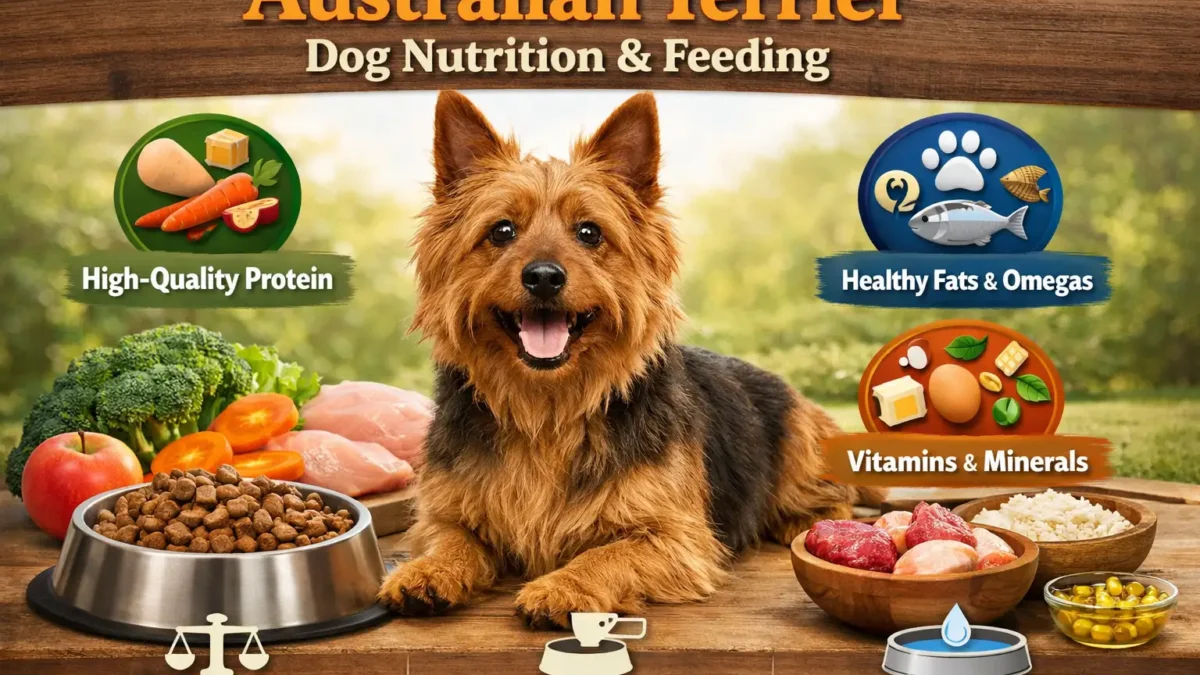
Australian Terrier Nutrition & Feeding Guide
Australian Terriers are small dogs, but their nutrition needs are not “small” or simple. This breed is energetic, alert, and naturally muscular, with a fast metabolism compared to many other small dogs. What you put in their bowl directly affects their energy level, digestion, weight control, coat quality, and long-term health.
This guide is designed to help you make clear, practical feeding decisions, whether you are raising a puppy, caring for an adult dog, or managing the needs of a senior Australian Terrier.
Why breed-specific nutrition matters for Australian Terriers
Australian Terriers were bred to work. They are active, curious, and often fearless, which means they burn calories quickly but can also gain weight easily if overfed. Many owners assume small dogs need very little food, but underfeeding can lead to low energy and muscle loss, while overfeeding quickly leads to weight gain and joint stress.
Because of their size, even small feeding mistakes add up faster than they do in large breeds. An extra treat every day or slightly oversized portions can make a noticeable difference within a few months.
How proper nutrition affects daily life and long-term health
A well-balanced diet supports:
- Steady energy without hyperactivity or crashes
- Strong muscles and healthy joints
- Good digestion and firm stools
- Healthy skin and a shiny coat
- Better focus and behavior during training
On the other hand, poor nutrition often shows up as:
- Weight gain or difficulty maintaining a healthy weight
- Soft stools, gas, or frequent stomach upset
- Dull coat or itchy skin
- Low stamina or restlessness
Many of these issues are not “normal for the breed” but signs that the diet is not well matched to the dog.
What this guide will help you do
By the end of this nutrition and feeding guide, you will know:
- What Australian Terriers should eat daily
- How much to feed based on age, size, and activity level
- How to choose better-quality food and avoid common mistakes
- How to handle treats, human foods, and special diet needs
The goal is not perfection, but consistent, informed feeding choices that keep your Australian Terrier healthy and active for years to come.
What Australian Terriers Should Eat Daily
Australian Terriers do best on a balanced, simple, and high-quality diet. Because they are small but active, their food needs to give them enough energy without causing weight gain.
You do not need fancy or trendy food. You need food that meets their daily nutrition needs and is easy for their body to digest.
Basic nutrition Australian Terriers need every day
Every healthy Australian Terrier diet should include:
- Protein for muscle strength and energy
- Fats for energy, skin, and coat health
- Carbohydrates for steady fuel
- Fiber for good digestion
- Vitamins and minerals for overall health
The key is balance, not extremes.
Core nutritional needs for Australian Terriers
| Nutrient | Why it matters | Ideal range (approx.) | Best food sources |
|---|---|---|---|
| Protein | Builds and maintains muscle, supports energy | 22–30% | Chicken, turkey, lamb, fish, eggs |
| Fat | Provides energy, supports skin and coat | 10–18% | Chicken fat, fish oil, salmon |
| Carbohydrates | Steady energy and digestion support | Moderate amount | Rice, oats, sweet potatoes |
| Fiber | Helps digestion and stool quality | 3–6% | Pumpkin, beet pulp, vegetables |
| Vitamins & minerals | Support bones, immune system, organs | Balanced, not excessive | Complete dog food formulas |
These ranges are general and work well for most healthy Australian Terriers.
Best types of food for Australian Terriers
Australian Terriers can do well on different food types as long as the food is complete and balanced.
- Dry food (kibble): Easy to store, affordable, and good for daily feeding
- Canned food: More moisture, helpful for picky eaters
- Fresh or gently cooked food: Can improve taste and digestion when well balanced
- Freeze-dried food: Convenient and nutrient-dense when prepared correctly
No matter the type, the food should meet recognized nutrition standards and be made for small or medium dogs.
Ingredients to look for and ingredients to avoid
Good ingredients to look for:
- Named animal proteins (like chicken or salmon)
- Healthy fats
- Simple, easy-to-digest carbs
- Clear ingredient lists
Ingredients to limit or avoid:
- Too many fillers with little nutrition
- Artificial colors and flavors
- Very high fat foods unless advised by a vet
The first few ingredients matter most. If the label looks confusing or vague, it is usually not a great choice.
How Much to Feed an Australian Terrier (By Age & Activity)
Feeding the right amount is just as important as choosing the right food. Australian Terriers are small dogs, so even small extra portions can lead to weight gain over time.
The goal is to keep your dog lean, active, and full of energy, not round or sluggish.
Daily calorie needs for Australian Terriers
Most adult Australian Terriers need about 30–40 calories per pound of body weight per day, depending on how active they are.
Very active dogs need more food. Calm or indoor dogs need less.
Australian Terrier daily feeding amounts
| Dog weight | Daily calories (approx.) | Dry food per day (approx.) |
|---|---|---|
| 12 lbs (5.5 kg) | 360–420 kcal | ¾ to 1 cup |
| 14 lbs (6.5 kg) | 420–490 kcal | 1 to 1¼ cups |
| 16 lbs (7.5 kg) | 480–560 kcal | 1¼ to 1½ cups |
| 18 lbs (8 kg) | 540–630 kcal | 1½ cups |
These amounts are general starting points. Always adjust based on your dog’s body shape and energy level.
Feeding frequency by life stage
| Life stage | Meals per day | Feeding notes |
|---|---|---|
| Puppy | 3–4 meals | Supports growth and steady energy |
| Adult | 2 meals | Helps digestion and weight control |
| Senior | 2 smaller meals | Easier on digestion, supports aging |
Puppies need more frequent meals because their bodies grow fast and burn energy quickly.
Adjust feeding based on activity level
You may need to adjust portions if your dog is:
- Very active, goes on long walks, or plays daily
- Less active, older, or spends most time indoors
Signs your dog may need more food:
- Low energy
- Visible ribs and hip bones
Signs your dog may need less food:
- Weight gain
- Hard to feel ribs
- Slow movement or tired easily
A healthy Australian Terrier should have a visible waist when viewed from above and ribs that can be felt but not seen clearly.
Treats, Human Foods, and Foods Australian Terriers Must Avoid
Treats and human foods can be part of your Australian Terrier’s life, but they must be handled carefully. Because this breed is small, too many treats can quickly lead to weight gain or stomach problems.
The rule is simple: treats should support health, not replace meals.
How many treats are okay?
Treats should make up no more than 10% of your dog’s daily calories.
Good treat habits:
- Use small treats
- Break treats into tiny pieces
- Count treats as part of the daily food amount
- Avoid feeding from the table
Many dogs gain weight not from meals, but from extra snacks during the day.
Safe human foods for Australian Terriers
Some human foods are safe in small amounts and can be used as treats.
Examples of safe options:
- Plain cooked chicken or turkey (no salt or spices)
- Carrots
- Green beans
- Apples (no seeds)
- Plain rice or oatmeal
Always introduce new foods slowly to avoid stomach upset.
Foods Australian Terriers must avoid
Some foods are dangerous and should never be fed, even in small amounts.
| Food | Safe or toxic | Why it’s a problem |
|---|---|---|
| Chocolate | Toxic | Can cause heart and nerve problems |
| Grapes & raisins | Toxic | Can lead to kidney failure |
| Onions & garlic | Toxic | Damage red blood cells |
| Xylitol (sweetener) | Toxic | Causes low blood sugar and liver failure |
| Cooked bones | Unsafe | Can splinter and cause choking |
| Fatty table scraps | Unsafe | Can cause stomach upset or pancreatitis |
If your dog eats something toxic, contact a veterinarian right away.
Choosing better treats
Look for treats that are:
- Low in calories
- Made with simple ingredients
- Easy to break into small pieces
Special Diet Needs, Common Feeding Mistakes, and When to See a Vet
Most Australian Terriers do well on a balanced diet, but some dogs need extra care with feeding. Small dogs can show problems faster when something is not right with their food.
This section helps you spot issues early and know when to ask for help.
Special diet needs in Australian Terriers
Some Australian Terriers may need a special feeding plan.
Common reasons include:
- Sensitive stomach or frequent loose stools
- Food allergies or itchy skin
- Weight gain or trouble losing weight
- Lower activity as they age
Dogs with sensitive stomachs often do better with:
- Simple ingredient foods
- Moderate fat levels
- Slow food changes
For weight control:
- Measure food carefully
- Limit treats
- Choose lower-calorie foods made for small breeds
Do not switch to special diets like grain-free or homemade food without a clear reason and guidance. These diets are not always safer or better.
Common feeding mistakes owners make
Many feeding problems come from habits, not bad food.
Common mistakes:
- Free-feeding all day instead of scheduled meals
- Giving too many treats or table scraps
- Guessing portion sizes instead of measuring
- Switching foods too fast
Fixing these habits often improves digestion, energy, and weight within a few weeks.
Switching dog food safely
When changing food, always go slow.
A safe switch usually looks like this:
- Days 1–3: Mostly old food, small amount of new food
- Days 4–6: Half old food, half new food
- Days 7–10: Mostly new food
Switching too fast can cause vomiting, gas, or loose stools.
When to see a veterinarian
Talk to a vet if your Australian Terrier:
- Refuses food for more than a day
- Loses weight or gains weight quickly
- Has ongoing diarrhea or vomiting
- Has constant itching or ear problems
- Seems tired or low energy
A vet can help rule out health issues and guide you toward the right diet.
Final thoughts for Australian Terrier owners
Feeding your Australian Terrier well does not have to be complicated. Focus on:
- Balanced, high-quality food
- Proper portions
- Limited treats
- Watching your dog’s body shape and energy
Small, steady choices make a big difference over time.
For official guidance on complete and balanced dog food standards, you can review the Association of American Feed Control Officials (AAFCO) recommendations, which explain how commercial dog foods are formulated to meet a dog’s basic nutritional needs:
https://www.aafco.org