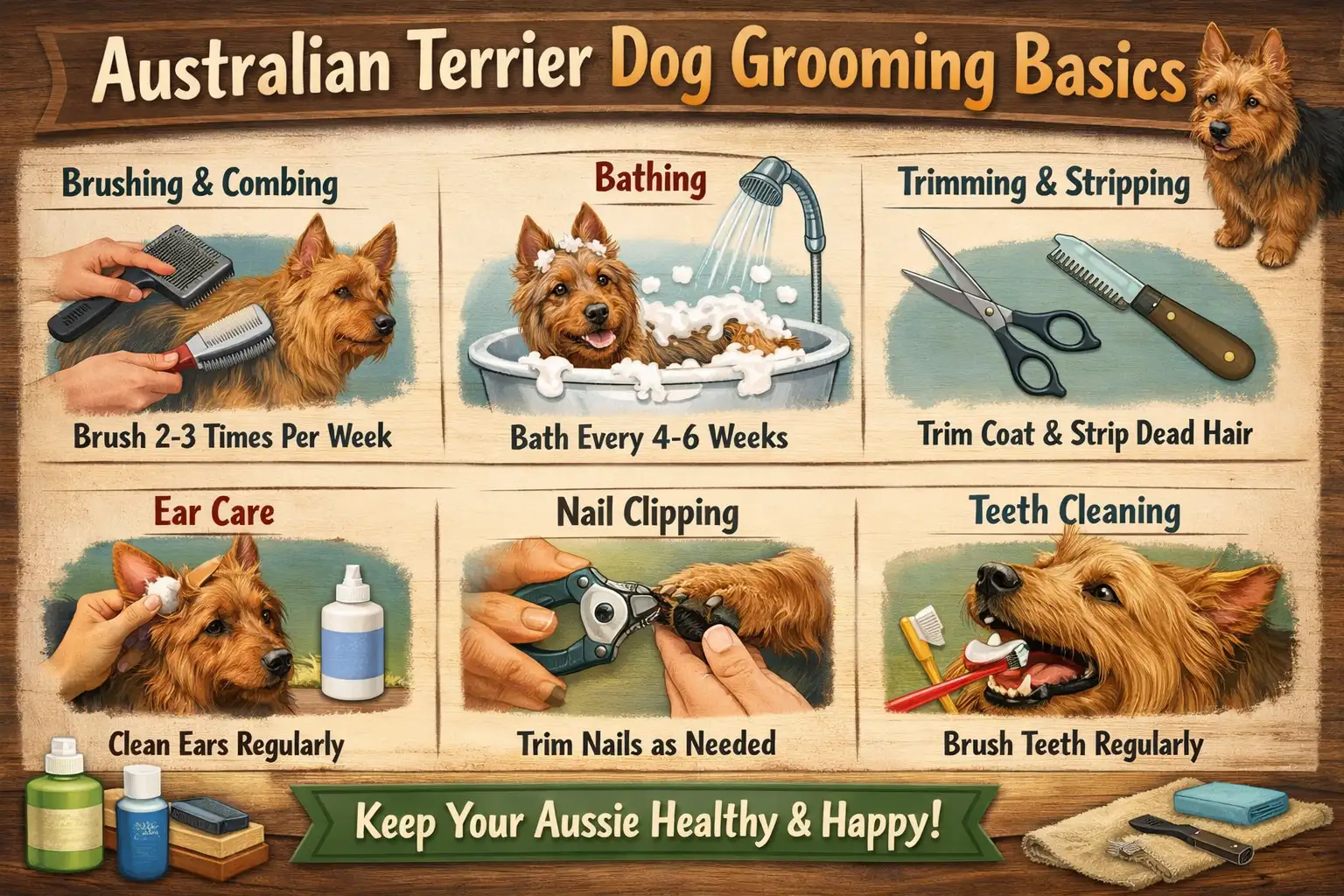
Australian Terriers have a harsh, wiry outer coat with a softer undercoat. This coat was designed to protect them from dirt, weather, and rough terrain. Because of this structure, their grooming needs are very different from smooth-coated or fluffy dogs.
This breed is often called “low shedding,” but that does not mean low maintenance. Loose hairs get trapped in the wiry coat instead of falling out, which is why regular grooming is important. Without it, the coat can look dull, feel itchy, and cause skin problems under the surface.
The wire coat should stay firm and textured, not soft or fluffy. Shaving or heavy clipping can permanently damage the coat, making it thin, patchy, or overly soft as it grows back. This also affects how well the coat protects the skin from heat, cold, and irritation.
Proper grooming helps:
- keep the coat clean without stripping natural oils
- reduce tangles and hidden matting near the skin
- support healthy skin airflow
- prevent irritation, itching, and odor buildup
Australian Terriers also tend to collect dirt around the legs, chest, and beard area. These spots need extra attention during brushing and bathing, even if the rest of the coat looks clean.
Understanding the coat type is the most important first step. Once owners know why this coat behaves the way it does, the grooming routine becomes much easier and safer to manage at home.
Essential Grooming Tools for an Australian Terrier
Using the right tools makes grooming easier and helps protect the wire coat. Australian Terriers do not need many tools, but the tools must be the correct type. Wrong tools can damage the coat or irritate the skin.
Below are the grooming tools most owners should have at home and how to use them safely.
Australian Terrier Grooming Tools and Their Purpose
| Tool | What it is used for | How often to use | Common mistakes to avoid |
|---|---|---|---|
| Pin brush | Removes loose hair and surface dirt without softening the coat | 1–2 times a week | Pressing too hard or brushing when coat is dry and tangled |
| Metal comb (medium teeth) | Checks for hidden tangles near skin and behind ears | Weekly | Skipping this step and missing small mats |
| Undercoat rake (light use) | Removes loose undercoat during shedding seasons | As needed | Overusing it and thinning the coat |
| Dog-safe shampoo | Cleans dirt and odor without stripping oils | Every 4–6 weeks | Using human shampoo or bathing too often |
| Dog towel | Dries coat gently after baths | Every bath | Rubbing too hard and roughing up the coat |
| Nail clippers or grinder | Trims nails to safe length | Every 3–4 weeks | Cutting too much at once |
| Ear cleaning solution | Keeps ears clean and dry | Every 2–4 weeks | Using water or cotton swabs deep in the ear |
Many owners buy slicker brushes or clippers because they are popular, but these are not ideal for Australian Terriers. Slicker brushes can break wiry hair, and clippers can permanently soften or damage the coat if used incorrectly.
Keeping tools simple and coat-safe helps:
- reduce grooming stress
- protect natural coat texture
- prevent skin irritation
- make grooming faster and easier
You do not need professional tools to maintain an Australian Terrier at home. You just need the right ones and to use them gently.
How to Groom an Australian Terrier at Home
Home grooming helps keep your Australian Terrier clean, comfortable, and healthy between professional visits. The routine does not need to be long or hard. Short and regular grooming works best for this breed.
Start grooming when your dog is calm. A quiet place and a non-slip surface make the process easier and safer.
Brushing should be done once or twice a week. Use a pin brush first to remove loose hair and dirt. Then use a metal comb to gently check behind the ears, under the legs, and around the neck. These are common spots where small tangles can form.
Bathing should be done every 4 to 6 weeks, or when the dog is dirty or smells bad. Use only dog shampoo made for sensitive skin. Wet the coat fully, apply shampoo gently, and rinse very well. Leftover soap can cause itching.
Drying is important. Pat the coat with a towel instead of rubbing. Let the coat air-dry or use a dryer on a cool or low setting. High heat can dry out the skin and soften the wire coat.
Light trimming around the feet and hygiene areas is usually safe at home. Avoid shaving or clipping the body coat. This can damage the coat texture and cause skin problems.
What You Can Do at Home vs When to See a Professional Groomer
| Grooming task | Safe to do at home | Professional recommended | Why it matters |
|---|---|---|---|
| Brushing and combing | Yes | No | Keeps coat clean and prevents tangles |
| Bathing | Yes | No | Removes dirt and odor safely |
| Nail trimming | Yes (with care) | Optional | Prevents pain and walking problems |
| Light foot trimming | Yes | Optional | Keeps feet neat and clean |
| Hand stripping | No | Yes | Maintains proper wire coat texture |
| Full coat trimming or shaving | No | Yes | Prevents permanent coat damage |
Keeping home grooming simple helps your dog stay relaxed and builds trust over time. Short sessions are better than trying to do everything at once.
Nail, Ear, and Skin Care Basics
Nail, ear, and skin care are small grooming steps, but they make a big difference in your Australian Terrier’s comfort and health. These tasks should be done gently and on a regular schedule.
Nails should be trimmed every 3 to 4 weeks. If you hear nails clicking on the floor, they are too long. Trim a little at a time to avoid cutting the quick, which can bleed and cause pain. If your dog is nervous, a nail grinder can be easier to use than clippers.
Ears should be checked every 1 to 2 weeks. Use a dog-safe ear cleaning solution and a soft cotton pad. Wipe only the visible part of the ear. Do not push cotton swabs deep into the ear. Redness, strong smell, or dark discharge are signs that your dog may need a vet visit.
Skin checks should be part of every grooming session. Run your hands over the body and look for:
- redness or scabs
- dry or flaky skin
- bumps or sores
- strong odor
Australian Terriers can have sensitive skin. Bathing too often or using harsh products can remove natural oils and cause itching. Always use dog shampoos made for gentle cleaning.
If you notice constant scratching, hair loss, or sore spots, grooming alone may not fix the problem. These signs can point to allergies or infections that need veterinary care.
Grooming Frequency, Common Mistakes, and Professional Help
Knowing how often to groom your Australian Terrier helps keep the coat healthy and avoids skin problems. Regular care is better than waiting too long and trying to fix issues later.
Australian Terrier Grooming Frequency Guide
| Grooming task | Puppy | Adult | Notes and warnings |
|---|---|---|---|
| Brushing and combing | 1 time a week | 1–2 times a week | Focus on ears, legs, and neck |
| Bathing | Every 6–8 weeks | Every 4–6 weeks | Do not over-bathe |
| Nail trimming | Every 3–4 weeks | Every 3–4 weeks | Trim small amounts |
| Ear cleaning | Every 2–4 weeks | Every 2–4 weeks | Stop if ears look sore |
| Professional grooming | Optional | Every 3–6 months | Needed for hand stripping |
Many grooming problems come from simple mistakes. Common ones include bathing too often, using human shampoo, brushing too hard, or shaving the coat. Shaving a wire coat does not make dogs cooler. It can damage the coat and lead to skin irritation.
Professional groomers are helpful for hand stripping, coat shaping, and dogs who are hard to manage at home. A groomer can also spot skin or coat problems early. If your dog has ongoing itching, hair loss, or sore skin, a veterinarian should be seen instead of trying new grooming products.
With the right routine, grooming becomes easy and stress-free for both you and your dog. Short, regular sessions keep your Australian Terrier looking neat and feeling comfortable.
For more detailed breed-specific grooming and care information, you can also visit the American Kennel Club Australian Terrier breed page, which provides expert guidance on coat care, health, and general maintenance for this breed.

Ata Ur Rehman is the founder of Pet Age in Human Years Calculator, an educational platform that provides age conversion charts and lifespan guides for dogs, cats, birds, and other companion animals. His work focuses on helping pet owners understand how animal ages translate into human years using commonly accepted age conversion formulas and published lifespan averages.
The website compiles breed and species lifespan data from kennel clubs, breed organizations, and general animal lifespan studies to present simple and easy-to-understand guides for pet owners worldwide.
This website was created to centralize animal age conversion charts into one easy reference platform for pet owners.