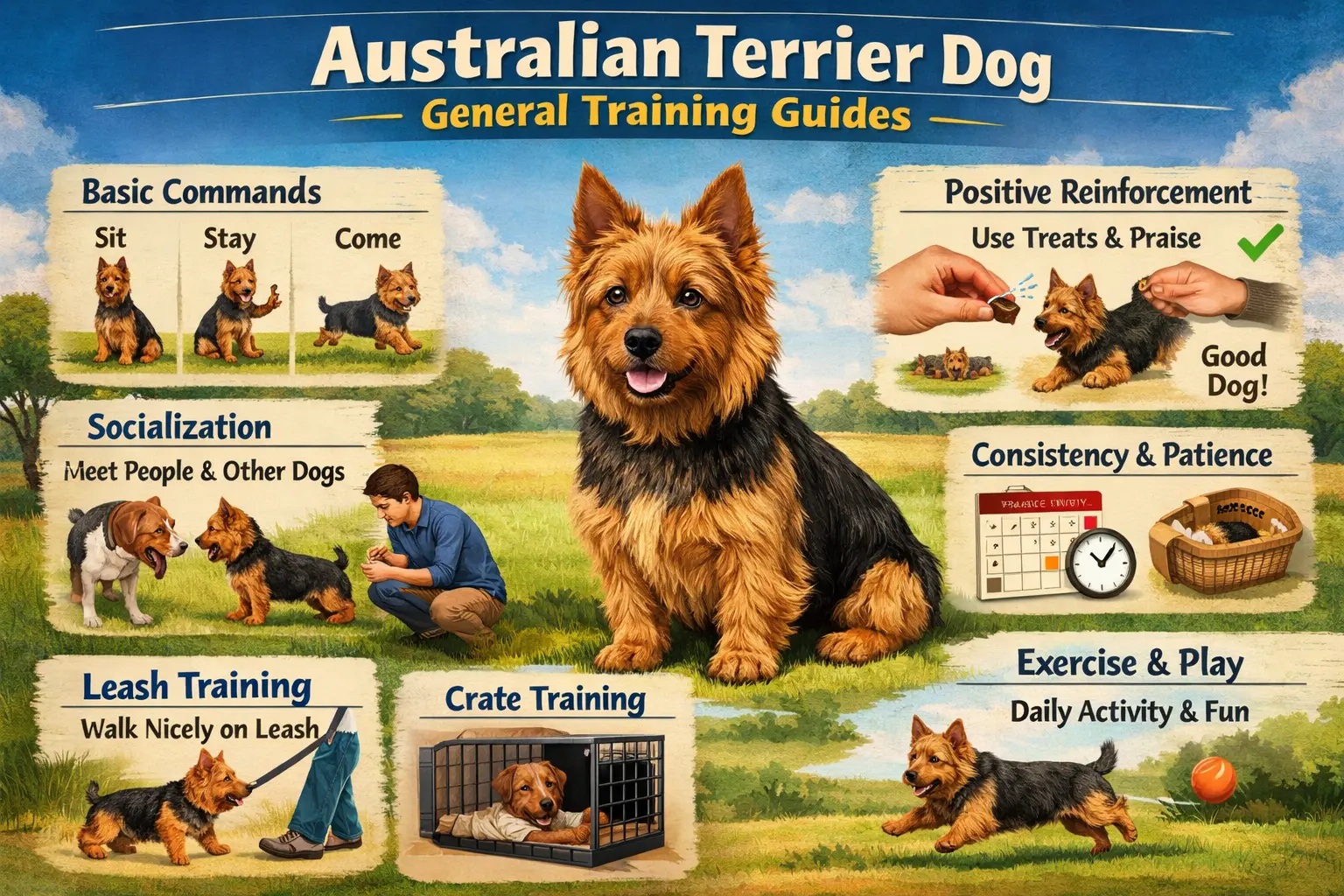
Training an Australian Terrier is not about control or force. It’s about understanding how this small but confident dog thinks, learns, and reacts to the world. This guide is built to help you train your Australian Terrier in a clear, practical, and realistic way—whether you’re starting with a puppy or working with an adult dog.
Australian Terriers are smart, alert, and independent. These traits make them fun companions, but they can also make training feel confusing for first-time owners. What works for many other small dogs often doesn’t work the same way for terriers. That’s why breed-specific training matters.
In this guide, you’ll learn:
- What makes Australian Terriers different from other breeds
- How their temperament affects training success
- How to train without frustration or punishment
- What progress should realistically look like
This is not a command-by-command list. Instead, it’s a general training guide that helps you build good habits, strong communication, and long-term behavior you can live with.
Understanding Australian Terrier Temperament and Behavior
Australian Terriers may be small, but they think like big dogs. Their personality plays a huge role in how well training goes. When owners understand this early, training becomes much easier and less stressful.
Here are the main traits that affect training:
- Independent thinkers
Australian Terriers like to make their own choices. This does not mean they are bad or disobedient. It means they need a reason to listen. - Very alert and vocal
They were bred to warn their owners. This is why barking is common if it is not managed early. - High prey drive
They love to chase moving things like birds, cats, or toys. This affects recall and leash training. - Smart but easily bored
They learn fast, but repeating the same thing too much can make them ignore you.
Many owners call Australian Terriers “stubborn,” but the truth is simpler. They respond best when training feels rewarding and interesting.
How Temperament Affects Training
| Australian Terrier Trait | What This Means for Training |
|---|---|
| Independent mindset | Needs motivation, not force |
| Alert nature | Barking must be guided early |
| High prey drive | Impulse control is important |
| High intelligence | Short, fun sessions work best |
Understanding these traits helps you avoid common mistakes like pushing too hard, training too long, or using harsh corrections. When training matches their nature, Australian Terriers learn faster and behave better.
Step-by-Step Australian Terrier Training Basics
Training an Australian Terrier works best when it is simple, short, and consistent. This breed learns fast, but only if training feels clear and rewarding.
Start with these basic rules:
- Train in short sessions
Long sessions cause boredom. Short sessions keep your dog focused. - Train every day
Daily practice matters more than long training times. - Use rewards your dog loves
Small treats, toys, or praise work better than force. - Train in a quiet place first
Too many distractions make learning harder in the beginning.
Simple Training Plan for Australian Terriers
| Training Part | What Works Best |
|---|---|
| Session length | 5–10 minutes |
| Sessions per day | 2–3 short sessions |
| Best rewards | Small treats, toys, praise |
| Training location | Quiet area at first |
| Best start age | As early as possible |
| Training style | Positive and calm |
What to Focus on First
Begin with skills that help daily life:
- Paying attention when you call their name
- Walking calmly on a leash
- Sitting before food or play
- Staying calm instead of barking for attention
Puppies learn faster, but adult Australian Terriers can also learn new habits. The key is patience and clear rewards.
If training feels hard, it usually means:
- Sessions are too long
- Rewards are not exciting enough
- The environment has too many distractions
Fix these things first before changing methods.
Solving Common Australian Terrier Training Problems
Australian Terriers often repeat the same behavior problems if training is not clear. The good news is that most of these issues come from natural instincts, not bad behavior.
Below are the most common problems owners face and how to handle them.
Why Problems Happen
Most training problems happen because:
- The dog is bored or under-exercised
- Rewards are not exciting enough
- Training rules are not consistent
- The dog is confused about what is expected
Understanding the cause makes fixing the problem much easier.
Common Problems and What Helps
| Problem | Why It Happens | What Actually Helps |
|---|---|---|
| Excessive barking | Alert nature, boredom | Teach quiet moments, reward calm behavior |
| Digging | Prey drive, extra energy | Give digging toys, add mental games |
| Pulling on leash | Excitement, curiosity | Practice loose-leash walking daily |
| Ignoring commands | Independence | Use better rewards, train in quiet places |
| Jumping up | Seeking attention | Ignore jumping, reward calm greetings |
Common Owner Mistakes to Avoid
- Repeating commands many times
- Training only when problems appear
- Using punishment instead of guidance
- Skipping daily mental exercise
Australian Terriers need both physical activity and brain work. Short training games, puzzle toys, and sniffing walks help reduce many behavior problems.
When Australian Terrier Owners Should Seek Professional Help
Most Australian Terrier training issues can be improved at home with time and consistency. However, some problems need help from a trained professional to keep everyone safe and reduce stress.
You should consider professional help if you notice any of these signs:
- Growling, snapping, or biting
- Fear that does not improve with training
- Strong reactions to people or other dogs
- Panic when left alone
- Sudden behavior changes without a clear reason
These behaviors are not “bad dog” problems. They are signs that your dog may be scared, confused, or overwhelmed.
When to Ask for Help
- If a problem does not improve after 4–6 weeks of steady training
- If behavior is getting worse instead of better
- If you feel unsafe or unsure how to continue
A qualified dog trainer can help with basic behavior issues. A veterinary behavior specialist may be needed for fear, aggression, or anxiety. Getting help early often leads to faster and better results.
Training an Australian Terrier takes patience, clear rules, and the right approach. When owners understand the breed and train with consistency, these dogs become confident, loyal, and enjoyable companions.
For additional breed-specific training and care guidance, you can also review the Australian Terrier overview provided by the American Kennel Club, which explains the breed’s temperament, history, and general training needs in more detail.

Ata Ur Rehman is the founder of Pet Age in Human Years Calculator, an educational platform that provides age conversion charts and lifespan guides for dogs, cats, birds, and other companion animals. His work focuses on helping pet owners understand how animal ages translate into human years using commonly accepted age conversion formulas and published lifespan averages.
The website compiles breed and species lifespan data from kennel clubs, breed organizations, and general animal lifespan studies to present simple and easy-to-understand guides for pet owners worldwide.
This website was created to centralize animal age conversion charts into one easy reference platform for pet owners.