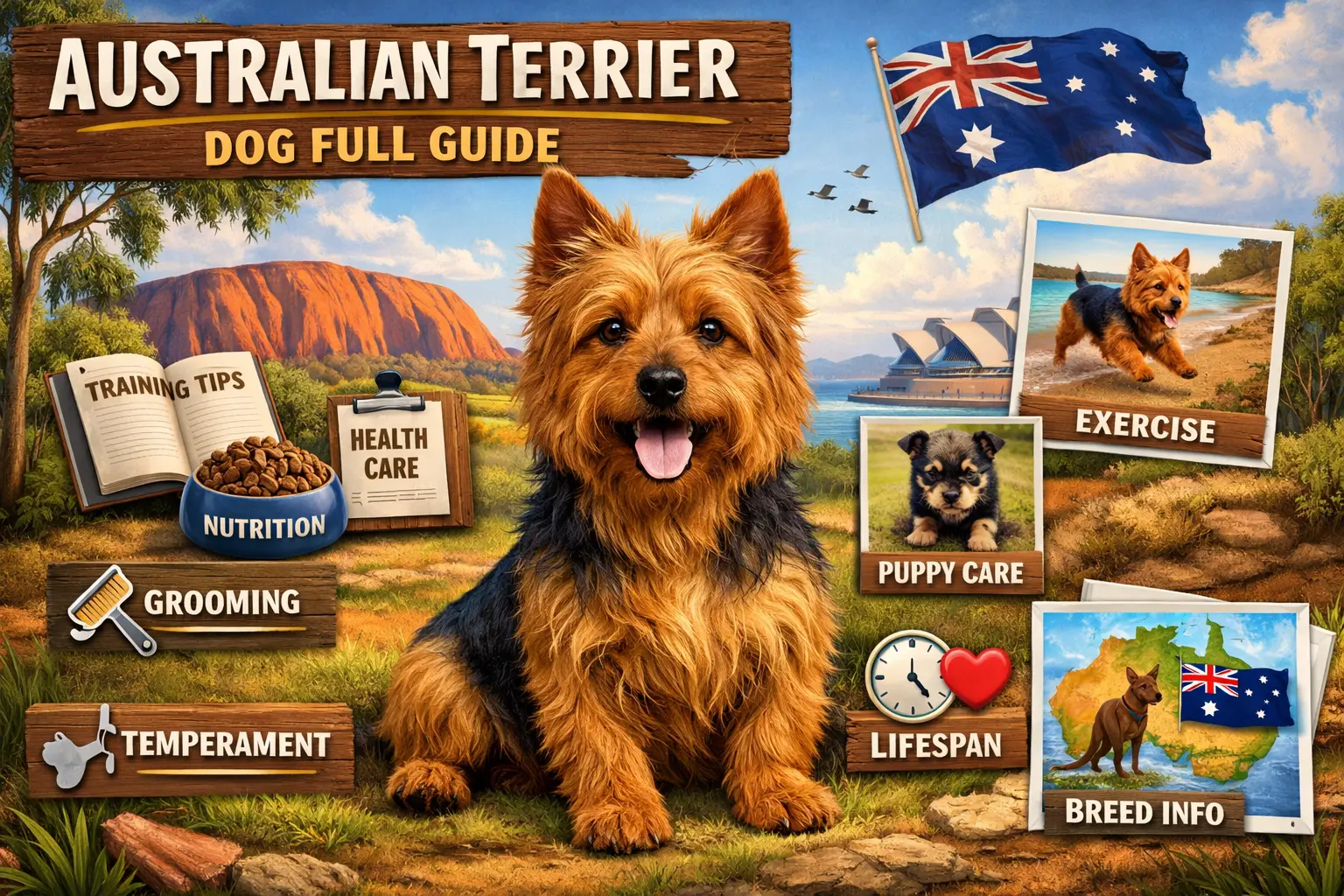
The Australian Terrier is a small but tough dog with a big personality. Even though this breed is compact, it was developed to work hard, stay alert, and protect its home. Many people choose the Australian Terrier because they want a confident, loyal dog that does not feel fragile or timid.
This breed is known for being bold, intelligent, and very aware of its surroundings. Australian Terriers often act like much bigger dogs than they really are. They are quick to alert their owners, curious about everything around them, and deeply attached to their family.
Because of their size, many people think Australian Terriers are easy, low-effort pets. In reality, they are active, opinionated, and need both mental and physical engagement. When their needs are met, they can be excellent companions for the right household.
In this guide, you will learn what living with an Australian Terrier is really like. We will cover their temperament, exercise needs, grooming, health, costs, and how they compare to other small terrier breeds, so you can decide if this dog truly fits your lifestyle.
The Australian Terrier was developed in Australia during the early 1800s. Early settlers needed a small but strong dog that could survive tough weather and help control pests like rats and snakes. These dogs also had to guard homes and farms.
To create this breed, settlers crossed several rough-coated terriers brought from Great Britain. These included working terriers that were brave, alert, and good hunters. Over time, breeders selected dogs that were tough, confident, and loyal to their owners.
The Australian Terrier became one of the first dog breeds officially developed in Australia. Unlike many toy-sized dogs, this breed was never meant to sit idle. Its working past explains why Australian Terriers are still energetic, fearless, and very protective of their space today.
Even though modern Australian Terriers mostly live as companions, their strong instincts remain. Their history helps explain why they are bold, vocal, and always ready to investigate anything unusual around the home.
Australian Terrier Appearance, Size, and Coat
The Australian Terrier is a small dog, but it looks strong and well-built. This breed is not delicate. It has a sturdy body, strong legs, and a confident stance that shows its working-dog roots.
Even though it is short in height, the Australian Terrier is slightly longer than it is tall. This body shape helped it move easily over rough land while hunting pests. Its upright ears and alert expression make it look focused and ready at all times.
The coat is one of the most noticeable features of this breed. It was designed to protect the dog from harsh weather, dirt, and rough terrain. The coat also gives the Australian Terrier its classic terrier look.
Australian Terrier Physical Characteristics
| Feature | Description |
|---|---|
| Height | About 9–11 inches |
| Weight | Around 14–16 pounds |
| Body type | Compact, sturdy, slightly longer than tall |
| Coat type | Harsh outer coat with soft undercoat |
| Common colors | Blue and tan, sandy, red |
| Distinctive features | Upright ears, rough coat, topknot |
The coat is rough to the touch, not soft or silky. This texture helps protect the skin and reduces heavy shedding. Australian Terriers do shed, but much less than many other breeds.
Their colors are natural and earthy. Blue and tan is the most common color, but sandy and red coats are also widely seen. The lighter-colored topknot on the head is a classic breed trait and adds to their sharp, alert look.
Australian Terrier Temperament and Personality
The Australian Terrier is known for having a big personality in a small body. This breed is confident, brave, and very alert. It was bred to work on its own, so it often thinks independently and likes to make its own decisions.
Australian Terriers are loyal to their family and enjoy being close to their people. They may follow their owner from room to room and like to know what is happening at all times. While they enjoy affection, they are not usually clingy or needy.
This breed is also a natural watchdog. Australian Terriers are quick to notice new sounds, movements, or visitors. Because of this, barking can be common, especially if the dog is bored or not trained early.
They are intelligent dogs, but their terrier nature means they can be stubborn. They respond best to calm, consistent owners who set clear rules and keep training interesting.
Australian Terrier Temperament Traits
| Trait | Level | What It Means in Daily Life |
|---|---|---|
| Confidence | High | Acts bold and fearless |
| Alertness | High | Notices sounds and movement quickly |
| Independence | Medium–High | Likes to think for itself |
| Affection | Medium | Loyal but not overly clingy |
| Barking | Medium–High | Barks to alert and warn |
| Intelligence | High | Learns fast but tests limits |
In real homes, Australian Terriers often act like much larger dogs. They may try to guard doors, watch windows, and investigate anything new. This makes them great little watchdogs, but it also means they need guidance to avoid bossy or noisy behavior.
Australian Terrier With Family, Children, and Other Pets
Australian Terriers are very loyal to their family and like to stay close to the people they trust. They enjoy being involved in daily life and often choose one or two people as their favorite humans.
With adults and older children, this breed can be loving, playful, and protective. They enjoy games, short walks, and being part of family activities. However, they do best when people respect their space and do not handle them roughly.
With young children, supervision is important. Australian Terriers are not fragile, but they do not like being pulled, hugged tightly, or startled. Teaching children how to gently interact with the dog makes a big difference.
When it comes to other pets, this breed can be challenging. Australian Terriers were bred to hunt small animals, so they have a strong prey drive. Cats, rabbits, and other small pets may trigger chasing behavior, especially if the dog is not raised with them.
They can live with other dogs, but same-sex dogs may cause issues if introductions are not handled carefully. Early socialization helps reduce problems, but terrier confidence can still lead to bossy behavior.
Australian Terrier Compatibility Overview
| Situation | Suitability | Important Notes |
|---|---|---|
| Families with children | Moderate | Best with respectful, older kids |
| Toddlers | Low–Moderate | Always supervise interactions |
| Other dogs | Moderate | Early socialization needed |
| Cats | Low–Moderate | Prey drive may be an issue |
| Small pets | Low | Not recommended |
Overall, Australian Terriers do best in homes where rules are clear and interactions are respectful. They are loving dogs, but they expect to be treated with fairness and consistency.
Is the Australian Terrier the Right Dog for You?
The Australian Terrier is not a “yes” or “no” dog for everyone. It is a great match for some lifestyles and a poor fit for others. Understanding this before bringing one home can save both the dog and the owner from frustration.
This breed does best with owners who enjoy being involved. Australian Terriers like structure, attention, and daily activity. They are not couch dogs that stay quiet all day without guidance.
They can live in small homes or apartments, but only if their exercise and mental needs are met. Without enough activity, they may bark, dig, or become stubborn. Owners who enjoy daily walks, short play sessions, and light training usually do well with this breed.
First-time owners can succeed with an Australian Terrier, but patience is important. Terrier independence can surprise people who expect an easy, always-obedient dog.
Australian Terrier Lifestyle Fit
| Lifestyle | Good Fit? | Why It Matters |
|---|---|---|
| Apartment living | Yes | Needs daily walks and play |
| First-time owners | Maybe | Stubborn streak needs patience |
| Seniors | Moderate | Still needs regular activity |
| Active owners | Yes | Enjoys walks and play |
| Busy households | Moderate | Needs daily interaction |
| Multi-pet homes | Caution | Prey drive may cause issues |
If you want a small dog with a bold personality, strong loyalty, and watchdog instincts, the Australian Terrier may be a good choice. If you want a quiet, very easygoing dog, this breed may feel demanding.
Exercise Needs of an Australian Terrier
Australian Terriers are small dogs, but they have good energy levels. They need daily exercise to stay healthy and calm. Without enough activity, they may bark more, dig, or act stubborn.
This breed does not need long hours of hard exercise. Short daily walks, playtime, and simple games are usually enough. What matters most is consistency. Skipping exercise for many days can lead to behavior problems.
Mental exercise is just as important as physical activity. Australian Terriers are smart and curious. Puzzle toys, basic training games, and scent-based play help keep their minds busy.
They enjoy exploring new places, but because of their strong prey drive, they should stay on a leash in open areas. Off-leash time is safest in secure, fenced spaces.
Daily Exercise Needs for an Australian Terrier
| Activity Type | Recommended Amount |
|---|---|
| Walks | 30–45 minutes daily |
| Playtime | 15–30 minutes |
| Mental games | Every day |
| Free running | Occasional, fenced area |
A well-exercised Australian Terrier is usually calmer, happier, and easier to manage at home. Regular activity helps reduce barking and keeps their confident personality balanced.
Training an Australian Terrier: What Owners Should Know
Australian Terriers are smart dogs, but they do not always like to obey just to please people. This breed was trained to think and work on its own, which means it can question commands if training feels boring or unclear.
They learn new skills quickly, but consistency is very important. Short, fun training sessions work better than long or strict ones. Repeating the same command many times without reward can cause them to ignore it.
One common challenge is recall. Australian Terriers may chase small animals or follow interesting smells. Because of this, early leash training and safe, fenced play areas are important.
Barking can also become a habit if training is delayed. Teaching calm behavior and rewarding quiet moments early helps control this problem.
This breed responds best to positive methods. Praise, treats, and play work much better than harsh correction. Owners who stay patient and confident usually see the best results.
Grooming and Coat Maintenance Needs
The Australian Terrier has a rough coat that is made to protect the skin. This coat does not shed heavily, but it does need regular care to stay healthy and neat.
Brushing once or twice a week helps remove dirt and loose hair. It also keeps the coat from becoming tangled. Many owners like this breed because it does not leave a lot of hair around the house.
Bathing should not be too frequent. Washing too often can make the coat soft and reduce its natural protection. A bath every few weeks, or when the dog is very dirty, is usually enough.
Some Australian Terriers need hand stripping to keep the coat rough and tidy. Others are trimmed with scissors or clippers for easier care. Nail trimming, ear cleaning, and teeth brushing are also important parts of regular grooming.
Australian Terrier Grooming Requirements
| Grooming Task | How Often |
|---|---|
| Brushing | 1–2 times per week |
| Bathing | Every 6–8 weeks |
| Hand stripping or trimming | As needed |
| Nail trimming | About once a month |
| Ear cleaning | Weekly |
| Teeth brushing | Several times per week |
Regular grooming keeps the Australian Terrier comfortable and helps prevent skin problems. It also gives owners a chance to check for cuts, bumps, or signs of illness.
Australian Terrier Health and Lifespan
Australian Terriers are generally healthy dogs and often live a long life for their size. With proper care, many stay active and alert well into their senior years.
Like all breeds, they can still be prone to certain health problems. Most of these issues are manageable when found early. Regular vet visits and responsible breeding play a big role in keeping this breed healthy.
One concern in Australian Terriers is knee problems, such as patellar luxation. Some dogs may also develop hip or leg conditions as they age. Dental care is important too, since small dogs are more likely to have tooth and gum problems.
A healthy diet, regular exercise, and routine checkups can help reduce many health risks and support a long, comfortable life.
Australian Terrier Health Overview
| Health Aspect | Details |
|---|---|
| Average lifespan | 12–15 years |
| Common issues | Patellar luxation, Legg-Calvé-Perthes disease |
| Other concerns | Dental disease, diabetes (less common) |
| Preventive care | Regular vet visits, weight control |
| Recommended checks | Knees, eyes, dental exams |
Many Australian Terriers remain healthy with basic preventive care. Choosing a reputable breeder and staying consistent with vet care can make a big difference over time.
Cost of Owning an Australian Terrier
Owning an Australian Terrier comes with regular expenses, even though this breed is small. Understanding these costs ahead of time helps owners plan better and avoid surprises.
The price of an Australian Terrier puppy can vary. Puppies from responsible breeders usually cost more, but they are more likely to be healthy and well cared for. Cheaper puppies may come from poor breeding conditions and can lead to higher vet costs later.
Ongoing costs include food, routine vet care, grooming, and basic supplies. Grooming costs are moderate compared to many other breeds, but regular care is still needed. Veterinary costs may increase as the dog gets older.
Some owners choose pet insurance to help manage unexpected medical bills. This can be helpful, especially for long-term health care.
Australian Terrier Cost Breakdown
| Expense Type | Estimated Cost |
|---|---|
| Puppy price | $800–$2,000 |
| Food (monthly) | $30–$50 |
| Routine vet care (yearly) | $300–$600 |
| Grooming (yearly) | $200–$400 |
| Pet insurance (monthly) | $20–$40 |
While the Australian Terrier is not the cheapest dog to own, it is also not one of the most expensive. Planning for regular costs helps ensure the dog receives proper care throughout its life.
Pros and Cons of the Australian Terrier
The Australian Terrier has many great qualities, but it is not perfect for everyone. Looking at both the good and the challenging parts can help you decide if this breed fits your home and lifestyle.
This breed is loyal, brave, and very alert. It often acts like a much larger dog and makes a good little watchdog. At the same time, its strong personality and terrier instincts can be difficult for some owners to manage.
Australian Terriers do best with owners who enjoy interaction and are willing to guide their behavior. Without clear rules, they can become bossy or noisy.
Pros and Cons of the Australian Terrier
| Pros | Cons |
|---|---|
| Loyal and devoted to family | Can be stubborn |
| Excellent watchdog | Barking can be an issue |
| Small but sturdy size | Strong prey drive |
| Low shedding coat | Needs regular grooming |
| Long lifespan | Not always easy for beginners |
When matched with the right owner, the Australian Terrier can be a confident and loving companion. When matched poorly, its bold nature may feel overwhelming.
For official breed standards, history, and recognized characteristics, you can also review the Australian Terrier breed profile provided by the American Kennel Club: https://www.akc.org/dog-breeds/australian-terrier/

Ata Ur Rehman is the founder of Pet Age in Human Years Calculator, an educational platform that provides age conversion charts and lifespan guides for dogs, cats, birds, and other companion animals. His work focuses on helping pet owners understand how animal ages translate into human years using commonly accepted age conversion formulas and published lifespan averages.
The website compiles breed and species lifespan data from kennel clubs, breed organizations, and general animal lifespan studies to present simple and easy-to-understand guides for pet owners worldwide.
This website was created to centralize animal age conversion charts into one easy reference platform for pet owners.